
Embarking on a cross-country journey from the heartland of Indiana to the Pacific shores of California is an quintessential American travel experience, bridging vast geographical and cultural landscapes. This significant distance necessitates careful planning, whether one opts for the swiftness of air travel, the immersive experience of a road trip, or the scenic comfort of a train. Understanding the exact distance, available routes, and modes of transportation is the first step in transforming this ambitious journey into a memorable adventure across the United States.
The Geographic Divide: Understanding the Distance
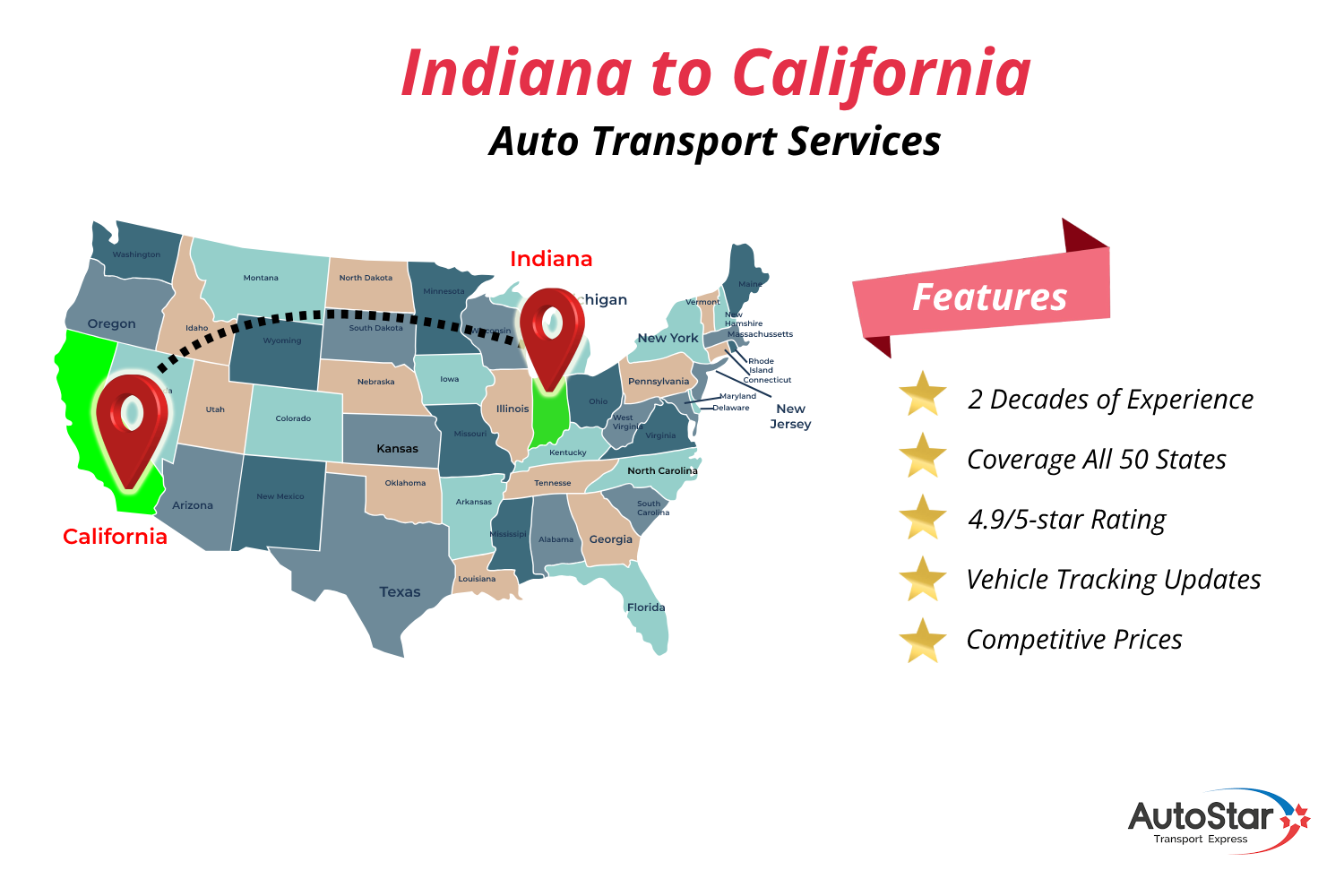
The vast expanse between Indiana and California covers approximately two-thirds of the continental United States. The exact mileage largely depends on your specific starting point in Indiana and your chosen destination in California.
Mileage and Driving Time Estimates
For instance, a journey from Indianapolis, Indiana, to Los Angeles, California, typically spans:
- Distance: Approximately 2,000 to 2,300 miles (3,200 to 3,700 kilometers).
- Driving Time: Without significant stops, this trip can take between 30 to 36 hours of continuous driving. However, practical travel dictates incorporating overnight stays and regular breaks, stretching the journey to 3 to 5 days, or even longer if one wishes to explore points of interest along the way.
The distance variation also depends on the final California destination. Traveling to San Francisco or Sacramento from Indianapolis might add another 100-200 miles compared to Los Angeles, slightly adjusting the overall travel time. Conversely, reaching a Southern California city like San Diego might add another hour or two beyond Los Angeles. These are not merely numbers on a map but represent the vast geographical diversity one traverses, from the cornfields of the Midwest to the deserts and mountains of the West, culminating in the vibrant coastal cities.
Charting Your Course: Popular Travel Routes
Navigating from Indiana to California offers several major interstate routes, each presenting unique landscapes and potential detours. The choice of route often depends on your final destination, the time of year, and your appetite for scenic diversity.
Northern Route Options
If your destination is Northern California (e.g., San Francisco, Sacramento), the northern route is typically preferred.
- Interstate 80 (I-80): This transcontinental interstate is a primary artery. From Indianapolis, you would generally head north-west on I-70 or other state routes to connect with I-80 in Illinois or Iowa. I-80 then takes you through Nebraska, Wyoming, Utah (passing near Salt Lake City), and Nevada (near Reno) before descending into California over the Sierra Nevada Mountains. This route offers views of expansive plains, rugged mountains, and high desert landscapes.
Central and Southern Route Options
For destinations in Southern or Central California (e.g., Los Angeles, San Diego), a more southerly approach is usually taken.
- Interstate 70 (I-70) to Interstate 15 (I-15): A popular choice involves taking I-70 west from Indianapolis through St. Louis, Missouri, and Kansas City, Kansas, continuing into Colorado and passing near Denver. From there, you would typically transition onto I-15 in Utah, which carries you through Las Vegas, Nevada, and directly into Southern California. This route presents a dramatic transition from plains to the impressive Rocky Mountains and the iconic Mojave Desert.
- Interstate 40 (I-40): An alternative, especially if you want to explore the American Southwest, is to take I-70 west to St. Louis and then connect to I-44 or I-55 south to pick up I-40 in Oklahoma City or Memphis. I-40 runs through Oklahoma, Texas, New Mexico, and Arizona, offering opportunities to visit places like the Grand Canyon National Park before reaching California. This is often considered a classic American road trip route, echoing parts of the historic Route 66.
Each route demands careful consideration of seasonal weather, particularly winter storms in the mountains and summer heat in the deserts, which can significantly impact travel times and safety.
Modes of Transport: Journey Options and Considerations
Beyond simply understanding the distance and routes, choosing the right mode of transportation is crucial for a successful and enjoyable trip from Indiana to California. Each option presents a unique blend of cost, time, and experience.
Flying: The Fastest Option
For travelers prioritizing speed and convenience, flying is undeniably the most efficient way to cover the vast distance.
- Duration: Direct flights are rare for this specific city-pair, but with one layover, total travel time from Indianapolis International Airport (IND) to major California airports like Los Angeles International Airport (LAX), San Francisco International Airport (SFO), Oakland International Airport (OAK), or San Jose International Airport (SJC) typically ranges from 6 to 9 hours, including layover time.
- Cost: Airfares fluctuate significantly based on booking time, airline (Southwest Airlines, American Airlines, United Airlines, Delta Air Lines, etc.), and seasonality. Booking in advance usually yields better prices.
- Pros: Minimal travel time, ideal for tight schedules, comfortable for long distances, no need to navigate roads or find parking.
- Cons: Less scenic, can be expensive, baggage restrictions, airport security procedures, potential for delays.
Driving: The Quintessential American Road Trip
A road trip offers unparalleled flexibility and the opportunity for exploration, making the journey an integral part of the adventure.
- Duration: As mentioned, 3 to 5 days is a realistic timeframe, allowing for 8-10 hours of driving per day with stops for meals, fuel, and rest.
- Cost: Fuel costs are a significant factor, along with potential lodging expenses, food, and vehicle maintenance. Tolls are generally minimal on primary interstates but can add up in certain regions.
- Pros: Complete control over itinerary, opportunity to discover roadside attractions and National Parks, ability to carry more luggage, ideal for families or groups.
- Cons: Demanding for drivers, potential for vehicle breakdowns, exposure to varying weather conditions, requires extensive planning for overnight stops and breaks.
Train Travel: A Scenic and Relaxed Pace
For a slower, more contemplative journey, Amtrak offers routes that traverse the country, providing unique perspectives of the American landscape.
- Routes & Duration: From Indianapolis, travelers would typically connect through Chicago.
- California Zephyr: From Chicago, this route travels through Iowa, Nebraska, Colorado (passing Denver), Utah (through Salt Lake City), and Nevada before arriving in Emeryville (for San Francisco). This journey takes approximately 52-54 hours from Chicago, so factor in additional time from Indianapolis.
- Southwest Chief: Also originating in Chicago, this train travels through Kansas City, New Mexico (stopping in Albuquerque), and Arizona (passing Flagstaff) before reaching Los Angeles. This route typically takes around 43-44 hours from Chicago.
- Cost: Train tickets can vary widely, from coach seats to private roomettes and bedrooms, influencing the overall expense.
- Pros: Relaxing travel, scenic views from observation cars, no driving stress, ability to move around, unique experience.
- Cons: Significantly longer travel time, less flexible schedules than driving, can be more expensive than budget flights or driving, limited direct routes.
Bus Travel: The Most Economical Choice
For budget-conscious travelers, bus services like Greyhound offer the most economical way to travel cross-country.
- Duration: This is the longest option, often taking 2 to 3 days (48-72 hours) or more, with multiple transfers and stops.
- Cost: Generally the cheapest mode of transportation.
- Pros: Very affordable, convenient for single travelers without a car, environmental footprint typically lower than flying or solo driving.
- Cons: Long travel times, less comfort, frequent stops, limited luggage space, less personal space.
Planning Your Transcontinental Adventure
Regardless of your chosen mode of transport, a journey from the Hoosier State to the Golden State requires meticulous planning to ensure a smooth and enjoyable experience.
Essential Pre-Departure Checklist
- Vehicle Maintenance (for drivers): Before embarking on a road trip, ensure your vehicle is in top condition. Check tires, oil, fluids, brakes, and lights. Carry an emergency kit, including jumper cables, a first-aid kit, and essential tools.
- Booking in Advance: For flights and train travel, booking tickets well ahead of time usually secures better prices and preferred seating. For road trips, reserving accommodations in advance, especially during peak season, is advisable.
- Travel Insurance: For such a long journey, travel insurance can provide peace of mind, covering unforeseen events like flight cancellations, medical emergencies, or roadside assistance.
- Packing Smart: Consider the duration of your trip and the climate variations you’ll encounter. California’s climate can vary dramatically from coastal cool to desert heat, and mountain snow in winter. Layers are always a good idea.
- Budgeting: Factor in all potential costs: transportation (fuel, tickets), accommodation, food, activities, and an emergency fund.
Enhancing the Journey Experience
- Road Trip Itinerary: If driving, plan your stops carefully. Research national parks, quirky roadside attractions, or charming small towns along your chosen route. Utilize navigation apps that include fuel stops and points of interest.
- Entertainment: Prepare playlists, audiobooks, or podcasts for long stretches. For families, consider portable games and activities to keep everyone engaged.
- Snacks and Hydration: Especially for driving and bus travel, having a supply of water and healthy snacks can save time and money and prevent energy slumps.
- Stay Connected: Ensure your phone is charged, and consider a portable charger or power bank. Inform family or friends of your travel plans and expected arrival times.
- Flexibility: While planning is key, be open to adjusting your itinerary if unexpected opportunities or challenges arise. Sometimes the best travel memories come from spontaneous detours.
The journey from Indiana to California is more than just covering a vast distance; it’s an opportunity to witness the incredible diversity of the American landscape and immerse oneself in the experience of transcontinental travel. By understanding the options and planning thoughtfully, this significant undertaking can become an unforgettable part of your travel story.
LifeOutOfTheBox is a participant in the Amazon Services LLC Associates Program, an affiliate advertising program designed to provide a means for sites to earn advertising fees by advertising and linking to Amazon.com. Amazon, the Amazon logo, AmazonSupply, and the AmazonSupply logo are trademarks of Amazon.com, Inc. or its affiliates. As an Amazon Associate we earn affiliate commissions from qualifying purchases.