
Embarking on a journey across the vast Pacific Ocean from the idyllic islands of Hawaii to the bustling shores of California is a quintessential American travel experience. For many, the first question that arises when planning such an adventure is often, “How long will I be in the air?” The flight duration is a crucial piece of information for managing expectations, planning itineraries, and preparing for the journey itself. While the precise answer can vary, a typical non-stop flight spans approximately five to six hours, bridging thousands of miles between these two distinct yet connected states.
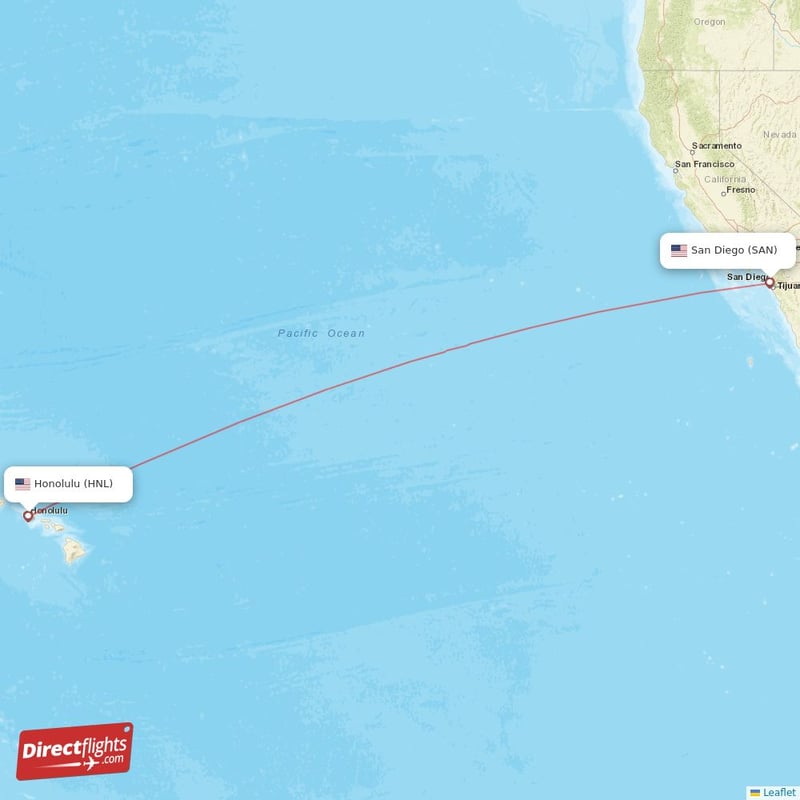
The Trans-Pacific Journey: An Overview
The air corridor between Hawaii and California is one of the busiest in the United States, facilitating everything from leisure vacations and business trips to family visits and military movements. This significant distance necessitates modern aircraft capable of long-haul flights, ensuring both comfort and efficiency for passengers.
Average Flight Durations
The average non-stop flight duration from a major airport in Hawaii to a major airport in California is generally between 5 hours and 30 minutes to 6 hours and 15 minutes. This range accounts for various factors, including the specific departure and arrival points, prevailing wind conditions, and the type of aircraft used. For instance, a flight from Honolulu (HNL) to Los Angeles (LAX) might be slightly shorter than one to San Francisco (SFO) or Oakland (OAK) due to the geographical positioning relative to the islands. Flights heading west from California to Hawaii typically experience a longer flight time, often extending by 30 to 45 minutes, due to flying against the prevailing jet stream winds. This phenomenon means that while the distance remains constant, the actual time spent in the air can fluctuate.
Key Departure and Arrival Hubs
In Hawaii, the primary gateway is Daniel K. Inouye International Airport (HNL) in Honolulu, Oahu. However, direct flights also depart from other islands, including Kahului Airport (OGG) on Maui, Kona International Airport (KOA) on the Big Island, and Lihue Airport (LIH) on Kauai.
On the California side, the major arrival hubs include Los Angeles International Airport (LAX), San Francisco International Airport (SFO), and Oakland International Airport (OAK). Additionally, flights connect to San Diego International Airport (SAN), Sacramento International Airport (SMF), and San Jose Mineta International Airport (SJC), offering a wide array of options for travelers depending on their final destination within the state.
Factors Influencing Flight Times
Several dynamic variables contribute to the exact duration of your flight from Hawaii to California. Understanding these can help in interpreting flight schedules and anticipating potential adjustments.
Departure and Arrival Airports
As mentioned, the specific route makes a difference. Flights originating from Honolulu to Los Angeles are geographically the most direct and often yield the shortest flight times. Flying from a more northerly Hawaiian island like Kauai to a more northerly Californian city like San Francisco will also be efficient. Conversely, flights from Kona to Sacramento, while direct, might have a slightly longer duration due to the greater distance and specific flight paths necessary for optimal air traffic control and fuel efficiency.
Aircraft Type and Airspeed
Modern passenger jets, such as the Boeing 737, Boeing 757, Boeing 767, Boeing 777, Boeing 787 Dreamliner, and Airbus A320 family (including the A321neo), are commonly used on this route. While most commercial airliners cruise at similar speeds (around 500-550 miles per hour), subtle differences in an aircraft’s cruising speed, fuel capacity, and operational efficiency can influence the overall flight time. Newer, more fuel-efficient aircraft, for example, might be able to maintain higher average speeds or take more direct routes.
Weather Conditions and Jet Streams
The most significant variable affecting flight duration is atmospheric conditions, particularly the strength and direction of the jet stream. The jet stream is a narrow, fast-flowing current of air typically found at altitudes of 30,000 to 45,000 feet. When flying eastbound from Hawaii to California, pilots often utilize tailwinds from the jet stream, which can significantly shorten the flight, sometimes by 30 minutes to an hour. Conversely, westbound flights to Hawaii often contend with headwinds, increasing the flight time. Other weather phenomena, such as strong frontal systems, can necessitate rerouting, adding both distance and time to the journey.
Direct vs. Connecting Flights
While direct flights are the most popular and efficient option for this route, some travelers might opt for connecting flights, often due to cost savings or specific airline preferences. A connecting flight will, by definition, add several hours to your total travel time, including layovers. If your primary concern is minimizing travel duration, a direct, non-stop flight is always the best choice.

Popular Routes and Airlines
The journey between Hawaii and California is well-served by numerous airlines, offering a competitive landscape that benefits travelers with a variety of choices.
Major Hawaiian Airports
- Daniel K. Inouye International Airport (HNL), Honolulu, Oahu: The busiest airport in Hawaii, offering the most direct connections.
- Kahului Airport (OGG), Maui: A popular departure point for visitors to Maui.
- Kona International Airport (KOA), Kona, Big Island: Serving the western side of the Big Island.
- Lihue Airport (LIH), Kauai: Providing direct access from the Garden Isle.
- Hana Airport (HNM) on Maui and Molokai Airport (MKK) on Molokai generally do not offer direct service to California, requiring inter-island connections first.
Major Californian Airports
- Los Angeles International Airport (LAX), Los Angeles: The largest gateway on the West Coast, with extensive connections.
- San Francisco International Airport (SFO), San Francisco: A major hub in the Bay Area, serving northern California.
- Oakland International Airport (OAK), Oakland: Another convenient option for the Bay Area, often offering competitive fares.
- San Diego International Airport (SAN), San Diego: Serving Southern California with direct flights.
- San Jose Mineta International Airport (SJC), San Jose: A key airport for Silicon Valley and the South Bay.
- Sacramento International Airport (SMF), Sacramento: Providing access to California’s capital region.
Airlines Serving the Route
Many reputable carriers operate direct flights between Hawaii and California. The most prominent include:
- Hawaiian Airlines: Hawaii’s flagship carrier, known for its authentic Hawaiian hospitality.
- United Airlines: Offers extensive connections from its hubs in San Francisco and Los Angeles.
- Delta Air Lines: A major player with strong presence in Los Angeles and Seattle (for connecting flights).
- American Airlines: Provides numerous daily flights, especially from Los Angeles.
- Southwest Airlines: Has expanded its presence on this route, often offering competitive fares and a unique boarding experience.
- Alaska Airlines: A strong option for those traveling to or from the Pacific Northwest with connections.
When booking, it’s advisable to compare flight times, prices, and amenities across these carriers to find the best fit for your travel needs.
Preparing for Your Pacific Crossing
A five to six-hour flight, while not ultra-long-haul, still requires some preparation to ensure a comfortable and smooth journey.
Comfort on Board
- Choose your seat wisely: Consider window seats for views, aisle seats for easy access, or exit rows for extra legroom (if available).
- Dress in layers: Cabin temperatures can fluctuate, so layering allows for easy adjustment.
- Stay hydrated: Drink plenty of water before and during the flight to combat dehydration.
- Move around: Get up and stretch periodically to improve circulation and prevent stiffness.
- Entertainment: Bring a book, download movies or podcasts, or use the in-flight entertainment system to pass the time.
- Neck pillow and eye mask: These can be invaluable for resting or sleeping.
Managing Time Zones
Traveling from Hawaii to California involves crossing at least a two to three-hour time difference (depending on Daylight Saving Time in California). Hawaii does not observe Daylight Saving Time. This means that if you depart Honolulu at 10:00 AM Hawaiian Standard Time (HST), you might arrive in Los Angeles at 6:00 PM Pacific Daylight Time (PDT) after a 5.5-hour flight. Adjust your watch and try to adapt to your destination’s time zone as soon as you board the plane to minimize jet lag. Eating and sleeping according to your arrival time can help your body adjust more quickly.
Booking Strategies
- Book in advance: Especially during peak travel seasons (summer, holidays), booking several months ahead can secure better prices and preferred flight times.
- Be flexible with dates: If your schedule allows, flying on weekdays (Tuesday, Wednesday, Thursday) often presents lower fares and potentially fewer crowds.
- Consider red-eye flights: Overnight flights, often departing Hawaii in the evening and arriving in California early morning, can be cost-effective and allow for an immediate start to your day upon arrival, but require good sleep hygiene on board.

Beyond the Flight: Planning Your Hawaiian or Californian Adventure
While the flight itself is a significant part of the journey, it merely serves as the bridge between two incredibly diverse and captivating destinations. Once you’ve landed, the true adventure begins. Whether you’re chasing the surf in Malibu, exploring the vibrant city life of San Francisco, hiking the volcanic landscapes of Maui, or relaxing on the pristine beaches of Oahu, careful planning will enhance your experience. Understanding the nuances of your flight duration is the first step in crafting a seamless and enjoyable transition from one paradise to another. The air travel component, while considerable, is a small investment of time for the unforgettable memories awaiting you on either side of the Pacific.
LifeOutOfTheBox is a participant in the Amazon Services LLC Associates Program, an affiliate advertising program designed to provide a means for sites to earn advertising fees by advertising and linking to Amazon.com. Amazon, the Amazon logo, AmazonSupply, and the AmazonSupply logo are trademarks of Amazon.com, Inc. or its affiliates. As an Amazon Associate we earn affiliate commissions from qualifying purchases.