
Understanding the intricacies of rental regulations in California is crucial for both tenants seeking long-term accommodation and landlords managing properties. The state, known for its dynamic housing market, has implemented specific laws to govern rent increases, aiming to balance tenant protection with property owner rights. While some regions boast long-standing local rent control ordinances, the most significant recent development has been the statewide caps on rent increases. Navigating these rules requires a clear understanding of what applies to a specific property and location.
Understanding California’s Statewide Rent Control Laws
Prior to 2020, rent control in California was primarily a patchwork of local ordinances, leaving many areas unprotected from significant rent hikes. This changed with the enactment of a landmark piece of legislation designed to provide a baseline level of protection across the state.

The Tenant Protection Act of 2019 (AB 1482)
The Tenant Protection Act of 2019, widely known as AB 1482, came into effect on January 1, 2020. This law introduced statewide rent caps and just cause eviction requirements for many residential properties. It represents a significant shift in California’s approach to housing, extending protections to millions of tenants who previously had none. The primary goal of AB 1482 is to prevent excessive rent increases and arbitrary evictions, thereby stabilizing the housing market and enhancing long-term accommodation security.
How AB 1482 Caps Rent Increases
Under AB 1482, landlords in most parts of California are restricted in how much they can raise the rent annually. The cap is set at 5% plus the percentage change in the cost of living, as measured by the regional Consumer Price Index (CPI). However, the total increase cannot exceed 10% in any 12-month period, regardless of how high the CPI rises.
The relevant Consumer Price Index is typically the “all urban consumers” index for the metropolitan area where the property is located. For example, a property in Los Angeles would refer to the Los Angeles-Long Beach-Anaheim CPI. Landlords must use the CPI published in April of the immediately preceding calendar year to determine the allowable increase for the upcoming year. This ensures a consistent and predictable benchmark. It is important to note that if a tenant has been living in a unit for less than 12 months, the landlord cannot implement a rent increase. The 12-month period resets with each increase.
Exemptions: When Rent Control Doesn’t Apply
While AB 1482 offers broad protection, it does not cover all rental properties. Several key exemptions mean that some landlords can raise rent without adhering to the statewide cap. Understanding these exceptions is crucial for both tenants and property owners in assessing their rights and obligations regarding long-term accommodation.
New Construction and Owner-Occupied Duplexes
One significant exemption applies to newly constructed units. Properties that have received a certificate of occupancy within the last 15 years are exempt from AB 1482’s rent caps. This exemption is designed to incentivize new housing development. For example, if a building received its certificate of occupancy in 2010, it would be exempt until 2025. Additionally, duplexes where the owner occupies one of the units as their primary residence at the beginning of the tenancy and continues to do so are also exempt. This often applies to small, owner-managed properties.
Single-Family Homes and Condominiums (with caveats)
Single-family homes and condominiums are generally exempt from AB 1482 if they are not owned by a corporation, a real estate investment trust (REIT), or an LLC with at least one corporate member, and if the landlord provides specific written notice to the tenant. This notice must inform the tenant that the property is exempt from the Tenant Protection Act of 2019’s rent cap and just cause eviction provisions. Without this specific notice, the exemption may not apply, and the property could still be subject to AB 1482 protections.
Affordable Housing and Government-Subsidized Units
Units that are already subject to “affordable housing” restrictions, meaning their rents are set by deed, regulatory agreement, or other recorded document limiting affordability to low- or moderate-income households, are also exempt. This includes most government-subsidized housing programs. The rationale is that these units already have their rents controlled by separate mechanisms, rendering AB 1482’s caps redundant.
Local Rent Control Ordinances: A Deeper Dive
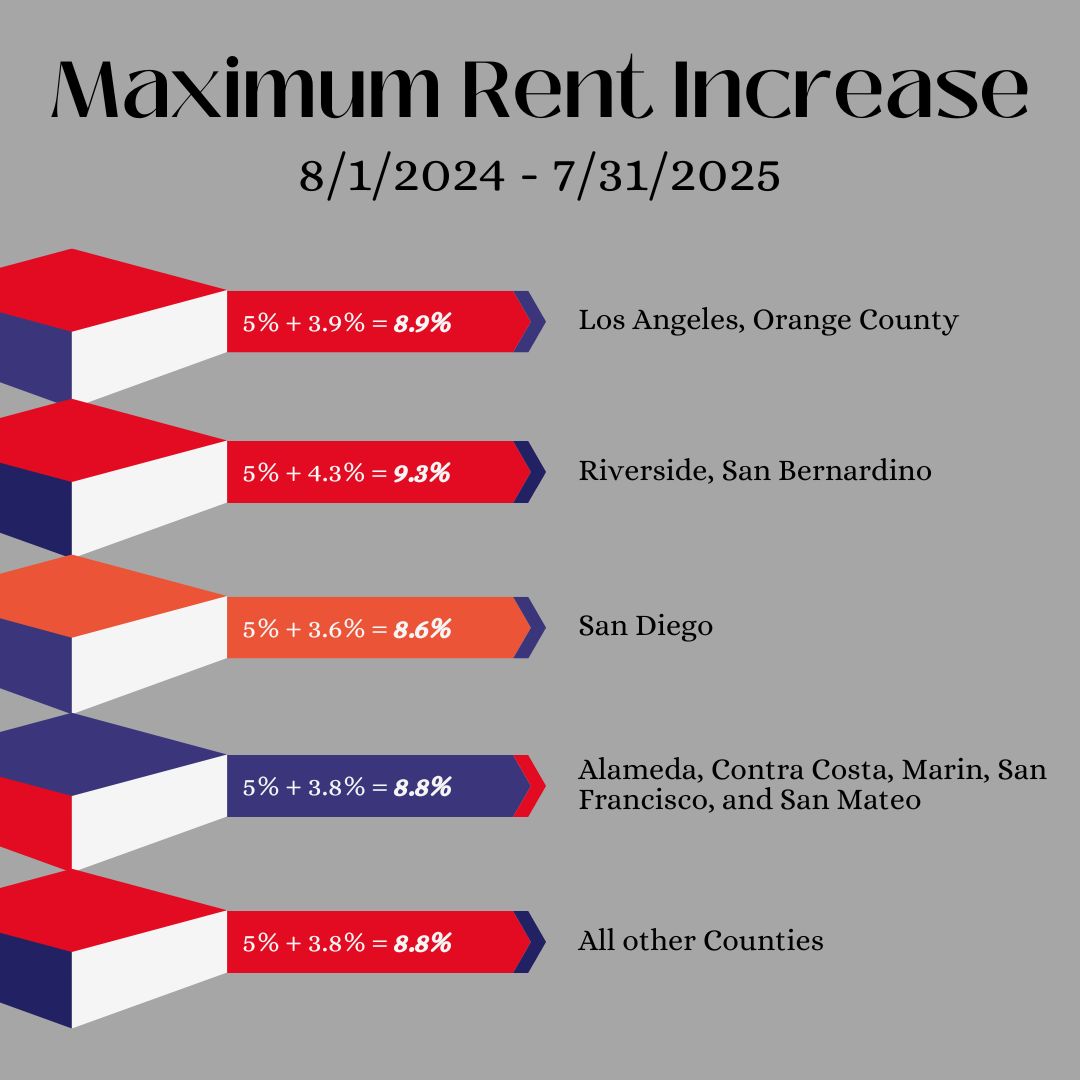
Beyond the statewide protections, many cities in California have their own local rent control ordinances that can offer even stronger protections for tenants. Where a local ordinance exists and provides greater tenant protection than AB 1482, the local ordinance takes precedence. It is crucial for tenants and landlords to determine if their property falls under a local rent control jurisdiction.
Cities with Stricter Rent Control
Several major California cities, particularly in the San Francisco Bay Area and Los Angeles County, have robust rent control laws that predated AB 1482 and often impose lower annual rent caps or more stringent requirements. Cities like San Francisco, Oakland, Berkeley, Santa Monica, West Hollywood, and San Jose are well-known for their comprehensive rent control programs. These local ordinances often apply to older buildings (e.g., those built before a specific year, such as 1979 in San Francisco or 1978 in Los Angeles), may have different CPI calculations, and sometimes cap annual increases at a fixed percentage well below the state’s 5%+ CPI limit. For instance, some cities might only allow a 2% or 3% increase per year, or base it on a specific percentage of the CPI with no added 5%. It is imperative for anyone involved in a long-term rental in these cities to consult the specific city’s housing department or tenant’s union for precise regulations.
Understanding Just Cause Eviction Protections
Both AB 1482 and many local rent control ordinances include “just cause” eviction protections. This means that after a tenant has resided in a property for a certain period (usually 12 months, or 24 months if an additional tenant is added), a landlord cannot evict them without a legally recognized “just cause.” Just causes are categorized as either “at-fault” or “no-fault.”
At-fault causes include non-payment of rent, breach of a material term of the lease, nuisance, criminal activity on the premises, or refusal to allow lawful entry. No-fault causes typically include an owner’s intent to move into the unit, withdrawal of the unit from the rental market (Ellis Act evictions), or demolition/substantial remodeling. In “no-fault” evictions, landlords are usually required to provide relocation assistance to the tenant, which can involve direct payments or a rent waiver. These protections are a critical component of tenant security, ensuring that landlords cannot use minor lease infractions or simply a desire for higher-paying tenants as grounds for eviction.
Navigating a Rent Increase: Tenant Rights and Steps
When faced with a potential rent increase, tenants in California have specific rights and steps they can take to ensure the increase is lawful.
Notice Requirements for Rent Increases
Landlords are legally required to provide proper notice before implementing a rent increase. For increases of 10% or less over a 12-month period, landlords must provide at least 30 days’ written notice. If the rent increase is greater than 10% over a 12-month period (which would only be permissible for properties exempt from AB 1482 and local rent control), the landlord must provide at least 90 days’ written notice. This notice must be in writing and properly served to the tenant. Failure to provide adequate notice makes the rent increase invalid.
What to Do if You Believe a Rent Increase is Illegal
If a tenant believes their landlord has issued an unlawful rent increase, several steps can be taken. First, review the lease agreement and research whether the property is subject to AB 1482 or a local rent control ordinance. Check the age of the building, the type of property, and the specific city it is located in.
Second, communicate with the landlord in writing, citing the relevant laws (AB 1482 or local ordinance) and explaining why the increase appears to be illegal. Keep detailed records of all communications.
Third, if the landlord does not comply, tenants can seek assistance from local tenant advocacy groups, housing rights organizations, or legal aid services. Many cities have specific rent boards or housing departments that can mediate disputes or provide definitive guidance. The California Department of Justice also provides resources and information on tenant rights. Legal consultation can be invaluable in understanding complex scenarios and pursuing formal action if necessary.

Resources for Tenants and Landlords
Navigating the landscape of rent control and tenant law in California can be complex. For landlords, understanding the limits prevents legal issues and fosters positive tenant relations. For tenants, knowing their rights ensures fair long-term accommodation.
Key resources include:
- The California Department of Justice’s guide to tenant and landlord rights.
- The California Department of Housing and Community Development (HCD) for general housing information.
- Local city housing departments or rent boards (e.g., Los Angeles Housing Department, San Francisco Rent Board).
- Non-profit tenant advocacy organizations, which offer free or low-cost legal advice and support.
Staying informed and proactive is the best way to ensure compliance and fairness in California’s dynamic rental market.
LifeOutOfTheBox is a participant in the Amazon Services LLC Associates Program, an affiliate advertising program designed to provide a means for sites to earn advertising fees by advertising and linking to Amazon.com. Amazon, the Amazon logo, AmazonSupply, and the AmazonSupply logo are trademarks of Amazon.com, Inc. or its affiliates. As an Amazon Associate we earn affiliate commissions from qualifying purchases.