
Navigating the financial landscape of California requires a comprehensive understanding of its economic systems, including the state’s unemployment insurance program. For residents, those contemplating a move to the Golden State for work, or even long-term visitors, knowing the specifics of California unemployment benefits is crucial for robust lifestyle planning and financial stability. This guide delves into the core aspects of the program, offering insights into eligibility, benefit calculations, and the application process, all vital components of managing one’s lifestyle in a dynamic economic environment.
Understanding California’s Unemployment Insurance System
California’s Unemployment Insurance (UI) program is a state-administered benefit that provides temporary financial assistance to eligible workers who lose their jobs through no fault of their own. It’s a critical safety net designed to help individuals maintain their financial footing while actively seeking new employment. The program is funded by employers through payroll taxes, not by employees. Understanding its mechanics is fundamental for anyone whose lifestyle could be impacted by an unexpected job loss, offering a degree of financial predictability in an unpredictable world.
Who is Eligible for Benefits?
Eligibility for California unemployment benefits is determined by several factors, which are designed to ensure the program serves its intended purpose without misuse. Primarily, claimants must meet specific work history and earnings requirements during a “base period,” which typically consists of the first four of the last five completed calendar quarters before the claim’s effective date.
To qualify, an individual must have:
- Earned Sufficient Wages: You must have earned at least a minimum amount in wages during your base period. This threshold changes periodically but generally requires substantial prior earnings.
- Be Unemployed or Underemployed: You must be either fully unemployed or working reduced hours with significantly lower earnings.
- Be Unemployed Through No Fault of Your Own: This is a crucial criterion. Layoffs due to lack of work, company closures, or position elimination typically qualify. Quitting a job voluntarily without good cause, or being fired for misconduct, generally disqualifies an individual from receiving benefits. Good cause for quitting can include a hostile work environment, health reasons, or a significant change in working conditions.
- Be Able and Available for Work: Claimants must be physically and mentally capable of working and be ready to accept suitable employment immediately. This means you cannot refuse suitable job offers without good reason.
- Be Actively Seeking Work: You must demonstrate an ongoing effort to find new employment. This usually involves documenting job search activities, such as applying for positions, attending interviews, or participating in networking events. The Employment Development Department (EDD) provides guidelines on what constitutes an acceptable job search.
Meeting these criteria is the first step toward accessing financial support that can significantly impact one’s ability to maintain their lifestyle in California, whether it’s affording rent in Los Angeles or daily expenses in San Francisco.
How Weekly Benefits are Calculated
The amount of weekly unemployment benefits an individual receives in California is not a fixed sum but is rather calculated based on their earnings during their base period. This personalized approach ensures that benefits partially reflect an individual’s previous income and standard of living.
The Employment Development Department (EDD) uses a specific formula to determine the weekly benefit amount (WBA). Generally, your WBA is determined by dividing your highest quarterly earnings during your base period by a factor established by law (currently 26) or by considering your total base period earnings, depending on the specific calculation method.
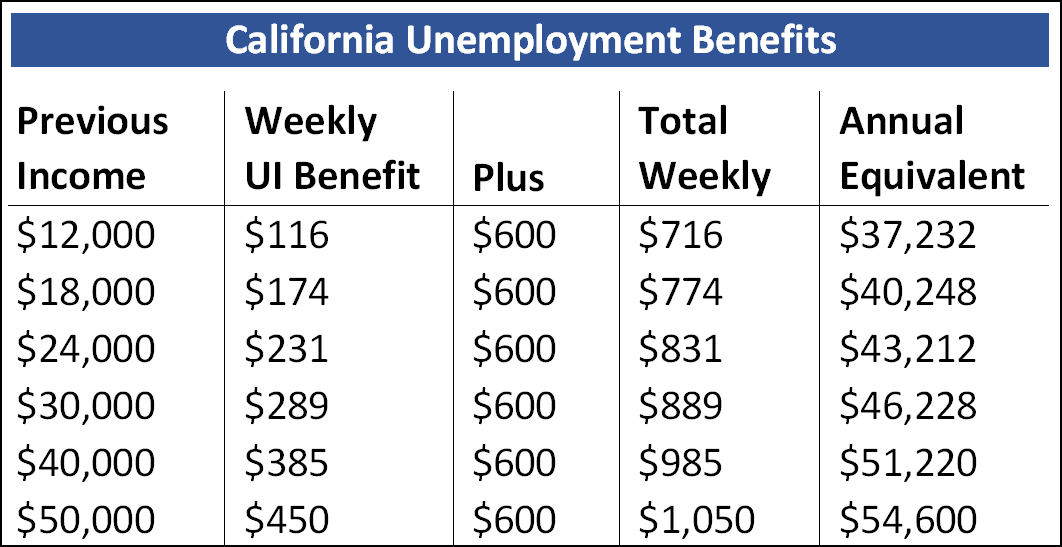
As of recent guidelines, the minimum weekly benefit amount in California is $40, and the maximum weekly benefit amount is $450. It’s important to note that these figures can be adjusted by the state legislature, so checking the most current information on the EDD website is always recommended.
For example, if your highest quarterly earnings in the base period were $11,700, dividing that by 26 would yield a weekly benefit of $450, hitting the current maximum. If your highest quarterly earnings were lower, say $2,600, your WBA would be $100 ($2,600 / 26). The total amount of benefits you can receive over the life of a claim is typically 26 times your WBA or half of your total base period earnings, whichever is less. This structure means that while benefits provide a crucial financial bridge, they are not designed to fully replace lost income but rather to offer substantial support during job transition. Understanding these calculations is key to budgeting and planning your lifestyle while temporarily unemployed.
The Application Process: A Step-by-Step Guide
Applying for unemployment benefits in California requires careful attention to detail and timely submission of information. The process is primarily handled online through the Employment Development Department (EDD) website, streamlining what was once a more cumbersome paper-based system. Knowing these steps helps reduce stress and ensures a smoother transition during a challenging period, allowing you to focus on your job search and lifestyle adjustments.
Gathering Necessary Documentation
Before you begin the online application, it’s essential to collect all required documentation. Having these details readily available will expedite the process and prevent delays. Key information you’ll need includes:
- Personal Information: Your Social Security number, driver’s license or state ID number, and mailing address.
- Employment History: Details for all employers you’ve worked for during the past 18 months, including company names, addresses, phone numbers, dates of employment, gross wages earned, and the reason for separation. This includes part-time and temporary work.
- Form W-2 and Pay Stubs: While not always explicitly required during the initial application, having these on hand can help verify your earnings and employment dates.
- Bank Account Information: If you opt for direct deposit for your benefit payments, you’ll need your bank name, account number, and routing number. Otherwise, benefits will be issued via a debit card.
- Reason for Separation: A clear and concise explanation of why you are no longer employed. Be honest and factual. If you were laid off, state that. If you quit, be prepared to explain the “good cause.”
Accuracy in providing this information is paramount, as discrepancies can lead to delays or even denial of benefits. Taking the time to prepare beforehand can save significant hassle later.
Filing Your Claim Online
Once you have your documents ready, the next step is to file your claim through the EDD’s official website. The online portal, known as UI Online, is the fastest and most efficient way to apply.
- Create an Account: If you don’t already have one, you’ll need to register for an account on the EDD’s website. This account will serve as your portal for managing your claim, certifying for benefits, and communicating with the department.
- Access UI Online: Log in to your account and navigate to the UI Online section to start a new claim.
- Complete the Application: Follow the prompts to fill out the application form. Be thorough and provide all requested information accurately. This includes your personal details, employment history, and the reason for your unemployment.
- Submit Your Application: After reviewing all your entries for accuracy, submit your claim electronically. You’ll receive a confirmation number, which you should keep for your records.
- Certify for Benefits: Once your claim is filed, you will need to “certify” for benefits typically every two weeks. This involves answering questions about your job search activities and any earnings you may have had during that period. This is how the EDD confirms your ongoing eligibility. You can do this through UI Online, by mail, or by phone.
- Receive Payments: If approved, your benefits will be paid either by direct deposit to your bank account or loaded onto an EDD Debit Card.
The entire process, from initial application to receiving the first payment, can take a few weeks. Promptly responding to any requests for additional information from the EDD is crucial to avoid delays. This financial support can make a significant difference in maintaining your chosen lifestyle in California during unemployment.
Financial Planning and the California Lifestyle
Understanding California’s unemployment benefits is not just about receiving aid; it’s about integrating this knowledge into a broader financial strategy that supports your lifestyle. Whether you’re a long-time resident of Silicon Valley, a recent transplant to San Diego, or considering a move to Sacramento, recognizing how these benefits factor into your overall financial resilience is paramount. Unemployment can be a temporary disruption, but with proper planning, it doesn’t have to derail your lifestyle entirely.
Budgeting While Receiving Benefits
Unemployment benefits, while helpful, rarely replace an individual’s full income. The maximum weekly benefit in California is $450, which for many, especially in high-cost-of-living areas, is a fraction of their previous earnings. Therefore, effective budgeting becomes incredibly important to sustain your lifestyle.
Key strategies include:
- Prioritize Essential Expenses: Focus on covering core needs first: housing, utilities, food, healthcare, and transportation. Review your current expenses and identify areas where you can cut back.
- Create a Detailed Budget: Track all incoming benefits and outgoing expenses. Apps and spreadsheets can help visualize where your money is going and identify non-essential spending that can be paused or reduced.
- Reduce Discretionary Spending: This might mean temporarily foregoing dining out, reducing entertainment costs, or delaying non-essential purchases. Small savings across various categories can add up significantly.
- Explore Cost-Saving Alternatives: Look into community resources for food assistance, discounted utilities, or public transportation options. In many California cities, there are programs designed to support residents facing financial hardship.
- Maintain an Emergency Fund: If you have an emergency fund, now might be the time to judiciously use it to supplement your benefits and cover gaps, but do so strategically to make it last.
By meticulously managing your finances, you can minimize the impact of unemployment on your daily lifestyle and ensure that your essential needs are met while you focus on finding new employment.
Exploring Alternative Income Streams and Re-employment
While receiving unemployment benefits, you are required to actively seek work. This period also presents an opportunity to explore new career paths, skill development, or even temporary income streams that align with your lifestyle goals.
Consider these approaches:
- Skill Enhancement: Utilize the time to acquire new skills or certifications that make you more competitive in the job market. Many online platforms offer courses, some of which may be free or low-cost. The EDD may also have programs for retraining or workforce development.
- Networking: Leverage your professional network. Attend industry events, virtual meetups, and connect with former colleagues. Networking can often open doors to unadvertised job opportunities.
- Temporary or Gig Work: Depending on your situation, consider taking on temporary, contract, or gig economy work. While you must report any earnings to the EDD, even partial income can help supplement your benefits and keep your skills sharp. Be aware that earning too much can reduce or eliminate your weekly benefit amount.
- Career Reassessment: Use this period to reflect on your career goals and perhaps pivot to a new industry or role that better aligns with your long-term lifestyle aspirations. California’s diverse economy, from tech in Silicon Valley to entertainment in Hollywood, offers a multitude of possibilities.
- Job Search Strategy: Tailor your resume and cover letters for each application. Practice interviewing skills and consider professional resume reviews or career counseling services.
Effectively managing unemployment benefits and proactively planning your re-employment strategy are not just administrative tasks; they are integral parts of maintaining and shaping your lifestyle in California. By understanding the system and making informed financial and career decisions, individuals can navigate periods of unemployment with greater confidence and emerge stronger.
LifeOutOfTheBox is a participant in the Amazon Services LLC Associates Program, an affiliate advertising program designed to provide a means for sites to earn advertising fees by advertising and linking to Amazon.com. Amazon, the Amazon logo, AmazonSupply, and the AmazonSupply logo are trademarks of Amazon.com, Inc. or its affiliates. As an Amazon Associate we earn affiliate commissions from qualifying purchases.