
Becoming a notary public in California offers a unique pathway to enhancing one’s professional lifestyle, providing flexibility, supplemental income, and a vital role within the community. In a state as dynamic and diverse as California, where legal and financial transactions are a daily occurrence, the demand for competent notaries is consistently high. This guide delves into the process of achieving notary public status, exploring how this esteemed position can integrate seamlessly into various personal and professional aspirations, from supporting a travel-heavy lifestyle to establishing a robust home-based business.
Understanding the Notary’s Role in California Lifestyle
The office of a notary public is steeped in legal tradition and serves as a cornerstone for trust in countless transactions. For individuals seeking a fulfilling career or a meaningful supplement to their existing income, understanding the gravity and scope of a notary’s duties is the first step toward embracing this lifestyle.
The Importance of Notarial Acts
A notary public acts as an impartial witness to the signing of important documents and verifies the identity of the signers. Their seal and signature authenticate documents, preventing fraud and ensuring that parties involved in a transaction are who they claim to be and are signing willingly. Common notarial acts include acknowledgments, jurats, copy certifications, and witnessing signatures. These acts are crucial for maintaining the integrity of legal instruments and are essential across various sectors, from real estate to healthcare. By undertaking this role, you become a guardian of legal veracity, a position that carries significant weight and responsibility, fostering a lifestyle built on trust and accuracy.
Who Needs a Notary?
The need for a notary public permeates nearly every facet of modern life. In California, for example, property deeds, mortgage documents, and real estate contracts all require notarization. Legal documents such as powers of attorney, wills, and affidavits demand a notary’s authentication. Beyond the legal realm, international travel often necessitates notarized consent forms for minors traveling abroad, showcasing the global reach of a notary’s influence. Businesses frequently require notarized contracts, and healthcare directives benefit from this verification. This widespread demand translates into ample opportunities for notaries, whether they choose to work within established institutions or cultivate an independent practice serving the vibrant communities of Los Angeles, San Francisco, or smaller towns across the state. The ability to serve such a broad spectrum of needs means a notary can shape their work to fit their preferred lifestyle.
How Notary Work Fits a Flexible Lifestyle
One of the most appealing aspects of becoming a California notary is the inherent flexibility it offers. Many notaries operate on a mobile basis, traveling to clients’ homes or offices, which can be particularly attractive for those who value autonomy and despise traditional office settings. This mobile model allows for the creation of a schedule that aligns with personal commitments, making it an ideal choice for parents, caregivers, or individuals pursuing other passions. For those living in popular tourist destinations like San Diego, offering notary services to visitors or residents needing quick verifications can provide a steady, on-demand income stream. Furthermore, becoming a certified loan signing agent opens doors to working with escrow and title companies, offering specialized, higher-paying assignments that can be scheduled around other life events. This adaptability is central to the “lifestyle” appeal of being a notary public, allowing individuals to design a work-life balance that truly suits them.
Eligibility and Core Requirements for California Notaries
The journey to becoming a commissioned notary public in California is a structured process, ensuring that all notaries meet stringent standards of integrity and competence. Understanding these foundational requirements is critical for any aspiring professional looking to integrate this role into their lifestyle.
Fundamental Qualifications
Before embarking on the application process, candidates must meet several key eligibility criteria established by the California Secretary of State. Applicants must be at least 18 years old and a legal resident of California. They must also be able to read, write, and understand English, as all official notary duties, forms, and instructions are in English. A crucial requirement involves a clean criminal background. While some minor offenses may not disqualify an applicant, any felony conviction or a conviction involving moral turpitude will generally lead to disqualification. This strict vetting process underscores the importance of the notary’s role and ensures public trust in their office. Meeting these initial qualifications sets the stage for a responsible and reputable professional life.
Education and Examination Process
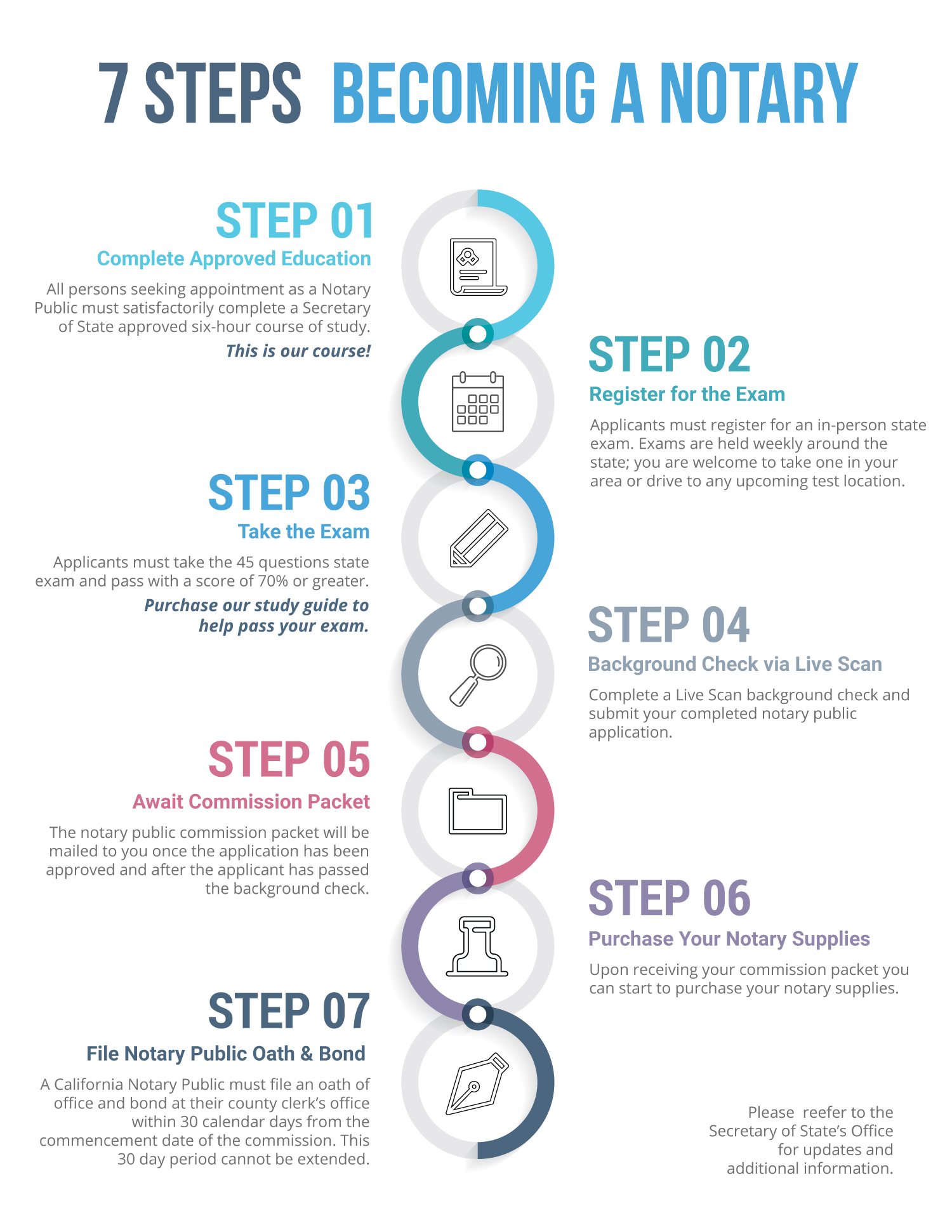
California mandates specific educational and examination requirements to ensure that notaries are well-versed in their duties and the state’s intricate notary laws. Aspiring notaries must complete a state-approved 6-hour course of study. This course covers essential topics such as legal definitions, proper notarial procedures, ethical conduct, and record-keeping mandates. These courses are offered by various approved vendors across the state, from Sacramento to Orange County, providing accessibility for all residents. Following the education, candidates must pass a written examination administered by a state-approved vendor. This exam tests knowledge of notary law, procedures, and ethics. Thorough preparation for both the course and the exam is paramount, as success in these stages is a non-negotiable step toward gaining your commission and establishing your credibility in the field.
Background Check and Fingerprinting
Maintaining public trust is central to the notary’s function, which is why a thorough background check is an indispensable part of the commissioning process. All applicants are required to undergo a Live Scan fingerprinting process. These fingerprints are then submitted to the California Department of Justice and the Federal Bureau of Investigation (FBI) for a comprehensive criminal history check. This step ensures that individuals with disqualifying criminal records are prevented from holding the sensitive office of a notary public. The integrity of this background check safeguards the public and upholds the high standards expected of California notaries, ensuring that the lifestyle built around this profession is one of unimpeachable trustworthiness.
Navigating the Application and Commissioning Process

Once the eligibility and educational hurdles are cleared, the practical steps of applying for and receiving your commission come into focus. This phase involves meticulous attention to detail and adherence to administrative protocols set forth by the California Secretary of State.
The Notary Public Application
The official application form, provided by the California Secretary of State, is a comprehensive document that collects all necessary personal and qualification information. It requires details about your educational background, criminal history disclosures, and a declaration that you meet all statutory requirements. Accurate and complete submission is critical to avoid delays. Any discrepancies or omissions can lead to the rejection of your application, necessitating a restart of the process. This administrative step, though seemingly mundane, is a fundamental building block for your new professional lifestyle as a California notary.
Securing Your Notary Bond
A notary bond is a form of insurance designed to protect the public from any financial harm caused by a notary’s errors or misconduct. California requires all commissioned notaries to obtain a four-year, $15,000 notary bond. This bond is not liability insurance for the notary; rather, it’s a guarantee that if a notary causes financial damages through negligence or willful misconduct, the injured party can file a claim against the bond. Various surety companies offer notary bonds, and they are typically inexpensive. Securing this bond is a non-negotiable step before you can finalize your commission and begin exercising your powers, serving as a testament to your professional responsibility.
Oath of Office and Filing Requirements
Upon approval of your application and receipt of your notary public commission certificate from the Secretary of State, there are two critical final steps: taking your Oath of Office and filing your bond. Within 30 days of the commencement date of your commission, you must personally appear before the County Clerk in the county where your principal place of business is located to take your official Oath of Office. At the same time, you must file your official notary bond with the County Clerk. Failure to complete these steps within the prescribed 30-day window will result in the forfeiture of your commission, requiring you to restart the entire application process. This formality solidifies your legal standing as a notary and marks your official entry into this impactful lifestyle role.
Acquiring Your Notary Supplies
Once commissioned and bonded, equipping yourself with the necessary supplies is the next practical step. Every California notary must possess an official seal, which is used to authenticate notarial acts. The seal must be photographically reproducible and contain specific information, including your name, the words “Notary Public,” the State Seal, the county where your oath and bond are filed, your commission expiration date, and your commission number. Additionally, a notary journal is mandatory. This journal must contain a sequential record of all notarial acts performed, documenting crucial details such as the date, time, type of act, document title, and identification of the signer. Reputable notary supply vendors offer pre-approved seals and journals that meet all state specifications. These tools are not just accessories; they are fundamental to executing your duties legally and professionally, forming the backbone of your operational lifestyle as a notary.
Maximizing Your Notary Commission for Lifestyle Enhancement
With your commission in hand, the real work—and the lifestyle benefits—begin. Becoming a notary is not just about completing paperwork; it’s about building a service, creating opportunities, and integrating a valuable skill into your desired way of life.
Building Your Notary Business
For many, the appeal of becoming a notary lies in the entrepreneurial possibilities. Establishing a mobile notary business allows you to set your own hours, dictate your service area, and control your income potential. Advertising your services through local business networks, online directories, and social media can attract clients in cities like San Jose or Long Beach. Specialization, such as becoming a certified loan signing agent, can significantly increase earning potential. Loan signing agents facilitate the signing of mortgage documents, a high-demand, high-value service that requires additional training but offers substantial rewards. This business-building aspect transforms a notary commission from a mere title into a dynamic, income-generating component of your lifestyle.
Continuous Learning and Professional Development
The legal landscape is ever-evolving, and a successful notary embraces continuous learning. Staying abreast of changes in California notary law, ethical guidelines, and best practices is essential for maintaining a high level of professionalism. Joining professional organizations, attending workshops, and subscribing to industry newsletters are excellent ways to remain informed and expand your expertise. For instance, understanding the nuances of notarizing documents for international use or specialized legal fields can open new avenues for clients and contribute to a more sophisticated professional profile. This commitment to ongoing education reinforces the integrity of your practice and ensures the longevity of your notary lifestyle.
Ethical Practices and Record Keeping
The bedrock of any successful notary’s career is an unwavering commitment to ethical practices and meticulous record-keeping. Upholding impartiality, accurately verifying identities, and never advising on legal matters (which would constitute the unauthorized practice of law) are non-negotiable ethical tenets. Your notary journal is more than just a requirement; it’s a critical legal record that protects both you and the public. Maintaining detailed, accurate, and sequential entries for every notarial act is paramount. This diligent record-keeping not only complies with state law but also serves as a crucial defense in case of any disputes or legal challenges. Integrating these rigorous standards into your daily routine ensures a reputable and sustainable notary lifestyle.

The Benefits of a Notary Lifestyle
Ultimately, becoming a California notary offers a unique blend of financial independence, professional respect, and personal flexibility. Whether you seek to supplement your existing income, launch a full-time entrepreneurial venture, or simply contribute meaningfully to your community, the notary commission provides a robust platform. The ability to work from anywhere, manage your own schedule, and engage with diverse individuals and businesses across the state’s vibrant regions, from the tech hubs to the wine country, empowers you to craft a lifestyle that is truly your own. It’s a role that demands responsibility but rewards with freedom and the satisfaction of providing an essential service.
LifeOutOfTheBox is a participant in the Amazon Services LLC Associates Program, an affiliate advertising program designed to provide a means for sites to earn advertising fees by advertising and linking to Amazon.com. Amazon, the Amazon logo, AmazonSupply, and the AmazonSupply logo are trademarks of Amazon.com, Inc. or its affiliates. As an Amazon Associate we earn affiliate commissions from qualifying purchases.