
Embracing a Fulfilling Healthcare Lifestyle in California
The decision to pursue a career in healthcare often stems from a desire to make a tangible difference in people’s lives. For many, becoming a medical assistant in California represents not just a job, but a pathway to a stable, meaningful, and dynamic professional lifestyle. This vibrant state, known for its innovation, diverse communities, and stunning natural beauty, also boasts one of the most robust healthcare sectors in the nation. As such, choosing to embark on this career here means aligning with a progressive industry in a state that offers an unparalleled quality of life. Medical assistants are the backbone of many healthcare facilities, providing essential administrative and clinical support that directly impacts patient care and operational efficiency. Their versatile skill set allows them to thrive in various environments, from bustling hospitals in Los Angeles to specialized clinics in San Francisco or community health centers in San Diego.
The Allure of a California Medical Assistant Career
California’s sprawling landscape and diverse population create a consistent, high demand for qualified medical assistants. This demand translates into ample job opportunities and career stability, key components of a desirable lifestyle. The sheer variety of healthcare settings, including private practices, urgent care centers, hospitals, and specialized clinics (e.g., dermatology, pediatrics, cardiology), ensures that medical assistants can find a niche that aligns with their personal interests and professional aspirations. Furthermore, the state’s forward-thinking approach to healthcare technology and patient care means medical assistants in California are often at the forefront of new practices, continually expanding their skills and knowledge. This environment fosters professional growth and keeps the work engaging, contributing to long-term career satisfaction. The ability to contribute directly to community health while enjoying the many benefits of living in California makes this a particularly attractive career choice for those seeking purpose alongside prosperity.
Understanding the Role and its Impact on Daily Life
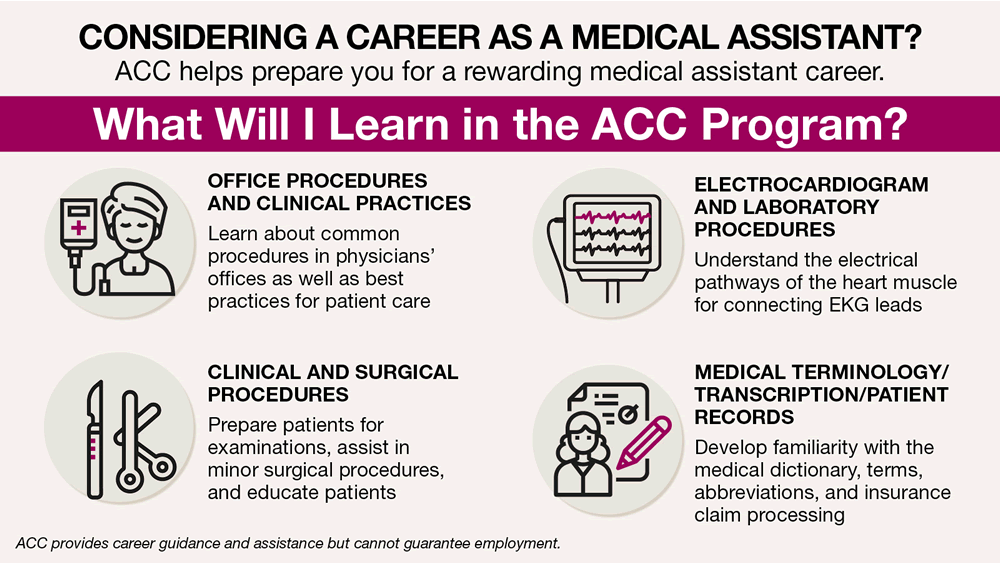
A medical assistant’s daily life is characterized by variety and patient interaction. On the administrative side, tasks may include scheduling appointments, managing patient records, handling billing and insurance, and ensuring the smooth operation of the front office. Clinically, responsibilities often involve taking vital signs, assisting physicians with examinations, preparing patients for procedures, performing basic lab tests, and administering medications under the supervision of a licensed practitioner. This dual role provides a comprehensive understanding of healthcare operations and allows for continuous learning. The direct interaction with patients, offering comfort and support, is often cited as one of the most rewarding aspects of the job, cultivating a sense of purpose that profoundly enriches one’s professional lifestyle. The ability to switch between administrative and clinical duties means that no two days are exactly alike, preventing monotony and fostering a dynamic work environment. This multifaceted role is integral to the efficient functioning of healthcare facilities, providing a valuable service to both patients and medical professionals.
Charting Your Educational Journey for a California MA Lifestyle
Embarking on the path to becoming a medical assistant in California begins with securing the right education. While formal licensure is not mandated by the state, most employers highly prefer, and often require, graduation from an accredited program and national certification. This foundational education not only equips aspiring medical assistants with the necessary skills but also signals a commitment to professional standards, paving the way for a successful and respected career lifestyle. California offers numerous educational pathways, from vocational schools to community colleges, each designed to provide comprehensive training in both the administrative and clinical aspects of the role.
Accredited Programs and Essential Coursework
When selecting a program, accreditation is paramount. Look for programs accredited by agencies recognized by the U.S. Department of Education or the Council for Higher Education Accreditation. Key accrediting bodies for medical assisting programs include the Accrediting Bureau of Health Education Schools (ABHES) and the Commission on Accreditation of Allied Health Education Programs (CAAHEP). These accreditations ensure that the curriculum meets rigorous national standards and prepares graduates for national certification exams. Essential coursework typically covers anatomy and physiology, medical terminology, pharmacology, medical law and ethics, administrative procedures, clinical procedures (such as venipuncture, injections, and EKG), and laboratory techniques. A robust curriculum ensures that graduates are well-rounded and capable of handling the diverse responsibilities of a medical assistant, contributing to a confident and competent professional lifestyle.
Choosing the Right Learning Environment: On-Campus vs. Online
Prospective medical assistants in California have the flexibility to choose between on-campus and online programs, each offering distinct advantages. On-campus programs provide a traditional classroom experience with direct interaction with instructors and peers, often fostering a strong sense of community and hands-on practice in simulated clinical settings. This environment can be ideal for those who thrive with structured routines and in-person guidance. Online programs, conversely, offer unparalleled flexibility, allowing individuals to balance their studies with existing work or family commitments. While the didactic portions are delivered virtually, online programs typically include mandatory in-person externships to ensure practical skill development. The choice between these modalities often depends on personal learning style, availability, and how seamlessly the program integrates with one’s desired lifestyle. Both options, when accredited, lead to the same professional outcome: a qualified medical assistant ready to contribute to California’s healthcare system.
Hands-On Experience: Clinical Externships and Professional Growth
A critical component of any comprehensive medical assistant program is the clinical externship. This supervised practical experience allows students to apply their classroom knowledge in a real-world healthcare setting. Externships typically last several weeks to a few months and provide invaluable exposure to the daily operations of a clinic or hospital. During this time, students work alongside experienced medical professionals, honing their clinical and administrative skills, interacting with patients, and understanding the nuances of patient flow and documentation. This hands-on training is not only crucial for skill development but also serves as an excellent networking opportunity, potentially leading to future employment. Many employers view successful completion of an externship as a strong indicator of a candidate’s readiness for the profession, making it an indispensable step towards establishing a thriving professional lifestyle in California.
Navigating Certification and Licensure for California Practice
While California does not mandate state licensure for medical assistants, national certification is overwhelmingly preferred and often required by employers. Obtaining a national certification demonstrates a high level of competency and commitment to the profession, significantly enhancing employability and career prospects within the state’s competitive healthcare landscape. This distinction is vital for those seeking a robust and respected professional lifestyle in California. Understanding the various certification options and ongoing requirements is key to maintaining a successful career.
The Importance of National Certification
Several recognized organizations offer national certification for medical assistants. The most prominent include the American Association of Medical Assistants (AAMA), which confers the Certified Medical Assistant (CMA) credential; the American Medical Technologists (AMT), offering the Registered Medical Assistant (RMA) credential; the National Center for Competency Testing (NCCT), which offers the NCMA credential; and the National Healthcareer Association (NHA), offering the Certified Clinical Medical Assistant (CCMA) credential. Passing one of these exams validates an individual’s knowledge and skills, making them highly desirable candidates for positions throughout California. Certification is a testament to an individual’s dedication to professional excellence and plays a crucial role in shaping a credible and rewarding career lifestyle.
California Specific Requirements and Legalities
Even without direct state licensure, medical assistants in California must operate within specific legal parameters defined by state law. The scope of practice for medical assistants is outlined primarily in the California Business and Professions Code, Sections 2069-2070. These regulations specify the tasks that medical assistants can legally perform, which procedures require direct supervision by a physician, surgeon, podiatrist, or registered nurse, and which procedures are prohibited (e.g., diagnosis, prescribing medication, or administering IVs). Familiarity with these guidelines is essential for ethical practice and for maintaining professional integrity. Adhering to these standards ensures patient safety and contributes to a legally compliant and secure professional lifestyle within the state’s healthcare system.
Maintaining Your Credentials: Continuous Learning and Professional Development
The healthcare field is constantly evolving, making continuous learning and professional development imperative for medical assistants in California. National certifications typically require renewal every few years, which often necessitates completing a certain number of continuing education (CE) units. These CE opportunities, which can include workshops, online courses, and seminars, allow medical assistants to stay updated on the latest medical practices, technologies, and regulatory changes. Engaging in ongoing education not only ensures the retention of certification but also fosters professional growth, opens doors to specialization, and enhances career longevity. Embracing a mindset of lifelong learning is a hallmark of a thriving professional lifestyle, ensuring that medical assistants remain valuable assets to their healthcare teams and continue to provide high-quality patient care across California.
Unlocking Career Opportunities and a Stable Lifestyle Across California
The strategic decision to become a medical assistant in California is underscored by the abundant career opportunities and the potential for a stable, comfortable lifestyle. The state’s vast and diverse economy, combined with a large and aging population, consistently fuels a robust demand for healthcare professionals. This creates a fertile ground for medical assistants to not only secure employment but also to explore various specializations and advance their careers, thereby enhancing their overall quality of life. The geographic diversity of California further allows individuals to tailor their professional life to their preferred living environment, whether it be a bustling urban center or a serene coastal town.
Diverse Work Settings and Specializations
Medical assistants in California are integral to a wide array of healthcare settings. Beyond traditional physician’s offices and clinics, opportunities exist in hospitals, urgent care centers, chiropractic offices, optometry clinics, nursing homes, and even specialized departments within larger medical groups, such as oncology, pediatrics, or cardiology. This variety means that medical assistants can choose a work environment that aligns with their personality and professional interests, contributing to daily job satisfaction. Furthermore, many medical assistants choose to specialize, deepening their expertise in areas like phlebotomy, EKG technology, or electronic health records (EHR) management. Such specialization can lead to enhanced career prospects, higher earning potential, and a more focused and fulfilling professional lifestyle within California’s dynamic healthcare sector.
Geographic Advantages: From Urban Centers to Coastal Communities
One of the unique advantages of pursuing a medical assistant career in California is the unparalleled geographic flexibility it offers. Whether an individual dreams of the vibrant city life in Los Angeles or San Francisco, the laid-back beach culture of San Diego, the agricultural richness of the Central Valley, or the scenic beauty of Northern California, there are ample opportunities. Major metropolitan areas naturally have a higher concentration of hospitals and clinics, offering numerous job openings and competitive salaries. However, even smaller towns and rural areas across the state experience a constant need for healthcare providers, potentially offering a different pace of life and community feel. This ability to choose not just a career, but also the ideal geographic setting, is a significant draw for those looking to build a specific lifestyle in the Golden State.
Salary Expectations and Growth Potential for a California MA
The earning potential for medical assistants in California is generally higher than the national average, reflecting the state’s higher cost of living and strong demand for skilled professionals. While entry-level salaries may vary, experienced and certified medical assistants, particularly those with specialized skills or in high-demand regions, can command competitive wages. Beyond initial compensation, the career path for medical assistants offers significant growth potential. Many use their experience as a stepping stone to further their education and advance into roles such as nursing, health administration, or other allied health professions. This upward mobility and the continuous opportunity for skill enhancement contribute significantly to a progressive and rewarding professional lifestyle, allowing individuals to invest in their future and achieve long-term financial stability in California.
Integrating Your MA Career with the California Lifestyle
Becoming a medical assistant in California is more than just securing employment; it’s about integrating a fulfilling career into a rich and diverse lifestyle. The state offers a unique blend of professional opportunities and personal amenities, from world-class cuisine and cultural attractions to outdoor adventures. Successfully navigating this career path involves not only excelling in the workplace but also finding balance, engaging with professional communities, and understanding the long-term prospects that contribute to a high quality of life.
Work-Life Balance in a Dynamic State
California is renowned for its emphasis on quality of life, and this extends to the work-life balance achievable as a medical assistant. While the healthcare field can be demanding, many medical assistant positions offer predictable schedules, particularly in outpatient settings, allowing time to enjoy the state’s myriad attractions. Whether it’s exploring national parks, visiting iconic landmarks, engaging in beach activities, or participating in community events, California provides endless opportunities for leisure and personal enrichment. The ability to work in a supportive role in a vital industry while still having ample time for personal pursuits is a cornerstone of a desirable lifestyle, making the medical assistant profession particularly appealing in this vibrant state.
Community Engagement and Professional Networking
Beyond individual career advancement, becoming a medical assistant in California offers numerous avenues for community engagement and professional networking. Joining professional organizations such as the California Society of Medical Assistants (CSMA) or local chapters of national associations provides valuable opportunities to connect with peers, share best practices, and stay informed about industry trends. These networks can also be instrumental in discovering new job opportunities and mentorship. Furthermore, working in healthcare inherently means being an active member of the community, contributing directly to the well-being of residents. This sense of belonging and impact significantly enhances the professional lifestyle, fostering connections and a sense of purpose that extends beyond the clinic walls.
The Future of Medical Assisting in the Golden State
The outlook for medical assistants in California remains exceptionally strong. As the healthcare industry continues to expand and evolve, driven by technological advancements, an aging population, and increased access to care, the demand for skilled support staff will only grow. Medical assistants are well-positioned to adapt to these changes, with their versatile skill sets making them indispensable members of the healthcare team. Opportunities for advanced training, specialization, and leadership roles are likely to increase, ensuring that a career as a medical assistant in California offers long-term stability, continuous professional development, and a deeply rewarding lifestyle for years to come.
LifeOutOfTheBox is a participant in the Amazon Services LLC Associates Program, an affiliate advertising program designed to provide a means for sites to earn advertising fees by advertising and linking to Amazon.com. Amazon, the Amazon logo, AmazonSupply, and the AmazonSupply logo are trademarks of Amazon.com, Inc. or its affiliates. As an Amazon Associate we earn affiliate commissions from qualifying purchases.