
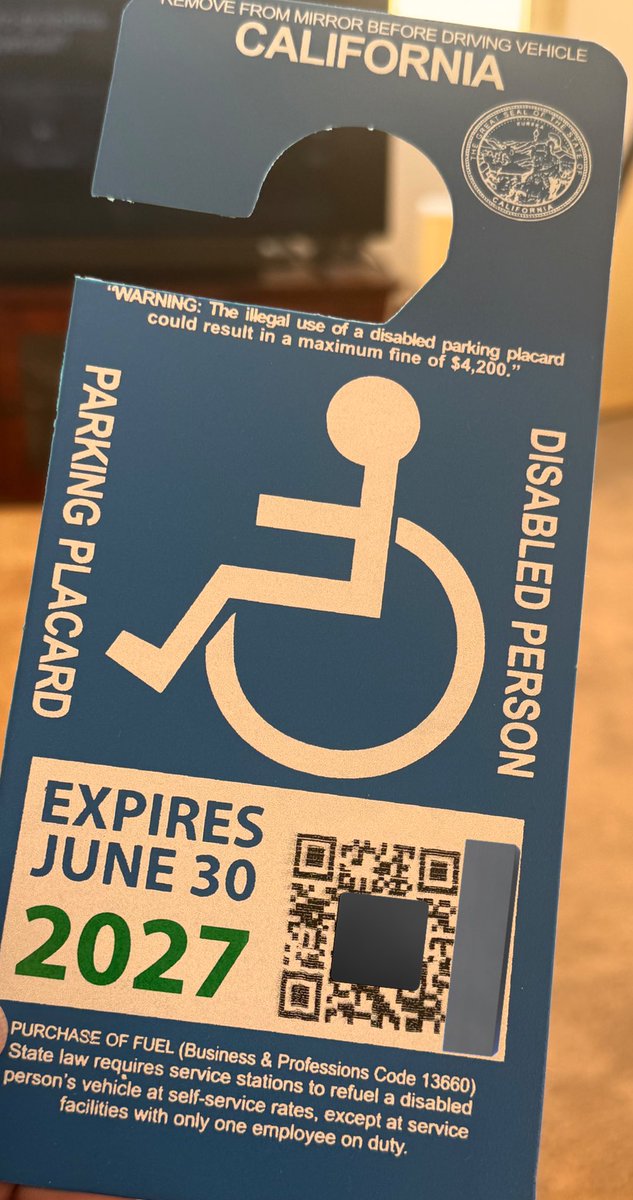
Navigating daily life, whether for routine errands, medical appointments, or exploring the vibrant landscapes of California, often presents unique challenges for individuals with disabilities. A disabled parking placard or license plate is more than just a piece of paper; it’s a vital tool that enhances independence, accessibility, and overall quality of life. Understanding the process to obtain one in the Golden State is a crucial step towards greater mobility and freedom. This comprehensive guide delves into the nuances of acquiring a disabled placard, framing it not merely as a bureaucratic task, but as an essential element for an enriched lifestyle.

Understanding the Importance of a Disabled Placard in California
For many, the ability to park conveniently and safely is taken for granted. For those with qualifying disabilities, however, accessible parking is a necessity that directly impacts their ability to participate fully in society. A disabled placard issued by the California Department of Motor Vehicles (DMV) serves as a gateway to enhanced mobility, opening up possibilities for a more active and engaged lifestyle.
Enhancing Mobility and Independence
The primary benefit of a disabled placard is the enhanced access it provides to designated parking spaces. These spaces are typically wider, closer to building entrances, and designed to accommodate wheelchairs, walkers, and other mobility aids. This proximity significantly reduces the physical strain and time required to travel from a parking spot to a destination, whether it’s a grocery store, a doctor’s office, or a local park. For individuals whose conditions make long-distance walking painful, difficult, or impossible, these placards are indispensable. They empower individuals to maintain their independence, run errands autonomously, and engage in social activities without the constant worry of inaccessible parking. This newfound freedom profoundly impacts daily routines, transforming what might otherwise be daunting tasks into manageable ones, thereby fostering a greater sense of self-reliance and empowerment.
Legal Privileges and Responsibilities
Possessing a disabled placard grants specific legal privileges, most notably the right to park in designated disabled parking spaces. In California, this also includes parking in metered spaces without charge, for unlimited periods, and in parking zones that limit parking to residents or restrict parking to specific timeframes (such as green curb zones), unless otherwise prohibited. However, these privileges come with significant responsibilities. Placard holders are expected to use them only when the person with the disability is in the vehicle, either as a driver or a passenger. Misuse of a disabled placard carries hefty penalties, including substantial fines and potential confiscation of the placard. It is crucial to respect these regulations to ensure the system remains effective for those who genuinely need it and to uphold the integrity of the program.
Types of Placards Available
The California DMV offers several types of placards to address varying needs:
- Permanent Placards: Issued to individuals with permanent disabilities. These are typically renewed every two years.
- Temporary Placards: Issued for temporary disabilities, valid for a specified period not exceeding six months, or the date noted by a medical professional, whichever is shorter. Up to six temporary placards can be issued to a person within a five-year period.
- Travel Placards: Specifically for California residents who hold a permanent placard or plate and are traveling, or for non-residents with a permanent disability placard/plate from their home state/country who are traveling in California. These are temporary and valid for up to 30 days.
- Organizational Placards: Issued to organizations that transport individuals with disabilities.
Choosing the correct type ensures that your specific circumstances are appropriately addressed, allowing for uninterrupted access to accessible parking.
Eligibility Requirements and Application Process
Understanding who qualifies for a disabled placard and the precise steps involved in the application process is paramount. The California DMV sets clear guidelines to ensure that placards are issued to those with legitimate needs, fostering a fair and efficient system.
Who Qualifies for a Placard?
Eligibility for a disabled placard in California is determined by specific medical conditions that limit mobility. Generally, a person qualifies if they have lost the use of one or more lower extremities, or both hands; have a diagnosed disease that substantially impairs mobility; are severely limited in the ability to walk due to an arthritic, neurological, or orthopedic condition; use a wheelchair, walker, or other mobility aid; or have a severe pulmonary, cardiovascular, or other disabling condition that makes walking more than 200 feet without stopping extremely difficult or impossible. Conditions such as severe vision impairment (low-vision) or specific respiratory diseases also typically qualify. The crucial aspect is that a licensed medical professional must certify these conditions, directly linking the medical diagnosis to the practical impairment of mobility.
Required Documentation
To apply for a disabled placard, you will need to complete the “Application for Disabled Person Placard or Plates (REG 195)” form. This form requires detailed information about the applicant and a section to be filled out by a certifying medical professional. Additionally, applicants must provide proof of identity. For permanent placards, there is no fee. For temporary placards, a small fee might apply unless specified otherwise. It is always advisable to visit the official California DMV website or an office directly to ensure you have the most current forms and information, as requirements can occasionally be updated.
Step-by-Step Application Guide
The application process, while straightforward, requires careful attention to detail:
- Obtain the Application Form: Download the “Application for Disabled Person Placard or Plates (REG 195)” form from the California DMV website, or pick one up at any DMV office.
- Complete Applicant Information: Fill out your personal details accurately on the form.
- Medical Certification: The most critical step. Take the form to a licensed physician, surgeon, chiropractor, optometrist, or podiatrist who is familiar with your condition. They must complete and sign the “Certifying Medical Professional’s Section” of the form, verifying your disability and its impact on your mobility.
- Submit the Application: Once both sections are complete, you can submit the form by mail to the address provided on the form, or in person at a DMV field office. If applying for a temporary placard in person, you might receive it on the same day. Permanent placards are typically mailed within a few weeks.
- Receive Your Placard: Upon approval, your placard will be mailed to you. Ensure your mailing address is current with the DMV.
Navigating the Application with Medical Professionals
The role of your medical professional is pivotal in securing a disabled placard. Their certification is the cornerstone of your application, validating your need for accessible parking privileges. A collaborative approach with your doctor can streamline the process and ensure accuracy.
The Role of Your Doctor
Your doctor, or other qualifying medical professional (as listed by the DMV), is responsible for confirming your disability meets the criteria set by California law. This involves documenting your specific condition, its severity, and how it impairs your mobility. They will need to sign and date the appropriate section of the REG 195 form, sometimes also providing their medical license number. It’s important to choose a medical professional who has a thorough understanding of your condition and is comfortable completing the required documentation accurately and comprehensively.
Ensuring Accurate Medical Certification
To facilitate an accurate certification, prepare for your appointment with your doctor. Clearly articulate how your disability affects your ability to walk or move. Provide any relevant medical records or diagnostic reports that support your claim. While your doctor is familiar with your condition, a concise summary of how it specifically impacts your mobility for parking purposes can be helpful. This ensures that the information provided on the application form is complete and leaves no room for ambiguity, which could otherwise delay your application.
What to Expect During the Medical Evaluation
During your visit, your doctor may conduct a brief evaluation or review your existing medical history to confirm the details needed for the placard application. This is typically not a new, extensive examination but rather a verification process. Be prepared to discuss your functional limitations directly. The doctor will then complete the necessary section of the form, certifying that your condition meets the state’s requirements. Some clinics may charge a small administrative fee for completing forms, so it’s wise to inquire about this beforehand.
Maintaining Your Placard and Understanding Renewals
Once you have your disabled placard, it’s important to understand the guidelines for its use, renewal, and replacement. Proper management ensures continued access to accessible parking and avoids potential legal issues.
Renewal Procedures for Permanent Placards
Permanent disabled placards are not truly permanent; they must be renewed every two years. Approximately 45 days before your placard expires, the DMV will mail you a renewal application. This renewal process typically does not require a new medical certification unless there has been a significant change in your condition or the DMV specifically requests it. Simply complete the renewal form and mail it back. If you do not receive a renewal notice, it is your responsibility to contact the DMV to ensure timely renewal and prevent any lapse in your parking privileges.
Temporary Placard Extensions
Temporary placards are issued for a maximum of six months at a time. If your temporary disability extends beyond this period, you will need to apply for a new temporary placard. This requires a new application form (REG 195) and a new medical certification from a qualified professional, just like the initial application. Remember that there’s a limit to how many temporary placards can be issued within a five-year period, usually six. Plan accordingly with your medical professional if your temporary condition is expected to last longer than initial estimates.
Reporting Lost, Stolen, or Damaged Placards
Losing your placard can be inconvenient, but replacements are available. You will need to complete a “Miscellaneous Certifications (REG 256)” form, checking the box for “Application for Replacement Disabled Person Placard.” You can submit this form by mail or in person. There may be a fee for replacement placards. If your placard was stolen, it’s advisable to file a police report, as this can help in obtaining a replacement and documenting the incident. Promptly reporting a lost or stolen placard helps prevent its misuse by others.
Avoiding Misuse and Penalties
The misuse of a disabled placard is a serious offense in California. This includes lending your placard to someone else, using an expired placard, or parking in a disabled space when the person with the disability is not in the vehicle. Penalties can include substantial fines, impoundment of the vehicle, and revocation of the placard. Always ensure the placard is clearly displayed when parked in a designated space and used strictly according to the regulations. Adhering to these rules ensures that these vital spaces remain available for those who truly rely on them.
Impact on Daily Life and California Exploration
A disabled placard fundamentally transforms how individuals with disabilities engage with their environment. It’s not just about parking; it’s about access, independence, and the ability to fully experience life in California.
Greater Access to Public and Private Spaces
With a disabled placard, the concern over finding suitable parking significantly diminishes. This means easier access to essential services like healthcare facilities, grocery stores, and pharmacies. Beyond necessities, it facilitates participation in social and recreational activities. Attending concerts, visiting museums, or simply enjoying a meal at a restaurant becomes more feasible. This enhanced access fosters social inclusion, allowing individuals to maintain connections, pursue hobbies, and enjoy a fuller, more integrated lifestyle within their communities, from the bustling streets of Los Angeles to the serene landscapes of Sacramento.
Planning Trips Across California
California is a state of incredible diversity, from the iconic Golden Gate Bridge in San Francisco to the natural wonders of Yosemite National Park and the entertainment of Disneyland near Anaheim. For those with mobility impairments, a disabled placard is an invaluable asset when planning and undertaking trips across the state. It allows for more flexible travel itineraries, reduces stress associated with parking at popular attractions, and ensures closer access to entrances. Whether exploring the historic Gaslamp Quarter in San Diego or venturing to the wine country, the placard ensures that mobility challenges do not become barriers to experiencing the rich culture and natural beauty California has to offer. It empowers individuals to embark on adventures, create memories, and embrace the spirit of exploration.

A Symbol of Inclusivity and Support
Ultimately, the disabled placard program is a testament to California’s commitment to inclusivity and support for its residents with disabilities. It’s a recognition that accessibility is not a privilege, but a right, and that practical measures can significantly improve daily living. Obtaining and properly utilizing a disabled placard is a proactive step towards a more independent and enriched lifestyle, fostering greater participation in all aspects of community life. It underscores a collective understanding that everyone deserves the opportunity to navigate their world with dignity and ease.
LifeOutOfTheBox is a participant in the Amazon Services LLC Associates Program, an affiliate advertising program designed to provide a means for sites to earn advertising fees by advertising and linking to Amazon.com. Amazon, the Amazon logo, AmazonSupply, and the AmazonSupply logo are trademarks of Amazon.com, Inc. or its affiliates. As an Amazon Associate we earn affiliate commissions from qualifying purchases.