
Purchasing a firearm in California is a process distinguished by its stringent regulations and detailed procedures, setting it apart from many other states in the United States. For residents considering firearm ownership, whether for sport, hunting, or personal defense, understanding this intricate legal landscape is paramount. This guide provides a comprehensive overview of the requirements, steps, and ongoing responsibilities involved in lawfully acquiring a firearm within the Golden State, emphasizing the importance of compliance and safety.
Understanding California’s Unique Firearm Laws
California stands at the forefront of firearm regulation, a reflection of its historical approach to public safety and gun control. The state’s laws are constantly evolving, making it crucial for prospective firearm owners to remain informed and diligent.
A Landscape of Strict Regulations
Compared to the broader United States, California’s firearm laws are among the most restrictive. These regulations encompass everything from who can own a firearm, to what types of firearms can be purchased, and how they must be stored and transported. The state employs a multi-layered approach, combining federal laws with its own unique statutes, often leading to a complex web of requirements that can initially seem daunting. The underlying philosophy often centers on reducing gun violence through comprehensive background checks, restrictions on certain firearm features, and mandatory safety protocols.
Key Regulatory Bodies
The primary authority overseeing firearm sales and ownership in California is the California Department of Justice (DOJ). The DOJ is responsible for maintaining firearm records, processing background checks, issuing permits for certain activities, and enforcing the state’s intricate gun laws. Local law enforcement agencies, such as city police departments and county sheriff’s offices, also play a significant role, especially concerning concealed carry weapon (CCW) permits and enforcement of local ordinances. Understanding the roles of these bodies is essential for navigating the purchase process successfully.
Types of Firearms and Restrictions
California imposes specific restrictions on various types of firearms. For instance, the state maintains an approved Handgun Roster, often referred to as the “Safe Handgun List,” which dictates which models of handguns can be legally sold by licensed dealers. Handguns not on this roster, with very limited exceptions (e.g., private party transfers, law enforcement exemptions), cannot be purchased. The state also has strict prohibitions on what it defines as “assault weapons,” which are often determined by specific cosmetic and functional features rather than their operational mechanism. Magazine capacity is capped at 10 rounds for all firearms, and certain modifications to rifles and shotguns, such as specific grips or adjustable stocks, can render them illegal. These regulations require buyers to be acutely aware of the specific make and model they intend to purchase, ensuring it complies with state law.
Eligibility Requirements for Firearm Ownership
Before even considering a specific firearm, potential buyers in California must first ensure they meet the fundamental eligibility criteria established by state and federal law.
General Qualifications
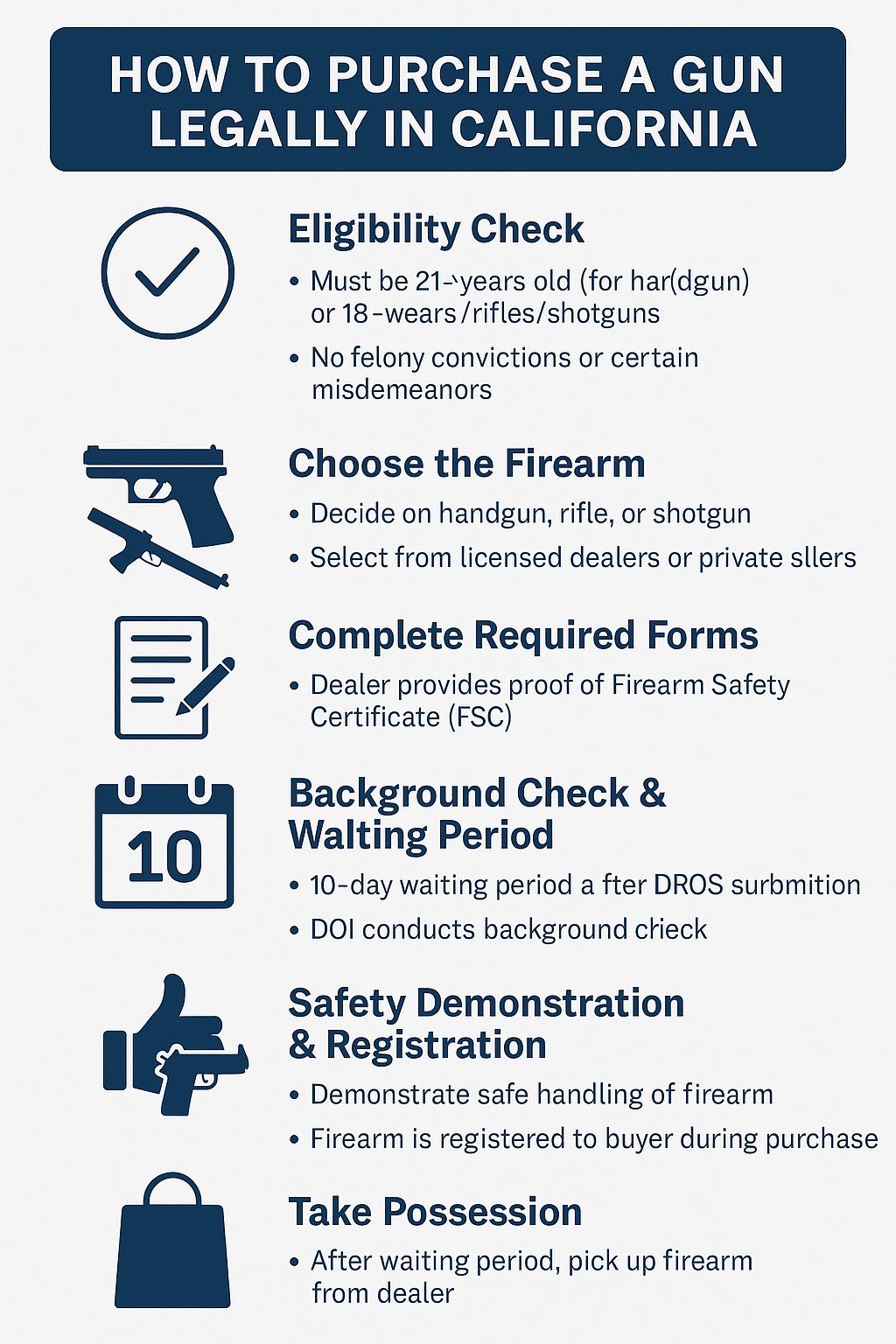
To legally purchase a firearm in California, individuals must meet several general qualifications. The age requirement is 21 for handguns and “other” firearms (including receivers) and 18 for rifles and shotguns. Purchasers must be California residents, providing valid identification that proves their residency. Furthermore, a clean criminal record is non-negotiable. Individuals convicted of a felony or certain misdemeanors (including specific violent offenses, domestic violence, or drug-related crimes) are prohibited from owning firearms. Those subject to certain restraining orders, specific mental health adjudications, or dishonorable discharges from the military are also disqualified. It is imperative to truthfully disclose all relevant information during the purchase process, as providing false information carries severe legal penalties.
The Firearms Safety Certificate (FSC)
A cornerstone of California’s firearm purchase process is the Firearms Safety Certificate (FSC). This certificate demonstrates that the individual has a basic understanding of firearm safety laws and practices. To obtain an FSC, applicants must pass a written test, typically administered by a certified instructor at any licensed firearm dealer. The test covers topics such as safe gun handling, storage, transportation, and California firearm laws. The FSC is valid for five years and must be presented at the time of purchasing any firearm. There are limited exemptions for certain individuals, such as active duty military personnel or law enforcement officers.
Proof of Residency and Identification
In addition to a valid California Driver’s License or ID card, purchasers are required to provide secondary proof of residency. This requirement ensures that the individual is indeed a bona fide resident of the state. Acceptable forms of secondary proof typically include utility bills (gas, electric, water, trash service – not cable or cell phone bills) from the last 90 days, vehicle registration issued by the California Department of Motor Vehicles, or a deed or lease agreement. The address on all forms of identification must match the buyer’s current residential address. This meticulous verification process is a critical step in preventing out-of-state straw purchases and ensuring compliance with California law.
Navigating the Purchase Process: From Selection to Background Check
Once eligibility is confirmed, the actual purchase journey involves several distinct stages, each mandated by California law.
Choosing a Licensed Firearm Dealer
All firearm purchases in California must be conducted through a federally licensed firearm dealer (FFL). This requirement applies to new sales, used firearms, and even private party transfers (which must still be processed through an FFL). These dealers are equipped to handle the necessary paperwork, conduct background checks, and ensure compliance with all state and federal regulations. It is advisable to choose a reputable dealer who can provide knowledgeable guidance through the process, especially given the complexity of California law.
Selecting Your Firearm
When selecting a firearm, consider its intended purpose: sport shooting, hunting, or personal defense. Each application may benefit from different firearm types, calibers, and features. For handguns, ensure the model is on California’s approved Handgun Roster. For rifles and shotguns, verify compliance with “assault weapon” regulations, paying close attention to features like pistol grips, adjustable stocks, and muzzle devices. A good dealer will help confirm the legality of your chosen firearm. Always prioritize safe handling and ergonomics; a firearm that fits well is easier and safer to operate.
The Dealer Record of Sale (DROS) Process
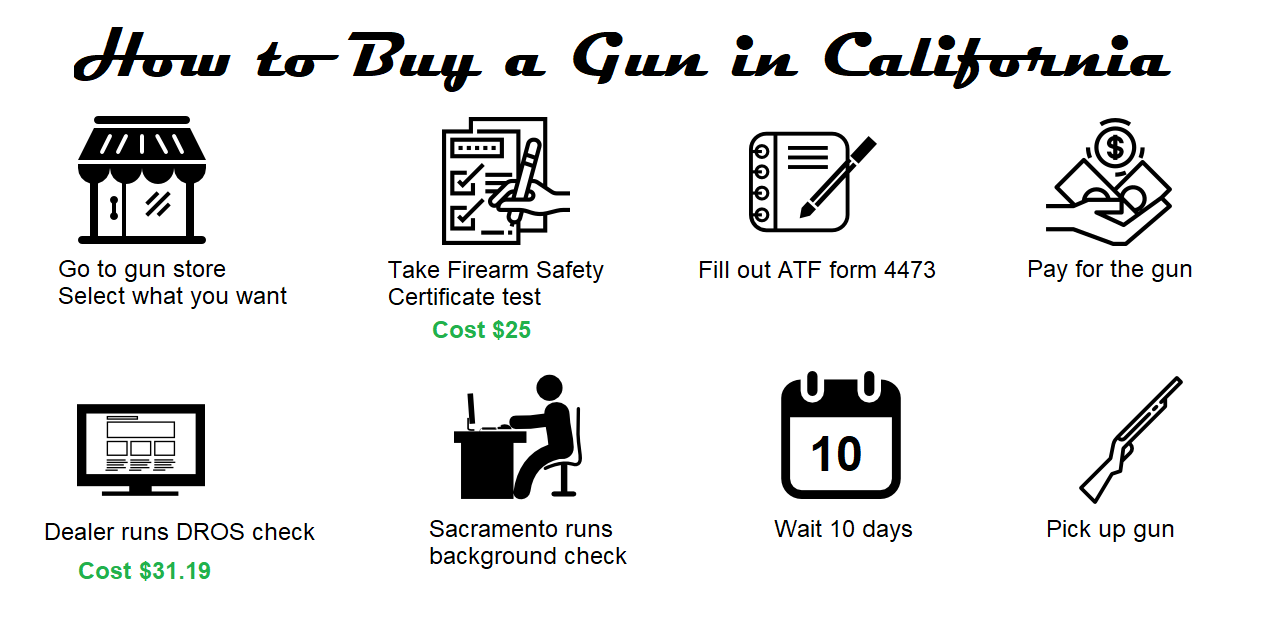
The heart of the purchase process is the Dealer Record of Sale (DROS) system. Once you’ve selected a firearm and provided your FSC and identification, the dealer will initiate the DROS submission with the California Department of Justice. This electronic submission includes all your personal information, firearm details, and answers to a series of eligibility questions. A fee, comprising state and dealer charges, is associated with the DROS process. This submission triggers the mandatory background check, where the DOJ verifies your eligibility against state and federal databases.
The Mandatory 10-Day Waiting Period
After the DROS is submitted and the background check initiated, California law mandates a strict 10-day waiting period. This period begins on the day the DROS is electronically submitted to the DOJ and must be completed before the firearm can be released to the buyer. The waiting period is designed as a “cooling-off” period and allows sufficient time for the background check to be thoroughly processed. There are virtually no exceptions to this waiting period for standard civilian purchases.
Delivery and Final Steps
Provided the background check is approved and the 10-day waiting period has elapsed, you can return to the dealer to take possession of your new firearm. Before release, the dealer will typically conduct a “safe handling demonstration” to ensure you know how to safely operate and store the firearm. You will also sign final paperwork acknowledging receipt. At this point, the firearm legally becomes yours. It’s crucial to ensure you have purchased a California compliant locking device (e.g., a gun safe or cable lock) at the time of purchase, as proof of this is required for all new firearm acquisitions.
Essential Steps After Purchase: Registration and Safe Storage
Firearm ownership in California extends beyond the purchase itself, encompassing ongoing responsibilities related to registration, safe storage, and usage.
Automatic Registration
Unlike some states where registration is optional or non-existent, firearms purchased through an FFL in California are automatically registered with the California Department of Justice upon completion of the DROS process. This means the state maintains a record of who owns specific firearms. It’s important to understand that this automatic registration applies to purchases through licensed dealers; special rules apply to private party transfers and firearms brought into the state by new residents, which may require separate declaration or registration processes.
Safe Storage Requirements
California has some of the nation’s strictest safe storage laws. When not in the immediate control of the owner, firearms must be stored in a locked container or rendered inoperable with a locking device (such as a trigger lock or cable lock). This is particularly critical in homes with minors, as California has robust child access prevention laws that impose severe penalties if a minor gains access to an improperly stored firearm. Even if you don’t have children, proper storage is vital for preventing theft and accidental discharge.
Ammunition Purchase and Storage
As of 2019, purchasing ammunition in California also requires a background check. Each time you purchase ammunition, a licensed ammunition vendor must conduct an eligibility check through the DOJ. This process verifies your identity and ensures you are not a prohibited person. Ammunition should be stored separately from firearms, ideally in a locked container, to enhance safety and security.
Understanding Carry Laws
California’s laws regarding carrying firearms, both openly and concealed, are highly restrictive. Open carry of loaded firearms is generally prohibited in most public places. Concealed Carry Weapon (CCW) permits are issued by county sheriffs or chiefs of police and require applicants to demonstrate “good cause,” complete extensive training, and pass a background check. The issuance of CCW permits varies significantly by county, with some jurisdictions being far more restrictive than others. Understanding these nuances is crucial to avoid legal repercussions.
Resources and Ongoing Compliance
Firearm ownership in California is an ongoing commitment to responsibility, safety, and legal compliance.
Staying Informed
Given the dynamic nature of California’s firearm laws, staying informed about legislative changes is paramount. Regularly consult official sources, such as the California Department of Justice website, and reliable legal resources specializing in California firearm law. Organizations dedicated to protecting Second Amendment rights often provide updates and analyses of proposed legislation.
Training and Education
Beyond merely acquiring an FSC, continuous training and education are vital for responsible firearm ownership. Enroll in formal firearms training courses taught by certified instructors to enhance your shooting proficiency, learn advanced safety techniques, and understand self-defense principles if applicable. Local shooting ranges and gun clubs often offer a variety of courses suitable for all skill levels.
Transferring Firearms and Private Sales
Private party transfers of firearms in California must also be processed through a licensed FFL. Both the buyer and seller must appear at the FFL, complete the necessary paperwork, and follow the DROS and waiting period requirements. This ensures that all firearms changing hands within the state undergo a background check.
Prohibited Areas
Firearms are generally prohibited in many specific locations, regardless of ownership status or permit. These typically include K-12 schools, universities, government buildings, courthouses, polling places, airports (secure areas), and often places where alcohol is served. Always be aware of local, state, and federal signage regarding firearm prohibitions before carrying a firearm into any establishment or area.
Purchasing a firearm in California requires patience, diligence, and a thorough understanding of the law. By adhering to these guidelines, prospective owners can navigate the process successfully and responsibly embrace firearm ownership.
LifeOutOfTheBox is a participant in the Amazon Services LLC Associates Program, an affiliate advertising program designed to provide a means for sites to earn advertising fees by advertising and linking to Amazon.com. Amazon, the Amazon logo, AmazonSupply, and the AmazonSupply logo are trademarks of Amazon.com, Inc. or its affiliates. As an Amazon Associate we earn affiliate commissions from qualifying purchases.