
Embracing the Entrepreneurial Lifestyle in California
California has long been a beacon for innovators and entrepreneurs, a dynamic landscape where groundbreaking ideas transform into thriving businesses. For those embracing a lifestyle defined by enterprise and business development, particularly within the Golden State, selecting the optimal legal structure for their venture is a pivotal decision. Among the various options, the S corporation, or S Corp, stands out as a compelling choice for many, offering a unique blend of personal liability protection and potential tax advantages that align well with the aspirations of a modern business professional. This structure can significantly impact not only your financial trajectory but also the operational ease and peace of mind crucial for a fulfilling entrepreneurial lifestyle. Understanding the nuances of establishing an S Corp in California is therefore a foundational step for anyone looking to solidify their business presence and optimize their financial approach within this vibrant economic hub.
Why an S Corp for Your Business Journey?
The appeal of an S Corp largely stems from its pass-through taxation status, which can be particularly advantageous compared to a standard C corporation. In an S Corp, profits and losses are passed directly through to the owners’ personal income without being subject to corporate income tax. This avoids the “double taxation” scenario often faced by C corporations, where profits are taxed at the corporate level and then again when distributed to shareholders as dividends. For an entrepreneur dedicated to reinvesting in their business and managing personal finances efficiently, this can lead to substantial savings.
Beyond the federal tax benefits, a key aspect for those running a business as part of their lifestyle in California is the ability to pay themselves a reasonable salary and then take additional profits as distributions. While the salary is subject to self-employment taxes (Social Security and Medicare), the distributions are generally not. This strategic compensation model allows business owners to potentially reduce their overall self-employment tax burden, freeing up capital that can be used for personal enrichment, further business development, or simply enhancing the quality of life that a successful California venture promises. It’s a sophisticated approach to compensation that reflects a strategic and financially savvy entrepreneurial lifestyle.
Moreover, the S Corp structure provides the limited liability protection typical of corporations, shielding personal assets from business debts and legal claims. This layer of security is indispensable for any entrepreneur, offering peace of mind and allowing for bolder strategic decisions without jeopardizing personal wealth. For someone whose lifestyle involves significant business engagement, this protection is not just a legal formality but a fundamental component of financial stability and risk management.
Laying the Foundation: Essential Pre-Incorporation Steps
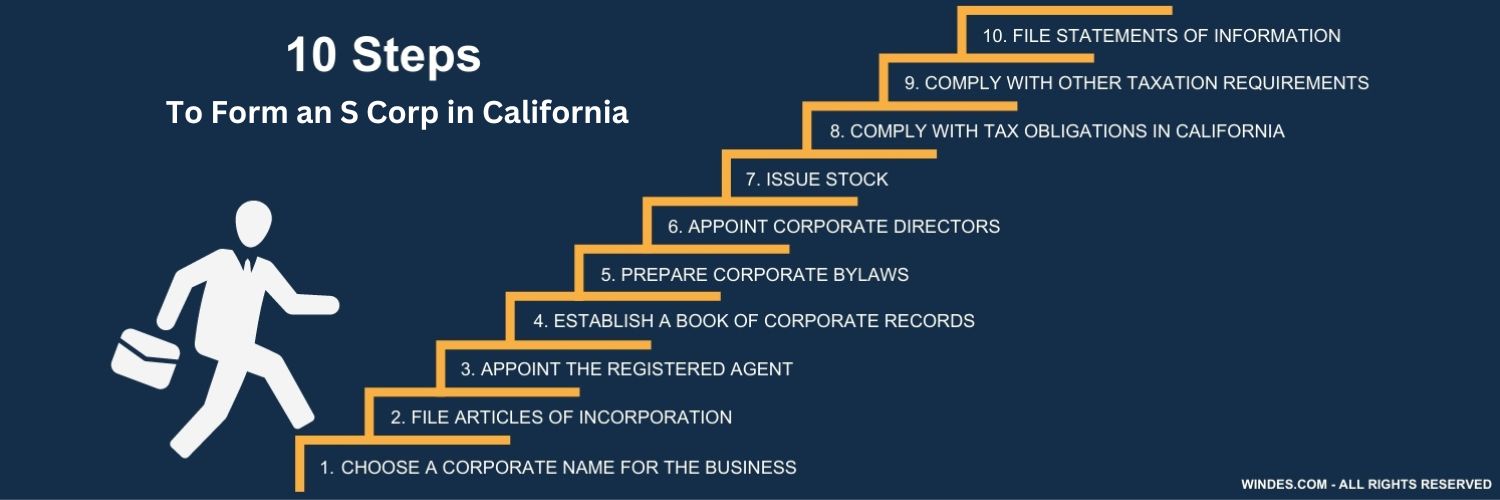
Before officially electing S Corp status, you must first establish a standard corporation in California. This initial phase involves several critical decisions and filings that set the stage for your business’s legal and operational framework. These foundational steps ensure your enterprise is properly recognized and ready to thrive within California’s robust business environment.
Naming Your Enterprise and Registered Agent Selection
The first tangible step in forming your corporation is choosing a business name. This name must be unique and distinguishable from other registered entities in California. A preliminary name availability search through the California Secretary of State‘s website is crucial to avoid rejections. Beyond legal compliance, selecting a name that resonates with your brand identity and entrepreneurial vision is vital for establishing market presence and achieving a distinctive lifestyle mark.
Concurrently, you’ll need to designate a registered agent. This individual or entity is legally responsible for receiving service of process (legal documents) and official government correspondence on behalf of your corporation. The registered agent must have a physical street address in California (not a P.O. Box) and be available during regular business hours. For entrepreneurs who frequently travel or operate remotely, selecting a professional registered agent service can be an invaluable asset, ensuring critical communications are always received and handled promptly, thereby maintaining the smooth flow of their business lifestyle.
Crafting Your Articles of Incorporation
The Articles of Incorporation are the foundational legal document that officially creates your corporation with the California Secretary of State. This document outlines essential information about your company, including its name, the purpose of the corporation, the registered agent’s details, and the number of shares the corporation is authorized to issue. While a template can often be found on the Secretary of State’s website, ensuring accuracy and completeness is paramount. Filing these articles initiates your corporation’s legal existence. Once filed and approved, your corporation officially exists as a distinct legal entity, paving the way for the subsequent S Corp election and the beginning of your formalized business lifestyle in California.
Navigating the Federal and State Election Processes
Once your corporation is officially established, the next critical phase involves electing S Corp status at both the federal and state levels. This two-pronged approach ensures that your business fully benefits from the pass-through taxation model for both federal and California tax purposes.

Federal S Corp Election (Form 2553)
To elect S Corp status federally, your corporation must file IRS Form 2553, “Election by a Small Business Corporation,” with the Internal Revenue Service. This form informs the IRS of your corporation’s intent to be taxed as an S Corp. There are specific eligibility requirements for S corporations, including:
- Being a domestic corporation.
- Having only one class of stock.
- Having no more than 100 shareholders.
- All shareholders being U.S. citizens or resident aliens (certain trusts and estates may also be shareholders).
- Certain types of corporations (e.g., insurance companies, financial institutions) are generally ineligible.
The timing of this filing is crucial. Generally, Form 2553 must be filed by the 15th day of the third month of the tax year for which the election is to take effect, or at any time during the preceding tax year. For new corporations, this typically means within 2 months and 15 days of the date of incorporation or the date the corporation first had shareholders, began business, or acquired assets. Missing this deadline can delay your S Corp status for a full year, impacting your tax planning and financial lifestyle. Given the complexities, consulting with a tax professional is highly recommended to ensure compliance and proper timing for your business lifestyle.
California State S Corp Election and Franchise Tax
California generally conforms to the federal S Corp election. If your corporation is a federal S Corp, California will recognize it as an S Corp for state tax purposes, provided it meets California’s own specific requirements. Unlike some other states, California does not require a separate state-specific S Corp election form, assuming you’ve correctly filed Form 2553 with the IRS.
However, it’s vital to be aware of California’s unique tax landscape for S corporations. While S Corps avoid the double taxation of C Corps, they are still subject to a state corporate franchise tax. California levies a 1.5% tax on an S Corp’s net income, with a minimum annual tax of $800, regardless of profitability. This minimum franchise tax is a non-negotiable cost of doing business in California and must be factored into your financial projections and overall business lifestyle planning. Understanding this state-specific obligation, handled through the Franchise Tax Board (FTB), is key to maintaining fiscal health and ensuring your entrepreneurial journey in California remains sustainable.
Ongoing Compliance for Your California S Corp Lifestyle
Establishing your S Corp is just the beginning. Maintaining its good standing and leveraging its benefits requires ongoing adherence to both federal and state regulations. For the entrepreneurial individual whose lifestyle revolves around their business, effective compliance management is not merely a legal obligation but a strategic component of sustainable growth and financial optimization.
Payroll, Benefits, and Reasonable Compensation
One of the most distinctive features of an S Corp is the requirement for owner-employees to pay themselves a “reasonable salary.” This salary must be commensurate with what someone in a similar role and industry would earn, and it is subject to all applicable payroll taxes (Social Security, Medicare, federal and state unemployment taxes). The remaining profits can then be distributed to shareholders as non-taxable dividends, generally avoiding self-employment taxes.
Determining what constitutes a “reasonable salary” is crucial and can be a point of scrutiny for the IRS and FTB. Paying too low a salary to maximize distributions could trigger an audit and potential penalties. This strategic balance between salary and distributions is a hallmark of sophisticated S Corp management and directly influences the financial lifestyle of the owner. Implementing a robust payroll system, whether in-house or through a third-party provider, is essential for accurate wage reporting, tax withholding, and benefit administration, ensuring your business lifestyle remains compliant and financially sound.
Annual Filings and Regulatory Adherence
Beyond payroll, California S Corps have several annual filing requirements to maintain their legal status. These include:
- Annual Statement of Information: Filed with the California Secretary of State, this form updates public records with current corporate information such as the registered agent, principal office address, and names of directors and officers. Failure to file can lead to penalties and potential suspension of corporate status.
- Federal Tax Return (Form 1120-S): The S Corp must file an annual informational tax return with the IRS, detailing its income, deductions, gains, losses, etc. A Schedule K-1 is then issued to each shareholder, reporting their share of the S Corp’s income or loss, which they report on their personal tax returns.
- California Tax Return (Form 100S): Similarly, the S Corp must file a state income tax return with the Franchise Tax Board (FTB) and pay the 1.5% net income tax (minimum $800).
Beyond these core filings, maintaining corporate records, such as meeting minutes and stock ledgers, is vital for demonstrating the company’s adherence to corporate formalities. While seemingly administrative, these details are fundamental to preserving the limited liability protection that makes the S Corp attractive to the discerning entrepreneur. Proactive management of these obligations ensures that the entrepreneurial lifestyle in California is supported by a strong, legally sound business foundation.

Strategic Growth and Long-Term Lifestyle Planning
An S Corp in California is not merely a tax designation; it’s a strategic asset for entrepreneurs focused on long-term growth and a well-structured business lifestyle. The financial advantages and liability protection provide a stable platform from which to innovate, expand, and cultivate a professional existence aligned with personal aspirations. Regular consultation with legal and tax professionals can help navigate evolving regulations, optimize compensation strategies, and explore opportunities for further tax efficiency. Whether your lifestyle involves frequent business engagements in bustling cities like Los Angeles or San Francisco, or managing a distributed team across California’s diverse regions, a properly established and maintained S Corp offers the flexibility and security needed to thrive. It’s a testament to a thoughtful, prepared, and ambitious entrepreneurial journey within one of the world’s most dynamic economies.
LifeOutOfTheBox is a participant in the Amazon Services LLC Associates Program, an affiliate advertising program designed to provide a means for sites to earn advertising fees by advertising and linking to Amazon.com. Amazon, the Amazon logo, AmazonSupply, and the AmazonSupply logo are trademarks of Amazon.com, Inc. or its affiliates. As an Amazon Associate we earn affiliate commissions from qualifying purchases.