
California is a dream destination for countless travelers, beckoning visitors with its diverse landscapes, iconic landmarks, and vibrant cultural scenes. From the sun-kissed beaches of San Diego County to the majestic redwoods of the north, and the bustling urban sprawls of Los Angeles County to the serene beauty of Yosemite National Park, there’s an endless array of experiences waiting to be discovered. However, for those planning a trip, particularly individuals who legally carry firearms in their home states, understanding California’s strict firearm laws, especially regarding concealed carry, is paramount. Navigating these regulations is a crucial aspect of responsible travel planning to ensure a smooth and enjoyable visit without unintended legal complications.

Navigating California’s Firearm Laws for Travelers
California boasts some of the most stringent gun control laws in the United States, a fact that can often surprise or confuse travelers accustomed to more lenient regulations elsewhere. For individuals considering carrying a concealed firearm while visiting the Golden State, the short answer to “Is conceal carry legal in California?” is generally a resounding “no” for non-residents, and even for residents, it’s a highly regulated and difficult process.
The state operates under a “may issue” policy for Concealed Carry Weapon (CCW) permits, meaning that local law enforcement agencies have significant discretion in deciding whether to issue a permit, even if an applicant meets all objective criteria. This stands in stark contrast to “shall issue” states where permits must be issued if the applicant meets specified requirements. For travelers, this discretionary power, combined with strict residency rules and a complete lack of reciprocity with other states, creates a complex legal landscape that effectively prohibits concealed carry for most visitors. Understanding these nuances is essential for any traveler to California who might possess a firearm in their home state.
Understanding California’s Concealed Carry Permit (CCW) Requirements
Obtaining a CCW permit in California is an extensive process, even for residents, and is virtually impossible for non-residents. The framework for issuance is established by state law, but the actual implementation and interpretation fall to the discretion of local issuing authorities—typically the county sheriff for residents in unincorporated areas and small cities, or the police chief for residents within larger municipalities.
“Good Cause” and “Good Moral Character”
At the heart of California’s CCW permit process are two subjective criteria: “good cause” and “good moral character.” An applicant must demonstrate “good cause” for desiring a CCW permit, which typically means proving a legitimate threat to their safety or that of their family that cannot be adequately addressed by traditional law enforcement. General self-defense or a preference for carrying a firearm is rarely considered sufficient “good cause” in most California jurisdictions. This requirement is a significant barrier, as its interpretation varies widely from one issuing authority to another. For instance, what might be considered “good cause” in a more rural county could be swiftly rejected in a densely populated urban area like Los Angeles County.
Furthermore, applicants must demonstrate “good moral character,” which involves a thorough background check into their personal history, criminal record (if any), and even their reputation within the community. Any history of domestic disputes, excessive traffic violations, or even certain social media postings could be scrutinized and potentially lead to a denial. The subjective nature of these criteria means that even well-intentioned applicants often face an uphill battle.
Residency Requirements
A critical hurdle for travelers is the strict residency requirement for California CCW permits. Generally, an applicant must be a resident of the county in which they are applying, or reside in a city within that county. This means that a CCW permit issued in San Diego County, for example, is for a resident of San Diego County. For individuals simply visiting California as tourists or on business, meeting this residency criterion is impossible. Consequently, non-residents cannot obtain a California CCW permit, effectively precluding them from legally carrying a concealed firearm within the state.
Jurisdictional Issuance
It’s also important to understand that CCW permits are issued at the local level. While the state sets the general framework, individual sheriffs and police chiefs establish their own specific application procedures, training requirements, and interpretations of “good cause.” This leads to significant variation across California’s 58 counties. Some counties might be more inclined to issue permits than others, but this localized approach does not change the fundamental residency and “good cause” barriers for travelers. Even if one were a resident, navigating the specific requirements of their particular county would be a complex endeavor.
Reciprocity and Non-Resident Considerations
For travelers from other states, understanding California’s stance on reciprocity is perhaps the most vital piece of information regarding concealed carry.
No Reciprocity with Other States
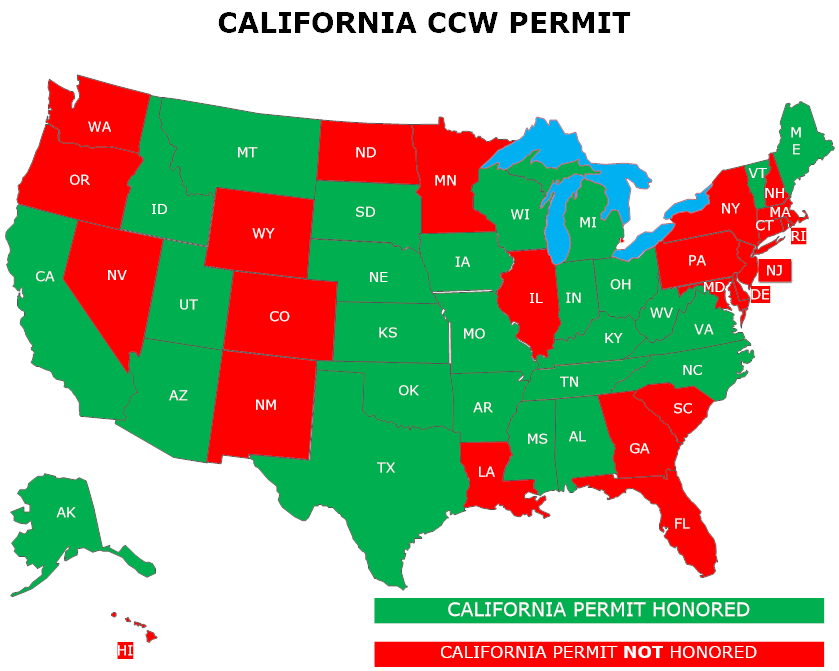
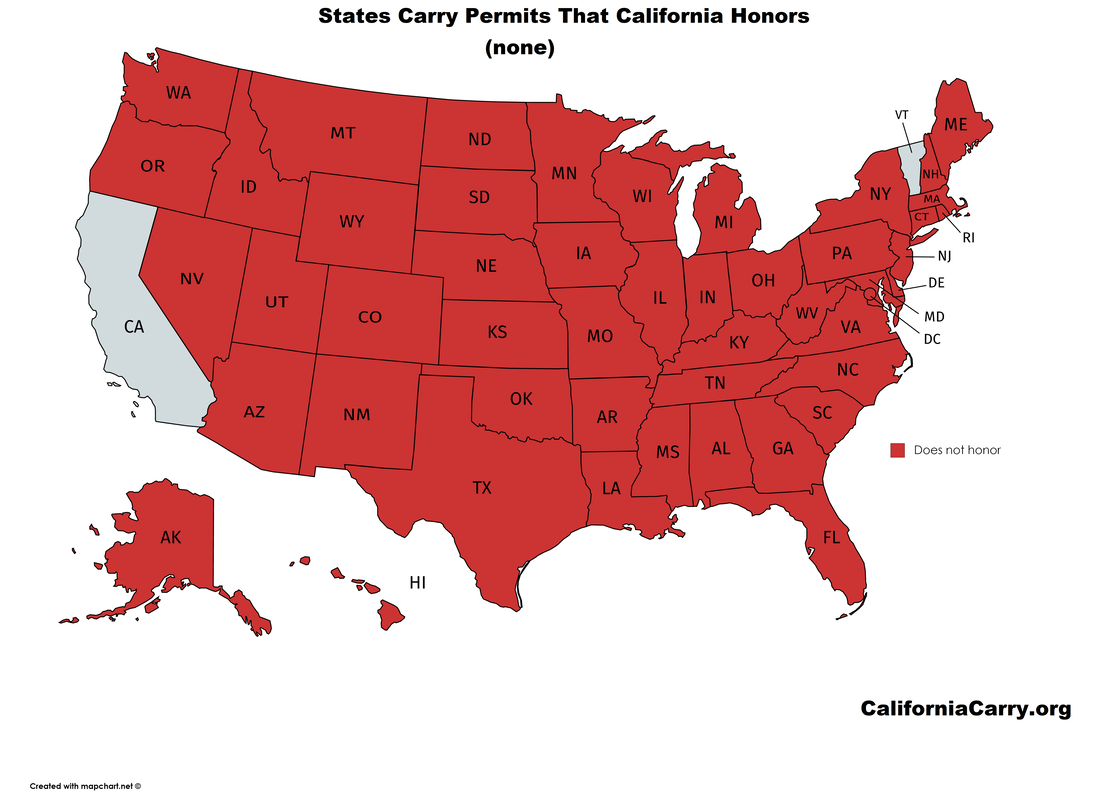
This is a non-negotiable point for anyone planning to travel to California with a firearm: California does not recognize concealed carry permits from any other state. A permit that is valid in your home state, or even in a vast majority of other states through reciprocity agreements, holds absolutely no legal standing in California. This means that if you are licensed to carry a concealed firearm in, say, Texas or Florida, that permit becomes invalid the moment you cross into California territory. Attempting to carry a concealed firearm in California without a valid California-issued permit is a serious felony offense, carrying severe penalties including substantial fines and imprisonment. This strict non-recognition policy is a cornerstone of California’s firearm regulations and something all travelers must be acutely aware of.
Federal Law (LEOSA)
One narrow exception exists under federal law for qualified current and retired law enforcement officers. The Law Enforcement Officers Safety Act (LEOSA) (18 U.S.C. §§ 926B & 926C) allows these individuals, under specific conditions and with the proper identification, to carry concealed firearms nationwide, including in California. However, this federal protection applies exclusively to a very specific professional demographic and does not extend to the general public, including private citizens who merely hold a state-issued concealed carry permit.
Transporting Firearms Through California
While concealed carry is generally prohibited for non-residents, transporting firearms through California is possible, provided strict federal and state laws are followed. The key distinction here is between “carrying” and “transporting.” When traveling interstate, federal law (18 U.S.C. § 926A) protects the right of individuals to transport unloaded firearms in a locked container, inaccessible from the passenger compartment, provided the journey originates and terminates in places where the individual is legally entitled to possess and carry the firearm.
Within California, state law generally requires that handguns be transported unloaded in a locked container, separate from ammunition, and not readily accessible to any occupant of the vehicle. Long guns must also be unloaded during transport. A “locked container” means a secure container that requires a key or combination to open, and it cannot be the glove compartment or center console. If driving, the firearm should be stored in the trunk. These rules apply even if you are just passing through California on your way to another state. It is crucial to strictly adhere to these transportation laws to avoid legal issues.
“Sensitive Places” and Restricted Locations
Even in the highly improbable event that a traveler were able to obtain a California CCW permit (which, as established, is not feasible), the state has an extensive list of “sensitive places” where carrying a firearm, even with a permit, is strictly prohibited. These restrictions further underscore the state’s intent to limit the presence of firearms in public spaces.
These “sensitive places” include, but are not limited to:
- Schools (K-12 and universities) and childcare facilities.
- Government buildings, including courthouses, legislative offices, and polling places.
- Airports (beyond the TSA checkpoint), public transportation, and within 1,000 feet of a school.
- Buildings or portions of buildings that are open to the public for public assembly, gatherings, or meetings.
- Any private property where the owner or lawful possessor has posted “no firearms” signs or has verbally prohibited firearms. This extends to a vast number of businesses, restaurants, and entertainment venues.
- Hospitals, medical facilities, and places of worship.
- Any location where alcohol is sold for consumption on the premises.
- Public parks, playgrounds, and many other recreational areas.
The sheer breadth of these restrictions means that even a permitted individual would find very few public spaces where concealed carry is legally permissible. For a traveler, this labyrinth of prohibitions would make carrying a firearm practically unfeasible and fraught with the risk of inadvertent violations.
Practical Advice for Travelers to California
Given the intricate and restrictive nature of California’s firearm laws, particularly concerning concealed carry for non-residents, the most straightforward and safest advice for travelers is unambiguous.
Leave Firearms at Home
For the vast majority of non-resident travelers, the strongest recommendation is to leave firearms at home. The legal complexities, the complete lack of reciprocity, and the severe penalties for non-compliance make traveling with a firearm to California an unnecessary risk. Focusing on the diverse attractions, from a stroll across the Golden Gate Bridge to the magic of Disneyland, without the added burden of navigating complex firearm regulations, will undoubtedly lead to a more relaxed and enjoyable trip.
Research Local Laws
If, for some extraordinary reason, you absolutely must transport a firearm through California, it is imperative to conduct thorough research of both federal and California state laws. Consult official sources such as the California Department of Justice website or contact a legal professional specializing in California firearm law well in advance of your trip. Understand the exact requirements for locked containers, unloaded status, and inaccessible storage.
Focus on Enjoying California’s Attractions
California offers an unparalleled range of travel experiences. Whether you’re exploring the cultural tapestry of San Francisco, hiking the majestic trails of Big Sur, or soaking up the sun on the beautiful beaches, the state provides countless opportunities for memorable adventures. By being informed and respectful of local laws, travelers can ensure their visit is filled with positive experiences and free from legal complications. Leave the firearm considerations aside and immerse yourself in the unique charm and natural beauty that make California a world-class travel destination.
LifeOutOfTheBox is a participant in the Amazon Services LLC Associates Program, an affiliate advertising program designed to provide a means for sites to earn advertising fees by advertising and linking to Amazon.com. Amazon, the Amazon logo, AmazonSupply, and the AmazonSupply logo are trademarks of Amazon.com, Inc. or its affiliates. As an Amazon Associate we earn affiliate commissions from qualifying purchases.