
California, a state renowned for its diverse landscapes, vibrant cities, and captivating attractions, draws millions of tourists annually. From the bustling streets of Los Angeles to the iconic landmarks of San Francisco, visitors seek memorable experiences. However, like any destination, understanding local laws and regulations is paramount for a seamless and trouble-free trip. One common query that often arises for tourists, especially those accustomed to carrying utility knives or multi-tools for various purposes, is regarding the legality of carrying a knife. The answer, as with many legal questions, is nuanced, depending on the type of knife, how it’s carried, and where. This guide aims to demystify California’s knife laws, offering essential tips for tourists to ensure compliance and peace of mind during their visit.
Understanding California’s Knife Laws for Tourists
California knife laws are primarily codified in the California Penal Code. Unlike some states with highly restrictive blanket prohibitions, California takes a more granular approach, distinguishing between various types of knives and methods of carry. For tourists, gaining a fundamental understanding of these distinctions is crucial to avoid inadvertent legal issues. The primary factors to consider are whether a knife is openly carried or concealed, its specific type, and its blade length.
The Basics: Open vs. Concealed Carry
The distinction between open and concealed carry is a cornerstone of California’s knife laws. Generally, it is legal for an adult to openly carry a folding knife in public, provided the blade is not fixed (i.e., it folds) and it is not explicitly prohibited by specific local ordinances or venue rules. “Openly carried” means the knife is visible and not hidden from ordinary observation. A pocket knife clipped to a belt or carried in a clear sheath would generally be considered openly carried.
Concealed carry, however, is where the law becomes more restrictive. It is illegal to carry a dirk or dagger concealed. California law defines a dirk or dagger as a knife or other instrument with or without a handguard that is primarily designed, redesigned, or carried as a stabbing instrument, and which can inflict great bodily injury or death. This broad definition can encompass many fixed-blade knives, even those not traditionally thought of as daggers. While folding knives are generally exempt from the concealed carry prohibition of dirks/daggers if the blade is not locked in an open position, carrying a locked-open folding knife concealed could potentially be interpreted as carrying a concealed dirk/dagger. The safest approach for tourists is to avoid carrying any fixed-blade knife concealed and to ensure folding knives are either openly carried or kept securely within luggage when not in use.
Defining “Switchblade” and Other Prohibited Knives
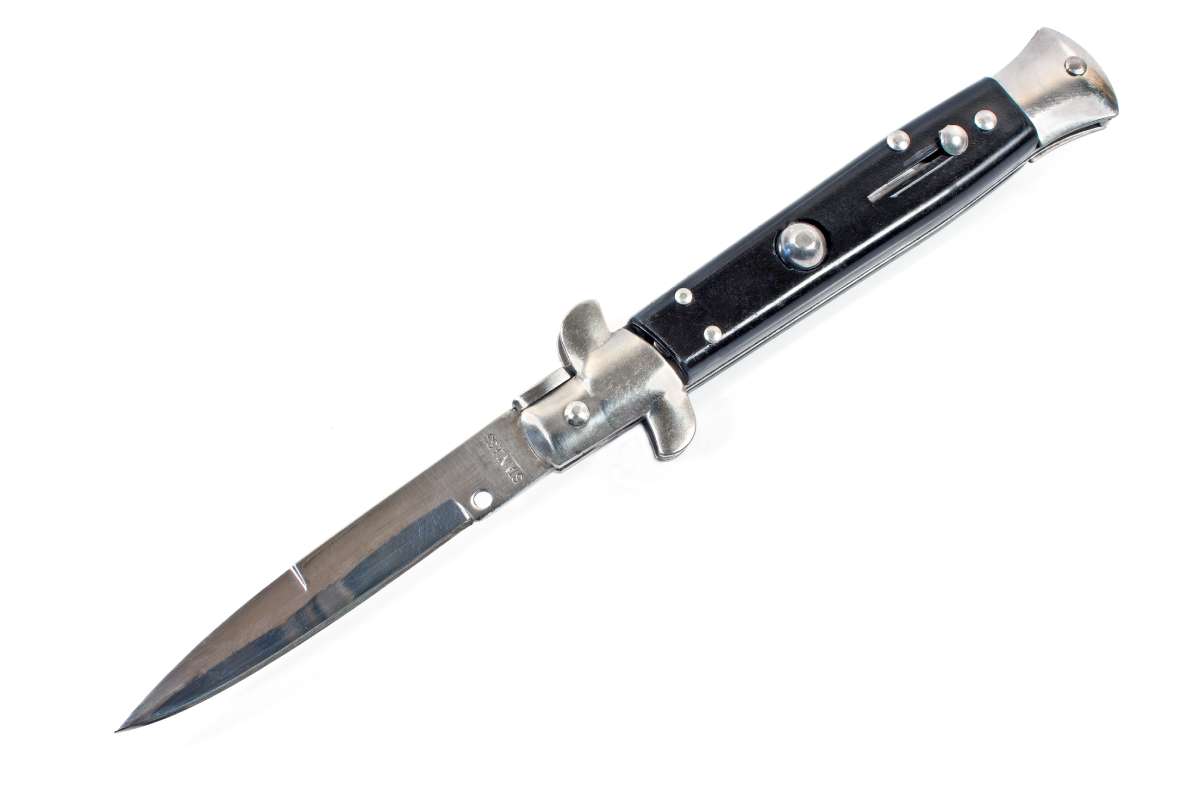
California has specific prohibitions against certain types of knives, regardless of how they are carried. The most notable of these is the “switchblade.” A switchblade, or automatic knife, is defined as a knife having a blade that is two inches or more in length and that can be released automatically by a button, spring, or other device in the handle. Possession of such a knife is generally illegal in California, with very limited exceptions for law enforcement or certain military personnel. Tourists should absolutely refrain from bringing or purchasing switchblades within the state.
Other prohibited knives include:
- Ballistic knives: Knives with a detachable blade that can be propelled by a spring-operated mechanism.
- Undetectable knives: Knives made entirely of nonmetallic materials and not detectable by metal detectors.
- Shurikens/Throwing Stars: While not knives, these are similarly prohibited.
- Belt buckle knives, lipstick case knives, writing pen knives: These are considered disguised knives and are generally illegal.
It is crucial for tourists to understand that carrying any of these prohibited knives, even if purchased elsewhere, can lead to serious legal repercussions.
Specifics on Blade Length and Type
Unlike some jurisdictions, California state law does not impose a maximum legal blade length for most openly carried knives, including folding knives. However, this general rule is subject to significant caveats. Local city and county ordinances can and do impose blade length restrictions. For example, some cities might have restrictions on knives with blades exceeding a certain length (e.g., 3 or 4 inches) in specific public areas or for certain types of knives.
Furthermore, while a general-purpose utility folding knife (e.g., a common pocket knife or multi-tool) is typically legal to carry openly, the intent behind carrying a knife can quickly change its legal status. If a knife, regardless of type or length, is carried with the intent to use it as a weapon, it can be considered a “deadly weapon” and lead to criminal charges. Tourists should ensure that any knife they carry is clearly for utilitarian purposes, such as opening packages, minor repairs, or for a specific recreational activity like camping, and not for self-defense or any aggressive intent.
Navigating Public Spaces and Tourist Attractions
The legality of carrying a knife in California can change drastically depending on the specific location. Tourists must be especially vigilant about “restricted zones” where knife possession is either entirely prohibited or heavily regulated, regardless of state-level general rules. Many popular tourist destinations, public facilities, and private establishments have their own rules that may be stricter than state or local laws.
Rules for Parks and Recreational Areas
When visiting California’s stunning national and state parks, such as Yosemite National Park or Big Sur, a utility knife can be an invaluable tool for camping, hiking, or minor tasks. Generally, carrying a common pocket knife for such purposes is permissible within park boundaries. However, visitors should always verify specific park regulations. Some parks, especially federal ones, might have different rules. Fixed-blade knives, while potentially legal for open carry in general, might be subject to stricter scrutiny or outright prohibition in certain sensitive natural areas or on specific trails. Always check the park’s official website or inquire at a visitor center upon arrival for any specific rules regarding weapons or tools.
Public Transportation and Government Buildings
Carrying knives on public transportation, including buses, trains, and light rail systems (e.g., BART in San Francisco or Metro Rail in Los Angeles), is often restricted. Most transit agencies have policies prohibiting weapons, which can include knives, especially those with fixed blades or exceeding a certain length. Even common folding knives might be subject to restrictions, particularly if they are carried in a manner that could be perceived as threatening. The safest approach for tourists using public transport is to secure any knife in checked luggage or to leave it at their accommodation.
Similarly, all government buildings, courthouses, police stations, and airports have strict prohibitions against carrying any kind of weapon, including most knives. This applies whether you are entering a state capitol building in Sacramento or a city hall in San Diego. Security checkpoints are common at these locations, and attempting to enter with a knife will result in its confiscation and potential legal trouble. For air travel, knives must always be placed in checked luggage; carrying them in carry-on bags is strictly forbidden by the Transportation Security Administration (TSA).
Theme Parks and Entertainment Venues
California is home to world-famous theme parks like Disneyland Resort and Universal Studios Hollywood, as well as numerous stadiums, concert halls, and other entertainment venues. These private establishments invariably have their own strict policies prohibiting all weapons, including knives of any kind. Security screenings, including metal detectors and bag checks, are standard practice. Attempting to enter with a knife will lead to denial of entry and confiscation. Tourists should never try to bring knives into these venues.
Schools, Colleges, and Restricted Zones
California law explicitly prohibits carrying knives on school grounds (K-12) and often on college and university campuses. This is a severe restriction, and violations carry significant penalties. Other restricted zones might include polling places, public meetings, and areas where large public gatherings are taking place. Tourists should always be aware of their surroundings and avoid carrying knives in any areas where children are present or where large crowds are expected. The general rule of thumb for visitors is: if you are unsure, err on the side of caution and leave your knife securely stored.
Practical Tips for Tourists Carrying Knives
Given the complexity and location-specific nature of California’s knife laws, tourists should adopt a conservative approach to avoid any legal complications. The primary goal is to enjoy the trip without unwanted encounters with law enforcement.
When to Leave Your Knife Behind
The simplest and safest advice for tourists is to consider whether carrying a knife is truly necessary for their planned activities. For a typical urban sightseeing trip, visiting museums, restaurants, and shopping areas, a knife offers little practical benefit and presents unnecessary legal risks. If your itinerary primarily involves city exploration, dining, or theme park visits, it is highly recommended to leave any knives at home or securely stored at your accommodation. Only consider carrying a utility knife if you have a specific, justifiable need related to outdoor activities like camping, fishing, or hiking, and even then, be extremely mindful of the context and local rules.
Importance of Awareness and Local Ordinances
While this guide provides a general overview of California state law, it is imperative for tourists to remember that local ordinances in cities like Los Angeles, San Francisco, and San Diego can impose stricter rules. These local laws might dictate specific blade length limits, prohibit open carry in certain areas, or even ban specific types of knives not covered by state law. Before visiting a particular city or county, a quick search for their local knife ordinances can prevent misunderstandings. Often, tourist information centers or local law enforcement websites might provide relevant details. When in doubt, assume stricter rules apply, especially in densely populated urban environments.
Seeking Legal Counsel if Unsure
For situations that are not clear-cut or if you have specific concerns about a particular type of knife or planned activity, consulting with a legal professional specializing in California law is the most prudent course of action. While most tourists won’t need this level of detail, it’s an option for those with unique circumstances or extended stays that might involve activities where knife carry is ambiguous. Understanding the law thoroughly can protect you from fines, arrest, or other disruptions to your travel plans.
Consequences of Non-Compliance and Staying Informed
Violating California’s knife laws can range from an infraction or misdemeanor to a felony, depending on the severity of the offense, the type of knife, the location, and the intent. Penalties can include substantial fines, confiscation of the knife, probation, and even jail time. For tourists, an arrest or legal proceedings can significantly disrupt and even ruin a vacation, leading to unexpected expenses and significant stress. Avoiding these situations is key to an enjoyable trip.
Penalties for Violations
Minor violations, such as carrying a non-prohibited knife in a restricted area where a local ordinance applies, might result in a citation and a fine. More serious offenses, like carrying a concealed dirk/dagger or possessing a prohibited switchblade, are often misdemeanors but can escalate to felonies if there are prior offenses or aggravating circumstances (e.g., intent to use as a weapon, proximity to a school). Felony convictions carry the possibility of state prison time. It is important to remember that ignorance of the law is not a valid defense.
Resources for Up-to-Date Information
Laws are subject to change, and interpretations can evolve. Tourists seeking the most current and authoritative information should refer to the official California Legislative Information website for the Penal Code, as well as the official websites of specific cities or counties they plan to visit. Local police department websites can also be a valuable resource for understanding local ordinances. When in doubt, contacting the local police department (non-emergency line) for clarification can provide direct and current information.

Prioritizing Safety and Enjoyment
Ultimately, the goal of any trip to California is to have a safe, enjoyable, and memorable experience. Understanding and respecting local laws, including those pertaining to knife carry, is an integral part of responsible tourism. By exercising caution, being informed, and making judicious decisions about what to carry and where, tourists can avoid legal pitfalls and fully immerse themselves in the beauty and excitement that California has to offer. Prioritizing safety and adherence to regulations ensures that your adventures across the Golden State remain positive and unforgettable.
LifeOutOfTheBox is a participant in the Amazon Services LLC Associates Program, an affiliate advertising program designed to provide a means for sites to earn advertising fees by advertising and linking to Amazon.com. Amazon, the Amazon logo, AmazonSupply, and the AmazonSupply logo are trademarks of Amazon.com, Inc. or its affiliates. As an Amazon Associate we earn affiliate commissions from qualifying purchases.