
For individuals engaged in long-term stays across California, understanding the intricacies of tenancy laws is paramount to securing stable accommodation. Among the most critical aspects is the three-day notice, a landlord’s initial step in many eviction proceedings. While seemingly straightforward, numerous errors and legal defenses can effectively void such a notice, protecting a tenant’s right to remain in their rented dwelling. Navigating these legal nuances requires a professional and insightful approach, especially for those who call California home for extended periods.
Understanding the Foundation: The California Three-Day Notice
A three-day notice is a formal written communication from a landlord to a tenant, typically demanding either payment of overdue rent or correction of a lease violation. It serves as a prerequisite for a landlord to initiate an Unlawful Detainer lawsuit, which is the legal process for eviction in California. For long-term residents, receiving such a notice can be alarming, but it’s crucial to remember that it is not an eviction order itself; rather, it’s a demand that must be met or disputed.
Purpose and Types of Notices
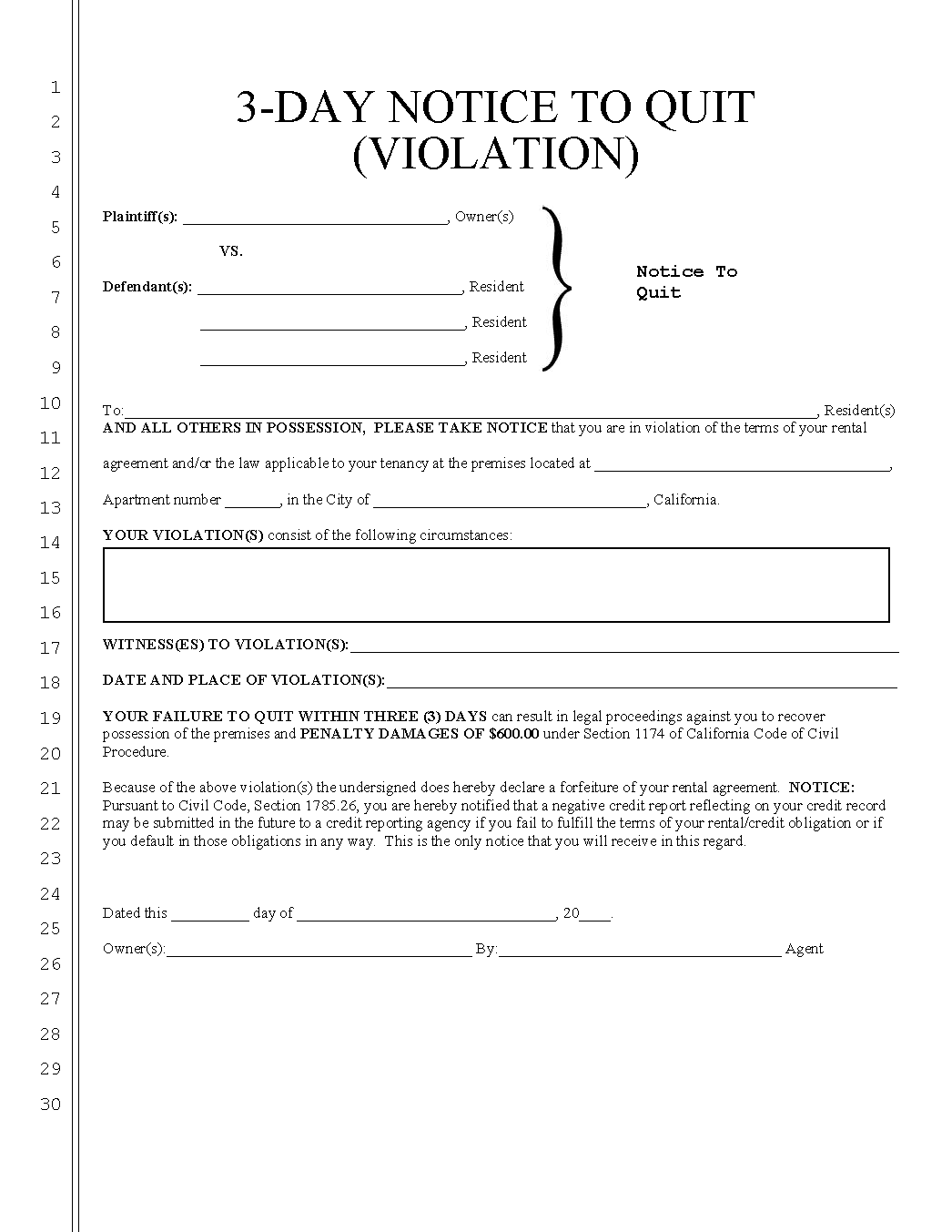
In California, there are primarily three types of three-day notices relevant to most long-term residential tenancies:
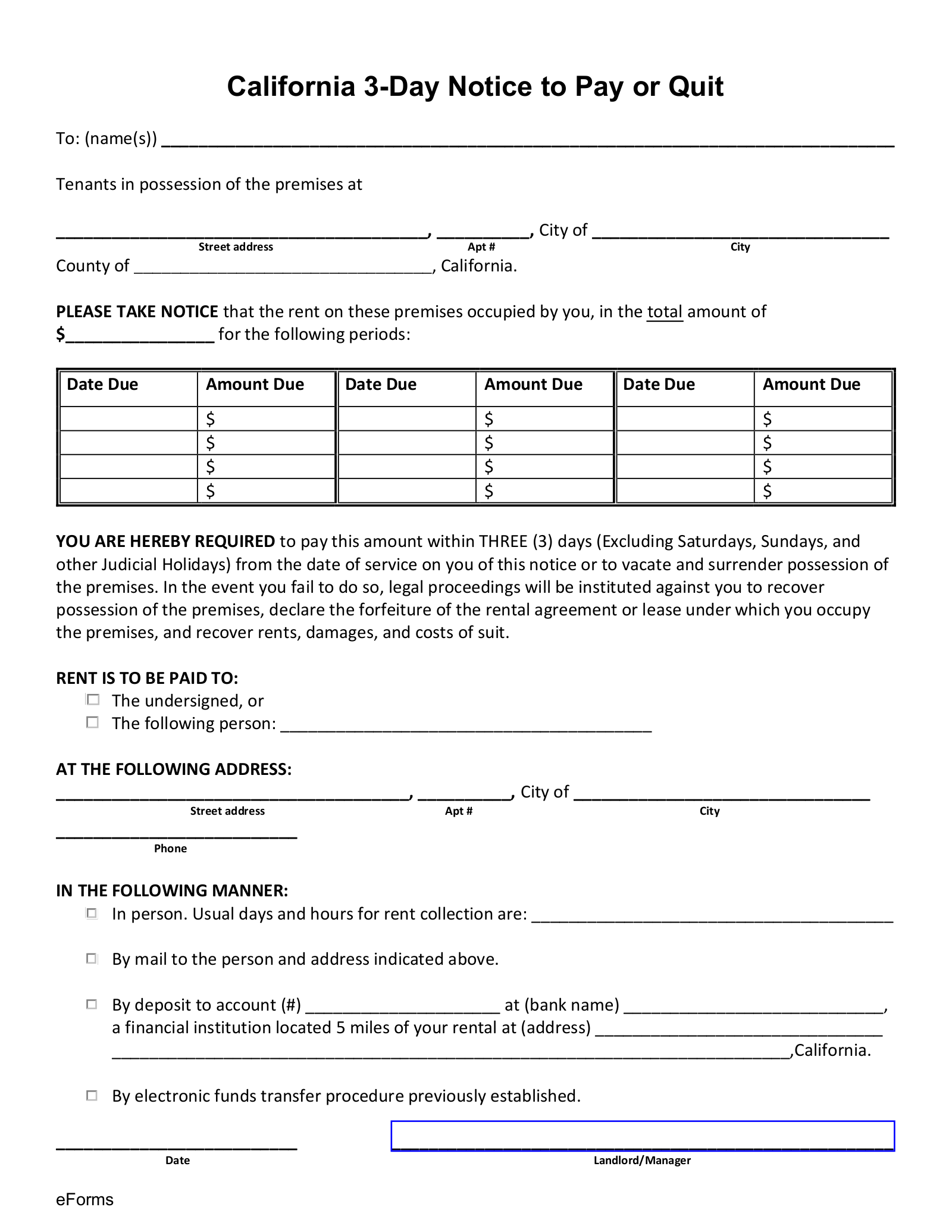
- Three-Day Notice to Pay Rent or Quit: This is the most common type, issued when a tenant is behind on rent. It gives the tenant three business days (excluding weekends and judicial holidays) to either pay the full amount of overdue rent or vacate the premises. Failure to do so allows the landlord to proceed with an Unlawful Detainer action.
- Three-Day Notice to Perform Covenants or Quit: This notice is used when a tenant has violated a term of the lease agreement other than non-payment of rent. Examples include having unauthorized pets, excessive noise, or damage to the property. It provides three business days to “cure” (fix) the violation or vacate.
- Three-Day Notice to Quit (Uncurable Breach): This notice is reserved for severe lease violations that cannot be corrected, such as illegal activity on the premises or significant damage to the property. In such cases, the notice demands the tenant vacate within three business days without the option to fix the issue.
The specific type of notice dictates the tenant’s potential response and the grounds on which it can be challenged. Understanding which notice has been served is the first step in formulating an effective defense, particularly for those deeply rooted in their long-term California accommodations.
The Legal Framework in California
California landlord-tenant law, particularly the Code of Civil Procedure, sets forth strict requirements for these notices. Any deviation from these legal mandates can render the notice defective and, consequently, void. This legal precision is a safeguard for tenants, ensuring landlords adhere to proper protocol before initiating the formal eviction process. Key elements include specific content requirements, accurate calculations, and correct service methods. For long-term residents, familiarity with these regulations can provide a strong foundation for challenging an improperly issued notice, allowing them to protect their housing stability.
Procedural Flaws That Invalidate a Notice
Many three-day notices are voided not due to the underlying issue, but because of errors in how the landlord prepares or serves the notice. These procedural flaws are often the easiest for a tenant to identify and can offer immediate relief from the threat of an Unlawful Detainer lawsuit.
Improper Service
The method by which a three-day notice is delivered to a tenant is strictly regulated by California law. Landlords must follow one of three specific procedures:
- Personal Service: Handing the notice directly to the tenant. This is the preferred and most legally sound method.
- Substituted Service: If the tenant is absent from their residence or usual place of business, the notice can be left with a person of suitable age and discretion at either location. A copy must then also be mailed to the tenant by first-class mail. Crucially, the mailing must be accompanied by an affidavit explaining why personal service could not be achieved.
- “Nail and Mail” Service: Only permissible if both personal and substituted service have been attempted with reasonable diligence but failed. In this method, the notice is posted in a conspicuous place on the property (e.g., the front door), and a copy is also mailed to the tenant by first-class mail. An affidavit must accompany the mailing, detailing the attempts at personal and substituted service.
Any deviation from these rules – for instance, simply slipping the notice under the door without attempting personal service and mailing, or mailing without a proper affidavit – can render the notice invalid. For long-term residents, documenting when and how a notice was received is vital for identifying potential service defects.
Inaccurate Information
A three-day notice must be meticulously accurate in its content. Errors in the notice itself can be grounds for voiding it:
- Incorrect Tenant Name or Address: The notice must correctly identify all tenants who are a party to the lease and the exact address of the rental property. Minor discrepancies, especially if they cause confusion, can be problematic for the landlord.
- Incorrect Rent Amount: For a “Notice to Pay Rent or Quit,” the notice must state the precise amount of rent owed, excluding any fees (like late fees, utility charges, or security deposits) that do not qualify as “rent” under the lease agreement. If the landlord demands more than the actual past-due rent, the notice is often deemed void. Tenants should meticulously compare the demanded amount against their rent ledger and lease terms.
- Invalid Lease Violation Description: For a “Notice to Perform Covenants or Quit,” the notice must clearly and specifically describe the alleged lease violation, allowing the tenant to understand what needs to be remedied. Vague or generic descriptions may invalidate the notice.
Any of these inaccuracies can provide a strong defense for long-term tenants challenged with a three-day notice, highlighting the landlord’s failure to meet legal requirements.
Incorrect Dates and Calculations
The precise calculation of the three-day period is critical. California law dictates that the day the notice is served does not count. The three-day period begins on the day after service. Weekends and judicial holidays are excluded from this three-day count. For example, if a notice is served on a Friday, the three days would begin on Monday and end on Wednesday, assuming no holidays.
Furthermore, if the notice is served by mail (as part of substituted or “nail and mail” service), an additional five calendar days (for mail within California) are typically added to the response time to account for mailing time, though this can vary depending on the specific legal interpretation and court. Miscalculation of these dates, leading to an insufficient response period, can void the notice. Tenants should meticulously track the date of service and consult a calendar to verify the notice period.
Substantive Defenses Against the Notice
Beyond procedural errors, tenants also have substantive legal defenses that can challenge the validity of a three-day notice, directly addressing the underlying reasons for its issuance. These defenses often involve demonstrating that the landlord’s claims are unfounded or that the tenant has a legal justification for their actions.
Payment Issues: Unpaid Rent and Partial Payments
- Landlord Refusal of Lawful Payment: If a tenant attempts to pay the full, correct amount of rent demanded within the three-day period, and the landlord refuses to accept it, the notice may be voided. Tenants should always attempt to pay the full amount due, preferably in a verifiable manner (e.g., cashier’s check, money order), and retain proof of the attempt.
- Partial Payments: Generally, if a landlord accepts a partial rent payment after serving a three-day notice to pay rent or quit, they may inadvertently waive their right to proceed with the eviction based on that specific notice. Accepting partial payment often implies a new tenancy agreement has been formed or the previous breach has been cured, requiring the landlord to serve a new notice if they wish to pursue eviction for the remaining balance. However, landlords can sometimes include specific language in the notice or a separate agreement stating that acceptance of partial payment does not waive their rights, so careful review is essential.
- Disputed Rent Amount: If the tenant genuinely believes they do not owe the full amount of rent demanded (e.g., due to overcharges, miscalculations, or legitimate deductions), they can dispute the notice. This often requires proving why the demanded amount is incorrect.
For long-term residents, keeping meticulous records of rent payments and communications with landlords is invaluable in these situations.
Lease Violations: Curing the Breach
For a “Notice to Perform Covenants or Quit,” the tenant has the right to cure the breach within the three-day period.
- Successful Cure: If the tenant successfully remedies the specified lease violation within the three days (e.g., removing an unauthorized pet, ceasing a nuisance activity, repairing minor damage), the notice becomes void, and the landlord cannot proceed with an eviction based on that specific notice. Tenants should document their efforts to cure the breach, including photos, videos, or written communication with the landlord.
- Vague or Uncurable Notice for Curable Breach: If a notice demands the tenant quit for a breach that is actually curable but doesn’t offer the option to cure, or if the description of the breach is too vague to allow the tenant to understand and fix it, the notice may be void.
This ability to cure is a significant protection for long-term tenants, providing an opportunity to rectify issues and maintain their accommodation.
Retaliation and Discrimination
California law strictly prohibits landlords from issuing a three-day notice in retaliation for a tenant exercising their legal rights or as a form of discrimination.
- Retaliatory Eviction: If a landlord serves a three-day notice shortly after a tenant has, for example, complained about uninhabitable conditions, reported the landlord to a housing authority, or organized a tenant union, the notice may be deemed retaliatory and void. California law presumes retaliation if a landlord takes adverse action within 180 days of a tenant exercising protected rights.
- Discrimination: Notices based on a tenant’s race, religion, sex, sexual orientation, marital status, national origin, ancestry, source of income, disability, or other protected characteristics are illegal and void under both federal and California fair housing laws.
These defenses are crucial for protecting vulnerable long-term tenants and ensuring their rights are not infringed upon by unjust or illegal landlord actions.
Additional Considerations for Long-Term Tenants
Beyond the direct procedural and substantive defenses, several other factors can influence the validity of a three-day notice and the overall landlord-tenant relationship, particularly for those in stable, long-term accommodations.
Implied Warranty of Habitability
All residential rentals in California come with an “implied warranty of habitability,” meaning the landlord must maintain the property in a safe and livable condition. If a tenant withholds rent because the landlord has failed to make necessary repairs after proper notice, and the premises are uninhabitable, the three-day notice to pay rent or quit may be void. This is a complex area, as specific procedures for withholding rent must be followed, but it provides a powerful defense for tenants living in substandard conditions. Understanding this warranty is critical for any long-term resident in California.
Accepting Rent After Notice
As noted previously, a landlord’s acceptance of rent, even a partial amount, after issuing a three-day notice can complicate the eviction process and potentially void the notice. This is especially true if the landlord accepts rent covering a period after the notice’s three-day compliance window has passed. Landlords who wish to preserve their right to evict must be very careful not to accept any rent after serving the notice, unless under specific circumstances where they explicitly state (in writing) that accepting rent does not waive their right to proceed with eviction, or if they pursue a new notice. Tenants should always document any rent tendered or accepted after receiving a notice.
Importance of Legal Counsel
The legal landscape surrounding three-day notices in California is complex and often requires professional interpretation. For long-term tenants facing such a notice, seeking timely legal advice from an attorney specializing in landlord-tenant law is highly recommended. A knowledgeable attorney can:
- Review the notice for procedural and substantive defects.
- Advise on the best course of action, whether it’s to pay, cure, or challenge the notice.
- Help prepare a strong defense if an Unlawful Detainer lawsuit is filed.
- Negotiate with the landlord on the tenant’s behalf.
Understanding what can void a three-day notice is not merely a legal technicality; it is a fundamental aspect of protecting one’s long-term accommodation and stability in California. By being informed and proactive, residents can effectively navigate these challenges and secure their rights.
LifeOutOfTheBox is a participant in the Amazon Services LLC Associates Program, an affiliate advertising program designed to provide a means for sites to earn advertising fees by advertising and linking to Amazon.com. Amazon, the Amazon logo, AmazonSupply, and the AmazonSupply logo are trademarks of Amazon.com, Inc. or its affiliates. As an Amazon Associate we earn affiliate commissions from qualifying purchases.