
The California State Flag, a vibrant and distinctive banner, is far more than just a piece of fabric; it is a profound historical document, a symbol of independence, and an enduring emblem of the state’s unique journey. Known affectionately as the “Bear Flag,” its design encapsulates a pivotal moment in California’s past, rich with tales of frontier spirit, revolutionary fervor, and the forging of a new identity. To truly understand what graces this iconic flag, one must delve into the historical context of its creation, dissect each of its symbolic elements, and appreciate its evolution into the cherished standard seen today across the Golden State.

A Symbol Forged in Rebellion: The Bear Flag Revolt
The origins of the California Flag are inextricably linked to the Bear Flag Revolt of 1846, a brief but impactful uprising that predated California’s admission into the United States. At this time, California was a sparsely populated Mexican territory, and tensions were mounting between the Mexican authorities and the growing number of American settlers who had arrived in the region. These settlers, many with expansionist ideals, felt increasingly alienated and insecure, leading to a desire for independence or annexation by the United States.
The Genesis of the Bear Flag
The spark for the revolt ignited in early June 1846. A small group of American settlers, fearing expulsion by Mexican forces and encouraged by covert maneuvers from U.S. Army Captain John C. Frémont, decided to take matters into their own hands. On June 14, 1846, thirty-three armed men, led by figures like Ezekiel Merritt, rode into the pueblo of Sonoma, a vital Mexican military outpost north of San Francisco Bay. They captured the presidio, seizing Mexican General Mariano Guadalupe Vallejo, effectively taking control of the town without firing a shot. This audacious act marked the beginning of the Bear Flag Revolt.
Following their success in Sonoma, the rebels realized they needed a symbol to represent their newly declared, albeit temporary, independence. The task of designing and creating this banner fell to a settler named William L. Todd, a nephew of Mary Todd Lincoln. Using a piece of unbleached cotton cloth, red flannel, and some improvised paints, Todd crafted the first “Bear Flag.” This original flag, crudely made but brimming with revolutionary spirit, would become the foundational design for the modern California State Flag.
William B. Ide and the Sonoma Declaration
Following the seizure of Sonoma, the insurgents elected William B. Ide as their leader. On June 15, 1846, Ide issued a proclamation, known as the “Sonoma Proclamation” or “Proclamation of the California Republic,” justifying the revolt and declaring the establishment of an independent republic. This declaration articulated the grievances of the American settlers against Mexican rule, citing issues of instability and inadequate protection, and asserted their right to self-governance. It was under this banner of a nascent republic that the first Bear Flag flew, symbolizing the aspirations of these frontiersmen.
The Brief Life of the California Republic
The independent “California Republic” was remarkably short-lived. Just 25 days after the capture of Sonoma, on July 7, 1846, U.S. naval forces under Commodore John D. Sloat landed in Monterey, raising the American flag and formally claiming California for the United States, marking the beginning of the Mexican-American War in the region. Two days later, on July 9, the Bear Flag was lowered in Sonoma and San Francisco, replaced by the Stars and Stripes. While the republic itself vanished swiftly, the flag and the spirit it represented endured, cementing its place in the state’s historical narrative. The original Bear Flag was eventually destroyed in the 1906 San Francisco earthquake and fire, but its legacy was firmly established.
Deconstructing the Elements: Bear, Star, and Stripe
Each component of the California Flag is imbued with specific historical and symbolic meaning, painting a vivid picture of the state’s rugged beauty and independent spirit.
The Grizzly Bear: A Symbol of Strength and Independence
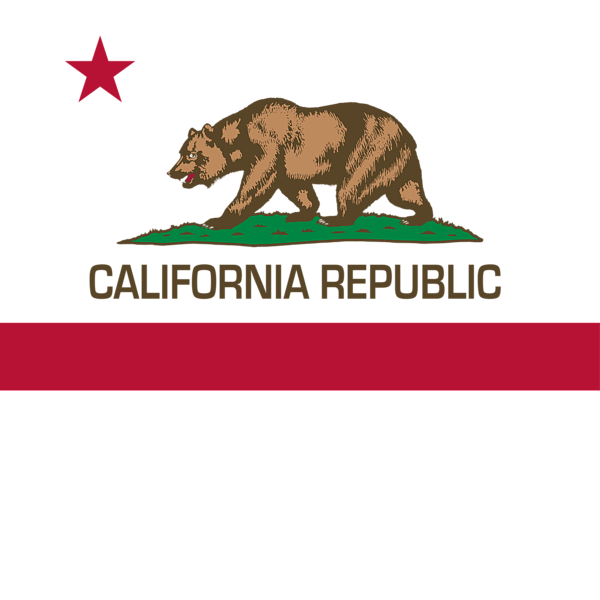
The most striking feature of the flag is the California grizzly bear (Ursus arctos californicus), a species once abundant in the state but now extinct. The bear on the flag is depicted walking towards the hoist (left) on a patch of green grass. This powerful creature was chosen by the revolters to represent the strength and indomitable spirit of California and its people. It also symbolized the willingness of the settlers to defend themselves and their newly declared independence from Mexican rule. The original bear on William Todd’s flag was reportedly modeled after a real California grizzly named “Monarch,” who was captured in 1889 and later housed at San Francisco’s Woodward’s Gardens and then Golden Gate Park. The bear’s pose – head down, walking forward – suggests a determined, yet non-aggressive posture, ready to defend but not actively seeking conflict.
The Lone Star: Echoes of Texas and Manifest Destiny
In the upper left corner of the flag is a single red five-pointed star. This “lone star” is believed to be inspired by the Lone Star Flag of Texas, which had recently achieved independence from Mexico and then joined the United States. For the California rebels, the star symbolized their own claim to independence and a hopeful future as a sovereign entity or as part of the United States. It represents a new beginning, a beacon of liberty shining bright over the western frontier. The single star also implicitly suggests a unique identity, separate from other territories or states.
The Red Stripe and Grass Plot: Blood, Sacrifice, and the Golden State’s Bounty

Along the bottom of the flag is a broad red stripe. This stripe is generally understood to represent courage, sacrifice, and the blood spilled by those who fought for California’s freedom and independence. The color red is a universal symbol of valor and passion, and its inclusion anchors the flag’s design with a profound sense of historical struggle. Above this red stripe, forming the ground for the grizzly bear, is a patch of green grass. While less overtly symbolic than other elements, this green patch can be interpreted as representing the fertile lands of California, its natural bounty, and the hope for prosperity that drew settlers to its shores. The white field that dominates the rest of the flag represents purity, peace, and the vast, undeveloped potential of the territory at the time of the revolt.
“California Republic”: The Enduring Motto
Beneath the grizzly bear, emblazoned in bold red letters, are the words “CALIFORNIA REPUBLIC.” This motto directly references the short-lived independent republic declared by the American settlers in 1846. Though the republic itself quickly dissolved, the phrase became an enduring reminder of that pivotal moment of self-determination. It serves as a historical marker, linking the contemporary state directly to its revolutionary roots and the aspirations of those who first raised the banner of independence.
Evolution and Standardization: From Crude Banner to Official Emblem
The journey from a hastily assembled rebel banner to a legally defined state flag was a gradual process, reflecting California’s growth and the desire for official recognition of its rich history.
Early Variations and Popular Interpretations
For decades after the Bear Flag Revolt, the flag existed primarily as a popular symbol rather than an official one. Numerous variations of the Bear Flag were created and flown throughout the state, often differing significantly in their artistic rendition of the bear, the placement of the star, and the typography of the “CALIFORNIA REPUBLIC” motto. These early flags were often handmade, reflecting local interpretations and artistic liberties. Despite the inconsistencies, the core elements—the bear, star, and red stripe—remained constant, firmly establishing the flag’s identity in the public consciousness. During parades, celebrations, and patriotic events, various versions of the Bear Flag would appear alongside the American flag, signifying California’s unique heritage within the Union.
Legislative Action and Official Adoption
It wasn’t until the turn of the 20th century that efforts began to officially standardize the design. Recognizing the historical significance and popularity of the Bear Flag, the California State Legislature officially adopted the “Bear Flag” as the state flag on February 3, 1911. This act formalized a design that had already become a beloved symbol, codifying its elements and ensuring its consistent representation across the state. The 1911 statute provided a basic description, but still allowed for some artistic interpretation, particularly regarding the depiction of the bear. The official adoption marked a crucial step in preserving and honoring the flag’s historical legacy, elevating it from a mere historical artifact to a formal state emblem.
The 1953 Design Standard: Perfecting the Bear
Despite the 1911 adoption, artistic variations in the bear’s depiction persisted. To ensure uniformity and precision, the California State Legislature passed a new law in 1953, standardizing the flag’s design to its current form. This legislation precisely defined the dimensions, colors, and the exact depiction of the grizzly bear. The official design of the bear was based on a watercolor painting by artist Charles Nahl from 1855, capturing the dynamic and powerful essence of the extinct California grizzly. This 1953 act ensured that every California State Flag flown would be an accurate and consistent representation of the original spirit and artistic intent, solidifying its status as a landmark symbol. The official colors were also specified, aligning with the “Stars and Stripes,” primarily “Old Glory Red” and “Old Glory Blue,” alongside specific shades for the bear’s fur and the grass.
The Flag’s Presence in Modern California
Today, the California State Flag remains a ubiquitous and cherished symbol, deeply woven into the fabric of the state’s identity. Its presence extends far beyond government buildings, permeating various aspects of Californian life and culture.
Cultural Iconography and State Identity
The Bear Flag is instantly recognizable and serves as a powerful emblem of California’s unique character. It is proudly displayed at state parks, schools, businesses, and homes throughout the state, embodying a distinct Californian identity. The grizzly bear, even in its extinction, continues to symbolize the state’s rugged natural beauty, its historical resilience, and its independent spirit. The flag’s design is frequently incorporated into logos, merchandise, and popular culture, appearing on everything from athletic team uniforms to artisan crafts, demonstrating its deep cultural resonance. For many, it evokes a sense of pride in the state’s pioneering past and its enduring legacy as a land of opportunity and innovation.
Educational Significance and Historical Preservation
The flag serves as a vital educational tool, a tangible link to California’s pivotal historical moments. In schools, the story of the Bear Flag Revolt and the flag’s symbolism is taught to generations of students, instilling an understanding of their state’s origins. Historical societies and museums, such as the California State Museum and various regional institutions, often feature exhibits dedicated to the flag, showcasing its evolution and the broader historical context of the Mexican-American War and statehood. Efforts to preserve the history behind the flag ensure that the narrative of early California settlers and their aspirations continues to be remembered and honored.
Display Protocols and Reverence
As an official state symbol, the California Flag is subject to specific display protocols, often flown alongside the United States Flag. When flown together, the U.S. flag always takes the position of honor (to the observer’s left), reflecting California’s status as one of the states within the Union. The careful adherence to these protocols demonstrates the reverence and respect accorded to this significant landmark. Whether waving majestically from the dome of the State Capitol in Sacramento or displayed modestly in a classroom, the California Flag stands as a powerful testament to the state’s adventurous past, its distinctive character, and its enduring spirit, a landmark symbol that continues to inspire and unite its diverse population.
LifeOutOfTheBox is a participant in the Amazon Services LLC Associates Program, an affiliate advertising program designed to provide a means for sites to earn advertising fees by advertising and linking to Amazon.com. Amazon, the Amazon logo, AmazonSupply, and the AmazonSupply logo are trademarks of Amazon.com, Inc. or its affiliates. As an Amazon Associate we earn affiliate commissions from qualifying purchases.