
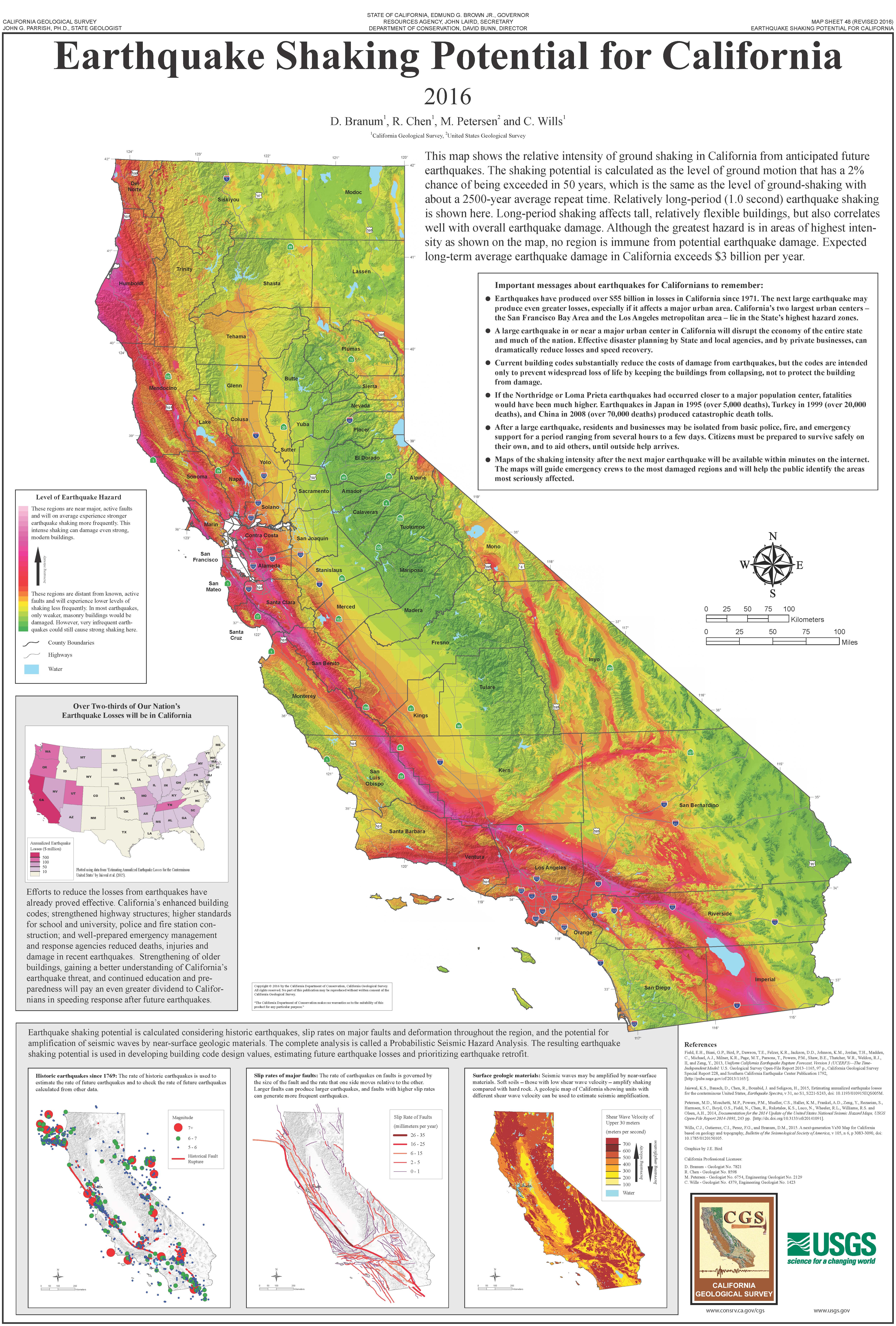
California, a state renowned for its breathtaking landscapes, vibrant culture, and innovative spirit, is also famously defined by its unique geological setting atop the Pacific Ring of Fire. This positioning means seismic activity is not merely a historical footnote but an intrinsic part of its natural heritage and a profound shaper of its landmarks, architecture, and very identity. While numerous earthquakes occur daily, most are minor and go unnoticed. However, several significant seismic events have punctuated California’s history, leaving indelible marks on its cities, infrastructure, and collective memory. Understanding when these major earthquakes struck offers a crucial lens through which to appreciate the state’s remarkable resilience and continuous evolution in the face of powerful natural forces.
California’s Seismic History: A Legacy of Movement
The history of California is intertwined with the narrative of its seismic shifts. These geological movements have not only altered the natural landscape but have also directly influenced urban planning, architectural styles, and the development of robust infrastructure designed to withstand future tremors. Each major earthquake serves as a historical marker, prompting advancements in engineering and a deeper understanding of the state’s dynamic geology.
The Great 1906 San Francisco Earthquake
One of the most devastating natural disasters in United States history occurred in the early morning hours of April 18, 1906. The Great San Francisco Earthquake, estimated at a magnitude of 7.9, struck off the coast of Northern California and caused widespread destruction, primarily due to the ensuing fires that raged for several days. This catastrophic event fundamentally reshaped the city of San Francisco, leading to its near-total rebuilding. The earthquake’s epicenter was located offshore, near San Francisco, and its rupture propagated both north and south along the infamous San Andreas Fault.
The impact on San Francisco’s architecture was profound. Most of the damage was not from the initial shaking but from the subsequent fires, which destroyed over 28,000 buildings across 490 city blocks. The event led to immediate, drastic changes in building practices and urban planning. While many iconic structures were lost, the rebuilding effort introduced new engineering techniques and a focus on fire-resistant materials, setting a precedent for future construction in seismically active zones. The city’s rapid recovery and subsequent growth are a testament to human resilience and adaptability in the face of such immense natural power.
The 1933 Long Beach Earthquake
Although not as famous as the 1906 event, the March 10, 1933, Long Beach earthquake was a pivotal moment in California’s architectural and legislative history. This magnitude 6.4 earthquake struck Southern California, causing significant damage, particularly to unreinforced masonry buildings, including many schools. While the death toll was relatively low (around 120 fatalities), the widespread structural failures, especially in public buildings, exposed critical vulnerabilities in existing building codes.
In response, California swiftly enacted the Field Act and the Riley Act, groundbreaking legislation that mandated earthquake-resistant design and construction for public buildings, especially schools. This legislation marked the beginning of a long-term commitment to seismic safety, fundamentally altering how structures were designed and built throughout the state, ensuring that future generations of California landmarks would be safer and more resilient.
The 1989 Loma Prieta Earthquake
On October 17, 1989, at 5:04 PM PDT, a magnitude 6.9 earthquake struck the San Francisco Bay Area. This event, known as the Loma Prieta Earthquake, occurred during the warm-up for Game 3 of the World Series between the San Francisco Giants and the Oakland Athletics, capturing global attention. The earthquake’s epicenter was in the Santa Cruz Mountains, roughly 60 miles south-southeast of San Francisco.
The Loma Prieta quake caused significant damage, particularly to infrastructure and unreinforced masonry buildings in San Francisco and Oakland. Iconic structures like the Bay Bridge suffered partial collapse, and the double-decked Cypress Street Viaduct in Oakland tragically collapsed, resulting in many fatalities. The damage extended to Santa Cruz, where numerous historic buildings were destroyed. This earthquake underscored the vulnerability of existing infrastructure and galvanized further investment in seismic retrofitting, particularly for bridges, freeways, and older public buildings, many of which are now considered significant landmarks in their own right, reflecting a new era of safety standards.
The 1994 Northridge Earthquake
Early in the morning of January 17, 1994, at 4:31 AM PST, the Northridge Earthquake, a magnitude 6.7 event, shook Southern California. While its magnitude was similar to Loma Prieta, the Northridge quake was particularly destructive due to its urban epicenter within the San Fernando Valley and its shallow depth, resulting in intense ground shaking. This blind thrust earthquake, meaning it occurred on a previously unknown fault, caused widespread damage across Los Angeles and surrounding communities.
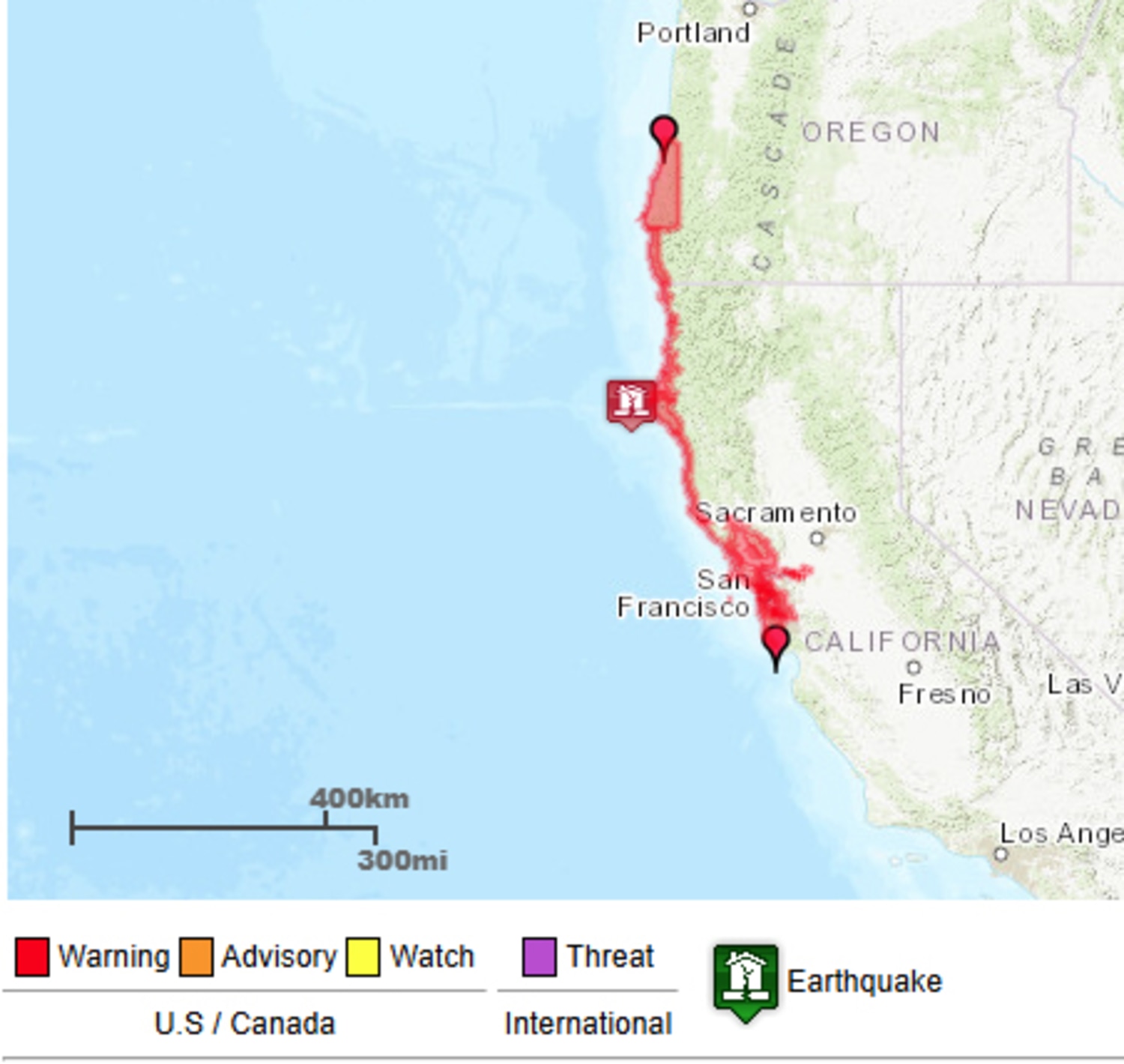
The Northridge earthquake caused extensive damage to residential and commercial buildings, with thousands deemed unsafe or red-tagged. Freeway overpasses collapsed, gas and water lines ruptured, and over 1,600 apartment buildings were severely damaged. The earthquake highlighted deficiencies in steel-frame construction practices common at the time and led to significant revisions in building codes, particularly regarding welds in steel structures and the retrofitting of non-ductile concrete buildings. Its legacy is etched into the architecture of Los Angeles, where modern structures increasingly incorporate advanced seismic engineering to protect the city’s iconic skyline and everyday infrastructure.
Understanding the San Andreas Fault System
California’s seismic character is primarily defined by the San Andreas Fault system, a natural landmark in itself, stretching over 800 miles through the state. This colossal geological feature is not merely a crack in the earth but a complex boundary between two massive tectonic plates.
Tectonic Plates and Seismic Activity
The San Andreas Fault marks the transform boundary where the Pacific Plate slides horizontally past the North American Plate. This constant, grinding movement creates immense stress that periodically releases as earthquakes. The fault is not a single, continuous line but rather a vast zone of interconnected fault segments, each capable of generating significant seismic events. Understanding this underlying geological “nature” is key to comprehending the historical “when” of California’s earthquakes and preparing for future ones.
Major Fault Lines Across California
Beyond the main San Andreas Fault, numerous other active fault lines crisscross the state. In Northern California, faults like the Hayward Fault and the Rogers Creek Fault pose significant threats, particularly to the densely populated San Francisco Bay Area. In Southern California, the San Jacinto Fault, Imperial Fault, and a network of blind thrust faults (like the one responsible for the Northridge quake) are all active. Each of these faults has its own history of seismic events, contributing to the state’s dynamic geological tapestry and shaping the landscape on which its famous cities and landmarks are built.
Seismic Resilience: Shaping California’s Architecture and Infrastructure
The repeated historical experience with earthquakes has forged a unique architectural and engineering identity for California. The “when” of past quakes directly informs the “how” of current and future construction, ensuring that the state’s iconic buildings and vital infrastructure can withstand the forces of nature.
Building Codes and Engineering Innovations
Following each major earthquake, California has consistently updated its building codes, leading the nation and often the world in seismic safety standards. Innovations like base isolation, which separates a building’s superstructure from its foundation, and shear walls designed to resist lateral forces, are common in new construction. The retrofitting of older, historically significant buildings, often using methods like steel bracing or fiber-reinforced polymers, is a continuous endeavor aimed at preserving these architectural landmarks while enhancing their safety. This commitment ensures that California’s future landmarks are built not just for aesthetics but for endurance.
Preserving Historical Structures
The challenge of preserving California’s historical landmarks in an active seismic zone is considerable. From the Spanish missions to Victorian homes in San Francisco, efforts are continuously made to integrate modern seismic retrofitting techniques without compromising the architectural integrity and historical authenticity of these structures. This process is a delicate balance, reflecting a deep respect for the past while acknowledging the imperative of safety. The successful retrofitting of structures like San Francisco’s City Hall, which underwent a massive base isolation project, stands as a testament to this commitment, allowing these landmarks to continue telling their stories for generations to come.

Preparing for the Next Major Event: A Continuous Endeavor
While the question “When was the earthquake in California?” points to the past, the state’s ongoing seismic activity means the conversation always includes preparedness for the future. Geologists continuously monitor fault lines, and engineers tirelessly work to improve structural resilience. For residents and visitors alike, understanding the state’s rich seismic history provides invaluable context, not just for safety but for appreciating the dynamic natural forces that have shaped, and continue to shape, this iconic American state. The periodic tremors are a reminder of California’s living geology, a natural phenomenon that is as much a part of its identity as its sunshine and innovation.
LifeOutOfTheBox is a participant in the Amazon Services LLC Associates Program, an affiliate advertising program designed to provide a means for sites to earn advertising fees by advertising and linking to Amazon.com. Amazon, the Amazon logo, AmazonSupply, and the AmazonSupply logo are trademarks of Amazon.com, Inc. or its affiliates. As an Amazon Associate we earn affiliate commissions from qualifying purchases.