
The Golden State, known globally for its innovation, stunning natural beauty, and vibrant cultural scene, is home to a population that shapes every facet of its existence. From its bustling metropolises to its serene coastal towns and agricultural heartlands, the sheer number of people residing within its borders profoundly influences everything from local culture and economic trends to the infrastructure supporting its thriving tourism industry. Understanding California‘s population isn’t just about statistics; it’s about comprehending the dynamic force behind its diverse lifestyles, world-renowned attractions, and the myriad accommodation options available to travelers and residents alike.
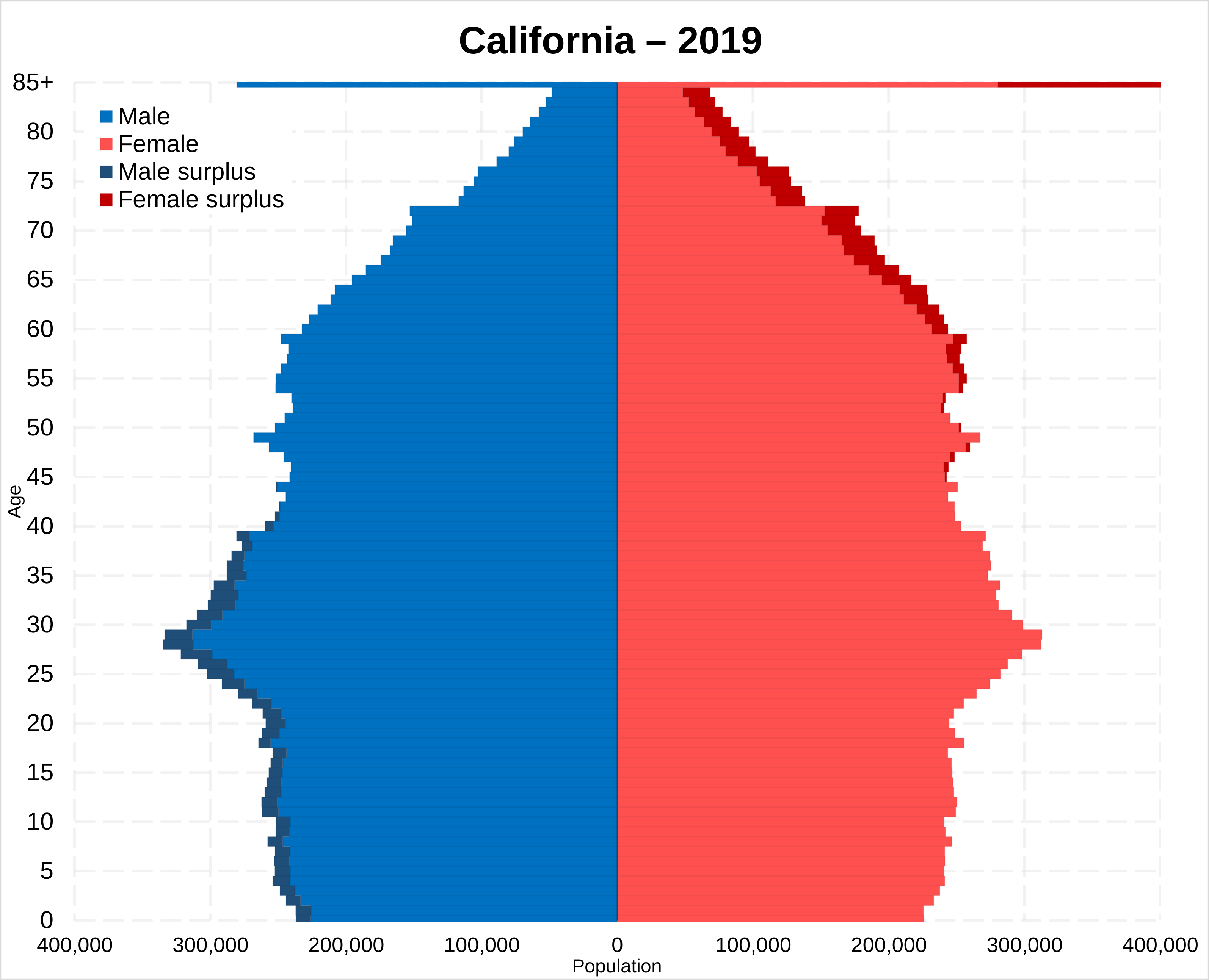
As of early 2024, California’s population hovers around 39 million residents, making it the most populous state in the United States. While it has recently experienced a slight decline from its peak, this figure still represents an immense concentration of people, each contributing to the state’s unique character. This vast demographic footprint is a key driver for the demand in travel, lodging, entertainment, and the very fabric of California’s identity as a global hub.
California’s Dynamic Demographic Landscape
The story of California’s population is one of growth, diversity, and constant evolution. For centuries, it has been a magnet for dreamers, innovators, and those seeking new beginnings, transforming it into a microcosm of the world itself.
The Sheer Numbers and Growth Trends
From its days as a sparsely populated territory to its explosive growth during the Gold Rush and subsequent booms, California’s population trajectory has been steep and sustained. In the 20th century, rapid industrialization, the rise of the entertainment industry, and its burgeoning tech sector cemented its status as a demographic powerhouse. While the state has seen a slight dip in recent years, primarily due to factors like housing affordability and out-migration to other states, its population base remains enormous. This slight adjustment in growth, however, doesn’t diminish the enduring allure of California for both domestic and international visitors, nor does it significantly alter the existing infrastructure and cultural landscape shaped by decades of expansion.
The state’s Department of Finance continuously tracks these numbers, providing crucial data for urban planning, resource allocation, and forecasting future needs in sectors like hospitality and transportation. Even with a modest decline, the state still gains international migrants and experiences natural population increases, ensuring a vibrant and continually refreshed demographic makeup.
A Melting Pot of Cultures: Diversity and Distribution
What truly defines California’s population is its unparalleled diversity. It is a true melting pot, with a rich tapestry of ethnicities, languages, and cultural backgrounds. This multiculturalism is evident in every major city, influencing everything from cuisine and festivals to art and music. Major urban centers serve as anchors for these diverse communities, each with its distinct flavor.
- Los Angeles: The largest city in California and the second-largest in the United States, Los Angeles is a sprawling metropolis known for its entertainment industry, diverse neighborhoods, and a population exceeding 3.8 million. Its vastness means a wide array of attractions, accommodations, and culinary experiences.
- San Diego: Situated on the southern coast, San Diego offers a relaxed vibe with beautiful beaches, a significant military presence, and a population of over 1.3 million. Its proximity to Mexico adds another layer of cultural richness.
- San Jose: The heart of Silicon Valley, San Jose is a hub of technological innovation and a major city with over 1 million residents, attracting a highly skilled and internationally diverse workforce.
- San Francisco: Iconic and densely populated, San Francisco boasts a vibrant cultural scene, stunning landmarks, and a population of nearly 800,000, known for its progressive outlook and unique neighborhoods.
- Fresno: Located in the agricultural heartland of the Central Valley, Fresno is a major city with a diverse population exceeding 540,000, serving as a gateway to national parks.
- Sacramento: As the state capital, Sacramento is a growing city with over 520,000 residents, blending historical charm with modern development, and offering access to diverse cultural and recreational activities.
- Other significant cities like Long Beach, Oakland, Bakersfield, Anaheim, and Riverside further highlight the widespread distribution and varied characteristics of California’s population. Each contributes to the state’s economic engine and offers unique attractions and community experiences. This dense and diverse population creates a constant demand for goods, services, and, crucially for our discussion, travel and accommodation options.
Population’s Ripple Effect on Travel and Tourism
The sheer volume and diversity of California’s population have a profound and undeniable impact on its travel and tourism industry. From the types of destinations developed to the variety of experiences offered, everything is, in some way, influenced by the millions who call the state home and the millions who visit.
Destinations and Attractions: Catering to Millions
With such a vast resident population, combined with millions of annual tourists, California’s attractions are designed to handle, entertain, and inspire immense crowds. Theme parks like Disneyland in Anaheim and Universal Studios Hollywood in Los Angeles are prime examples, built to accommodate millions of visitors year-round. Similarly, iconic landmarks such as the Golden Gate Bridge in San Francisco, the Hollywood Walk of Fame, the Santa Monica Pier, and Griffith Observatory in Los Angeles draw massive numbers, sustained by the steady flow of both locals and tourists.
Beyond urban marvels, California’s incredible natural landscapes also experience significant visitor traffic. Yosemite National Park, Lake Tahoe, Joshua Tree National Park, Death Valley National Park, and coastal gems like Pfeiffer Big Sur State Park see millions of visitors annually. The need to manage these large numbers sustainably has become a critical aspect of California’s tourism strategy. Historical sites such as Alcatraz Island and Hearst Castle also benefit from robust attendance, driven by both educational interest and the sheer volume of potential visitors.
The Culinary Scene and Local Experiences
The diverse population directly translates into an exceptionally rich and varied culinary scene. Every major city, and even smaller towns, offers an authentic taste of cuisines from around the globe, from Mexican and Vietnamese to Ethiopian and Italian. This cultural fusion makes food tourism a cornerstone of the California experience. Travelers can embark on gastronomic journeys, exploring farmers’ markets, Michelin-starred restaurants, food trucks, and neighborhood eateries that reflect the state’s global demographic. This constant demand from a large and varied local population ensures a dynamic and competitive food scene, offering high-quality and authentic experiences for visitors. Beyond food, the population supports a vibrant arts scene, live music venues, and community events that provide deep dives into local culture.
Accommodation and Infrastructure: Meeting Demand
Serving a population of nearly 39 million, plus millions of annual tourists, requires a robust and adaptable infrastructure, especially concerning accommodation and transportation. The sheer scale of demand necessitates continuous development and innovation in these sectors.
Hotel and Resort Development
The accommodation landscape in California is as diverse as its population. From luxury five-star hotels in Beverly Hills to budget-friendly motels along historic Route 66, and from sprawling resorts in Palm Springs to quaint boutique hotels in Wine Country, there’s an option for every traveler and every budget. Major hotel brands like Marriott, Hilton, and Hyatt have a significant presence, often operating multiple properties across different segments, from full-service hotels to extended-stay options.
The strong local population also drives demand for unique accommodations, including vacation rentals and glamping sites, particularly near popular natural attractions. The sustained demand for lodging, whether for business travelers heading to Silicon Valley, families visiting theme parks, or tourists exploring national parks, ensures a competitive market that often pushes for innovation in amenities and services. Developers constantly seek to expand and upgrade properties to cater to evolving tastes and the needs of a diverse clientele, all shaped by the underlying population density and tourist volume.
Urban Planning and Connectivity
Managing transportation for tens of millions of people is a monumental task. California’s dense urban corridors often face challenges with traffic congestion, prompting significant investment in public transit, ride-sharing services, and infrastructure improvements. For tourists, this means that while driving is often the preferred mode of transport, extensive road networks connect major cities and attractions. The state’s large population also supports multiple international airports, including Los Angeles International Airport (LAX), San Francisco International Airport (SFO), and San Diego International Airport, facilitating both domestic and international travel. The presence of a large population ensures the viability of these complex transportation networks, making California accessible to the world.

Lifestyle and Living: The Californian Experience
The demographic composition of California profoundly influences the lifestyles of its residents and the experiences available to visitors. It’s a state that offers a spectrum of living, from high-octane urban centers to tranquil rural retreats, reflecting the diverse aspirations of its millions of inhabitants.
Diverse Lifestyles Across the State
With its vast population spread across varied geographies, California offers an unparalleled range of lifestyles. You can find the quintessential luxury travel experience in Beverly Hills or Napa Valley, offering high-end shopping, gourmet dining, and exclusive resort stays. Conversely, budget travel is entirely feasible, with numerous hostels, campgrounds, and affordable eateries, particularly in backpacker-friendly cities like San Francisco or near national parks.
Family trips are well-catered for, with theme parks, beaches, and family-friendly museums across the state. Meanwhile, business stays are a constant fixture in innovation hubs like San Jose and financial centers like Los Angeles, driving demand for executive accommodation and conference facilities. The sheer number of people means there’s a critical mass for every niche lifestyle, contributing to a vibrant and adaptable social fabric that caters to different economic strata, cultural preferences, and recreational pursuits. Whether one seeks a quiet escape into nature or a bustling metropolitan adventure, California’s population ensures that every lifestyle niche is not only present but thriving.

Impact on Arts, Culture, and Recreation
A large and diverse population fosters an incredibly rich environment for arts, culture, and recreation. California is home to world-class museums, theaters, and music venues that thrive on the patronage of millions. The state’s cultural institutions, from the Getty Center in Los Angeles to the California Academy of Sciences in San Francisco, are sustained by a large and engaged public. Similarly, the demand for outdoor recreation is immense, with residents flocking to beaches, mountains, and deserts for hiking, surfing, skiing, and more. This constant engagement ensures that California’s cultural and recreational offerings are continually evolving, providing endless opportunities for both residents and tourists to experience new and exciting activities. The large population acts as both a consumer and a creator of this vibrant cultural landscape, making California a global leader in trends and entertainment.
In conclusion, understanding the population of California is paramount to grasping the essence of the Golden State. Its nearly 39 million residents form the foundation upon which its economy, culture, and social structures are built. This immense and diverse demographic not only fuels the innovation that defines the state but also drives the vibrant travel and tourism industry, shaping destinations, diversifying accommodation options, and creating a dynamic lifestyle that continues to attract people from all corners of the globe. California remains a compelling destination, a testament to the powerful synergy between its people and its unparalleled offerings.
LifeOutOfTheBox is a participant in the Amazon Services LLC Associates Program, an affiliate advertising program designed to provide a means for sites to earn advertising fees by advertising and linking to Amazon.com. Amazon, the Amazon logo, AmazonSupply, and the AmazonSupply logo are trademarks of Amazon.com, Inc. or its affiliates. As an Amazon Associate we earn affiliate commissions from qualifying purchases.