
Unveiling the Location of Southern California’s Iconic Peak
Mount Baldy, officially known as Mount San Antonio, stands as a monumental natural landmark in Southern California, dominating the eastern expanse of the San Gabriel Mountains. This prominent peak is situated primarily within the vast Angeles National Forest, straddling the border between Los Angeles County and San Bernardino County. Its towering presence is a defining feature of the regional landscape, visible from a multitude of vantage points across the sprawling Los Angeles metropolitan area and the Inland Empire.
At an impressive elevation of 10,064 feet (3,067 meters) above sea level, Mount Baldy reigns as the highest point in the San Gabriel Mountains range. Its distinction is not merely its altitude but also its striking appearance, characterized by a treeless, often snow-capped summit that gives the mountain its popular, descriptive moniker. This ‘bald’ characteristic is particularly noticeable during the winter months when a thick blanket of snow accentuates its majestic form, contrasting sharply with the often verdant or arid lower slopes. Geographically, it forms a critical watershed, feeding several significant rivers and streams that are vital to the region’s ecology and water supply. The sheer scale and visual impact of Mount Baldy firmly establish it as a cornerstone landmark, central to the understanding of Southern California’s natural geography.

A Landmark Defined by Nature and Geography
The intrinsic value of Mount Baldy as a landmark is rooted deeply in its natural attributes and complex geographical context. Its existence is a testament to the dynamic geological processes that have shaped California over millennia, forming a diverse environment that supports a rich array of ecosystems.
Geological Formation and Topography
Mount Baldy is a product of tectonic uplift, a result of the ongoing collision between the Pacific Plate and the North American Plate. The San Gabriel Mountains themselves are a young, rapidly eroding mountain range, characterized by steep slopes, deep canyons, and rugged terrain. Mount Baldy’s summit, composed primarily of metamorphic rock, bears the scars of ancient glaciation, although contemporary glaciers are absent. The distinctive treeless cap, from which it derives its common name, is a result of the extreme alpine conditions found at its elevation, where strong winds, intense solar radiation, and heavy snowfall prevent the growth of substantial vegetation. This treeless zone, visible from afar, is a crucial identifying feature, allowing it to be easily distinguished from other peaks in the range. Surrounding the peak, a network of deep canyons, such as San Antonio Canyon and Icehouse Canyon, radiate outwards, carved by millennia of water erosion. These canyons contribute to the mountain’s dramatic topography and serve as natural corridors leading towards its base.
Climate and Ecosystems
The varied elevation of Mount Baldy creates a remarkable gradient of climates and ecosystems, contributing to its status as a multifaceted natural landmark. At its lower elevations, a Mediterranean climate prevails, characterized by hot, dry summers and mild, wet winters, supporting chaparral and oak woodlands. As one ascends, the climate transitions to a mixed conifer forest zone, where species like Jeffrey pine, sugar pine, and white fir thrive. Higher still, subalpine forests of limber pine and lodgepole pine give way to the sparse vegetation of the alpine zone.
Seasonal changes profoundly alter the landmark’s appearance. Winters bring significant snowfall, often blanketing the peak from November through April, making it a stark white beacon. Spring sees snowmelt feeding streams and waterfalls, invigorating the landscape with fresh growth. Summers, while dry at lower elevations, offer cooler, drier air on the upper slopes, often punctuated by afternoon thunderstorms. This ecological diversity, from arid chaparral to alpine tundra-like conditions, all within a relatively short vertical distance, highlights Mount Baldy’s unique geographical significance and underscores its role as an ecological island within the urbanized landscape of Southern California.
Historical Significance and Cultural Iconography
Beyond its physical attributes, Mount Baldy holds a deep historical and cultural resonance, solidifying its place as a cherished landmark in the collective consciousness of Southern California.

Early Inhabitants and Naming
Long before European arrival, the San Gabriel Mountains and the valleys surrounding Mount Baldy were home to indigenous peoples, primarily the Tongva (also known as the Gabrieliño) and Kizh peoples. These groups maintained a profound spiritual connection to the land, utilizing its resources and understanding its seasonal rhythms. While specific indigenous names for the peak itself are less commonly documented in contemporary records, its presence would have been an undeniable and central feature of their ancestral territories.
The name “Mount San Antonio” was bestowed upon the peak in 1774 by Spanish explorer Francisco Garcés, in honor of Saint Anthony of Padua. However, over time, its distinctive treeless summit led to the more colloquial and widely adopted name, “Mount Baldy.” This popular nomenclature reflects a direct observation of its most striking physical characteristic and has since become synonymous with the landmark. The dual naming reflects both the historical overlay of European exploration and the organic, descriptive evolution of local vernacular.
A Beacon for Recreation and Exploration
For over a century, Mount Baldy’s imposing presence has served as a natural magnet for exploration and appreciation of the wilderness. While specific recreational activities fall outside the scope of “landmarks,” the mountain’s enduring allure as a prominent natural feature is undeniably part of its cultural significance. Its visible grandeur from urban centers has historically inspired generations to venture into the high country. Early pioneers, prospectors, and naturalists were drawn to its slopes, seeking both resources and solitude. Its iconic silhouette became a symbol of the wild frontier contrasting with the burgeoning cities below.
The mountain’s aesthetic appeal, particularly during its snow-capped winter months, renders it a photographic subject and a source of regional pride. It stands as a constant reminder of the majestic natural world that coexists with the dense urbanization of Southern California, offering a visual connection to untamed wilderness. This dual identity—a majestic natural formation with a rich human history—cements its status as an iconic landmark.
Navigating to the Iconic Summit
Understanding the precise location of Mount Baldy also involves comprehending how one approaches this significant landmark and its visibility within the broader regional context.
Access Points and Approaches
Access to the general area of Mount Baldy is primarily facilitated by Mount Baldy Road, a winding scenic route that originates near the city of Upland and ascends into the heart of the San Gabriel Mountains. This road leads to Mount Baldy Village, a small community nestled in the canyon below the peak, which serves as a key gateway to the upper reaches of the mountain. From Mount Baldy Village, the road continues upwards to various trailheads and access points, including the Mount Baldy Ski Lifts area.
For those approaching from the San Bernardino County side, access is often through communities like Wrightwood or via the eastern approaches within the Angeles National Forest, connecting to various forest service roads and trails that lead into the Mount Baldy wilderness area. These routes highlight the mountain’s position at the confluence of multiple regional access corridors, emphasizing its central role as a landmark in the San Gabriels.
Visibility and Regional Context
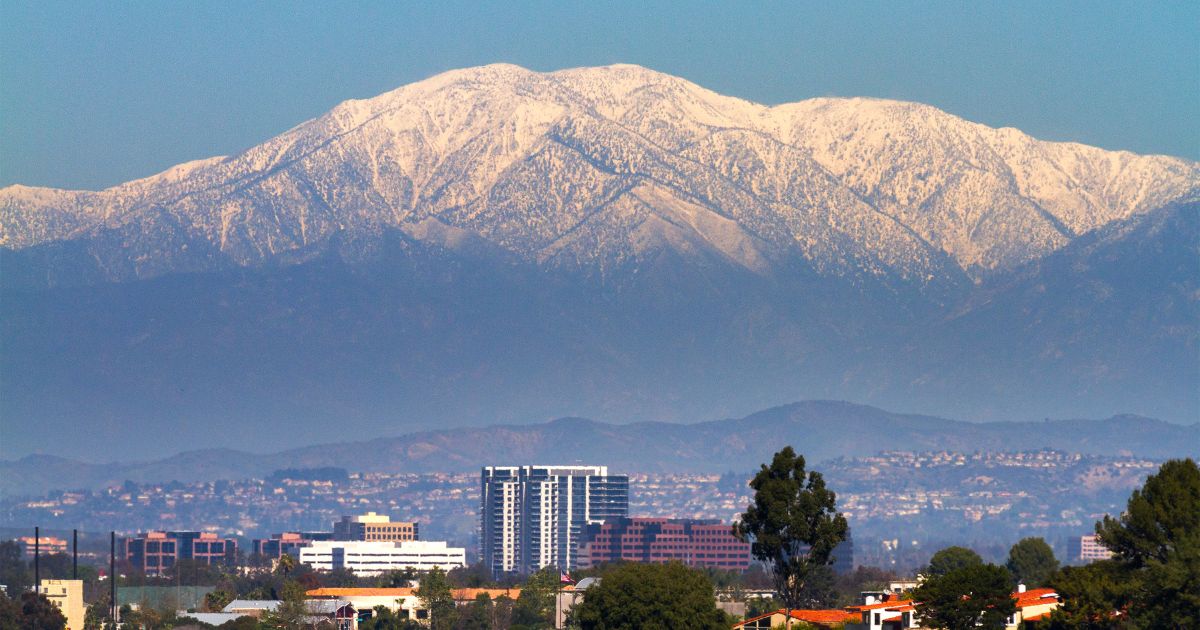
One of the most remarkable aspects of Mount Baldy’s location is its unparalleled visibility across Southern California. On clear days, the peak can be seen from as far west as Santa Monica and Malibu, across the vast expanse of the Los Angeles basin, and eastward into the Mojave Desert and parts of the Inland Empire. Its commanding presence serves as a natural compass and a constant backdrop to the lives of millions.
This widespread visibility reinforces its status not just as a geographical point, but as a recognized symbol of the region. Whether viewed from the bustling freeways of Los Angeles, the suburban streets of Orange County, or the agricultural fields of the Inland Empire, Mount Baldy remains an unmistakable natural monument, anchoring the landscape and serving as a majestic reminder of the enduring wildness at the heart of one of the world’s most populous urban areas. Its location is not just coordinates on a map, but a profound connection point between nature and civilization in Southern California.
LifeOutOfTheBox is a participant in the Amazon Services LLC Associates Program, an affiliate advertising program designed to provide a means for sites to earn advertising fees by advertising and linking to Amazon.com. Amazon, the Amazon logo, AmazonSupply, and the AmazonSupply logo are trademarks of Amazon.com, Inc. or its affiliates. As an Amazon Associate we earn affiliate commissions from qualifying purchases.