
The Inescapable Pull of California: Demand vs. Scarcity
The question of why residential accommodation in California commands such exorbitant prices is multifaceted, but at its core lies a fundamental imbalance between relentless demand and an inherently constrained supply. For decades, the Golden State has been a beacon for innovation, opportunity, and a desirable lifestyle, attracting millions from across the globe. This influx of residents, coupled with a growing internal population, creates immense pressure on the housing market, making long-term accommodation increasingly competitive and expensive.
Population Growth and Economic Attractiveness
California’s robust economy, particularly its dominance in the technology sector in areas like Silicon Valley, the entertainment industry in Los Angeles, and burgeoning biotech hubs in San Diego and the Bay Area, generates high-paying jobs that draw a talented workforce. These individuals, often earning substantial incomes, enter the housing market with significant purchasing power, driving up prices. The allure isn’t just economic; California’s diverse natural landscapes, from the pristine beaches of Malibu to the majestic peaks of the Sierra Nevada, and its vibrant cultural scene across cities like San Francisco and Oakland, contribute to its widespread appeal as a place to live permanently. This desirability translates directly into a willingness to pay a premium for a long-term stay, whether renting an apartment or purchasing a home.
Geographic and Environmental Constraints
Unlike many other states with vast expanses of easily developable land, much of California’s desirable areas are geographically constrained. The state’s extensive coastline, mountainous regions, deserts, and fertile agricultural lands mean that only a limited portion of its total area is suitable for residential development. This inherent scarcity of buildable land, particularly in metropolitan areas where job opportunities are concentrated, naturally inflates property values. Furthermore, environmental protections, vital for preserving California’s natural beauty and ecosystems, often restrict where and how new housing can be built, further limiting supply. The growing concerns regarding wildfires also impact developable land and insurance costs for existing structures, adding another layer of complexity and expense to accommodation.
Navigating the Regulatory Labyrinth: Construction and Zoning Challenges
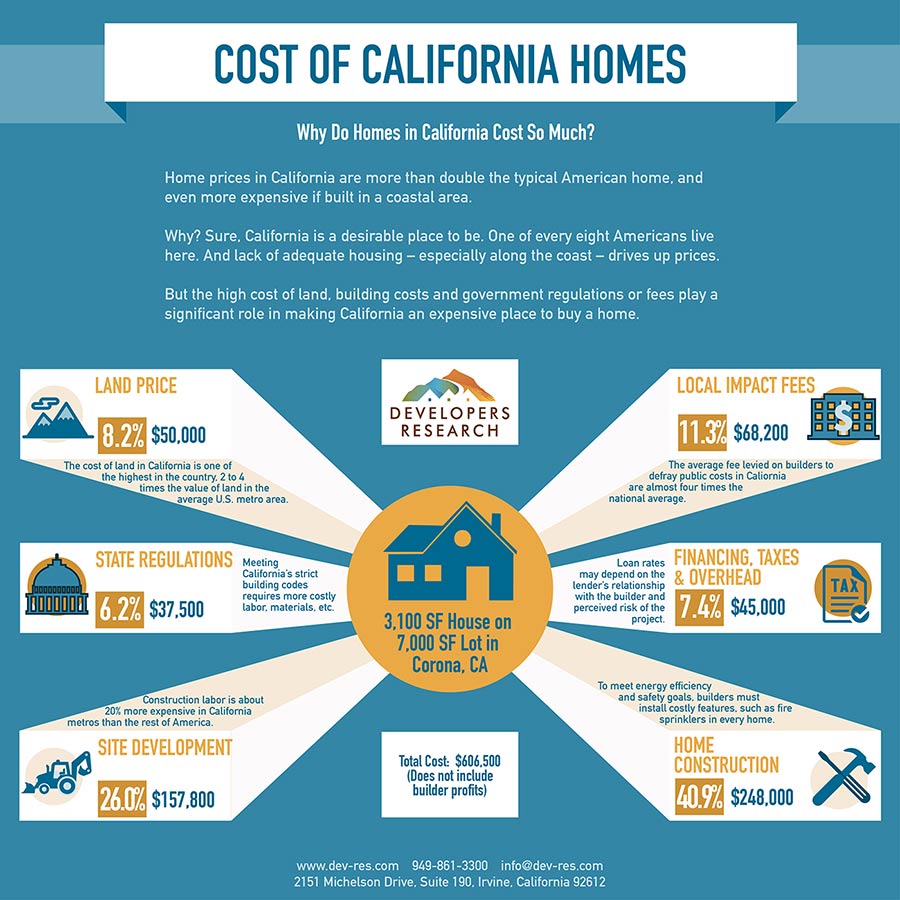
Beyond the fundamental supply-demand imbalance, the cost of constructing new residential accommodation in California is significantly influenced by a complex web of regulations, high labor costs, and bureaucratic hurdles. These factors collectively increase development expenses, which are ultimately passed on to the buyer or renter, contributing to the state’s sky-high housing prices.
Stringent Zoning Laws and Permitting
Many of California’s most desirable cities and counties have stringent zoning laws that often favor single-family homes and restrict higher-density development. While these regulations are sometimes enacted to preserve community character or manage infrastructure, they severely limit the number of residential units that can be built on a given parcel of land. This effectively caps the potential supply of long-term housing options, even in areas with significant demand. The process for obtaining permits for new construction or even significant renovations can be notoriously lengthy, complex, and expensive, often involving multiple reviews, environmental impact reports, and community input processes. These delays and requirements add substantial “soft costs” to projects, pushing up the final price of the accommodation. Attempts to streamline this process, such as state-level legislation aimed at overriding local zoning for certain types of housing, have met with mixed success due to local resistance.
High Construction Costs and Labor
California faces some of the highest construction costs in the nation. This is attributable to several factors: the high cost of skilled labor, particularly in competitive markets like San Jose and Santa Monica; the expense of materials, which can be higher due to transport and specific state building codes (e.g., earthquake-resistant standards); and the need to comply with extensive environmental and safety regulations. Developers must also account for various impact fees levied by local governments to fund infrastructure improvements like schools, roads, and utilities, which are passed on to the consumer as part of the total cost of accommodation. These fees can add tens of thousands of dollars to the cost of a single housing unit, making it more challenging to build affordable long-term stays.

The Golden State’s Golden Opportunities: Economic Magnetism
California’s powerful economic engine is a double-edged sword when it comes to housing affordability. While it creates abundant opportunities and attracts talent, the wealth generated also fuels demand for accommodation, further driving up prices. This phenomenon is particularly acute in the state’s major metropolitan areas, where innovation and prosperity are concentrated.
Tech Boom and High-Income Earners
The rise of the technology industry, centered in the Bay Area but with significant presences across Southern California, has created a class of exceptionally high-income earners. Tech companies like Apple, Google, Facebook (now Meta), and numerous startups offer salaries and stock options that significantly outpace national averages. These well-compensated individuals can afford to pay more for residential accommodation, whether they are looking for a house to buy or a luxury apartment for long-term lease in areas like Palo Alto or Beverly Hills. Their entry into the housing market inevitably pushes prices upward, making it increasingly difficult for moderate and even upper-middle-income individuals and families to secure stable accommodation. The strong presence of these high-paying sectors also means that supporting service industries often struggle to find local employees who can afford to live near their workplaces, leading to long commutes and further exacerbating housing stress.
Quality of Life and Desirability
Beyond economic factors, California’s unparalleled quality of life continues to make it a highly desirable place to live and establish a long-term residence. The state boasts a Mediterranean climate in many regions, diverse natural beauty ranging from stunning coastlines to national parks like Yosemite and the Redwood National Park, and a vibrant cultural tapestry. Access to world-class universities, healthcare facilities, and a progressive social environment further adds to its appeal. For many, the lifestyle offered by living in California is worth the premium, creating a sustained demand for residential accommodation that shows little sign of abating. This intrinsic value, coupled with limited supply, means that even in the face of high costs, a significant number of people are consistently willing to vie for available houses and apartments, perpetuating the high price environment for long-term stays.
Beyond the Build: Investment, Speculation, and Rental Market Dynamics
The high cost of residential accommodation in California isn’t solely a function of supply, demand, and development costs. External market forces, including investment activity, speculative buying, and the dynamics of the rental market, also play a significant role in inflating home values and the overall cost of living. These factors create additional layers of competition for prospective long-term residents.
Investor Activity and Financialization of Housing
California real estate, particularly in its major urban centers, has long been viewed as a sound investment. Both individual and institutional investors are drawn to the state’s strong appreciation rates and rental yields. These investors often have cash offers, which can outcompete traditional buyers reliant on mortgages, especially in highly sought-after neighborhoods. The financialization of housing, where homes are increasingly seen as assets for wealth generation rather than solely as places of residence, reduces the stock available for owner-occupancy and drives up prices. This trend can also lead to properties being held off the market for speculative purposes, further constricting supply in an already tight long-term accommodation environment. When a significant portion of available homes is purchased by investors, it leaves fewer options for families and individuals looking for a primary residence, pushing them into a competitive and expensive rental market.
Impact of Short-Term Rentals
The proliferation of short-term rental platforms, while offering flexible accommodation options for travelers, has also impacted the long-term housing supply in many California cities. Properties that might otherwise serve as permanent residences or long-term rental units are converted into lucrative short-term rentals. This conversion reduces the overall availability of housing for permanent residents, thereby intensifying competition and driving up long-term rental prices. Local governments in cities like San Francisco, Los Angeles, and Santa Barbara have attempted to regulate short-term rentals to mitigate this effect, but the challenge remains significant in many areas, particularly in popular tourist destinations where the profit margins for short-term stays are exceptionally high. The blurring lines between hotel-style accommodation and residential housing further complicates the market, contributing to the elevated cost of securing a long-term place to live.
The Cycle of Appreciation and Affordability Crisis
The combination of limited supply, robust demand, high construction costs, and significant investment activity creates a self-reinforcing cycle of appreciation. As prices rise, homeowners gain equity, which can encourage further investment in the housing market, potentially leading to more competitive bids and higher sale prices. This continuous upward pressure on values makes entry into the ownership market increasingly difficult for first-time buyers, effectively locking out many who wish to establish long-term accommodation in the state. The affordability crisis extends beyond homeownership, pushing rental prices ever higher as demand outstrips the supply of available apartments and houses for lease. This ongoing challenge underscores why finding affordable long-term accommodation in California remains one of the state’s most pressing and complex issues.
LifeOutOfTheBox is a participant in the Amazon Services LLC Associates Program, an affiliate advertising program designed to provide a means for sites to earn advertising fees by advertising and linking to Amazon.com. Amazon, the Amazon logo, AmazonSupply, and the AmazonSupply logo are trademarks of Amazon.com, Inc. or its affiliates. As an Amazon Associate we earn affiliate commissions from qualifying purchases.