
California, a beacon for diverse travel experiences, from the sun-drenched beaches of San Diego to the majestic redwoods of the north, consistently presents a unique challenge to travelers: exceptionally high gasoline prices. For those planning a road trip through the Golden State, or even just navigating its bustling cities, understanding the multifaceted reasons behind these costs is crucial for effective budget planning and adapting one’s travel lifestyle. The confluence of stringent environmental regulations, a distinct market structure, and a heavy tax burden creates a scenario where gas prices routinely soar above the national average, profoundly influencing how visitors and residents alike experience the state.

The Unique Economics Fueling California’s Pumps
The fundamental reasons for California’s elevated gas prices are deeply embedded in its legislative, environmental, and geographical landscape. These factors combine to create an intricate pricing model that directly impacts the budget and planning for every travel lifestyle, from the spontaneous adventurer to the meticulous family vacationer.
State Taxes and Environmental Regulations
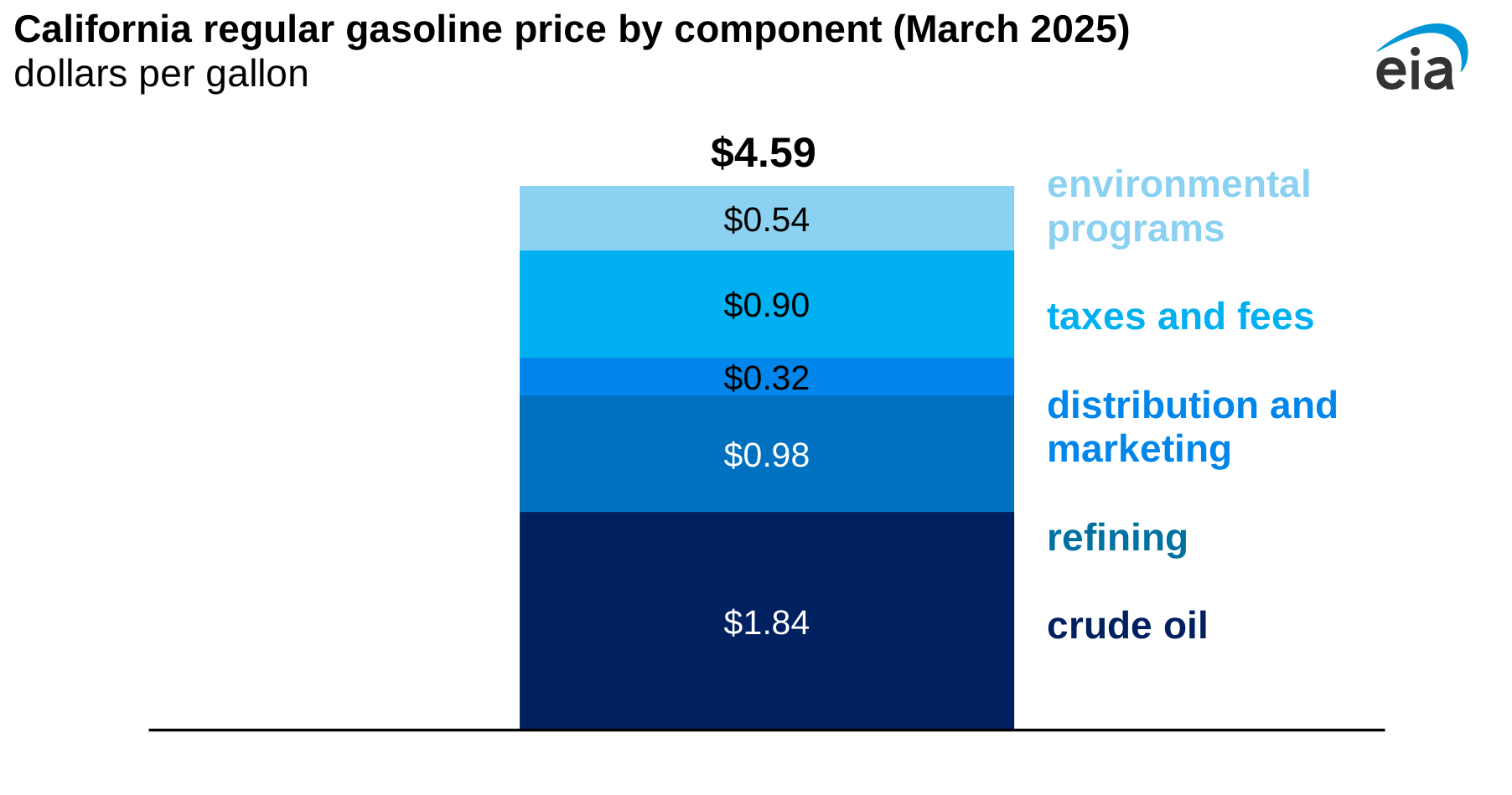
Perhaps the most significant contributors to the disparity in gas prices between California and other states are its aggressive tax policies and pioneering environmental mandates. California imposes some of the highest state excise taxes on gasoline in the United States. These taxes are earmarked for vital infrastructure projects, including road maintenance and public transportation improvements, which ironically benefit travelers but come at a direct cost at the pump. Beyond excise taxes, the state levies additional fees such as a sales tax and a Cap-and-Trade program fee, designed to reduce greenhouse gas emissions. While these policies reflect the state’s commitment to environmental stewardship and sustainable development, they add several cents per gallon, making an immediate impact on a traveler’s daily expenditure and influencing the budget travel lifestyle significantly. For instance, a long-haul journey from Los Angeles to San Francisco can see hundreds of dollars allocated purely to fuel, a consideration that budget-conscious travelers cannot overlook.
Specialized Fuel Blends and Refinery Capacity
Another critical factor is California’s requirement for a unique, cleaner-burning gasoline formulation, often referred to as CARB (California Air Resources Board) compliant fuel. This specialized blend is mandated to reduce smog and air pollution, particularly in dense urban centers like Los Angeles, the San Francisco Bay Area, and the Central Valley. Producing this specific fuel is more complex and costly than conventional gasoline, and only a limited number of refineries are equipped to do so.
Furthermore, California operates somewhat as an “energy island.” It has a restricted network of pipelines connecting it to other major refinery centers in the United States. This means the state relies heavily on its in-state refineries or imports from overseas. Any unplanned refinery maintenance, operational issues, or natural disasters (such as wildfires or earthquakes) can quickly tighten supply, leading to immediate and sometimes dramatic price spikes. This delicate balance of supply and demand for a specialized product creates an unpredictable element for any travel lifestyle, requiring travelers to monitor prices closely or factor in potential surges.
Market Dynamics and Supply Chains
The competitive landscape among gasoline retailers in California also plays a role. While there are numerous gas stations, the underlying supply chain is dominated by fewer players, which can affect wholesale prices. Moreover, the cost of crude oil, which is a global commodity, directly impacts the price at the pump. Although California produces some crude oil, it still imports a significant amount from international markets. Geopolitical events, global demand fluctuations, and shipping costs all contribute to the final price consumers pay. These external market dynamics introduce an element of volatility, meaning that even well-planned travel budgets can be susceptible to sudden changes in fuel costs, making adaptability a key trait for those embarking on a flexible travel lifestyle in the state.
Navigating the Golden State: Strategies for Diverse Travel Lifestyles
Understanding the “why” behind California’s high gas prices is the first step; the next is adapting one’s travel approach. Different travel lifestyles—from the budget-conscious backpacker to the luxury seeker—will find unique ways to navigate these costs.
Budget-Conscious Exploration
For travelers prioritizing affordability, every gallon counts. Smart planning becomes paramount. Utilizing apps like GasBuddy to locate the cheapest gas stations along a route can yield significant savings over a multi-day trip. Often, gas stations further from major highways or tourist hotspots offer lower prices. Strategic route planning to minimize unnecessary detours and focusing on fuel-efficient driving habits (e.g., avoiding rapid acceleration and braking, maintaining optimal tire pressure) are simple yet effective strategies for a frugal travel lifestyle. Consider grouping attractions that are geographically close to reduce driving time and fuel consumption, allowing more budget for experiences rather than expenses.
Luxury and Convenience Travel
Even for those whose travel lifestyle prioritizes luxury and convenience over strict budgeting, California’s fuel prices are hard to ignore. While the sticker shock at the pump might be absorbed more easily, the sheer expense can still subtly influence decisions. Luxury travelers might opt for high-performance vehicles which, while desirable, often consume more fuel. However, the rising cost of petrol might encourage a shift towards luxury electric vehicles, blending eco-consciousness with comfort and significantly reducing fuel anxieties, especially given California’s extensive charging infrastructure. For the ultimate in convenience, some luxury travelers might choose curated tours where transportation is handled, or utilize chauffeured services, effectively outsourcing the fuel cost and management. This allows them to enjoy California’s splendor without the direct hassle of refueling.
Family Road Trips and Group Adventures
Family road trips and group adventures inherently involve more people and often more gear, frequently necessitating larger, less fuel-efficient vehicles. For this group travel lifestyle, gas costs can quickly add up. Strategies here often revolve around collective planning. Carpooling, where multiple families or friends share one vehicle, is an excellent way to split fuel expenses. Planning meals and accommodations in advance can reduce spontaneous detours for necessities, thereby saving gas. Furthermore, choosing a single base location for a few days to explore a region, rather than constantly moving between distant points, can significantly cut down on mileage and fuel consumption. For instance, exploring the Napa Valley from a single hotel rather than driving to separate locations daily.
Adapting to the New Normal: Evolving Travel Lifestyles in California
The persistent high cost of gasoline in California is not just a temporary inconvenience; it is shaping long-term trends in travel and influencing personal transportation choices. This “new normal” is giving rise to evolving travel lifestyles that prioritize sustainability, efficiency, and alternative modes of exploration.
The Rise of Electric Vehicles for Tourists
California’s proactive stance on electric vehicles (EVs) is rapidly transforming travel, making the EV an increasingly viable and attractive option for visitors. The state boasts a leading charging infrastructure, with numerous charging stations located at hotels, public parking lots, and along major scenic routes like Highway 1. High gas prices make the economics of renting or owning an EV much more compelling, offering significant cost savings on “fuel.” For the eco-conscious traveler lifestyle or simply those looking to avoid pump shock, an EV offers a smoother, often quieter journey, aligning perfectly with the desire for a relaxed and responsible vacation. Many rental car agencies now offer a wide selection of EVs, making this option accessible for short-term visitors.
Embracing Public Transit and Ride-Shares
In California’s major metropolitan areas, high gas prices make public transportation and ride-sharing services incredibly appealing alternatives to driving. Cities like San Francisco offer comprehensive transit systems such as BART (Bay Area Rapid Transit) and Muni buses and streetcars, allowing seamless exploration without the worry of parking or fuel costs. Los Angeles’s Metro system, though vast, is continually expanding and connecting more of the sprawling city. For short distances or evenings out, ride-sharing apps offer convenience and often prove more cost-effective than fueling up and parking, particularly for the urban explorer lifestyle. This shift allows travelers to immerse themselves more deeply in local culture without the stress of navigating traffic or finding expensive parking.

Shorter Drives and Regional Immersion
The economic reality of expensive gas is also encouraging a trend towards more focused travel. Instead of attempting cross-state epics that traverse the entire length of California in a single trip, many travelers are now opting for shorter, more intensive regional explorations. A regional immersion lifestyle might involve spending an entire week exploring Southern California, focusing on Orange County beaches and Disneyland, or dedicating a trip solely to the wonders of Northern California’s wine country and coastal towns. This approach reduces overall mileage and fuel consumption, allowing for a deeper, more relaxed experience of a specific area rather than a rushed overview of the entire state. It also frees up budget for local experiences, dining, and accommodations, enhancing the quality of the trip within a constrained travel budget.
In conclusion, California’s high gas prices are a complex issue rooted in a blend of environmental policy, market dynamics, and taxation. While they present a significant consideration for any traveler, they also foster an environment of innovation and adaptation. By understanding these underlying factors and embracing strategic planning, alternative transportation, or evolving travel styles, visitors can still enjoy the boundless beauty and experiences the Golden State has to offer, proving that even with high fuel costs, the Californian dream remains very much within reach for every kind of lifestyle.
LifeOutOfTheBox is a participant in the Amazon Services LLC Associates Program, an affiliate advertising program designed to provide a means for sites to earn advertising fees by advertising and linking to Amazon.com. Amazon, the Amazon logo, AmazonSupply, and the AmazonSupply logo are trademarks of Amazon.com, Inc. or its affiliates. As an Amazon Associate we earn affiliate commissions from qualifying purchases.