
Understanding the economic landscape of a city is fundamental to planning any lifestyle, whether you’re considering a temporary visit, a long-term relocation, or simply budgeting for daily expenses. For anyone looking at Chicago, a global hub of culture and commerce, knowing the minimum wage is a critical piece of information. This isn’t just a figure for job seekers; it’s a benchmark that influences the cost of living, the price of services, and ultimately, the viability of a particular lifestyle within the Windy City. Chicago’s minimum wage policies are unique, often exceeding both federal and Illinois state minimums, reflecting the City of Chicago’s commitment to ensuring a living wage for its residents and workforce.
Understanding Chicago’s Tiered Minimum Wage System
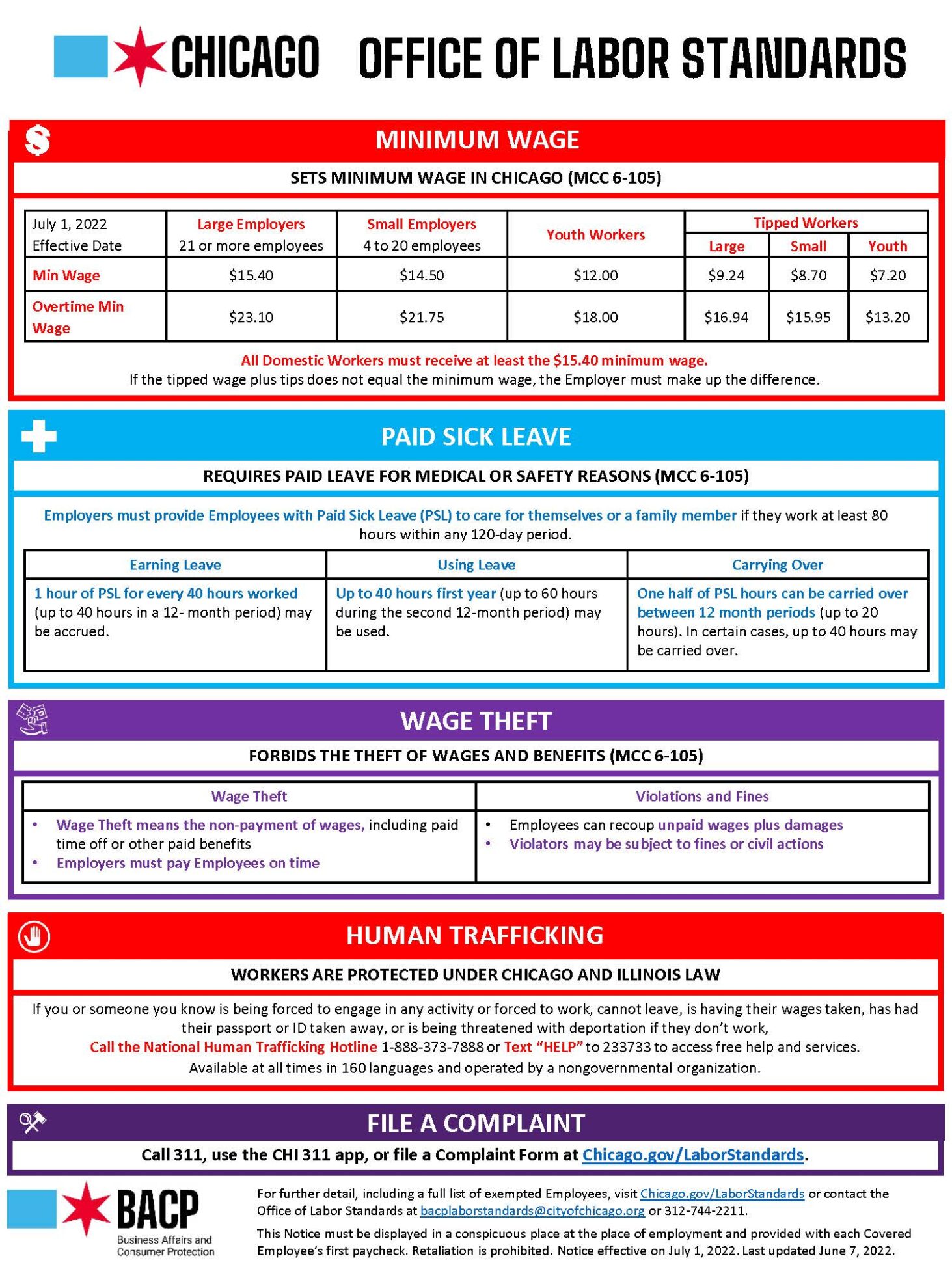
Chicago’s approach to minimum wage is more nuanced than a single, flat rate. It operates under a tiered system, taking into account the size of the employer and whether employees receive tips. This complexity aims to create a more equitable economic environment, though it requires a bit of parsing for those unfamiliar with local ordinances.
The City of Chicago Minimum Wage Ordinance
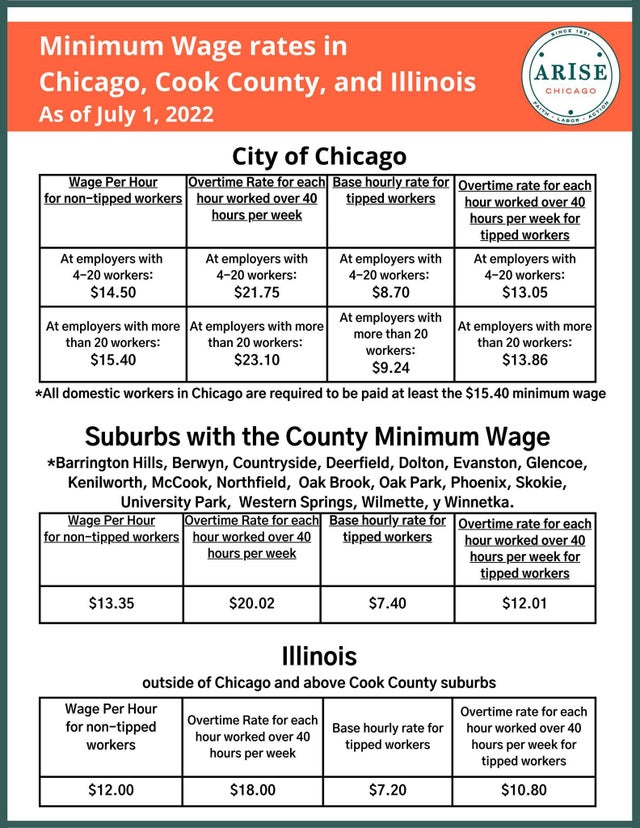
The City of Chicago has consistently implemented its own minimum wage, which has historically been higher than both the federal minimum wage and the state of Illinois’s minimum wage. This local ordinance applies to most employees working within the city limits, regardless of where their employer is based. The specific rate is usually differentiated by employer size, typically defined by the number of employees. For instance, larger employers (often those with 21 or more employees) are typically required to pay a higher minimum wage than smaller employers (those with 4 to 20 employees). Businesses with fewer than four employees are usually exempt from the City of Chicago minimum wage ordinance and fall back to the state minimum wage. It is crucial to note that the minimum wage ordinance of the City of Chicago also applies to youth workers (under 18) but at a slightly reduced rate for the first 90 days of employment. After 90 days, the standard minimum wage for the employer size applies. This progressive approach underscores the City of Chicago’s dedication to enhancing the economic standing of its working population.
Special Wage Tiers and Exemptions
Beyond the general minimum wage, Chicago has specific provisions for certain categories of workers, most notably tipped employees. Under Chicago’s Fair Workweek Ordinance, and subsequent adjustments, the minimum wage for tipped workers has been on a path to eventually match the non-tipped minimum wage. In the interim, tipped employees have a separate, lower minimum wage, with the understanding that their total earnings (base wage plus tips) must meet or exceed the standard non-tipped minimum wage. If an employee’s tips do not bring them up to the full minimum wage, the employer is legally obligated to make up the difference. This system ensures that tipped employees are not solely reliant on customer generosity for a baseline income. Additionally, certain organizations, such as specific non-profits or governmental entities, may have particular exemptions or different minimum wage requirements, although these are generally less common for the typical private sector employee. It’s also important to distinguish City of Chicago wages from the broader Cook County minimum wage; while Chicago is within Cook County, its municipal ordinance typically sets a higher bar than the county’s mandate, meaning Chicago employers must adhere to the higher City of Chicago rate.
Annual Adjustments and Future Outlook
The minimum wage in Chicago is not static; it is subject to annual adjustments, typically taking effect on July 1st of each year. These adjustments are often tied to the Consumer Price Index (CPI), reflecting changes in the cost of living. This mechanism is designed to ensure that the minimum wage keeps pace with inflation, helping to preserve the purchasing power of low-wage workers. The transparency and predictability of these annual increases allow both employers and employees to plan accordingly. The long-term outlook for Chicago’s minimum wage continues to lean towards progressive increases, often with the ultimate goal of reaching a “living wage” benchmark, further solidifying its position as a city committed to economic fairness for its workforce.
The Impact on Lifestyle: Budgeting for Life in the Windy City
For anyone considering living or even extended travel in Chicago, understanding the minimum wage is just the first step. The real insight comes from how this wage translates into daily life, especially when confronting the city’s cost of living.
Cost of Living vs. Minimum Wage
Chicago is renowned for its vibrant culture, stunning architecture, and diverse opportunities, but it also carries a significant cost of living. Rent, in particular, can be a substantial portion of one’s expenses, especially in popular neighborhoods like Lincoln Park, River North, or Wicker Park. While the City of Chicago’s minimum wage is higher than many other cities, earning solely at this level can still present challenges in affording basic necessities without careful budgeting. Groceries, utilities, and healthcare costs also contribute to the overall expense. For individuals or families relying on minimum wage income, strategic choices regarding housing location, transportation methods, and spending habits become paramount to maintaining a sustainable lifestyle. This often means living further from the city center, utilizing public transit, and prioritizing essential expenses over luxuries.
Daily Expenses and Discretionary Spending
The minimum wage directly dictates the extent of an individual’s discretionary spending. For those earning at this level, a significant portion of their income is allocated to fixed costs like rent and utilities. This leaves a smaller amount for flexible spending categories such as food, entertainment, and personal care. Eating out regularly at Chicago’s acclaimed restaurants, attending concerts, or frequenting the many bars can quickly deplete a minimum wage budget. Consequently, a lifestyle built on a minimum wage income often involves cooking at home, seeking out free or low-cost entertainment options, and making intentional choices about every purchase. Understanding this balance is key for budget travelers or individuals on temporary assignments who need to stretch their money further while still experiencing the best of what Chicago has to offer.
Transportation Costs
Navigating Chicago efficiently is crucial, and transportation costs can significantly impact a minimum wage budget. The Chicago Transit Authority (CTA) offers extensive bus and ‘L’ train services, providing an affordable way to travel across the city. A monthly pass for the CTA is a smart investment for regular commuters. However, relying on ride-sharing services or taxis, while convenient, can quickly become prohibitive on a minimum wage income. The decision to own a car in Chicago also comes with considerable costs: insurance, gas, parking fees, and maintenance. For someone earning minimum wage, foregoing a personal vehicle and embracing Chicago’s robust public transit network or opting for cycling can significantly reduce monthly expenditures, freeing up funds for other essential or discretionary needs.
Minimum Wage and the Travel Experience: A Budget Traveler’s Perspective
For the budget-conscious traveler, understanding Chicago’s minimum wage isn’t just an abstract economic fact; it’s a practical tool for planning an affordable and enjoyable visit. It offers insights into service costs, tipping expectations, and even potential temporary work opportunities.
Evaluating Travel Budgets
When planning a trip to Chicago, knowing the local minimum wage helps to set realistic expectations for daily expenses. The cost of labor, which the minimum wage underpins, influences the price of everything from a cup of coffee to a guided tour. Budget travelers can use this knowledge to anticipate how much they might spend on meals, local transportation, and entry fees to attractions. For example, if the minimum wage is relatively high, it implies that certain services or restaurant meals might also be priced higher to account for increased labor costs. This encourages travelers to look for deals, explore less expensive dining options, or opt for free attractions to keep their budget in check. It’s about aligning expectations with local economic realities to avoid financial surprises during your stay.
Tipping Culture and Etiquette
Chicago has a strong tipping culture, especially in its vibrant hospitality sector. While the City of Chicago has a separate, lower minimum wage for tipped employees, the expectation is that tips will supplement this base wage to reach a living income. For budget travelers, it’s essential to factor in tips for restaurant servers, bartenders, taxi drivers, and other service providers. A standard tip in Chicago often ranges from 15% to 20% of the bill, or more for exceptional service. Understanding the minimum wage structure for tipped workers helps visitors appreciate the role of tips in their overall compensation, fostering a more informed and respectful interaction with the local service industry. Budgeting for tips ensures a smoother and more ethical travel experience.
Job Opportunities for Temporary Stays
For those considering a working holiday or an extended stay in Chicago, understanding the minimum wage is paramount. Many entry-level positions in the hospitality, retail, and service industries – common choices for temporary employment – will pay at or near the minimum wage. Knowing this figure allows individuals to accurately project their potential earnings and assess if it’s sufficient to cover their living expenses in Chicago. It also helps in evaluating job offers and negotiating wages. While minimum wage jobs can provide a foot in the door and an income stream, individuals seeking long-term financial stability in Chicago might consider pursuing roles that offer wages significantly above the minimum, or explore sectors with higher earning potential.
Navigating Chicago on a Minimum Wage Budget
Living or traveling on a budget in a major metropolitan area like Chicago requires smart planning and an awareness of cost-saving strategies. Even with a minimum wage income, it’s possible to enjoy the city’s rich offerings without breaking the bank.
Affordable Activities and Attractions
Chicago is brimming with free and low-cost attractions that are perfect for a budget-conscious lifestyle. Millennium Park is home to iconic landmarks like the Cloud Gate (“The Bean”) and the Crown Fountain, all accessible without charge. The Lincoln Park Zoo offers free admission year-round, providing a wonderful escape for families and individuals. Many of Chicago’s world-class museums, such as the Art Institute of Chicago or the Field Museum, offer free admission days for Illinois residents, and often discounted rates for others. Walking or cycling along the Lakefront Trail provides stunning views of the skyline and Lake Michigan at no cost. Exploring diverse neighborhoods like Pilsen for its vibrant murals or Andersonville for its unique shops can be an engaging experience without significant expenditure.
Smart Eating and Grocery Shopping
Food costs can quickly add up, but Chicago offers numerous ways to eat well on a budget. Cooking at home is the most effective strategy; exploring local grocery stores like Mariano’s, Jewel-Osco, or discount chains can help keep costs down. Visiting farmers’ markets during the season can provide fresh, local produce at competitive prices. When dining out, look for lunch specials, happy hour deals, or BYOB (Bring Your Own Bottle) restaurants, which can significantly reduce the cost of a meal. Exploring Chicago’s vast array of casual eateries, from authentic taco stands in Little Village to classic Chicago-style hot dog joints, offers delicious and affordable culinary experiences.
Accommodation Strategies
For budget travelers or those contemplating a temporary stay, finding affordable accommodation in Chicago is key. While hotels along the Magnificent Mile or in River North can be pricey, several options cater to a tighter budget. Hostels in central locations offer dormitory-style lodging at significantly lower rates and provide opportunities to meet other travelers. Extended-stay hotels, particularly those further from the immediate downtown core but still accessible by CTA, can offer better weekly or monthly rates. Additionally, exploring rental options in neighborhoods slightly outside the most tourist-heavy areas, such as Uptown, Logan Square, or Bridgeport, can yield more affordable apartment rentals for longer stays, aligning better with a minimum wage budget. The choice of accommodation profoundly impacts the overall financial feasibility of a Chicago experience.
LifeOutOfTheBox is a participant in the Amazon Services LLC Associates Program, an affiliate advertising program designed to provide a means for sites to earn advertising fees by advertising and linking to Amazon.com. Amazon, the Amazon logo, AmazonSupply, and the AmazonSupply logo are trademarks of Amazon.com, Inc. or its affiliates. As an Amazon Associate we earn affiliate commissions from qualifying purchases.