
The Chicago hot dog is not merely a meal; it is a culinary institution, a vibrant cultural emblem, and an essential rite of passage for any visitor exploring the rich tapestry of the city. Far more than a simple frankfurter in a bun, this iconic dish is a meticulously crafted symphony of flavors and textures, a culinary experience so distinct that it has earned its own passionate following and a revered place in Illinois tourism. To truly understand Chicago culture and its unique gastronomic identity, one must delve into the components that elevate this humble street food to legendary status, understanding not just what is on it, but why each element is indispensable.

The Anatomy of a Legend: Deconstructing the Chicago Hot Dog
At the heart of the Chicago hot dog lies a profound respect for tradition and a commitment to a precise combination of ingredients. This isn’t just about throwing toppings on; it’s about a deliberate construction known affectionately as “dragging it through the garden.” Each component plays a vital role, contributing to an unmistakable profile that is both complex and incredibly satisfying.
The Foundation: All-Beef Frank & Poppy Seed Bun
The journey begins with the frankfurter itself: an all-beef, natural-casing hot dog. This choice is non-negotiable for purists. The natural casing provides that quintessential “snap” when bitten into, a textural hallmark that distinguishes a true Chicago dog from its lesser counterparts. It’s typically steamed or simmered, never grilled, to maintain its plumpness and juiciness. Complementing this savory centerpiece is the steamed poppy seed bun. Soft and slightly sweet, the bun serves as the perfect, yielding vessel, while the poppy seeds add a subtle nutty flavor and a distinctive visual appeal, much like tiny constellations across a golden sky. The steaming process ensures it’s warm, pliable, and ready to embrace its generous cargo of toppings without tearing.
The Seven Sacred Toppings (The “Drag Through the Garden”)
The magic truly unfolds with the seven specific toppings, each layered with purpose and precision. Deviating from this sacred septet is to risk culinary heresy in the eyes of many Chicagoans.
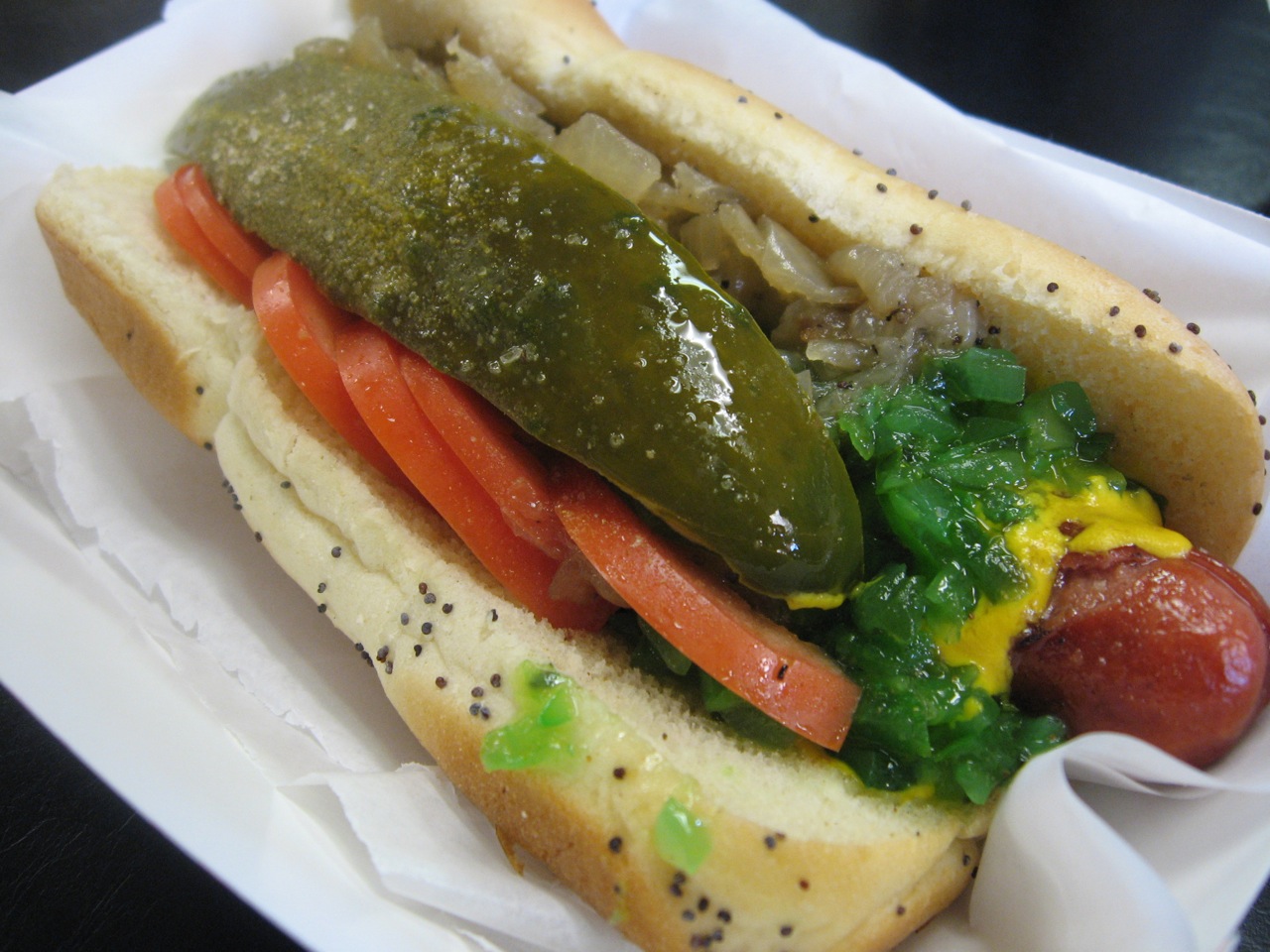
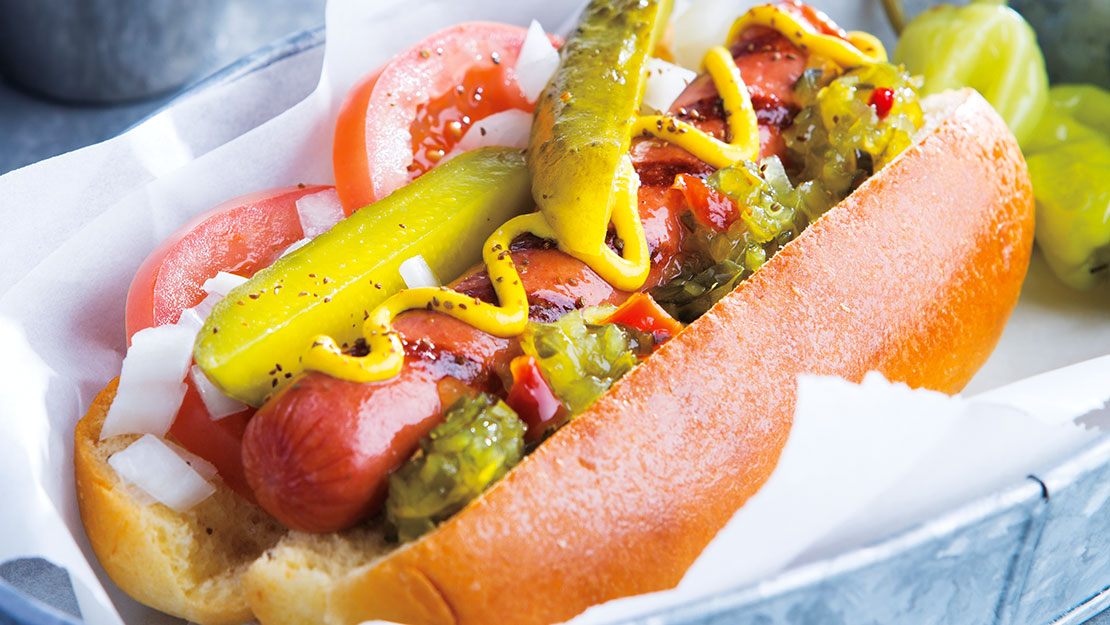
First, a generous squiggle of yellow mustard is applied directly to the hot dog. This bright, tangy condiment acts as the foundational flavor, cutting through the richness of the beef. Next come a scattering of fresh, finely chopped white onions, providing a crisp texture and a sharp, pungent bite. The third crucial element is the vibrant, often neon-green, sweet pickle relish. This uniquely colored relish is a visual signature of the Chicago dog, offering a sweet counterpoint to the mustard and a soft textural contrast.
Following the relish, a robust dill pickle spear is tucked alongside the hot dog. This isn’t just a garnish; it’s a significant component, delivering a substantial crunch and a powerful sour tang that cleanses the palate. Then, two or three fresh tomato slices or wedges are carefully placed, adding a burst of juicy sweetness and acidity, along with a refreshing coolness. The sixth ingredient, and arguably one of the most distinctive, are a few fiery sport peppers. These small, pickled chili peppers deliver a sharp, vinegary heat that lingers delightfully. Finally, the entire ensemble is dusted with a delicate sprinkle of celery salt, an aromatic finish that ties all the flavors together with a subtle, earthy, and savory note, completing the “drag through the garden.” The harmony of these distinct ingredients – savory, sweet, tangy, spicy, and crunchy – is what creates the legendary Chicago hot dog experience.
Beyond the Buns: Where to Savor the Authentic Chicago Dog Experience
Discovering the perfect Chicago hot dog is as much about the destination as it is about the delectable dish itself. The city boasts a myriad of establishments, from humble street-side carts to iconic, long-standing diners, all dedicated to serving this local delicacy. For visitors seeking to immerse themselves in Chicago’s vibrant food scene, understanding where and how to enjoy this treat is key to an authentic tourism experience.
Street Stands and Iconic Eateries
The most traditional and often most rewarding way to experience a Chicago hot dog is at a dedicated hot dog stand. These establishments, often characterized by their no-frills décor and bustling atmosphere, are community fixtures and popular tourist draws. They embody the spirit of fast-casual dining, where efficiency meets quality. You’ll find counter service, often a queue of eager customers, and the unmistakable aroma of steamed buns and sizzling frankfurters filling the air. These stands are more than just places to eat; they are social hubs where locals and tourists alike converge over a shared love for this quintessential Chicago food. While some establishments have gained national fame, countless neighborhood gems offer equally authentic and delicious interpretations, each contributing to the city’s rich culinary fabric. The experience is often quick, standing-room only, and inherently part of the urban hustle and bustle, making it an engaging slice of local life.
Neighborhood Gems and Downtown Delights
The beauty of the Chicago hot dog lies in its ubiquity. Whether you’re exploring the architectural marvels downtown, wandering the bustling shops along the Magnificent Mile, or venturing into the city’s diverse residential neighborhoods, a quality hot dog stand is never far away. Each area might have its local favorite, a spot cherished by residents for generations. In more tourist-heavy areas, such as near Navy Pier or Millennium Park, visitors will find convenient options that still uphold the strict standards of the Chicago-style preparation. The consistency of quality across various locales underscores the deep-rooted cultural importance of this dish. Enjoying a hot dog outside a historic theatre, amidst the skyscrapers, or by a quiet park bench offers different facets of the Chicago experience, each one authentic and memorable. It’s an accessible delight, transcending economic boundaries and bringing a taste of Chicago to everyone.
The Unwritten Rules: Dos and Don’ts of Enjoying a Chicago Hot Dog
Part of truly embracing the Chicago hot dog experience involves understanding the subtle, often unspoken, rules of engagement. These aren’t just quirks; they are ingrained aspects of local culture that reflect the city’s pride in its iconic food. For tourists, observing these customs can transform a simple meal into a genuine cultural immersion.
The Cardinal Sin: No Ketchup!
Perhaps the most famous, and vehemently enforced, rule of the Chicago hot dog tradition is the absolute prohibition of ketchup. For many Chicagoans, dousing a perfectly crafted Chicago hot dog with ketchup is a culinary offense of the highest order. The rationale is simple yet profound: the ketchup’s overpowering sweetness and tomato flavor are believed to mask the intricate balance of the “dragged through the garden” toppings. The combination of mustard, relish, onions, pickle, tomato, sport peppers, and celery salt is designed to stand on its own, a masterpiece of complementary flavors. Adding ketchup is seen as an act of disrespect to this careful composition. While hot dog stands will usually have ketchup available for those ordering plain dogs or fries, locals will often give a knowing look or a gentle admonition to anyone attempting to defile a proper Chicago dog with the red condiment. It’s a point of civic pride and a testament to the distinctiveness of their signature dish.
The Proper Order and Presentation
When ordering, simply asking for a “Chicago-style hot dog” will typically ensure you receive the full, traditional assembly. There’s no need to list out the seven toppings; it’s understood. The presentation is also key: the toppings are arranged deliberately, often with the pickle spear and sport peppers prominently displayed. Hot dogs are usually served wrapped in paper, making them easy to eat on the go. There’s no formal etiquette for consumption; it’s a casual affair, meant to be savored quickly, often standing up at a counter or outdoors. The method of eating, whether holding it delicately or diving in with gusto, is less important than enjoying the full flavor spectrum. The act itself is a casual, democratic experience, reflective of the city’s down-to-earth character.
Pairing Perfection
While the hot dog itself is the star, it’s often accompanied by a few traditional sidekicks. Fresh-cut french fries are the most common pairing, their salty crispness a perfect counterpoint to the hot dog’s rich flavors. Many stands pride themselves on their hand-cut, often perfectly golden-brown, fries. To wash it all down, a cold soda or, for adults, a local beer (where available) is the beverage of choice. This simple, satisfying combination creates a complete and utterly authentic Chicago meal, one that resonates deeply with the local culinary identity and offers a truly immersive taste of the city.
A Culinary Symbol: The Chicago Hot Dog’s Place in Local Culture
Beyond its components and consumption rules, the Chicago hot dog holds a significant place in the city’s cultural heart. It’s more than just sustenance; it’s a narrative, a historical marker, and a unifying force that helps define Chicago’s unique identity. For tourists, understanding this deeper context enriches the experience, transforming a simple meal into a profound connection with the city’s soul.
More Than Just Food: A Civic Identity
The Chicago hot dog embodies the city’s straightforward, no-nonsense character. It’s a food built on quality ingredients, honest preparation, and a distinct lack of pretension. It’s a symbol of blue-collar pride and culinary innovation, a dish that has remained true to its roots while capturing the essence of a diverse and dynamic metropolis. Like Chicago itself, the hot dog is hearty, robust, and unapologetically itself. It’s a democratic food, accessible to everyone regardless of social status, bridging divides and fostering a sense of shared community. Eating a Chicago hot dog is an act of civic participation, a small but meaningful way to connect with the city’s ethos and appreciate its unique blend of industrial heritage and culinary artistry.
A Taste of Chicago History
The origins of the Chicago hot dog are deeply intertwined with the city’s history of immigration and innovation. German immigrants brought frankfurters to the United States in the late 19th and early 20th centuries, and it was in Chicago, a bustling hub of industry and a melting pot of cultures, that the hot dog truly evolved. Initially sold from pushcarts, often at concession stands catering to factory workers and market-goers, the array of toppings gradually developed. Vendors added fresh vegetables and condiments, turning a simple sausage into a full meal. This evolution reflects the pragmatic and resourceful spirit of Chicago, adapting and perfecting a simple concept into a beloved staple. Alongside deep-dish pizza, the Chicago hot dog stands as a culinary landmark, a delicious testament to the city’s enduring legacy of culinary creativity and its ability to transform everyday ingredients into iconic dishes.
The Ultimate Chicago Souvenir
For many visitors, taking a bite into a Chicago hot dog is as memorable and essential as visiting the city’s famous architecture or world-class museums. It’s a sensory souvenir, a taste that lingers and evokes the vibrant spirit of the city long after the trip is over. It’s more than just trying a local food; it’s an experience that encapsulates the flavor, history, and character of Chicago. No visit to the “Windy City” is complete without indulging in this carefully constructed, flavorful masterpiece. It’s an essential part of any visitor’s itinerary, an authentic taste of Illinois that leaves an indelible mark and a deep appreciation for Chicago’s unique culinary contributions to American culture.
LifeOutOfTheBox is a participant in the Amazon Services LLC Associates Program, an affiliate advertising program designed to provide a means for sites to earn advertising fees by advertising and linking to Amazon.com. Amazon, the Amazon logo, AmazonSupply, and the AmazonSupply logo are trademarks of Amazon.com, Inc. or its affiliates. As an Amazon Associate we earn affiliate commissions from qualifying purchases.