
O’Hare International Airport, officially designated by its IATA code ORD, stands as a colossal gateway to the Midwest and a critical hub in global air travel. Its strategic placement is fundamental to understanding its function and importance, serving not just the city of Chicago but also an expansive network of surrounding suburbs and the broader region. While colloquially referred to as being “in Chicago,” its precise location is slightly removed from the urban core, a common characteristic of major international airports designed to handle extensive air traffic and infrastructure requirements.
Geographically, O’Hare is situated approximately 17 miles (27 kilometers) northwest of Downtown Chicago, specifically The Loop. This positioning places it primarily within the city limits of Chicago, though its sprawling footprint often extends into adjacent suburbs such as Rosemont, Des Plaines, and Schiller Park. This particular location was chosen for its ample space, allowing for multiple runways, extensive terminal facilities, and future expansion possibilities – factors critical for one of the world’s busiest airports. For travelers, understanding this precise location is the first step in planning seamless transit to and from the heart of the city or their ultimate destination in the greater Chicago metropolitan area.

O’Hare’s Geographic Significance and Scale
O’Hare’s location isn’t merely a point on a map; it’s a testament to urban planning and logistical foresight. Its northwest orientation relative to the city center offers several advantages. Firstly, it positions the airport on relatively flat terrain, ideal for runway construction and minimizing noise impact on dense urban areas, though surrounding suburban communities certainly experience significant aircraft noise. Secondly, its placement facilitates efficient access from major interstate highways, connecting it directly to Chicago’s expressways and the broader regional road network.
The sheer scale of O’Hare International Airport underscores its importance. Covering approximately 7,627 acres, it boasts four main passenger terminals—Terminal 1, Terminal 2, Terminal 3, and Terminal 5—and nine runways. This vast infrastructure is designed to handle hundreds of thousands of flights and tens of millions of passengers annually, making it a critical node for both domestic and international travel. Its location provides a strategic advantage for airlines like United Airlines and American Airlines, which have established major hubs here, leveraging Chicago’s central position in the United States to connect travelers across the globe.
Navigating the Airport’s Layout
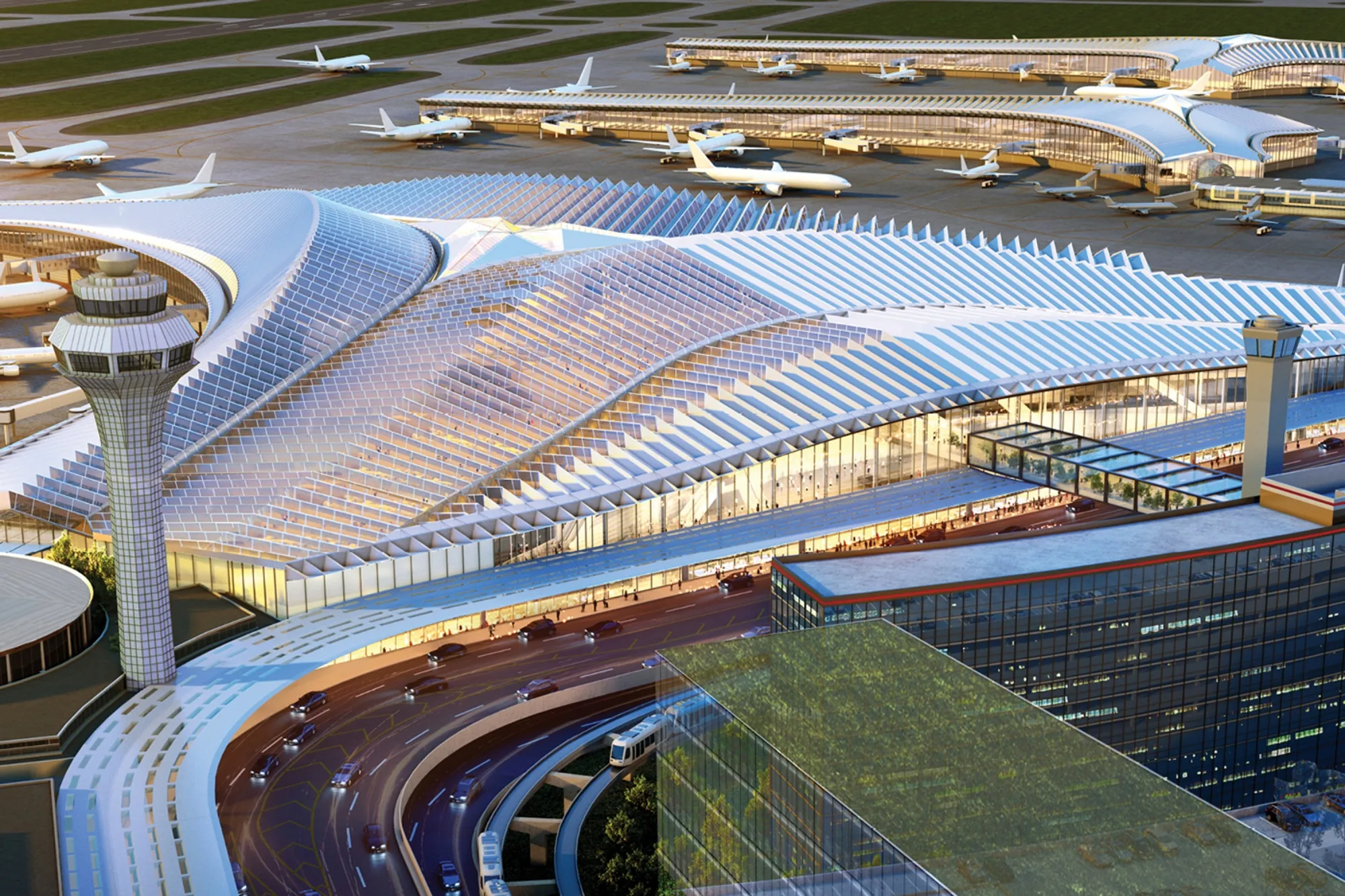
For those traveling through O’Hare, understanding its layout is as crucial as knowing its external location. The terminals are arranged in a horseshoe shape, with Terminal 5 (international) situated slightly apart. An automated transit system, the Airport Transit System (ATS), efficiently connects all terminals, parking lots, and the Metra station. This internal transportation network is essential for navigating the airport’s expansive grounds, especially for passengers with connecting flights or those utilizing public transport from the city.
Knowing the specific terminal for arrival or departure is vital, as gates can be far apart, even within the same terminal. Terminal 1 is primarily for United Airlines, Terminal 2 serves a mix of airlines like Alaska Airlines and Spirit Airlines, while Terminal 3 is home to American Airlines and its Oneworld partners. Terminal 5 handles the majority of international arrivals and departures, requiring customs and immigration processing. This segmentation, while efficient for operations, necessitates careful planning for travelers, especially those with tight connection times.
Getting To and From O’Hare: Transportation Links
The effectiveness of O’Hare’s location is greatly enhanced by its comprehensive transportation network, offering travelers multiple ways to reach Downtown Chicago and beyond. This connectivity is a cornerstone of Chicago’s appeal as a travel destination and business hub.
Public Transportation Options
The most popular and often most efficient public transportation link is the CTA Blue Line. This 24/7 rapid transit service directly connects O’Hare to The Loop and other key neighborhoods in Chicago. The station is conveniently located directly beneath Terminal 2 and accessible from all other terminals via the ATS. The journey to Downtown Chicago typically takes 45-60 minutes, making it an economical and reliable option, especially during peak traffic hours.
Another rail option is Metra’s North Central Service, which stops at the O’Hare Transfer Station. While not as direct to The Loop as the Blue Line, it serves suburbs north of the city and offers connections to Union Station in Downtown Chicago. The ATS connects passengers from the terminals to the Metra station.
Road Access and Ground Transport
For those preferring road transport, O’Hare is exceptionally well-served by major expressways. The Kennedy Expressway (I-90) provides direct access to Downtown Chicago, while I-190 is the primary access road into the airport itself, branching off from I-90 and the Tri-State Tollway (I-294). This network allows for relatively straightforward driving to various parts of the metropolitan area, albeit subject to Chicago’s notorious traffic congestion, particularly during rush hours.
Numerous ground transportation options are available:
- Taxis: Readily available at designated taxi stands outside each terminal. Fares to Downtown Chicago typically range from $40-$50, excluding tolls and tips.
- Rideshares: Uber and Lyft operate at O’Hare, with dedicated pick-up zones, usually located on the upper-level departures area for Terminal 2 and Terminal 3, and the lower level for Terminal 5.
- Airport Shuttles: Shared-ride and private shuttle services offer door-to-door convenience, especially for travelers heading to hotels or specific suburban locations. Companies like Go Airport Express are popular choices.
- Rental Cars: All major car rental agencies have a presence at O’Hare, with a consolidated rental car facility accessible via the ATS. This is an ideal option for those planning to explore beyond Chicago’s immediate urban core.
Travel times by road can vary dramatically. Under ideal conditions, the drive to Downtown Chicago can be as quick as 30-40 minutes. However, during peak periods, this can easily extend to 90 minutes or more. Travelers are always advised to factor in potential delays when planning their journey.
O’Hare’s Role in Global Travel and Local Economy
O’Hare’s location and extensive connectivity are not just about passenger convenience; they are vital to Chicago’s economic health and global standing. As one of the world’s busiest airports, it facilitates international trade, attracts foreign investment, and supports a massive tourism industry.
The airport directly and indirectly employs hundreds of thousands of people across various sectors, from airline operations and ground handling to retail, food service, and transportation. Its constant flow of travelers supports hotels, restaurants, and attractions throughout the Chicago metropolitan area, including popular spots like Millennium Park, the Magnificent Mile, the Willis Tower, and the Museum Campus. Business travelers frequently utilize O’Hare for conventions and conferences at venues such as McCormick Place, reinforcing Chicago’s status as a premier global city.
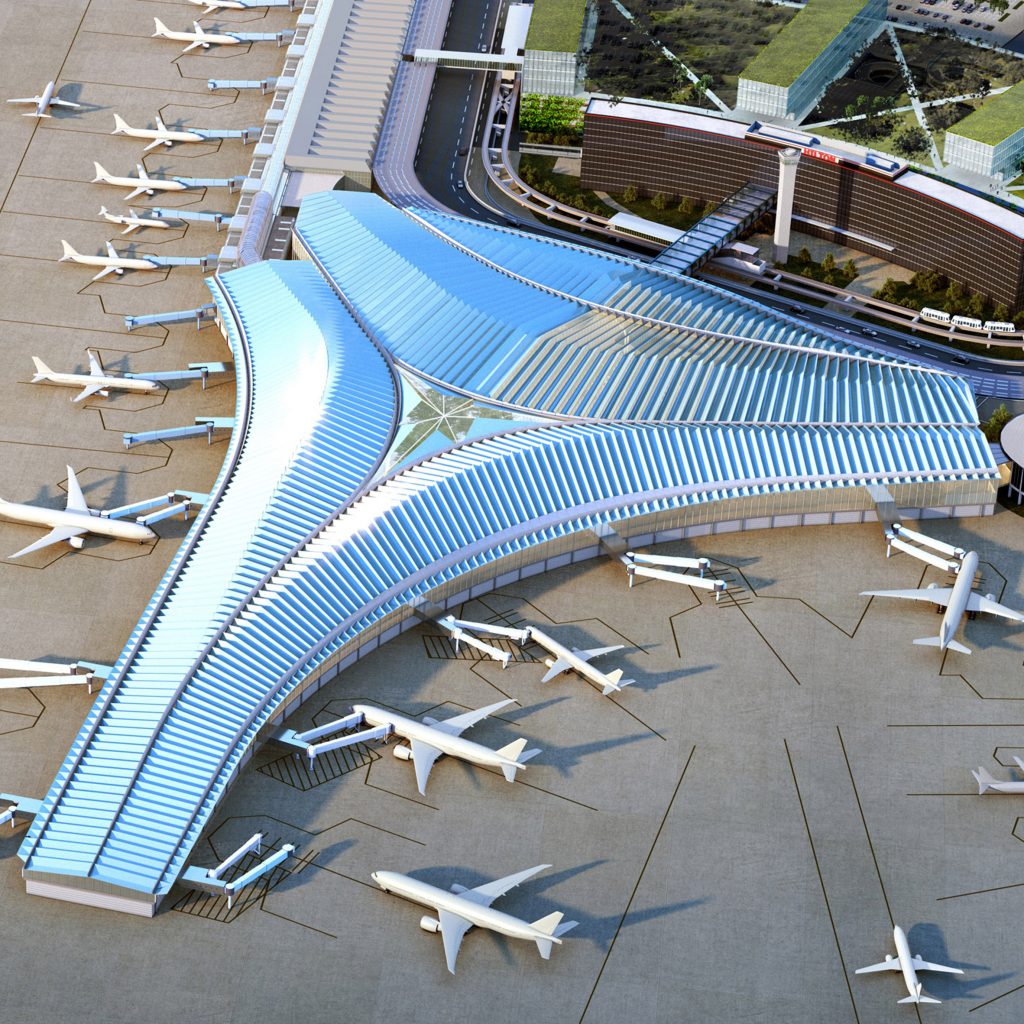
Looking ahead, ongoing modernization and expansion projects at O’Hare aim to further enhance its capacity and traveler experience. These initiatives include terminal renovations, runway reconfigurations, and improved passenger amenities, all designed to maintain O’Hare’s competitive edge as a leading international airport. Its strategic location will continue to be a cornerstone of its success, connecting Chicago to the world and driving regional prosperity for decades to come.
In conclusion, Chicago O’Hare International Airport is strategically located approximately 17 miles northwest of Downtown Chicago, primarily within the city limits and bordering several key suburbs. This location, coupled with an extensive network of transportation links, makes it an accessible and indispensable gateway for millions of domestic and international travelers each year, solidifying Chicago’s position on the global stage.
LifeOutOfTheBox is a participant in the Amazon Services LLC Associates Program, an affiliate advertising program designed to provide a means for sites to earn advertising fees by advertising and linking to Amazon.com. Amazon, the Amazon logo, AmazonSupply, and the AmazonSupply logo are trademarks of Amazon.com, Inc. or its affiliates. As an Amazon Associate we earn affiliate commissions from qualifying purchases.