
The Unique Climatic Tapestry of California
[California]’s geography is incredibly varied, encompassing everything from expansive deserts to towering mountain ranges and a lengthy coastline along the [Pacific Ocean]. This topographical diversity is the primary driver behind its equally diverse climatic zones, each experiencing heat differently.Geographic Features Shaping the Heat
One of the most significant factors is the state’s orientation relative to the [Pacific Ocean]. While the coast benefits from the cooling influence of the [Pacific], inland areas are often shielded from this moderation. The vast [Central Valley], for instance, acts as a heat trap. Flanked by the [Coastal Ranges] to the west and the imposing [Sierra Nevada Mountains] to the east, air masses tend to settle and stagnate over this expansive agricultural region, heating up considerably. The mountain ranges create a rain shadow effect, blocking moisture from the [Pacific] and contributing to arid, hot conditions on their leeward sides, particularly in Southern [California] and the eastern deserts.
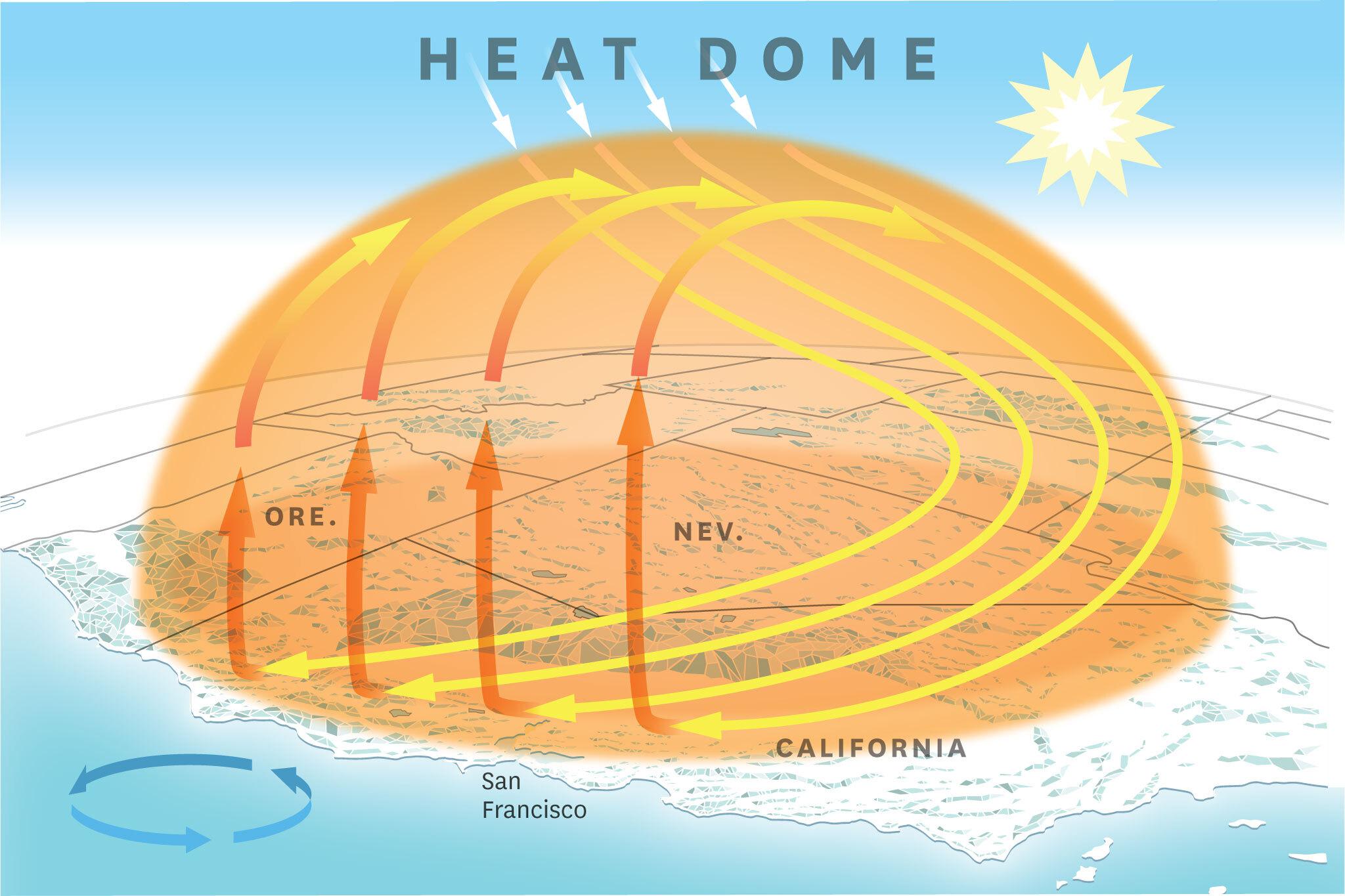
Another critical element is the presence of high-pressure systems. Persistent high-pressure ridges often settle over the western [United States], pushing the jet stream northward. This results in clear skies and minimal cloud cover, allowing intense solar radiation to reach the ground and warm the air. These systems also inhibit the influx of cooler maritime air, trapping heat over the land.
The Role of Seasonal Patterns and Heatwaves
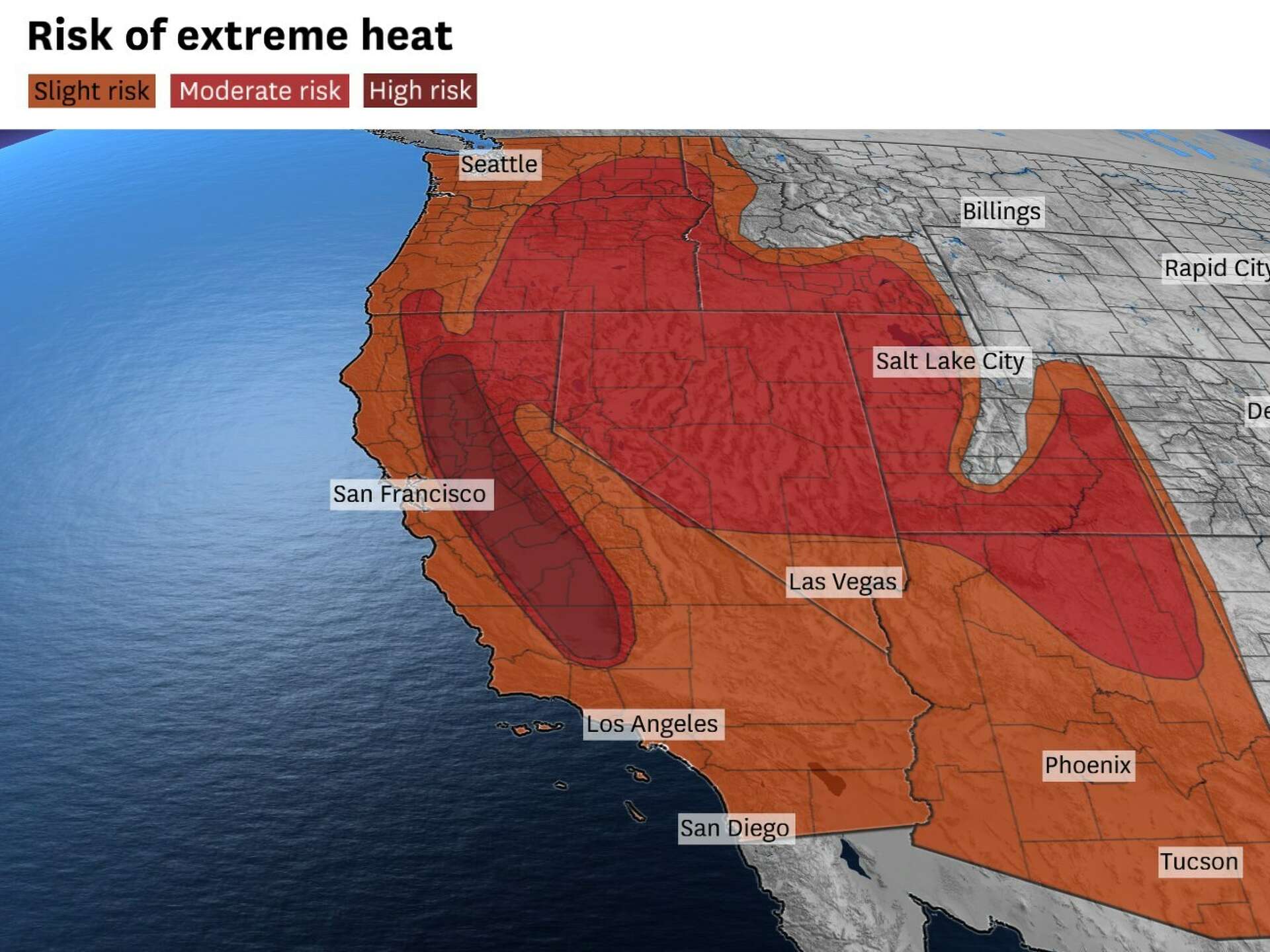
[California] experiences distinct seasons, though the perception of summer can stretch well into autumn, especially inland. Summers are typically characterized by strong, persistent high-pressure systems. These systems are responsible for the famous “Mediterranean climate” found along the coast, which means dry, warm summers and mild, wet winters. However, move inland even a short distance, and this moderating effect quickly diminishes, giving way to much hotter, drier conditions.Heatwaves are a recurrent feature of [California]’s climate, especially from late spring through early fall. These events are often exacerbated by specific wind patterns. The infamous [Santa Ana winds], for example, are hot, dry winds that blow from the interior desert regions toward the coast in Southern [California]. As these winds descend from higher elevations and squeeze through mountain passes, they warm dramatically due to adiabatic compression, carrying dry, hot air directly to coastal cities like [Los Angeles] and [San Diego], often leading to elevated fire risk. Similarly, “Diablo winds” affect Northern [California], bringing comparable hot and dry conditions to areas like the [Napa Valley] and [Sonoma County]. These episodic events can push temperatures well into the triple digits, even in areas that typically enjoy milder weather.
The Impact of Climate Change
It’s impossible to discuss [California]’s heat without acknowledging the overarching influence of global climate change. Scientific consensus indicates that average temperatures in [California] are rising, leading to more frequent, more intense, and longer-lasting heatwaves. The number of extreme heat days has demonstrably increased over the past few decades, contributing to challenges such as drought, increased wildfire activity, and strain on energy grids. For prospective visitors, this means that summer temperatures, particularly in inland areas, are likely to be increasingly warm, necessitating careful planning for their [travel] itineraries.
Navigating California’s Heat: Tips for Travelers
Understanding why [California] gets hot is one thing; knowing how to navigate it as a traveler is another. The good news is that despite the heat, [California] offers an unparalleled array of experiences. With strategic planning, visitors can comfortably enjoy their stay, leveraging the state’s diverse geography to find relief and adventure.
Choosing the Right Accommodation
When planning your [accommodation], especially during the warmer months, selecting the right place can make all the difference. Many [hotels], [resorts], and [villas] across [California] are well-equipped to handle the heat. Look for properties that boast excellent air conditioning as a standard amenity. For those seeking respite, consider [hotels with pools] – a refreshing dip can be a lifesaver after a day of exploration. In areas like [Palm Springs] or the [Central Valley], where temperatures soar, many luxury properties offer private plunge pools or expansive resort pools, transforming the accommodation itself into a cooling oasis. Options like [The Parker Palm Springs] or the [Hotel del Coronado] (on a cooler coast) exemplify properties where staying cool is part of the experience. For [long-term stay] visitors or families, apartments and vacation rentals often provide the comforts of home, including robust AC systems and sometimes access to community pools.
Cool Activities and Attractions
Don’t let the heat deter you from experiencing [California]’s vibrant [tourism] scene. Instead, adjust your itinerary to embrace cooler options or schedule outdoor activities for earlier mornings or later evenings.
- Coastal Escapes: The most obvious way to beat the heat is to head to the coast. Cities like [San Francisco], [Monterey], [Santa Cruz], [Santa Monica], and [San Diego] enjoy significantly milder temperatures due to the [Pacific Ocean]’s influence and the cooling “marine layer” that often blankets coastal areas in the mornings. Spend your days exploring [Pier 39] in [San Francisco], strolling along the [Santa Monica Pier], or relaxing on the beaches of [La Jolla] in [San Diego].
- Mountain Retreats: For a complete change of pace and temperature, head to [California]’s mountains. Destinations like [Lake Tahoe] offer crisp, clean air and opportunities for hiking, boating, and enjoying alpine lakes. [Yosemite National Park] and [Sequoia National Park], while still warm at lower elevations, provide cooler temperatures and stunning natural beauty as you ascend to higher altitudes.
- Indoor Attractions: [California] boasts world-class museums, aquariums, and entertainment venues, perfect for escaping the midday sun. Explore the [Getty Center] in [Los Angeles], the [California Academy of Sciences] in [San Francisco], or the [Monterey Bay Aquarium]. Theme parks like [Disneyland] and [Universal Studios Hollywood] offer plenty of air-conditioned queues and indoor shows, in addition to water rides for cooling off.
- Water-Based Fun: Beyond the ocean, [California] has numerous lakes and water parks. Explore [Lake Shasta] or [Big Bear Lake] for boating and swimming, or visit one of the many water parks like [Raging Waters] for a guaranteed cool-down.
Hydration and Sun Protection
No matter where you go in [California] during warm periods, prioritizing hydration and sun protection is paramount. Always carry a reusable water bottle and refill it frequently. Many attractions and public spaces offer water fountains. Wear lightweight, loose-fitting clothing, a wide-brimmed hat, and high-SPF sunscreen. Sunglasses are also essential. If you’re planning strenuous outdoor activities, consider doing them in the early morning or late afternoon, and be mindful of signs of heat exhaustion.
Embracing California’s Year-Round Appeal
While the focus here is on the heat, it’s important to remember that [California]’s appeal extends far beyond just its summer climate. The state offers a vibrant tapestry of experiences throughout the year, catering to various [lifestyle] preferences, from [luxury travel] to [budget travel], and accommodating [family trips] as well as [business stays].
Culinary Delights and Cultural Experiences
[California]’s culinary scene is a reflection of its diversity, and many establishments are designed for comfort even on warm days. Enjoy farm-to-table dining in [Napa Valley], explore the vibrant food truck scene in [Los Angeles], or indulge in fresh seafood along the coast. Many restaurants offer shaded outdoor seating or air-conditioned interiors, making dining a pleasant experience regardless of the temperature. The state is also rich in cultural experiences, from the historic missions scattered across the state to the thriving arts districts in cities like [San Francisco] and [Oakland]. These cultural [landmarks] and activities are often enjoyed indoors or during cooler parts of the day.Diverse Travel Styles
Whether you’re planning a lavish escape or an economical adventure, [California] provides options. [Luxury travel] might involve staying at an exclusive [resort] in [Laguna Beach], like [The Ritz-Carlton Laguna Niguel], or a chic boutique [hotel] in [Beverly Hills], such as the [Beverly Wilshire, A Four Seasons Hotel]. These establishments prioritize comfort, often featuring extensive pools, spas, and climate-controlled environments. For those on a [budget travel] plan, campgrounds in national parks or hostels in major cities offer affordable ways to experience the state. Regardless of your budget, research and booking in advance, especially during peak seasons, is always recommended, particularly for popular [accommodation] options.
Beyond Summer: The Shoulder Seasons
To fully avoid the peak heat, consider visiting [California] during the shoulder seasons – spring (April to June) and fall (September to November). These months often offer pleasant temperatures across much of the state, fewer crowds, and the opportunity to witness [California]’s natural beauty in full bloom or vibrant autumn colors. For example, spring wildflowers in the deserts or fall foliage in the [Eastern Sierra] are spectacular. These periods are often ideal for exploring national parks, embarking on scenic drives along [Highway 1], or enjoying outdoor festivals.
In conclusion, [California]’s heat is a complex phenomenon influenced by its unique geography, atmospheric patterns, and the broader context of climate change. While it can be intense, especially in inland regions and during heatwaves, it’s also an integral part of the state’s identity. By understanding these factors and planning strategically, travelers can not only cope with the warmth but also embrace it as part of an unforgettable [California] adventure, discovering the countless reasons why this sun-drenched state continues to be a top global destination for [tourism], [travel], and extraordinary [experiences].
LifeOutOfTheBox is a participant in the Amazon Services LLC Associates Program, an affiliate advertising program designed to provide a means for sites to earn advertising fees by advertising and linking to Amazon.com. Amazon, the Amazon logo, AmazonSupply, and the AmazonSupply logo are trademarks of Amazon.com, Inc. or its affiliates. As an Amazon Associate we earn affiliate commissions from qualifying purchases.