
Embarking on a career in real estate in Colorado offers a unique blend of professional challenge, financial reward, and the flexibility to shape a lifestyle that truly aligns with your aspirations. The Centennial State, known for its stunning natural beauty, vibrant cities, and thriving economy, presents an attractive market for real estate professionals. Navigating the path to licensure requires a clear understanding of the requirements set forth by the Colorado Real Estate Commission (CREC), a division of the Colorado Department of Regulatory Agencies (DORA). This comprehensive guide outlines the steps, considerations, and opportunities awaiting those ready to enter Colorado’s dynamic real estate landscape.
Embarking on a New Chapter: Why Colorado Real Estate?
The decision to pursue a real estate license is often driven by a desire for autonomy, significant income potential, and the satisfaction of helping individuals achieve their property dreams. In Colorado, these motivations are amplified by a robust market and an unparalleled quality of life.
The Allure of the Colorado Market
Colorado’s real estate market is remarkably diverse and consistently attracts attention from across the nation. Major metropolitan areas like Denver, Boulder, Fort Collins, and Colorado Springs experience sustained growth, driven by job opportunities, a burgeoning tech sector, and an influx of new residents seeking the Colorado lifestyle. Beyond the urban centers, the mountain resort towns of Aspen, Vail, and Breckenridge offer high-value luxury markets, while rural areas present unique opportunities in land and ranch sales. This diversity means that a real estate professional can specialize in various niches, from residential sales and commercial properties to investment real estate or resort transactions, catering to a wide array of clients and interests. The economic stability and projected growth across different sectors ensure a continuous demand for housing and commercial spaces, making it a fertile ground for a real estate career.
Lifestyle Benefits of a Real Estate Career
A career in real estate is more than just buying and selling properties; it’s a pathway to a flexible and rewarding lifestyle. Real estate brokers often enjoy a degree of independence not found in traditional 9-to-5 jobs. While the work can be demanding, it typically allows for a flexible schedule, enabling professionals to balance work commitments with personal life, family, and leisure activities. The income potential is directly correlated with effort and skill, offering unlimited earning capacity that can far exceed fixed salaries. Furthermore, the role involves constant interaction with people, fostering relationships and providing a sense of purpose through helping clients navigate one of the most significant financial decisions of their lives. For those seeking to “live out of the box,” real estate can provide the financial freedom and autonomy to pursue passions, travel, or simply enjoy the Colorado outdoors.
Essential Steps to Becoming a Licensed Broker in Colorado
The process of obtaining a real estate license in Colorado is structured yet manageable, involving several key stages designed to ensure that all licensed brokers are competent and ethical.
Eligibility Requirements
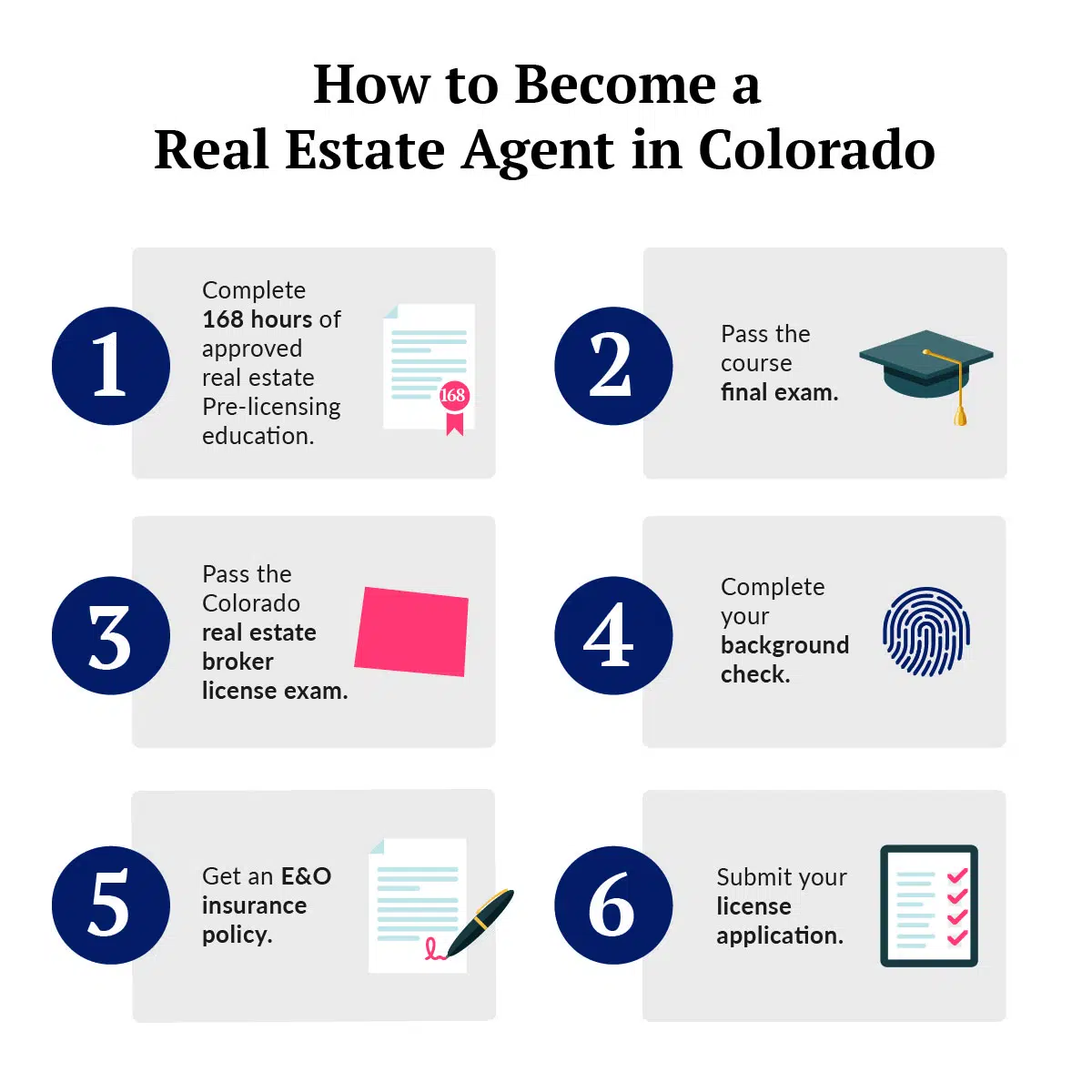
Before embarking on the pre-licensing education, prospective brokers must meet basic eligibility criteria. Applicants must be at least 18 years old and possess a high school diploma or its equivalent. A critical component is the background check; Colorado requires all applicants to undergo a fingerprint-based criminal history check. While a criminal record doesn’t automatically disqualify an applicant, serious offenses, particularly those involving fraud, dishonesty, or moral turpitude, may lead to denial of licensure. Transparency is key; it’s always best to disclose any past issues upfront to the Colorado Real Estate Commission.
Pre-Licensing Education
This is the cornerstone of your journey. Colorado mandates 168 hours of approved real estate pre-licensing education. These hours are typically divided into specific course modules covering essential topics:
- Real Estate Law and Practice: Covering contracts, property law, agency relationships, and disclosures.
- Property Management: Understanding leases, landlord-tenant relations, and property maintenance.
- Finance: Mortgages, financing options, and investment strategies.
- Appraisal: Principles of valuation and market analysis.
- Water Rights: A crucial and unique aspect of Colorado real estate.
- Closings: The process of finalizing a real estate transaction.
- Current Legal Issues: Staying abreast of recent changes in legislation and practices.
These courses must be completed through a Colorado Real Estate Commission-approved education provider. Popular choices include online platforms like Kaplan Real Estate Education or Real Estate Express, as well as local in-person schools, offering flexibility to suit various learning styles and schedules. It’s imperative to choose a school that provides comprehensive instruction and exam preparation resources.
The Colorado Real Estate Exam
Upon completing your 168 hours of pre-licensing education, the next hurdle is passing the Colorado Real Estate Broker Exam. This is a rigorous test administered by a third-party testing service (currently PSI Exams) and consists of two parts: a national portion and a state-specific portion.
- National Portion: Covers general real estate principles, laws, and practices applicable across the United States.
- State Portion: Focuses specifically on Colorado real estate laws, contracts, and regulations, including unique aspects like water rights and deeds of trust.
Both sections are multiple-choice, and you must pass both to be eligible for licensure. Passing scores generally require correctly answering 75-80% of the questions. Extensive preparation, including practice exams and reviewing course materials, is crucial for success. Many pre-licensing schools offer dedicated exam prep courses.
Fingerprinting and Background Check
As mentioned, a background check is a mandatory part of the application. You must submit your fingerprints to the Colorado Bureau of Investigation (CBI) through an approved vendor. The results of this background check are then sent directly to the Colorado Real Estate Commission. This process can take several weeks, so it’s advisable to initiate it early in your licensure journey, ideally shortly after enrolling in your pre-licensing courses.
Applying for Your License
Once you have successfully passed both portions of the state exam and your background check has cleared, you can submit your license application to the Colorado Department of Regulatory Agencies (DORA) via their online portal. The application will require documentation of your education, exam results, and personal information, along with the required application fee. It is crucial to ensure all information is accurate and complete to avoid delays. The Colorado Real Estate Commission typically processes applications within a few weeks.
Post-Licensing: Launching Your Real Estate Career
Obtaining your license is just the beginning. The next steps involve aligning with a brokerage and laying the groundwork for your professional success.

Finding a Sponsoring Brokerage
In Colorado, newly licensed brokers operate under the supervision of an employing broker (also known as a sponsoring brokerage). This means you cannot conduct real estate transactions independently immediately after getting your license. Finding the right brokerage is a critical decision. Consider factors such as:
- Training and Mentorship: Does the brokerage offer robust training programs for new agents? Is there a mentorship program?
- Office Culture: Does it align with your values and work style?
- Commission Splits and Fees: Understand the financial agreement, including desk fees, transaction fees, and commission structures.
- Resources and Support: What tools, marketing support, and administrative assistance do they provide?
- Geographic Focus: Does the brokerage specialize in the areas or property types you’re interested in?
Interviewing several brokerages in areas like the Denver Metro or Front Range is highly recommended to find the best fit for your burgeoning career.
Continuing Education Requirements
To maintain an active Colorado real estate broker license, you must complete continuing education (CE) hours every three years. The Colorado Real Estate Commission requires 24 hours of CE, with a specific 12-hour Annual Commission Update (ACU) course that must be completed each year for the first three years of licensure (and subsequently as part of each three-year renewal cycle). These courses ensure that brokers stay current with evolving laws, regulations, and best practices in the industry, fostering professionalism and competence.
Building Your Business
A successful real estate career is built on strong relationships and strategic business development.
- Networking: Attend local real estate association meetings, community events, and industry conferences. Build connections with lenders, inspectors, attorneys, and other allied professionals.
- Marketing: Develop a personal brand. Utilize online platforms, social media, a professional website, and traditional marketing methods to reach potential clients. Highlight what makes you unique and how you can serve their needs.
- Specialization: Consider specializing in a particular niche, such as first-time homebuyers, luxury homes, commercial real estate, or specific neighborhoods in Denver or Boulder.
- Client Relationship Management (CRM): Invest in a good CRM system to manage leads, track client interactions, and streamline your workflow.
- Continuous Learning: The real estate market is constantly evolving. Stay informed about market trends, economic indicators, and technological advancements.
Navigating the Colorado Real Estate Landscape
Understanding the unique nuances of the Colorado real estate environment is paramount for effective practice.
Understanding Local Markets
Colorado’s vast geography creates distinct local markets. The Denver Metro area and the Front Range cities often see competitive, fast-paced markets with rising home values. Mountain towns cater to second home buyers and tourists, with different seasonal demands. Rural areas may involve larger land parcels and agricultural considerations. Successful brokers tailor their strategies and knowledge to the specific market in which they operate, offering specialized expertise to their clients. Local associations, such as the Denver Metro Association of Realtors, provide valuable market data and networking opportunities.
Key Regulations and Ethics
The Colorado Real Estate Commission is diligent in regulating the industry to protect the public. Brokers must adhere to strict ethical guidelines and legal requirements, including proper agency disclosure, understanding standard Colorado contract forms approved by the Colorado Attorney General, and maintaining trust accounts correctly. Staying informed about these regulations is not just about compliance; it’s about building a reputation for integrity and professionalism.
Technology and Tools for Success
Modern real estate practice is heavily reliant on technology. Utilize the Multiple Listing Service (MLS) for property searches and market analysis, electronic signature platforms (e-signing) for convenient document execution, and virtual tour software to showcase properties effectively. Investing in robust hardware and software will enhance your efficiency and client service, helping you stand out in a competitive field.
Common Challenges and How to Overcome Them
While rewarding, a real estate career comes with its share of challenges, especially in the initial stages.
The Learning Curve and Initial Investment
New agents often face a steep learning curve regarding market dynamics, contract intricacies, and client management. There’s also an initial financial investment required for pre-licensing education, exam fees, application fees, association dues, marketing, and often, a period of reduced income as you build your client base. To mitigate this, have a financial buffer, seek strong mentorship, and immerse yourself in continuous learning.
Market Fluctuations and Competition
Real estate markets are cyclical and can be influenced by economic factors. Colorado, while generally strong, is not immune to these fluctuations. Additionally, the industry is competitive. Differentiation through specialization, exceptional client service, and consistent networking can help you thrive regardless of market conditions.

Maintaining Motivation and Work-Life Balance
The independent nature of real estate can be a double-edged sword. While it offers flexibility, it also requires self-discipline and strong motivation. It’s easy to overwork or underwork. Establishing a routine, setting clear boundaries, and prioritizing self-care are essential for long-term success and preventing burnout. The ability to manage your time effectively and stay motivated will directly impact your lifestyle and income.
Becoming a licensed real estate broker in Colorado is a journey that demands dedication, continuous learning, and strategic effort. However, for those prepared to embrace the challenge, it offers the promise of a fulfilling career that empowers you to control your professional destiny and enjoy the vibrant Colorado lifestyle to its fullest.
LifeOutOfTheBox is a participant in the Amazon Services LLC Associates Program, an affiliate advertising program designed to provide a means for sites to earn advertising fees by advertising and linking to Amazon.com. Amazon, the Amazon logo, AmazonSupply, and the AmazonSupply logo are trademarks of Amazon.com, Inc. or its affiliates. As an Amazon Associate we earn affiliate commissions from qualifying purchases.