
Obtaining a motorcycle license in Colorado is a streamlined process designed to ensure all riders possess the necessary skills and knowledge for safe operation. For residents and visitors alike who wish to explore the state’s breathtaking scenic routes on two wheels, understanding the specific requirements and steps is paramount. This guide outlines everything you need to know to secure your motorcycle endorsement in the Centennial State, positioning you to fully immerse yourself in Colorado’s diverse landscapes and vibrant local experiences.
Understanding Colorado’s Licensing Requirements
Before embarking on the journey to obtain a motorcycle license, it’s crucial to familiarize yourself with the foundational requirements set forth by the Colorado Department of Revenue (DR) Division of Motor Vehicles (DMV). These stipulations ensure that all applicants meet a basic standard of eligibility and preparedness.
Eligibility Criteria
To be eligible for a motorcycle instruction permit or endorsement in Colorado, you must first hold a valid Colorado driver’s license. If you are under 18 years of age, there are additional requirements:
- Ages 15 to 16 years: Must have held an instruction permit for at least 12 months, complete an approved motorcycle safety course, and log 50 hours of driving experience with a parent or legal guardian, including 10 hours at night. They must also pass a written permit test and a drive skills test or present a waiver from an approved course.
- Ages 16 to 18 years: Must have held an instruction permit for at least 12 months if going through the graduated licensing program, or simply pass the written permit test and a drive skills test or present a waiver from an approved course if they already hold a full driver’s license. Completion of an approved motorcycle safety course is highly recommended and often streamlines the process.
- 18 years and older: Simply needs a valid Colorado driver’s license, must pass a written permit test, and then pass a drive skills test or present a waiver from an approved course.
All applicants must also provide proof of identity, legal presence, Colorado residency, and social security number. These documents are standard for any DMV transaction and are critical for verifying your information.
Types of Licenses
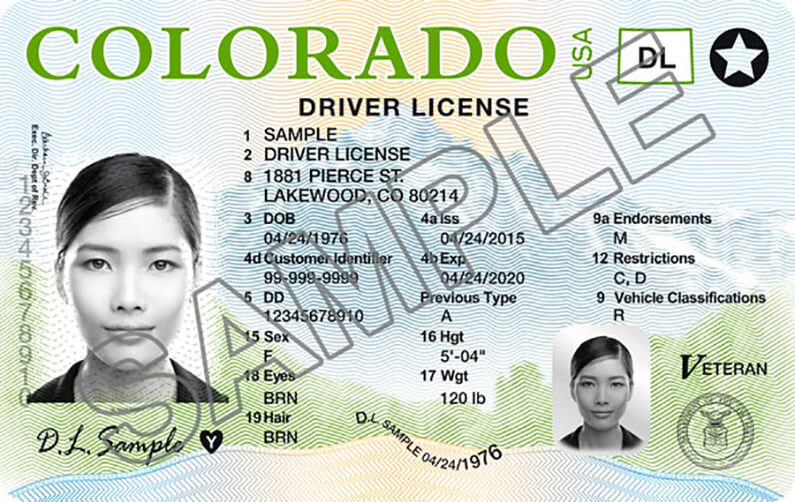
In Colorado, a motorcycle license is issued as an “M” endorsement added to your existing driver’s license. There isn’t a standalone motorcycle license.
- Class “M” Endorsement: This allows you to operate any two-wheeled motorcycle on public roads.
- Motorcycle Instruction Permit: This temporary permit allows you to practice riding under specific restrictions before obtaining the full “M” endorsement.
Understanding these distinctions is the first step toward effectively navigating the licensing process and preparing for the open road.
The Learning Permit Phase
The motorcycle instruction permit is a crucial stepping stone for all new riders, providing the opportunity to gain essential on-road experience under controlled conditions before taking the final licensing tests.
Obtaining Your Permit
To obtain a motorcycle instruction permit, you must visit a Colorado Division of Motor Vehicles (DMV) office and pass a written knowledge test. This test evaluates your understanding of Colorado traffic laws specific to motorcycles, safe riding practices, and road signs.
- Preparation: Study the Colorado Motorcycle Operator’s Manual, which is available online through the DMV website. It covers everything from basic motorcycle controls to advanced safety strategies.
- Application: Bring all required identification and residency documents, complete the application form, and pay the associated fee. Vision screening will also be conducted.
- Test: The written test typically consists of multiple-choice questions. A passing score is required to be issued the permit.
Permit Restrictions
Once you have your motorcycle instruction permit, you are legally allowed to practice riding, but with specific restrictions designed to ensure your safety and the safety of others. These typically include:
- Daylight Riding Only: You are generally restricted to riding during daylight hours.
- No Passengers: You cannot carry any passengers.
- No Freeway Riding: Riding on highways with speed limits exceeding 55 mph or on controlled-access highways (freeways) is usually prohibited.
- Supervision: In some cases, especially for younger riders, you may be required to ride with a licensed motorcycle operator present.
These restrictions are designed to allow new riders to develop their skills in less demanding environments. The permit is typically valid for one year, giving you ample time to gain confidence and experience before attempting the skills test.
Choosing Your Path: Motorcycle Safety Course vs. DMV Test
Colorado offers two primary pathways to obtaining your “M” endorsement: completing an approved motorcycle safety course or passing a direct skills test at the DMV. Each path has its advantages.
The Motorcycle Safety Course Advantage
For many riders, completing an approved motorcycle safety course is the preferred and often most beneficial route.
- Waiver of Skills Test: Successfully completing a Basic RiderCourse (BRC) approved by the Motorcycle Safety Foundation (MSF) and offered by a Colorado-approved provider will typically waive the need to take the DMV skills test. This is a significant advantage, as the course provides structured training and testing in a safe environment, often using smaller, more forgiving training motorcycles.
- Comprehensive Training: These courses cover a wide range of topics, including basic motorcycle operation, hazard perception, defensive riding techniques, emergency maneuvers, and accident avoidance. They provide both classroom instruction and hands-on riding practice.
- Skill Development: Even experienced riders often benefit from these courses, as they reinforce fundamental skills and introduce advanced techniques. For new riders, they are invaluable for building confidence and competence.
- Insurance Discounts: Many insurance companies offer discounts to riders who have completed an approved safety course, making it a sound financial decision as well.
- Providers: Look for courses offered by authorized MSF training centers across Colorado, such as those in Denver, Colorado Springs, or Grand Junction.
The structured learning environment and the waiver of the DMV skills test make the motorcycle safety course a highly recommended option for most aspiring riders.
Direct DMV Testing Process
If you choose not to take an approved motorcycle safety course, or if you already possess significant riding experience, you can opt to take the skills test directly at a Colorado DMV office that offers motorcycle testing.
- Scheduling: You must schedule an appointment for your skills test. Availability can vary, so plan ahead.
- Your Own Motorcycle: You must provide your own registered, insured, and roadworthy motorcycle for the test. You will also need to demonstrate proof of ownership and insurance.
- Safety Gear: You must wear appropriate safety gear, including a DOT-approved helmet, eye protection, long pants, a long-sleeved shirt or jacket, full-fingered gloves, and sturdy over-the-ankle footwear.
- The Test: The skills test typically involves a series of maneuvers designed to assess your ability to control the motorcycle, including weaving through cones, turning, stopping, and maintaining balance at low speeds. The examiner will be looking for smooth control, proper use of signals, and adherence to test instructions.
- Passing Score: A minimum passing score is required. If you fail, you will need to reschedule and retake the test.
While the direct DMV testing path offers flexibility for experienced riders, it places the full burden of preparation and execution on the applicant, without the structured training of a safety course.
Preparing for Your Tests
Regardless of whether you choose the safety course or direct DMV testing, thorough preparation is the key to success.
Knowledge Test Preparation
The written knowledge test for the instruction permit is foundational.
- Colorado Motorcycle Operator’s Manual: This is your primary study guide. Read it thoroughly multiple times. Pay special attention to sections on defensive riding strategies, lane positioning, passenger rules, and specific motorcycle laws.
- Practice Tests: Many online resources offer free practice tests that mimic the format and content of the actual DMV exam. Utilizing these can help you identify areas where you need further study.
- Understand Motorcycle-Specific Laws: Beyond general traffic laws, motorcycles have specific regulations regarding helmet use (if under 18), lane splitting (illegal in Colorado), and equipment requirements.
Skills Test Preparation
Whether through a course or self-practice, mastering motorcycle control is essential.
- Practice Maneuvers: If you’re taking the DMV skills test, practice the specific maneuvers outlined in the Motorcycle Operator’s Manual. Set up cones in a safe, open area (like a large, empty parking lot) to replicate the test conditions.
- Low-Speed Control: Many test failures occur during low-speed maneuvers. Practice clutch control, throttle modulation, and rear brake application to maintain balance and precision at slow speeds.
- Emergency Braking and Swerving: These critical skills are often part of the test and are vital for real-world safety. Practice smooth, controlled braking and quick evasive maneuvers.
- Gear Up: Always practice with the same protective gear you plan to wear during the test to ensure comfort and familiarity.
- Pre-Ride Inspection: Before any ride, and especially before your test, perform a thorough pre-ride inspection of your motorcycle (T-CLOCS: Tires and wheels, Controls, Lights and electrics, Oil and fluids, Chassis, Stands).
Effective preparation significantly increases your chances of passing both tests on your first attempt and, more importantly, equips you with the skills for safe riding.
Final Steps to Licensure
Once you have successfully completed the necessary tests or courses, the final administrative steps to obtain your “M” endorsement are straightforward.
Required Documentation
When you visit the DMV to get your endorsement, ensure you have all necessary documentation:
- Valid Colorado Driver’s License: Your existing license onto which the “M” endorsement will be added.
- Proof of Passing:
- If you completed a motorcycle safety course, bring your course completion card or certificate (often referred to as an MSF card or endorsement waiver). This document is typically valid for a certain period, so ensure it hasn’t expired.
- If you took the DMV skills test, the passing score will be noted in their system.
- Proof of Identity and Residency: Although you likely provided these for your instruction permit, it’s always wise to bring them again, especially if your information has changed.
Fees and Issuance
There will be a fee to add the “M” endorsement to your driver’s license. The exact amount can be found on the Colorado DMV website or by contacting your local office. After paying the fee, your new driver’s license, now bearing the “M” endorsement, will typically be issued immediately or mailed to you within a few weeks.
Congratulations! With your new motorcycle endorsement, you are officially ready to ride legally on Colorado’s roads.
Exploring Colorado by Motorcycle: A New Horizon
With your “M” endorsement in hand, a new world of exploration opens up. Colorado is renowned for its stunning mountain passes, winding canyon roads, and expansive open plains, all of which are uniquely experienced from the saddle of a motorcycle. This license is not just a piece of paper; it’s a gateway to experiencing the local culture and breathtaking natural beauty of the state in an entirely new, engaging way.
Safety First: Gear and Awareness
Before hitting the road, always prioritize safety.
- Proper Gear: Invest in a DOT-approved full-face helmet, a protective jacket (preferably armored), riding pants, full-fingered gloves, and sturdy over-the-ankle boots. This gear significantly reduces the risk of injury in case of an accident.
- Pre-Ride Checks: Make it a habit to perform a quick pre-ride inspection before every journey.
- Stay Alert: Always be aware of your surroundings, anticipate potential hazards, and ride defensively. Colorado’s diverse terrain and weather conditions can change rapidly.
- Continuous Learning: Consider taking advanced rider courses even after obtaining your license to further hone your skills and enhance your safety.

Popular Rides and Destinations
While this guide focuses on the licensing process, it’s worth noting that Colorado offers an abundance of incredible motorcycle routes. From the challenging twists of Independence Pass to the historic charm of Highway 24 through South Park, or the scenic beauty of the Peak to Peak Scenic Byway near Boulder, each journey promises unique sights and experiences. Having your license allows you to participate in local motorcycle rallies, explore small mountain towns, or simply enjoy a quiet ride through the countryside, making your travel experiences in Colorado truly unforgettable.
LifeOutOfTheBox is a participant in the Amazon Services LLC Associates Program, an affiliate advertising program designed to provide a means for sites to earn advertising fees by advertising and linking to Amazon.com. Amazon, the Amazon logo, AmazonSupply, and the AmazonSupply logo are trademarks of Amazon.com, Inc. or its affiliates. As an Amazon Associate we earn affiliate commissions from qualifying purchases.