
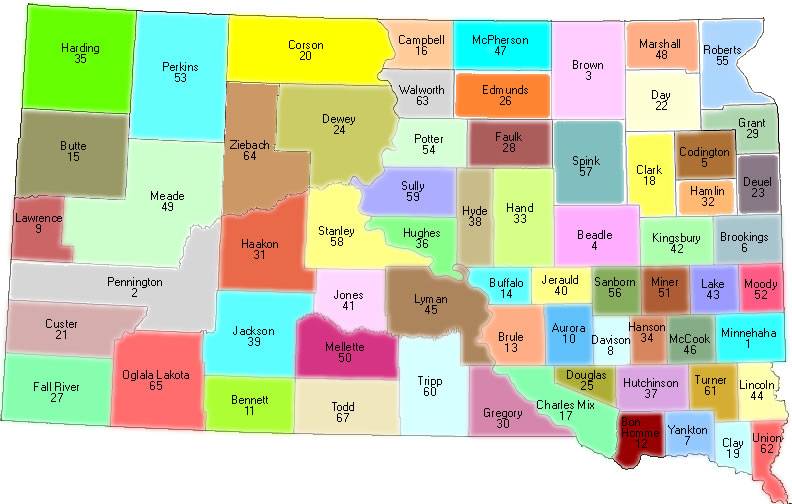
Unveiling the geographical structure of a state is often the first step in planning a comprehensive travel itinerary. For those contemplating a journey through the heartland of America, specifically to South Dakota, understanding its county divisions offers invaluable insight into its diverse landscapes, attractions, and cultural nuances. South Dakota is home to 66 distinct counties, each contributing a unique thread to the vibrant tapestry of the state’s travel experience. Far from being mere administrative boundaries, these counties frequently delineate geographical regions, historical legacies, and concentrations of specific travel opportunities, from dramatic badlands and majestic mountains to fertile prairies and bustling urban centers. For the discerning traveler, leveraging this county-by-county perspective transforms a generic road trip into a deeply immersive exploration, allowing for a more focused and enriching encounter with the Spirit of America.
Exploring the Badlands and Black Hills Region: Western South Dakota’s Iconic Counties
The western part of South Dakota is arguably its most famous, drawing millions with its rugged beauty and monumental sculptures. This region is primarily defined by a cluster of counties that host some of the nation’s most iconic landmarks, making it a cornerstone for any travel plan to the state.
Pennington County stands as a major hub, home to Rapid City, often dubbed the “Gateway to the Black Hills.” From here, travelers can easily access Mount Rushmore National Memorial, an engineering marvel carved into the granite of the Black Hills. Pennington County also borders the otherworldly landscape of Badlands National Park, where eroded buttes and pinnacles create a surreal backdrop for hiking and wildlife viewing. A short drive east into Jackson County allows for further exploration of the park’s eastern reaches and the Stronghold Unit, managed by the Oglala Sioux Tribe.
Adjacent to Pennington County, Custer County offers an equally rich array of natural and historical attractions. Here, Custer State Park beckons with its Wildlife Loop Road, scenic drives like the Needles Highway, and opportunities to spot bison, pronghorn, and burros. The colossal Crazy Horse Memorial is also located within Custer County, representing a monumental tribute to Native American heritage. Further south, Fall River County is home to Wind Cave National Park, one of the longest and most complex caves in the world, offering unique subterranean exploration alongside prairie ecosystems.
Moving north within the Black Hills, Lawrence County and Meade County encapsulate a different facet of South Dakota’s allure. Lawrence County is where you’ll find Deadwood, a National Historic Landmark District renowned for its Old West history, gambling, and colorful characters like Wild Bill Hickok and Calamity Jane. The scenic Spearfish Canyon, with its stunning waterfalls and limestone cliffs, offers exceptional hiking and photography opportunities. Meade County, on the other hand, is famous for hosting the annual Sturgis Motorcycle Rally, transforming the small town of Sturgis into a global gathering for motorcycle enthusiasts every August. Beyond the rally, Meade County provides vast open spaces for outdoor activities and rural exploration. Travel in this western region thrives on scenic drives, historical immersion, and wilderness adventures, with each county providing distinct highlights that are crucial for a well-rounded itinerary.
The Missouri River Corridor: Central South Dakota’s Waterways and Plains
The vast expanse of central South Dakota is dominated by the majestic Missouri River, a powerful waterway that has shaped the state’s geography, history, and recreational opportunities. This region’s counties offer a tranquil yet engaging travel experience, contrasting sharply with the ruggedness of the Black Hills.
Hughes County serves as the political heart of the state, home to Pierre, the state capital. Travelers can explore the grandeur of the South Dakota State Capitol Building, a beautifully preserved example of Neoclassical architecture. The nearby Oahe Dam, one of the largest rolled-earth dams in the world, creates Lake Oahe, a vast reservoir offering unparalleled fishing, boating, and watersports. The Lewis and Clark Expedition plays a significant role in this region’s narrative, with numerous interpretive sites marking their passage.
Further south, counties like Stanley County, Lyman County, and Charles Mix County embrace the river’s influence. These areas are renowned for their prime hunting and fishing grounds, particularly for walleye and pheasants. Stanley County, directly across the river from Pierre, offers expansive prairie landscapes and opportunities for agritourism. Lyman County and Charles Mix County are known for their picturesque river bluffs and access to the larger reservoirs created by the Missouri River dams, providing perfect settings for secluded getaways and outdoor adventures.
For those interested in Native American culture, the Akta Lakota Museum and Cultural Center in Chamberlain, located in Brule County, offers deep insights into the history and traditions of the Lakota people. This central corridor is ideal for travelers seeking serene natural beauty, excellent outdoor recreation, and a deeper connection to the history of westward expansion and indigenous cultures. Understanding these counties helps in plotting a travel path that maximizes access to river activities and cultural experiences.
Eastern South Dakota’s Prairielands and Urban Hubs: From Agriculture to Academia
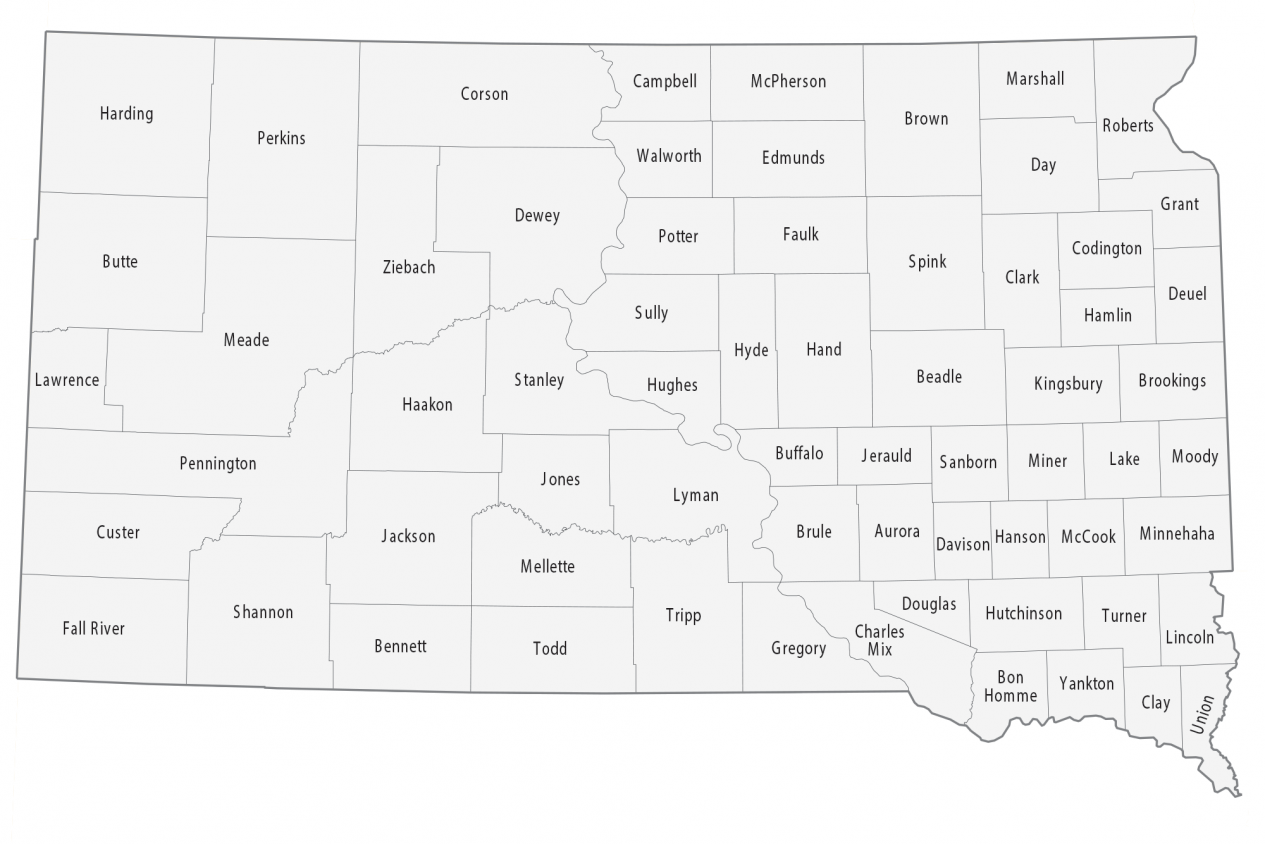
The eastern part of South Dakota presents a different character, marked by fertile farmlands, charming prairie towns, and the state’s largest urban centers. This region offers a blend of metropolitan amenities, agricultural heritage, and serene natural beauty, providing a distinct travel experience.
Minnehaha County is the epicenter of eastern South Dakota travel, home to Sioux Falls, the state’s largest city. Sioux Falls boasts a vibrant downtown with the stunning Falls Park, where the Big Sioux River cascades over pink quartzite. The city offers a rich array of cultural attractions, including the Washington Pavilion, home to an art gallery and science center, and the Great Plains Zoo & Delbridge Museum of Natural History. For foodies and shoppers, Sioux Falls provides ample opportunities, showcasing local cuisine and unique boutiques.
Moving north, Brookings County is centered around the city of Brookings, an energetic university town. Home to South Dakota State University, Brookings offers cultural events, a lively college atmosphere, and attractions like the South Dakota Art Museum and the Children’s Museum of South Dakota. The surrounding farmlands provide insights into the state’s agricultural backbone.
South of Minnehaha County, Yankton County offers a charming historical perspective on the Missouri River. The city of Yankton, once the territorial capital, is rich in history, evident in its well-preserved downtown and the beautiful Meridian Bridge, a former double-decker lift bridge now a pedestrian walkway. The Missouri River here provides excellent recreational opportunities, including boating and fishing.
Other notable counties in eastern South Dakota include Union County, featuring Spirit Mound Historic Prairie, an important Lewis and Clark site, and Grant County, home to the historic Fort Sisseton Historic State Park, which hosts annual rendezvous events. Garretson in Minnehaha County boasts Palisades State Park, known for its unique quartzite formations and climbing opportunities. This eastern stretch is perfect for travelers interested in urban exploration, cultural institutions, and experiencing the tranquil beauty of the prairie landscape, often with a focus on historical towns and agricultural insights.
Planning Your South Dakota Itinerary by County
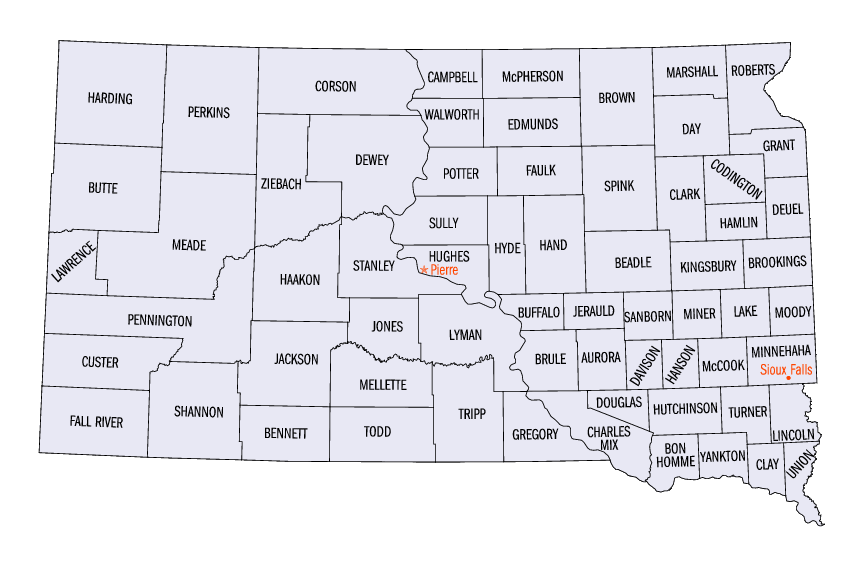
Understanding South Dakota’s 66 counties is more than just a geographical exercise; it’s a strategic approach to crafting an unforgettable travel experience. By conceptualizing the state through its county divisions, travelers can more effectively plan their routes, discover hidden gems, and immerse themselves in the distinct character of each region.
Regional Exploration vs. Cross-State Journeys
For shorter trips, focusing on a cluster of geographically contiguous counties allows for a deep dive into a specific region. For example, a week-long vacation could be dedicated solely to the Black Hills counties (Pennington County, Custer County, Lawrence County, Meade County, Fall River County), ensuring ample time for hiking, historical sites, and wildlife viewing without feeling rushed. Conversely, for a longer, cross-state adventure, mapping out a journey that touches on key counties in each major region—western, central, and eastern—provides a comprehensive overview of South Dakota’s diverse offerings. This could involve starting in Minnehaha County for city life, transitioning through Hughes County for river activities and state history, and culminating in Pennington County for the iconic Black Hills experience.
Leveraging County Resources for Travel Planning
Many counties in South Dakota maintain their own tourism boards or chambers of commerce. These local entities are invaluable resources for travelers, offering detailed information on county-specific attractions, events, lodging, and dining options that might not be prominently featured in broader state guides. By exploring individual county websites, travelers can uncover local festivals, farmers’ markets, historical society museums, and community events that provide authentic insights into the local culture. This granular approach to planning allows for a more personalized and less tourist-centric travel experience. For instance, looking into Aurora County might reveal charming small-town diners, or Clark County could offer a unique prairie nature preserve.
Discovering Hidden Gems Beyond Major Attractions
While iconic landmarks like Mount Rushmore and Badlands National Park are undeniable draws, the true magic of South Dakota often lies in its less-trodden paths. By examining counties beyond the major tourist corridors, travelers can stumble upon delightful surprises. Perhaps a visit to Wall Drug Store in Pennington County leads to an unexpected side trip into the lesser-known parts of Jackson County. Or, exploring a county like Union County reveals Spirit Mound Historic Prairie, a site of profound cultural and historical significance. These smaller, county-level attractions often provide a more intimate connection with the state’s heritage and natural beauty. Leveraging the 66-county framework empowers travelers to look beyond the brochures and craft an itinerary that truly reflects the vast and varied heart of South Dakota.
LifeOutOfTheBox is a participant in the Amazon Services LLC Associates Program, an affiliate advertising program designed to provide a means for sites to earn advertising fees by advertising and linking to Amazon.com. Amazon, the Amazon logo, AmazonSupply, and the AmazonSupply logo are trademarks of Amazon.com, Inc. or its affiliates. As an Amazon Associate we earn affiliate commissions from qualifying purchases.