
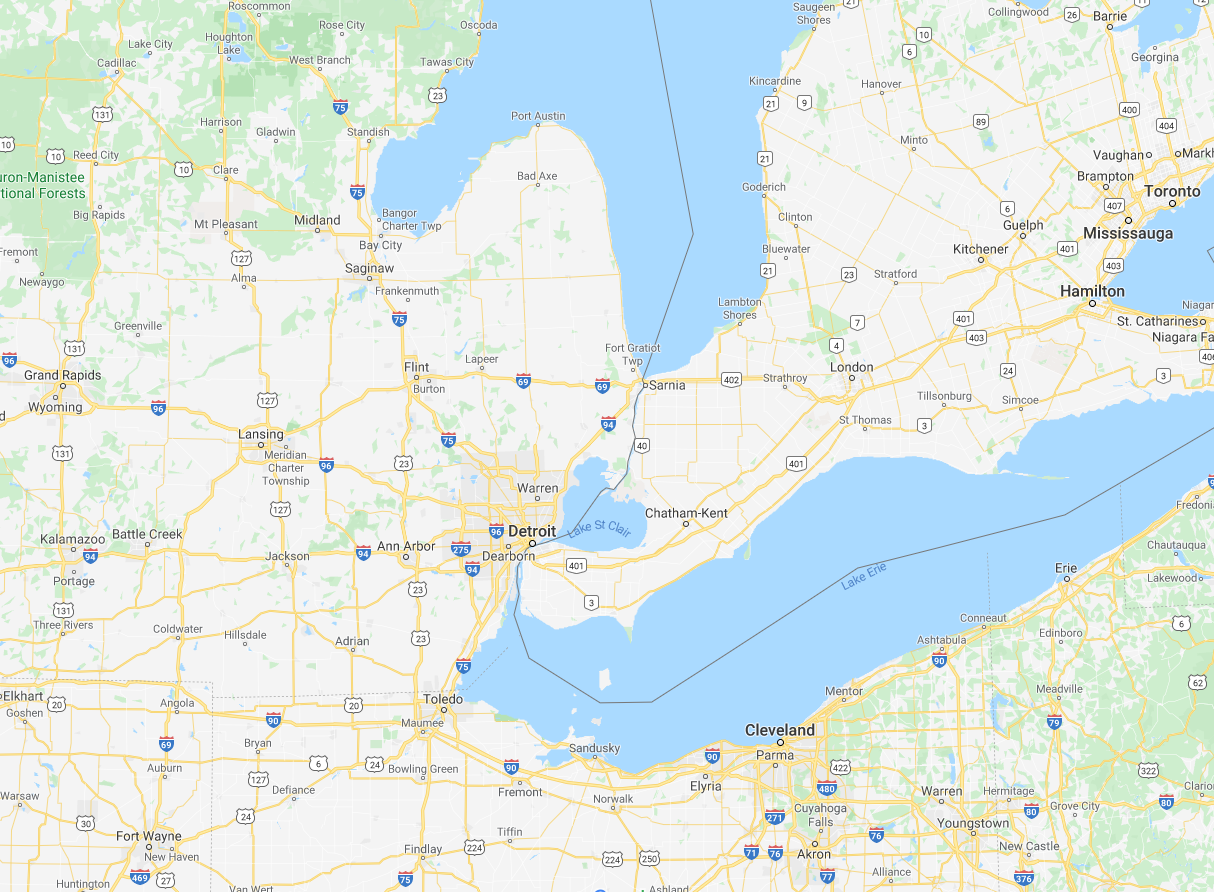
The question “How far is Detroit to Canada?” carries a unique answer among international borders: it’s not a matter of miles, but often just a short drive or even a ferry ride across a river. Detroit, Michigan, holds the unique distinction of being the only major U.S. city situated directly north of Canada, making it an immediate gateway to its neighbor. This geographical anomaly places the vibrant Canadian city of Windsor, Ontario, directly across the Detroit River from Detroit, creating one of North America’s busiest international crossings. For travelers looking to experience both nations in a single trip, understanding this close proximity and the logistics of cross-border travel is essential for a seamless and enriching journey.
The Proximity Paradox: Detroit’s Immediate Border with Canada
The sheer closeness of Detroit to Canada is often a surprise to those unfamiliar with the region’s geography. Unlike most major U.S. cities which are typically south of Canada, Detroit shares its northern flank directly with the province of Ontario. The Detroit River, a mere 0.5 to 2.5 miles (0.8 to 4 km) wide, is all that separates the two countries at this point. This means that from downtown Detroit, the skyline of Windsor is clearly visible, making the journey across the border one of the shortest and most accessible international crossings in the world.
This unique geographical relationship has fostered deep economic, cultural, and social ties between the two cities and nations. Many residents commute daily for work or leisure, highlighting the integrated nature of the cross-border community. For travelers, this proximity presents an unparalleled opportunity to experience distinct cultures, cuisines, and attractions within minutes of each other. Whether you’re exploring the revitalized streets of Detroit or the charming waterfront of Windsor, the journey between them is a swift transition rather than a long expedition.
Navigating the Border: Your Gateway Options
Crossing from Detroit into Canada is straightforward, with two primary methods for vehicle traffic and a convenient, albeit less common, air option. Each route offers a distinct experience and serves different travel needs.
The Ambassador Bridge: A Major Artery
The Ambassador Bridge is the busiest international border crossing in North America by trade volume, connecting Detroit to Windsor via a suspension bridge over the Detroit River. This iconic structure is approximately 1.5 miles (2.4 km) long and offers panoramic views of both city skylines. It is a toll bridge, and fees are typically paid upon entry into Canada (or upon return to the U.S.), varying by vehicle type and payment method.
Travel time across the bridge itself is usually just a few minutes, though total crossing time can be significantly impacted by wait times at customs. It’s crucial to check real-time border wait estimates before departing, especially during peak travel hours, holidays, or major events. The Ambassador Bridge is a vital link for both commercial and passenger vehicles, making it a reliable choice for most travelers.
The Detroit-Windsor Tunnel: A Subterranean Passage
For a more unique crossing experience, the Detroit-Windsor Tunnel offers a subterranean route beneath the Detroit River. This engineering marvel connects downtown Detroit directly with downtown Windsor, making it an ideal choice for those looking to reach the heart of either city quickly. The tunnel is approximately 0.75 miles (1.2 km) long and is strictly for passenger vehicles and motorcycles; commercial trucks are not permitted.
Like the bridge, the tunnel is a toll road, with fees similar to the bridge. The journey through the tunnel is quick, often taking less than 5 minutes. While generally experiencing shorter wait times than the bridge during non-peak hours, it is still subject to customs delays. Its central location makes it particularly convenient for travelers heading directly to Windsor’s waterfront, entertainment venues like Caesars Windsor, or the bustling downtown area.
Air Travel Considerations
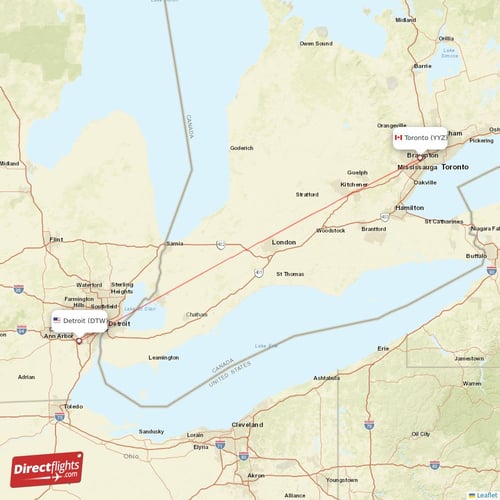
While ground crossings are the most common and direct routes, air travel is also an option for those flying from Detroit Metropolitan Airport (DTW) to various Canadian cities. DTW offers direct flights to major hubs like Toronto, Montreal, and Vancouver, bypassing the immediate land border. However, for reaching Windsor or nearby Ontario destinations, driving remains the most practical and cost-effective solution.
Essential Border Crossing Requirements and Tips
Crossing an international border, even one as fluid as the Detroit-Windsor crossing, requires proper preparation. Understanding the necessary documentation and customs procedures will ensure a smooth journey.
Documentation Demands: What You Need to Cross
For U.S. and Canadian citizens, the primary documents required for land border crossings are:
- Passport: The most universally accepted and recommended document for international travel.
- NEXUS Card: For frequent travelers, a NEXUS card allows for expedited processing at designated lanes, significantly reducing wait times.
- Enhanced Driver’s License (EDL): Available in certain U.S. and Canadian provinces, an EDL serves as both a driver’s license and proof of identity and citizenship for land and sea travel to Canada (and back to the U.S.).
- SENTRI Card: Similar to NEXUS, but more focused on the U.S.-Mexico border for land crossings. It is accepted at the U.S.-Canada border.
- FAST Card: Primarily for commercial truck drivers.

Children traveling with adults generally require proof of citizenship (birth certificate) if they do not have a passport. Non-U.S./Canadian citizens will need a valid passport and, depending on their nationality, a visa to enter Canada. It is advisable to check the official websites of Canada Border Services Agency (CBSA) and U.S. Customs and Border Protection (CBP) for the most up-to-date requirements.
Customs and Immigration: What to Expect
When approaching the border, be prepared for a brief interview with a border services officer. You will be asked about your citizenship, purpose of travel, duration of stay, and any goods you are bringing into the country. It’s important to be honest and cooperative.
Common items to declare include:
- Alcohol and tobacco (with limits).
- Firearms (highly restricted).
- Food, plants, and animal products (some prohibited).
- Cash or monetary instruments equal to or exceeding $10,000 CAD or USD.
Prohibited items include certain weapons, narcotics, and culturally sensitive items. Failing to declare items or providing false information can result in delays, fines, or even refusal of entry.
Currency and Communication
Canada’s official currency is the Canadian Dollar (CAD). While many businesses in Windsor may accept U.S. dollars, it’s always best to pay in local currency or use a credit card with no foreign transaction fees. Exchange rates can be found at banks, currency exchange kiosks, or by simply checking your credit card’s conversion rate.
For mobile communication, check with your service provider about international roaming plans before you cross. Many plans offer affordable daily or monthly add-ons for use in Canada, or you can rely on Wi-Fi availability in many public spaces.
Beyond the Border: Exploring Windsor and Nearby Ontario
Once you’ve crossed into Canada, a wealth of experiences awaits just minutes from Detroit. Windsor itself is a vibrant city with its own distinct charm.
Windsor’s Urban Charms
Windsor boasts a beautiful waterfront, offering stunning views back towards Detroit. The Windsor Sculpture Park, an outdoor gallery featuring over 30 large-scale sculptures, is a highlight along the waterfront trail. The city is also known for its lively entertainment scene, particularly at Caesars Windsor, a major resort and casino offering gaming, dining, and live performances.
Foodies will appreciate Windsor’s diverse culinary landscape, from authentic Canadian poutine to a wide array of international cuisines. The city is often referred to as the “Automotive Capital of Canada,” mirroring Detroit’s industrial heritage, and this history is reflected in some of its museums and public art.
Day Trips and Further Exploration in Ontario
For those looking to venture beyond Windsor, the surrounding region of Southwestern Ontario offers picturesque landscapes and charming towns.
- Point Pelee National Park: Approximately an hour’s drive southeast of Windsor, Point Pelee is the southernmost point of mainland Canada and a major migratory bird route. It’s a paradise for nature lovers, birdwatchers, and outdoor enthusiasts.
- Lake Erie North Shore Wine Region: Ontario’s oldest and most southerly wine region, just east of Windsor, offers numerous wineries for tours and tastings.
- London, Ontario: About a two-hour drive east, London is a larger city with a vibrant arts scene, numerous festivals, and beautiful parks.
For longer trips, major Canadian cities like Toronto (about a four-hour drive) and the majestic Niagara Falls (about three to four hours) are accessible from Windsor, making Detroit a convenient starting point for an extended Canadian adventure.
Planning Your Cross-Border Journey
To maximize your travel experience, consider these planning tips:
- Check Border Wait Times: Utilize apps or websites (e.g., CBP Border Wait Times, CBSA Border Wait Times) for real-time updates on bridge and tunnel delays.
- Avoid Peak Hours: Weekends, holidays, and daily rush hours (morning and late afternoon) typically have the longest wait times. Early mornings or late evenings often offer quicker crossings.
- Have Documents Ready: Keep passports or EDLs easily accessible for inspection by border officers.
- Know What to Declare: Be honest and prepared to state your purpose of visit and declare any goods as required.
- Fuel Up: Gas prices can differ between the U.S. and Canada, so consider filling your tank strategically.
The question “How far is Detroit to Canada?” highlights a truly unique travel opportunity. It’s a journey not of great distance, but of international discovery that’s remarkably close at hand, offering travelers the chance to explore two distinct cultures in a single, accessible trip.
LifeOutOfTheBox is a participant in the Amazon Services LLC Associates Program, an affiliate advertising program designed to provide a means for sites to earn advertising fees by advertising and linking to Amazon.com. Amazon, the Amazon logo, AmazonSupply, and the AmazonSupply logo are trademarks of Amazon.com, Inc. or its affiliates. As an Amazon Associate we earn affiliate commissions from qualifying purchases.