
The question of why Detroit became “abandoned” often arises when contemplating the iconic cityscape, a place synonymous with both industrial prowess and profound urban decline. While the term “abandoned” might paint an overly bleak picture, it speaks to a very real historical period of deindustrialization, population exodus, and subsequent decay that left vast swathes of the Motor City vacant. Understanding this complex narrative requires delving into its vibrant past, the forces that led to its decline, and the architectural and social legacy it left behind, all of which contribute to Detroit’s unique status as a landmark of American history.

The Rise and Fall of an Industrial Powerhouse
Detroit’s story is inextricably linked to the American industrial boom of the 20th century, a period of unprecedented growth that transformed it into a global economic powerhouse. Its subsequent decline, while sharp and devastating, was the result of a confluence of economic, social, and political factors that eroded its foundations over several decades.
Early Prosperity: The Automotive Boom
At the turn of the 20th century, Detroit emerged as the epicenter of the nascent automotive industry. Visionaries like Henry Ford pioneered mass production techniques, attracting millions of workers from across the United States and even internationally, seeking high-paying factory jobs. The city’s population swelled, and its architectural landscape blossomed with grand commercial buildings, residential neighborhoods, and state-of-the-art factories like the River Rouge Complex. This era saw Detroit become a symbol of American innovation and economic opportunity, its prosperity fueled by a seemingly insatiable demand for automobiles. The city’s infrastructure, from its public transportation systems to its cultural institutions, grew to accommodate its booming population and economic might.
Seeds of Decline: Automation and Decentralization
Even at the height of its power, the seeds of Detroit’s eventual decline were being sown. The very industry that built the city also began to reshape its future in challenging ways. Automation, while increasing efficiency, gradually reduced the need for a vast human workforce in factories. Simultaneously, automotive companies began decentralizing their operations, opening plants in other states and even overseas, seeking lower labor costs and greater logistical flexibility. This shift meant fewer jobs remained in Detroit itself, triggering the initial trickle of population loss. The city, having put all its economic eggs in one basket, was particularly vulnerable to these industry-wide changes.
Socioeconomic Shifts and Urban Exodus
The economic shifts were compounded by profound social and racial tensions that accelerated the population decline and contributed significantly to the city’s eventual state of abandonment. The post-war era brought both prosperity and deep-seated societal challenges that Detroit struggled to overcome.
Racial Tensions and White Flight
Detroit’s rapid growth led to a diverse but often segregated population. Post-World War II, heightened racial tensions culminated in significant social unrest, most notably the 1967 Detroit Riot. This period of civil unrest, coupled with ongoing racial discrimination in housing and employment, spurred a phenomenon known as “white flight.” Middle and upper-class white residents, many of whom were still employed in the declining automotive sector but saw their jobs increasingly moving out of the urban core, began to move en masse to the burgeoning suburbs. This exodus drastically reduced the city’s tax base and further drained its economic vitality, leaving behind a disproportionately poorer, predominantly African-American population struggling with diminished resources and opportunities.
Economic Hardship and Deindustrialization
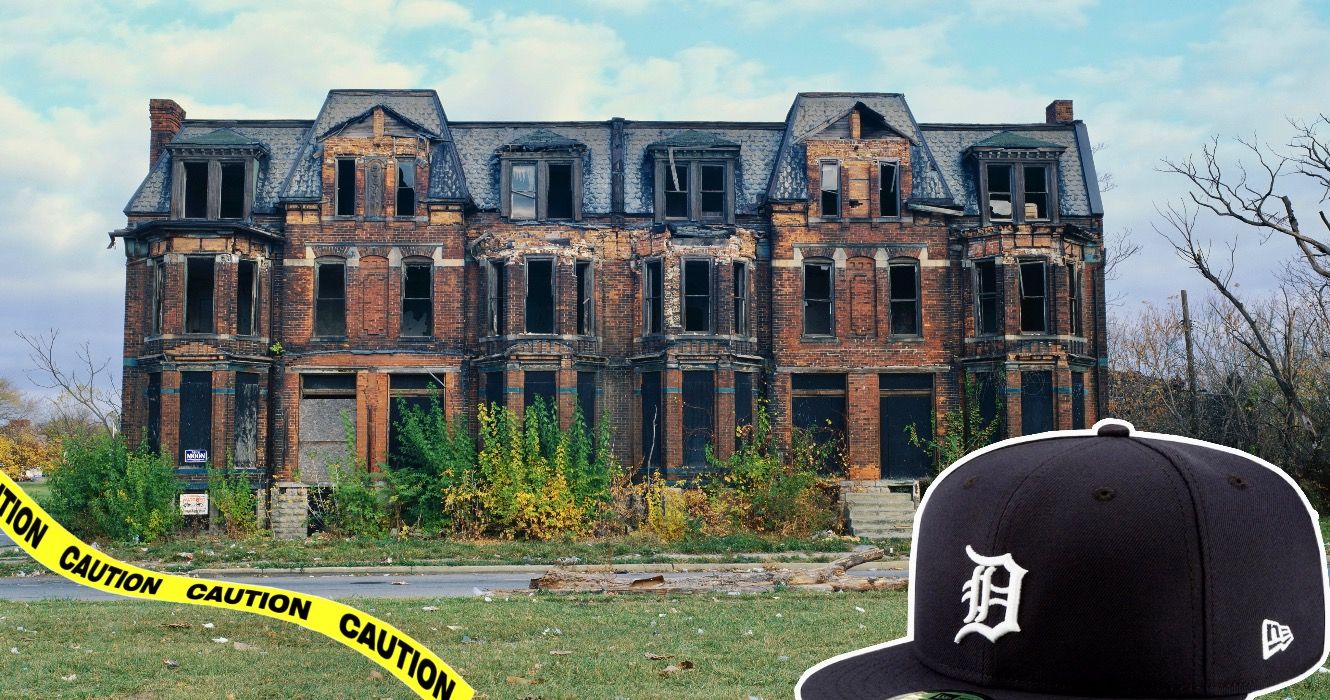
The 1970s and 1980s delivered successive blows to Detroit’s economy. The Oil Crisis of the 1970s shifted consumer demand away from the large, gas-guzzling American cars that were Detroit’s specialty, favoring more fuel-efficient Japanese and European imports. This crisis, combined with increased global competition and further automation, led to massive layoffs and factory closures. As industries closed their doors, entire neighborhoods that had once thrived around these facilities lost their economic anchor. This period of deindustrialization left a vacuum, creating widespread unemployment, poverty, and a sharp decline in municipal services as the tax base continued to shrink. Homes, storefronts, and even iconic public buildings were left empty, slowly succumbing to decay.
The Ghost of Grandeur: Architectural Legacy and Decay
The visual manifestation of Detroit’s decline is its extraordinary collection of abandoned buildings. These structures, once symbols of aspiration and prosperity, now stand as poignant architectural landmarks, telling a story of past glory and subsequent neglect.
Iconic Structures Left Behind
Among the most famous examples is Michigan Central Station, a magnificent Beaux-Arts railway terminal opened in 1913. For decades, it was a bustling gateway to the city, but with the decline of rail travel and Detroit’s population, it ceased operations in 1988, becoming a haunting shell. Similarly, the Packard Automotive Plant, once a sprawling, state-of-the-art facility, closed in 1958 and became a symbol of industrial ruin, its concrete structures slowly crumbling. Other notable sites include the Detroit Lee Plaza Hotel, an elegant apartment-hotel that once housed the city’s elite, and countless smaller factories, schools, and residential homes. These buildings are more than just abandoned; they are historical artifacts, each telling a piece of Detroit’s narrative, their decay part of the city’s unique historical landscape.
The Allure of Ruin Tourism
Ironically, the very abandonment that afflicted Detroit also gave rise to a unique form of tourism: “ruin tourism” or “dark tourism.” Photographers, urban explorers, and history enthusiasts flocked to the city to document and experience these decaying landmarks. The stark beauty of nature reclaiming concrete, the poignant silence within grand halls, and the palpable sense of history offered a powerful, often melancholy, experience. While controversial—some viewed it as exploitative—this interest also brought global attention to Detroit’s plight and highlighted the architectural significance of its abandoned spaces. These buildings, despite their state, became accidental landmarks, drawing visitors keen to witness this unique chapter of urban history.
Detroit Today: A City Rebuilding
While the scars of abandonment are still visible, the narrative of Detroit is increasingly one of resilience and revitalization. The city is actively engaged in a monumental effort to redefine itself, balancing its historical legacy with ambitious future plans.
Revival and Renovation Efforts
Since filing for bankruptcy in 2013, Detroit has embarked on a remarkable journey of rebirth. Major investments from both public and private sectors have fueled extensive renovation projects. Michigan Central Station, once a symbol of decay, is now undergoing a massive restoration led by Ford Motor Company to become a hub for future mobility innovation. Other formerly abandoned buildings have been repurposed into residential units, offices, and cultural spaces. Downtown Detroit and Midtown have seen significant revitalization, attracting new businesses, residents, and visitors. The city’s spirit of innovation, which once drove its automotive success, is now being channeled into urban renewal, sustainable development, and a diversifying economy.

Preserving the Past, Shaping the Future
Crucially, Detroit’s revitalization efforts acknowledge and often integrate its unique history. The abandoned structures are not merely being demolished; many are being thoughtfully preserved and repurposed, allowing their historical significance to endure. The city’s distinctive architecture, from its Art Deco skyscrapers to its industrial behemoths, is being recognized as a vital part of its identity. Detroit is a living testament to the cycles of prosperity, decline, and rebirth inherent in urban landscapes. Its “abandonment” was not an end but a chapter, one that has shaped its character and now informs its determined path forward, solidifying its place as a landmark city whose very fabric tells a compelling story of American industry, society, and reinvention.
LifeOutOfTheBox is a participant in the Amazon Services LLC Associates Program, an affiliate advertising program designed to provide a means for sites to earn advertising fees by advertising and linking to Amazon.com. Amazon, the Amazon logo, AmazonSupply, and the AmazonSupply logo are trademarks of Amazon.com, Inc. or its affiliates. As an Amazon Associate we earn affiliate commissions from qualifying purchases.