
Traveling across the Sunshine State often involves navigating its well-established network of highways, connecting vibrant metropolises with historic state capitals. For many, the journey between Orlando, the world-renowned theme park capital, and Tallahassee, Florida‘s legislative heart, is a frequently undertaken trip for business, education, or leisure. Understanding the distance, travel time, and various transportation options is crucial for planning a seamless and enjoyable expedition across this significant stretch of Florida.
The Core Journey: Distance and Driving Time
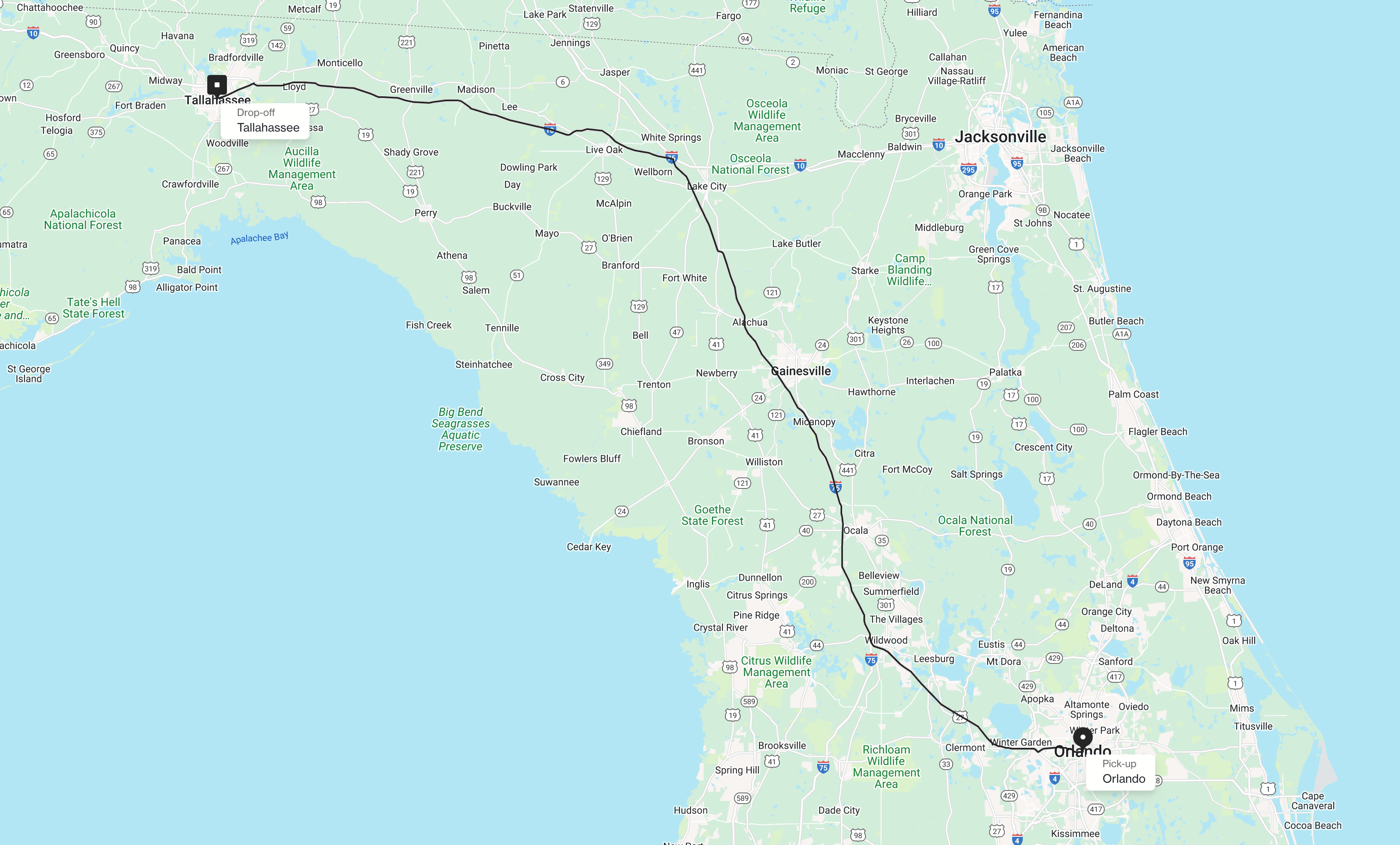
The direct road distance between Orlando and Tallahassee typically spans approximately 250 miles (about 402 kilometers). This substantial journey makes for a considerable drive, demanding both preparation and realistic expectations for travel duration. Under optimal conditions, meaning light traffic and maintaining reasonable highway speeds, the drive can be completed in about 4 to 5 hours. However, numerous variables can influence this estimate, pushing the total travel time closer to 5.5 or even 6 hours.

Factors such as the specific starting point within the sprawling Orlando metropolitan area and the final destination in Tallahassee can add significant minutes to the trip. For instance, navigating the congested I-4 corridor in Orlando during peak hours can be a time-consuming affair before even hitting the main highways to Tallahassee. Similarly, construction zones, unexpected road closures, or adverse weather conditions common in Florida (like sudden thunderstorms) can introduce delays. Drivers also need to factor in stops for fuel, restrooms, and meals, which can easily extend the journey by an hour or more. Most direct routes utilize major interstates and Florida’s primary toll road, Florida’s Turnpike, which are designed for efficiency but are not immune to the aforementioned factors.
Navigating the Route: Key Highways and Considerations
The expedition from Orlando to Tallahassee offers a few primary driving routes, each with its own characteristics regarding speed, scenery, and tolls. Selecting the right route often depends on individual priorities, whether it’s minimizing travel time, avoiding tolls, or enjoying a less-traveled path.
Route 1: The Most Direct via Florida’s Turnpike and I-75/I-10
This is often considered the fastest and most straightforward route for many travelers. From Orlando, drivers typically head northwest to connect with Florida’s Turnpike northbound. The Turnpike is a well-maintained, multi-lane toll road designed for higher speeds and offers service plazas for convenient stops. After traveling north on the Turnpike, motorists transition onto I-75 North. This stretch of I-75 traverses through more rural parts of Florida, passing through areas like Wildwood and Gainesville. Finally, travelers will merge onto I-10 West, which leads directly into Tallahassee.
- Considerations: This route involves tolls, primarily on Florida’s Turnpike. Drivers should be prepared with a SunPass or E-Pass, or understand the Toll-By-Plate system, as cash payment options are becoming less common. Traffic can occasionally build up around the Orlando exits for the Turnpike and around the I-75/I-10 interchange closer to Tallahassee.
Route 2: Primarily Via I-75 North and I-10 West
An alternative, slightly less direct but potentially toll-free option (depending on the initial departure point in Orlando), involves heading directly west from Orlando to connect with I-75 North. This might involve using local roads or portions of other interstates like I-4 to reach I-75. Once on I-75 North, the journey mirrors the latter part of Route 1, eventually transitioning to I-10 West to Tallahassee.
- Considerations: This route might involve more urban driving at the beginning to reach I-75, potentially encountering more local traffic. While it can avoid Florida’s Turnpike tolls, the total driving time might be marginally longer due to slightly less direct routing or lower average speeds on initial stretches.
Route 3: The US-27 North Scenic Alternative
For those not in a hurry and wishing to experience a different side of Florida, US-27 North offers a more scenic, less interstate-heavy alternative. This route meanders through smaller towns and rural landscapes, presenting a glimpse into old Florida. It’s significantly longer in terms of travel time, often adding an hour or more to the journey compared to the interstate options, but provides a different atmosphere with more opportunities for spontaneous stops in charming communities.
- Considerations: This route is not recommended for travelers prioritizing speed. It features more traffic lights and lower speed limits, making it a considerably slower option. However, for those seeking a leisurely drive with fewer trucks and a more varied landscape, it can be a pleasant change of pace.
Regardless of the chosen route, it is always wise to consult real-time traffic applications like Google Maps or Waze before and during the journey. These tools provide invaluable updates on traffic congestion, accidents, and estimated travel times, allowing for informed decisions and potential route adjustments on the fly. Planning for fuel stops and rest breaks is also essential, especially on longer stretches of I-75 and I-10, where services can be spread out.
Alternative Modes of Transport
While driving is the most common way to travel between Orlando and Tallahassee, several other transportation options exist, each with its own benefits and drawbacks.
Bus Travel
Bus services offer a cost-effective and convenient alternative to driving. Companies like Greyhound and RedCoach operate daily routes connecting Orlando and Tallahassee.
- Duration: Bus journeys typically take longer than driving, often ranging from 5 to 7 hours, as they include multiple stops and adhere to stricter speed limits.
- Pros: Economical fares, no need to worry about driving, tolls, or parking; some services offer Wi-Fi and comfortable seating.
- Cons: Less flexibility in schedule, potential for delays, limited luggage allowances, and longer travel times compared to non-stop driving.
- Stations: Buses generally depart from the Orlando Bus Station (located near downtown) and arrive at the Tallahassee Bus Station (also typically centrally located).
Train Travel
Amtrak offers train services in Florida, but a direct, efficient train route between Orlando and Tallahassee is currently not available. Passengers would often need to travel to other hubs, such as Jacksonville or even Tampa, for connecting services, making the journey significantly longer and less practical than driving or taking a bus for this specific route.
- Stations: The Orlando Amtrak Station and Tallahassee Amtrak Station serve other routes but generally not a direct connection between these two cities.
Air Travel
While the shortest in terms of airborne time, flying between Orlando and Tallahassee is often not the most practical or time-efficient option for this distance.
- Airports: Orlando International Airport (MCO) serves Orlando, and Tallahassee International Airport (TLH) serves Tallahassee.
- Direct Flights: Direct flights are rare, and most routes typically involve a connection through major hubs like Atlanta or Charlotte. This adds considerable time due to layovers.
- Total Travel Time: When factoring in travel to and from airports, check-in, security, boarding, and potential layovers, the total time for air travel can easily match or exceed the driving time, often for a much higher cost.
- Pros: Quickest actual travel time in the air.
- Cons: High cost, inconvenience of connections, additional time for airport procedures, and airport transfers.
Ride-Sharing and Private Shuttles
Services like Uber or Lyft can facilitate long-distance travel, but the cost for a 250-mile journey would be substantial, making it an impractical choice for most individuals. Private shuttle services might be an option for groups willing to share costs, offering door-to-door convenience but at a premium price.
Planning Your Journey: Essential Travel Tips
To ensure a smooth and stress-free journey between Orlando and Tallahassee, consider these practical travel tips:
- Best Time to Travel: To minimize traffic, especially around Orlando’s bustling I-4 corridor, aim to depart early in the morning on weekdays or mid-morning to early afternoon. Avoiding Friday afternoons and Sunday evenings can also help circumvent weekend leisure traffic.
- Tolls: If using Florida’s Turnpike, ensure your SunPass or E-Pass is active and properly mounted, or understand the Toll-By-Plate system to avoid penalties. Cash lanes are limited.
- Vehicle Maintenance: Before embarking on a long drive, perform a quick check of your vehicle: tire pressure, oil levels, coolant, and wiper fluid. Ensure your fuel tank is full.
- Navigation: Rely on a GPS system (Google Maps, Waze) for real-time traffic updates. These can be invaluable for rerouting around unexpected delays.
- Entertainment: Prepare for the drive with playlists, podcasts, or audiobooks. For families, consider portable entertainment devices to keep passengers engaged.
- Snacks and Hydration: Pack a cooler with water, drinks, and snacks. This reduces the need for frequent stops and keeps energy levels up.
- Breaks: Plan to take at least one significant break during the 4-5 hour drive. Stretch your legs, grab a coffee, and refresh before continuing. Service plazas on Florida’s Turnpike are ideal for this.
- Flexibility: Always build in a buffer for unexpected delays. Florida weather can be unpredictable, and traffic incidents can occur without warning.
Why Make the Trip? Connecting Destinations
The journey between Orlando and Tallahassee serves a multitude of purposes, reflecting the diverse appeal of Florida’s urban centers.
From Orlando to Tallahassee
Many travel north to Tallahassee for governmental affairs, visiting the state capital for business, legislative sessions, or to experience the city’s rich history. Tallahassee is also home to major educational institutions, including Florida State University (FSU) and Florida A&M University (FAMU), attracting students, faculty, and visitors for campus tours, sporting events, or graduation ceremonies. Beyond the urban core, North Florida offers unique natural beauty and historical sites, such as the St. Marks National Wildlife Refuge and various state parks, drawing outdoor enthusiasts.
From Tallahassee to Orlando
Conversely, travelers heading south from Tallahassee are often seeking the unparalleled entertainment and excitement of Orlando. This includes world-famous theme parks like Walt Disney World Resort and Universal Orlando Resort, as well as other major attractions like SeaWorld Orlando and the Kennedy Space Center Visitor Complex (a short drive east of Orlando). Orlando International Airport (MCO) also serves as a critical hub for onward domestic and international travel, making the city a necessary transit point for many residents of North Florida.
In conclusion, the journey between Orlando and Tallahassee is a substantial but manageable one, typically covered in 4-5 hours by car over 250 miles. With careful planning, selection of the appropriate route, and consideration of alternative transport options, travelers can ensure a comfortable and efficient trip between these two pivotal Florida destinations.
LifeOutOfTheBox is a participant in the Amazon Services LLC Associates Program, an affiliate advertising program designed to provide a means for sites to earn advertising fees by advertising and linking to Amazon.com. Amazon, the Amazon logo, AmazonSupply, and the AmazonSupply logo are trademarks of Amazon.com, Inc. or its affiliates. As an Amazon Associate we earn affiliate commissions from qualifying purchases.