
Embarking on a journey from Virginia to Florida is a classic American road trip, a rite of passage for many seeking the Sunshine State’s allure. The vast expanse between these two prominent East Coast states presents a dynamic travel experience, varying greatly depending on your starting point in Virginia and your ultimate destination within Florida. Understanding the distances, typical driving times, and optimal routes is crucial for planning a seamless and enjoyable adventure. This journey traverses several states, offering a kaleidoscope of landscapes and cultural nuances, transforming a simple drive into a memorable expedition.
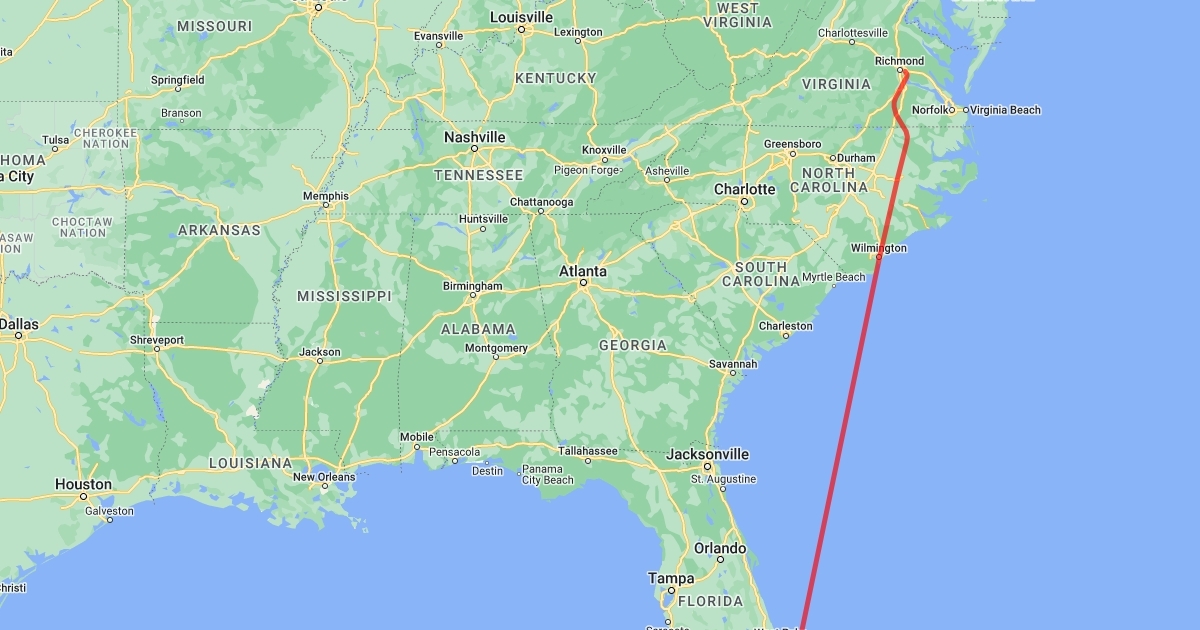
Mapping the Major Routes
The primary artery connecting the Mid-Atlantic to the Southeast is a well-traveled corridor, but alternative paths offer different scenic appeals and driving experiences. Choosing the right route is fundamental to shaping your travel narrative.
The I-95 Corridor: The Most Direct Path
For most travelers, Interstate 95 (I-95) is the default and most efficient route. Stretching along the East Coast from Maine to Florida, I-95 provides the most direct path, minimizing detours and maximizing speed. From Richmond, Virginia, for example, I-95 will take you straight through North Carolina, South Carolina, and Georgia before crossing into Florida. This route is characterized by multiple lanes, numerous service exits, and a consistent flow of traffic, making it ideal for those prioritizing speed and convenience.
While I-95 offers predictability, it also means encountering varying levels of traffic, especially around major metropolitan areas like Washington D.C. (if starting from Northern Virginia), Richmond, Fayetteville, Columbia, and Jacksonville. Strategic planning around peak hours, weekends, and holidays can mitigate potential delays. It’s also worth noting that construction is an ongoing reality on such a major highway, so real-time navigation apps are indispensable.
Scenic Alternatives: A Coastal Drive or Appalachian Detour
For those with more time and a desire for a less hurried pace, alternative routes can enrich the travel experience. While not as direct, these paths often reward travelers with picturesque views and unique stops.
- The Coastal Route (US-17, US-1): Skirting closer to the Atlantic, routes like US-17 or US-1 offer a different flavor. US-17, for instance, runs parallel to I-95 for significant stretches and passes through charming coastal towns in North Carolina, South Carolina, and Georgia. This path allows for stops in places like Charleston or Savannah, offering a glimpse into the rich history and distinct culture of the Lowcountry. While slower due to more intersections and varying speed limits, the opportunity to explore historic districts, enjoy local cuisine, and experience the coastal ambiance can be a significant draw.
- Appalachian Detour (I-81/I-77): For a truly different journey, starting from Western Virginia, one could consider taking I-81 South to I-77 South, dipping into the Appalachian foothills of North Carolina and South Carolina before connecting back to I-95 or continuing southwest. This route offers stunning mountain vistas, particularly in the autumn, and bypasses the immediate urban congestion of the I-95 corridor. However, it adds considerable distance and time, making it more suitable for multi-day trips where the journey itself is a primary focus.
Calculating Distance and Driving Time
The distance and duration of your trip from Virginia to Florida can vary by hundreds of miles and several hours, depending on your specific departure and arrival points. It’s essential to define your exact endpoints for an accurate estimate.
Virginia to North Florida: Gateway to the Sunshine State
For those heading to the northern parts of Florida, such as Jacksonville, St. Augustine, or Gainesville, the journey is significantly shorter.
- From Richmond, Virginia to Jacksonville, Florida: Approximately 500-550 miles. This typically translates to a driving time of 8-10 hours, without factoring in significant stops for fuel, food, or rest. With a couple of brief breaks, this segment is generally manageable within a single day for an experienced driver, though two drivers sharing the load would make it more comfortable.
- From Virginia Beach, Virginia to Jacksonville, Florida: Closer to 570-600 miles, requiring around 9-11 hours of pure driving time. The initial stretch from Virginia Beach involves connecting to I-95, often via I-64 West and I-295 South around Richmond.
These shorter segments make for a long day of driving but are generally considered a one-day trip for many, especially if departing early in the morning.
Virginia to South Florida: The Full Spectrum Journey
Reaching the southern tip of Florida, including popular destinations like Orlando, Tampa, or Miami, extends the trip considerably.
- From Richmond, Virginia to Orlando, Florida: Roughly 720-750 miles. This journey typically demands 11-13 hours of driving. While ambitious for a single day, it is often done by those accustomed to long drives. However, for safety and comfort, breaking this into two days with an overnight stop is highly recommended.
- From Richmond, Virginia to Miami, Florida: The longest leg, spanning approximately 1050-1100 miles. This distance translates to a formidable 16-18 hours of continuous driving. Attempting this in a single day is generally not advisable due to fatigue and safety concerns. A two-day trip with a stop somewhere in South Carolina or Georgia (e.g., Savannah or Jacksonville) is the most practical approach.

Factors like traffic, weather conditions, road construction, and the frequency of stops will inevitably extend these estimates. It is always wise to add an extra 15-20% to pure driving time estimates for a realistic travel plan.
Essential Considerations for Your Road Trip
A successful road trip from Virginia to Florida requires more than just knowing the distance; it demands thoughtful preparation and smart decision-making.
Fueling Up and Resting Stops
The I-95 corridor is well-equipped with exit services, making it easy to find gas stations, fast food, and rest areas. However, not all exits are created equal. Planning your fuel stops in advance can help avoid higher prices often found directly off the interstate. Additionally, designated rest areas, often operated by the states, provide safe and free places to stretch your legs, use restrooms, and take a short power nap. For longer breaks, consider stopping in towns slightly off the interstate that offer more diverse dining options and a chance to experience local flavor.
For multi-day journeys, booking an overnight stay in advance, especially during peak seasons or holidays, is highly advisable. Popular midway points include Florence, South Carolina, Savannah, Georgia, or Jacksonville, Florida, depending on your final destination and desired driving segments.
Peak Travel Times and Traffic Hotspots
Traffic is an unavoidable reality on I-95. Weekends, particularly Friday afternoons and Sunday evenings, often see increased congestion as commuters and travelers head out or return. Holiday periods, such as spring break, summer holidays, and Christmas, can transform parts of I-95 into parking lots, adding hours to typical travel times.
Major cities along the route are perennial traffic hotspots. These include the areas around Richmond, Virginia; Fayetteville, North Carolina; Florence and Columbia, South Carolina; and Jacksonville and Orlando, Florida. Using real-time navigation apps like Google Maps or Waze can provide invaluable assistance in identifying current traffic patterns and suggesting alternative routes to bypass severe congestion.
Preparing Your Vehicle and Yourself
Before embarking on such a substantial road trip, a thorough vehicle check is paramount. Ensure your tires are properly inflated and have adequate tread, check fluid levels (oil, coolant, windshield wiper fluid), test your brakes and lights, and confirm your battery is in good health. A roadside emergency kit, including jumper cables, a first-aid kit, a flashlight, and basic tools, can be a lifesaver.
For yourself and your passengers, packing essential snacks, drinks, entertainment, and comfortable clothing will enhance the journey. Creating a curated playlist or downloading audiobooks can help pass the time. Most importantly, prioritize rest. Driver fatigue is a significant risk factor; plan to stop every 2-3 hours for a brief stretch and refreshment, and never drive when drowsy. If traveling with children, extra planning for stops, activities, and comfort items will be essential.
What to See Along the Way
While the goal is Florida, the journey itself offers opportunities for discovery, transforming the drive from a necessity into an integral part of the vacation experience.
Mid-Atlantic Charms
Departing Virginia, you’ll quickly transition into North Carolina. While I-95 bypasses most major cities, a slight detour can lead to points of interest. Near Richmond, historical sites from the Civil War are abundant. As you enter North Carolina, the landscape shifts to pine forests and agricultural fields. Consider a quick stop in Fayetteville, home to Fort Liberty (formerly Fort Bragg) and a rich military history, or explore the quaint downtown of Rocky Mount.
Southern Hospitality and Coastal Views
Moving into South Carolina and Georgia, the true essence of the Deep South begins to emerge.
- South Carolina: If time permits, detouring to Charleston is highly recommended. This historic port city, with its cobblestone streets, vibrant culinary scene, and antebellum architecture, is a cultural gem. Even a drive through its historic district can offer a memorable interlude. Smaller towns like Florence provide convenient and comfortable overnight stops with a range of amenities.
- Georgia: Savannah, Georgia, is another essential stop for those with an extra day. Its picturesque squares, Spanish moss-draped oak trees, and ghost stories create an enchanting atmosphere. The River Street waterfront is bustling with activity, shops, and restaurants, offering a perfect break from driving.
As you cross into Florida, the palm trees begin to appear, signaling your arrival in the Sunshine State. The first major city is Jacksonville, a sprawling metropolis with beautiful beaches and a burgeoning arts scene. Whether you are continuing south to the theme parks of Orlando or the vibrant culture of Miami, the journey itself, punctuated by these varied American landscapes and communities, forms an indelible part of the overall travel experience.
LifeOutOfTheBox is a participant in the Amazon Services LLC Associates Program, an affiliate advertising program designed to provide a means for sites to earn advertising fees by advertising and linking to Amazon.com. Amazon, the Amazon logo, AmazonSupply, and the AmazonSupply logo are trademarks of Amazon.com, Inc. or its affiliates. As an Amazon Associate we earn affiliate commissions from qualifying purchases.