
Florida, the Sunshine State, is synonymous with warm weather, outdoor living, and for many accommodation owners, the quintessential backyard oasis: a swimming pool. Whether you’re investing in a vacation rental property, a long-term residence, or simply enhancing your existing home, understanding the financial commitment of installing a pool in Florida is crucial. A pool isn’t just a luxury; it’s a significant value-add for any property, especially when considering its appeal to renters and potential buyers. However, the cost can vary widely, influenced by numerous factors ranging from design choices to geographical location within the state.

Key Factors Influencing Pool Costs
The price tag of a new swimming pool in Florida is not a fixed number. Instead, it’s a dynamic sum shaped by several core decisions and site-specific conditions. Understanding these variables is the first step in budgeting for this substantial accommodation enhancement.
Type of Pool Construction
The most significant cost differentiator often lies in the pool’s construction material and method.
- Gunite/Concrete Pools: These are the most popular and durable option, offering unparalleled design flexibility. Gunite is a dry mix of cement and sand applied at high velocity, then hand-troweled and finished with plaster, tile, or pebble aggregate. While highly customizable in shape, size, and depth, they are also the most expensive due to labor-intensive construction and extended build times. Expect initial costs to be higher, but their longevity and resilience make them a solid investment for long-term accommodation value.
- Fiberglass Pools: Manufactured off-site as a one-piece shell, fiberglass pools are installed much faster than gunite. They offer a smooth, non-porous surface, which can reduce chemical usage and cleaning time, appealing to accommodation owners looking for lower maintenance. However, design options are limited to pre-fabricated shapes and sizes, and transportation can be an issue for very large shells. They typically fall in the mid-range of pricing.
- Vinyl Liner Pools: These pools feature a flexible vinyl sheet that fits into an excavated hole supported by a frame of steel, polymer, or aluminum walls. They are generally the most affordable upfront. While customizable in shape, the liner needs replacement every 7-10 years, adding to long-term maintenance costs. For accommodation properties, the durability and aesthetic appeal compared to gunite or fiberglass might be a consideration.
Size, Depth, and Design Complexity
Naturally, a larger pool requires more materials and labor, directly correlating to higher costs. A standard residential pool in Florida might range from 12×24 feet to 18×36 feet. Depths typically vary from 3 to 8 feet. Beyond basic dimensions, custom shapes, curves, tanning ledges, beach entries, or integrated spas significantly increase both material and labor expenses. More intricate designs require specialized engineering and craftsmanship, pushing the price upward.
Essential and Optional Features
While a basic pool provides the primary function, many features enhance both aesthetics and usability, greatly impacting the final price for accommodation:
- Screen Enclosures: Almost a necessity in Florida to keep out insects, leaves, and debris, a screen enclosure is a substantial add-on. Costs depend on size, height, and material quality.
- Decking and Patios: The surrounding deck space is crucial for outdoor living and complements the pool area. Materials like pavers, travertine, concrete, or stamped concrete come at different price points. Larger or more elaborate deck designs will increase costs.
- Water Features: Waterfalls, deck jets, sheer descents, and bubblers add visual and auditory appeal, creating a resort-like atmosphere highly desirable in vacation rentals.
- Lighting: LED lighting, fiber optic lighting, and color-changing options elevate the ambiance, particularly for evening use.
- Heating Systems: While Florida is warm, a heater (electric heat pump, gas, or solar) extends the swimming season, a valuable feature for attracting renters during cooler months.
- Automation Systems: Smart controls for pumps, lights, and heaters offer convenience, but add to the initial investment.
- Integrated Spa/Hot Tub: A separate or attached spa adds significant cost but provides a popular amenity for relaxation.
Site Preparation and Permits
The condition of your property’s backyard can influence excavation costs. Sloping terrain, difficult access for machinery, or rocky soil will incur additional charges. Furthermore, every pool build requires permits from local authorities, and these fees vary by municipality, whether it’s Miami, Orlando, Tampa, or a smaller coastal town. Engineering plans and inspections are also part of this phase.
Average Cost Breakdown in Florida
Given the myriad of variables, providing an exact cost is challenging, but we can offer a general range for in-ground pools, which are most common for permanent accommodation properties.
Entry-Level Pools: $40,000 – $60,000
This range typically covers a basic, smaller to medium-sized gunite or fiberglass pool with standard finishes.
- Pool Shell: Simple rectangular or oval shape, standard depth.
- Equipment: Basic pump, filter, and sanitization system.
- Decking: Minimal concrete decking around the immediate pool perimeter.
- Permits: Included in the base cost.
- No Screen Enclosure: This is often an added expense for this tier.
Mid-Range Pools: $60,000 – $90,000
This segment represents the most common choice for many Florida homeowners and vacation rental investors, offering a good balance of features and value.
- Pool Shell: Medium to larger size, possibly with some curves, a tanning ledge, or custom steps. Often gunite with a standard plaster finish.
- Equipment: More efficient pump, larger filter, possibly salt chlorination system.
- Decking: More extensive patio area, possibly with basic pavers or stamped concrete.
- Screen Enclosure: A standard size, aluminum frame screen enclosure is usually included or offered as a common upgrade.
- Minor Features: A few small water features, basic LED lighting.
Luxury and Custom Pools: $90,000 – $150,000+
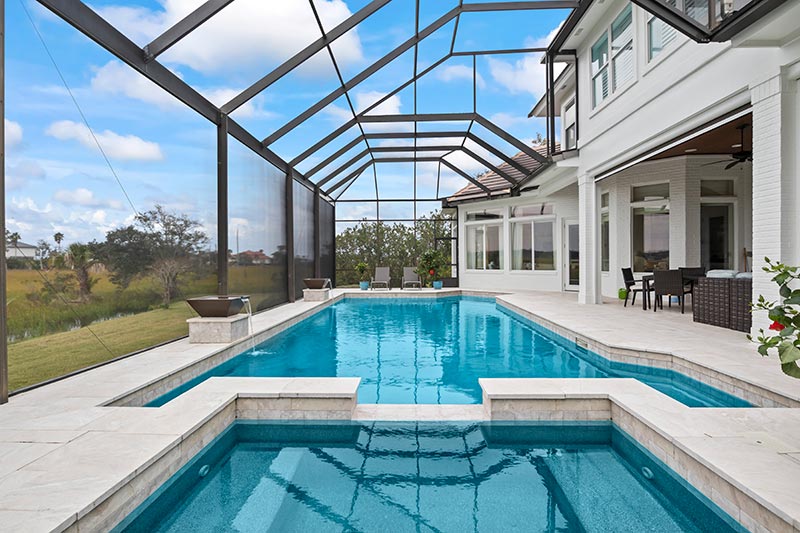
At the higher end, costs can easily exceed $150,000 for truly bespoke designs and premium amenities.
- Pool Shell: Large, custom-shaped gunite pool with premium finishes like pebble aggregate, mosaics, or fully tiled surfaces. Multiple depths, beach entries, or integrated zero-entry designs.
- Integrated Spa: Often includes a custom-designed, heated spa with therapeutic jets.
- Extensive Features: Multiple waterfalls, fire features, swim-up bars, elaborate deck jets, infinity edges (negative edges).
- Premium Decking: Large expanses of high-end travertine, intricate paver designs, or natural stone.
- Advanced Equipment: High-efficiency variable-speed pumps, automated control systems, advanced sanitization, and multiple heating options (e.g., large heat pump or gas heater).
- Large Custom Screen Enclosures: Often taller or wider, designed to integrate seamlessly with the property’s architecture.
- Landscaping and Outdoor Kitchens: Often includes comprehensive landscaping plans and built-in outdoor kitchen areas for ultimate outdoor living experience.
It’s important to remember these are estimated ranges. Always obtain multiple quotes from reputable, licensed pool builders in your specific Florida location for accurate pricing.
Ongoing Maintenance and Operational Costs
The initial installation cost is only part of the financial picture for a pool. Accommodation owners must also budget for regular upkeep to ensure the pool remains an attractive and functional amenity.
Routine Maintenance
- Chemicals: On average, expect to spend $100-$200 per month on chemicals (chlorine, pH adjusters, alkalinity increasers, algaecides, etc.) to maintain water balance and sanitation.
- Electricity: Running the pool pump, filter, and heater significantly impacts your electricity bill. This can range from $50 to $150+ per month, depending on pump efficiency (variable-speed pumps are more energy-efficient), usage duration, and heater type.
- Water: Periodically, pools need to be topped off due to evaporation. While not a huge expense, it adds to your monthly water bill.
- Professional Cleaning Service: Many accommodation owners, particularly for vacation rentals, opt for weekly or bi-weekly professional pool cleaning. This typically costs $100-$200 per month, covering skimming, brushing, vacuuming, and chemical balancing.
Periodic and Long-Term Expenses
- Equipment Repairs/Replacements: Pumps, filters, heaters, and other components have a lifespan. Budget for potential repairs or replacements every 5-15 years.
- Resurfacing: Gunite pools typically need replastering every 10-15 years, a significant expense ranging from $5,000 to $15,000, depending on the finish. Vinyl liners need replacement every 7-10 years, costing $3,000-$6,000.
- Screen Enclosure Maintenance: Rescreening panels due to tears or age, or repainting the frame, will be necessary over time.
- Insurance: Your homeowner’s insurance policy will likely increase to cover the added liability of a pool.
The Return on Investment for Accommodation
For accommodation properties in Florida, a swimming pool is often considered a non-negotiable amenity, profoundly impacting both property value and rental income potential.
Enhanced Property Value
A well-maintained pool can increase a home’s value by 7% to 15% in Florida, sometimes more in prime tourist locations. This is particularly true in competitive real estate markets like Orlando‘s vacation home corridors, or coastal regions popular for second homes. It’s a key differentiator that can make your property stand out.
Increased Rental Income and Occupancy
For vacation rentals, a private pool is often the most requested amenity. Properties with pools can command significantly higher nightly rates—sometimes 20-50% more—compared to similar properties without one. This is especially true for families or groups traveling to destinations like Orlando, often visiting attractions such as Walt Disney World Resort or Universal Orlando Resort, who prioritize a private space to relax after a long day. Higher demand translates to increased occupancy rates, improving overall revenue for the accommodation owner. In the competitive Florida rental market, a pool can be the deciding factor for guests.
Lifestyle Appeal
Even for primary residences or long-term rentals, a pool enhances the lifestyle associated with living in Florida. It becomes a focal point for entertainment, relaxation, and fitness, making the property more desirable and appealing to a broader tenant or buyer base.
Financing and Cost-Saving Tips
To manage the significant investment, several financing options are available, including home equity loans, home improvement loans, or specialized pool loans offered by banks and credit unions.
When planning your pool, consider these cost-saving tips:
- Energy Efficiency: Invest in a variable-speed pump from the outset. While pricier initially, it offers substantial long-term savings on electricity. Consider solar heating as a cost-effective way to extend your swimming season.
- DIY Maintenance: If you’re managing a personal residence or long-term rental, learning basic pool chemistry and cleaning can save you professional service fees.
- Strategic Features: Prioritize features that offer the best return for your specific accommodation type. For a vacation rental, a screen enclosure and heating are often more critical than elaborate water features.
- Off-Season Installation: Some builders may offer better rates during the cooler, less busy months (e.g., late fall or winter).
Ultimately, the cost of a pool in Florida is a varied spectrum, but its value as an accommodation amenity, whether for personal enjoyment, increased property value, or boosted rental income, is undeniable. Careful planning and a clear understanding of your needs and budget will ensure your investment creates the perfect Florida oasis.
LifeOutOfTheBox is a participant in the Amazon Services LLC Associates Program, an affiliate advertising program designed to provide a means for sites to earn advertising fees by advertising and linking to Amazon.com. Amazon, the Amazon logo, AmazonSupply, and the AmazonSupply logo are trademarks of Amazon.com, Inc. or its affiliates. As an Amazon Associate we earn affiliate commissions from qualifying purchases.