
Planning for the future is a crucial aspect of life, and for residents of Texas, understanding the intricacies of estate planning is paramount. A key component of this is the execution of a valid will and testament. This document serves as a clear directive on how your assets will be distributed after your passing, ensuring your wishes are honored and potentially easing the burden on your loved ones during a difficult time. This guide delves into the fundamental requirements and considerations for creating a legally sound will in the Lone Star State.
Understanding the Legal Framework for Wills in Texas
In Texas, the creation and validity of a will are governed by specific state laws, primarily found in the Texas Estates Code. These statutes ensure that wills are executed with a certain degree of formality and intent, thereby preventing fraud and ensuring that the testator’s (the person making the will) wishes are genuinely represented.
Key Requirements for a Valid Texas Will
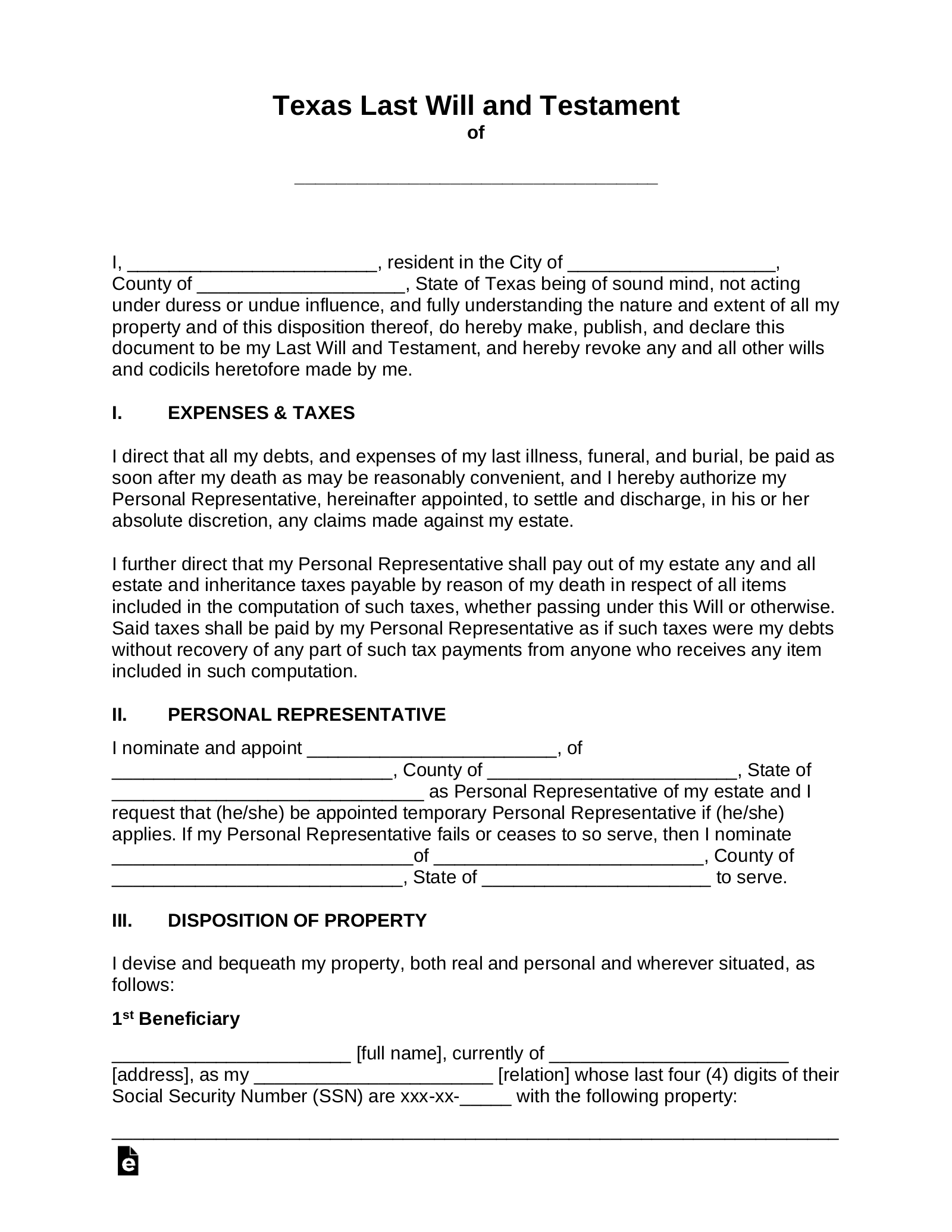
To be considered valid in Texas, a will must meet several criteria:
- Age of the Testator: The individual making the will must be of sound mind and at least 18 years of age. Alternatively, they can be or have been married, or have been a member of the armed forces of the United States.
- Sound Mind (Testamentary Capacity): This is a critical element. The testator must understand that they are signing a document that will transfer their property upon death. They need to comprehend the nature and extent of their property and be aware of the natural objects of their bounty (typically close family members, though this can be adjusted).
- In Writing: Texas law generally requires wills to be in writing. Oral wills, or “nuncupative wills,” are extremely limited in scope and only permissible in very specific, dire circumstances, such as during a last illness.
- Signed by the Testator: The will must be signed by the testator or by another person on their behalf, in the testator’s presence and under their direction. This signature signifies their intent and approval of the document’s contents.
- Attested by Two Credible Witnesses: For a standard, formal will, there must be at least two witnesses who are at least 14 years of age. These witnesses must sign the will in the testator’s presence. Crucially, these witnesses should not be beneficiaries of the will. If a witness is a beneficiary, their gift under the will may be voided, though the rest of the will can remain valid.
Self-Proving Affidavits: Streamlining the Probate Process
A common and highly recommended addition to a Texas will is a “self-proving affidavit.” This affidavit, signed by the testator and witnesses before a notary public, essentially allows the court to accept the will without requiring the witnesses to testify in person during the probate process. This significantly simplifies and speeds up the administration of the estate, making it a wise inclusion for most testators.
Types of Wills Recognized in Texas
While the formal, attested will is the most common, Texas law recognizes a few other types of wills, though they come with specific limitations and considerations.
Formal Attested Wills
This is the standard will that meets all the requirements outlined above: in writing, signed by the testator, and witnessed by two individuals. It is the most robust and legally defensible type of will.
Holographic Wills
A holographic will is one that is written entirely in the testator’s own handwriting. Unlike formal wills, holographic wills do not require witnesses. While seemingly simpler, they can lead to interpretation issues and disputes if not drafted with extreme clarity. The entire will must be in the testator’s handwriting; any portion typed or written by someone else can invalidate the entire document. This type of will is often chosen for its simplicity, but its validity hinges on the absolute certainty of the handwriting and the clear intent of the testator.
Nuncupative Wills
As mentioned, nuncupative wills are oral wills and are rarely valid. They can only be made by individuals in their last sickness and can only dispose of personal property. They must be proved by at least three credible witnesses who were present at the making thereof. Due to their extreme limitations and the potential for disputes, they are generally not recommended for estate planning.
Essential Components of a Texas Will
Beyond meeting the legal formalities, a well-drafted will should clearly articulate the testator’s intentions regarding several key areas.
Naming an Executor
The executor is the individual or entity responsible for carrying out the terms of the will. This includes gathering assets, paying debts and taxes, and distributing the remaining property to the beneficiaries. It is crucial to name a reliable and trustworthy executor. You should also name an alternate executor in case your primary choice is unable or unwilling to serve.
Considerations for Choosing an Executor:
- Trustworthiness and Integrity: Can they be relied upon to act in the best interests of the estate and beneficiaries?
- Financial Acumen: Do they have the ability to manage financial matters?
- Availability and Willingness: Do they have the time and desire to undertake this responsibility?
- Location: While not strictly required, an executor residing in Texas might be more familiar with local laws and procedures.
Designating Beneficiaries
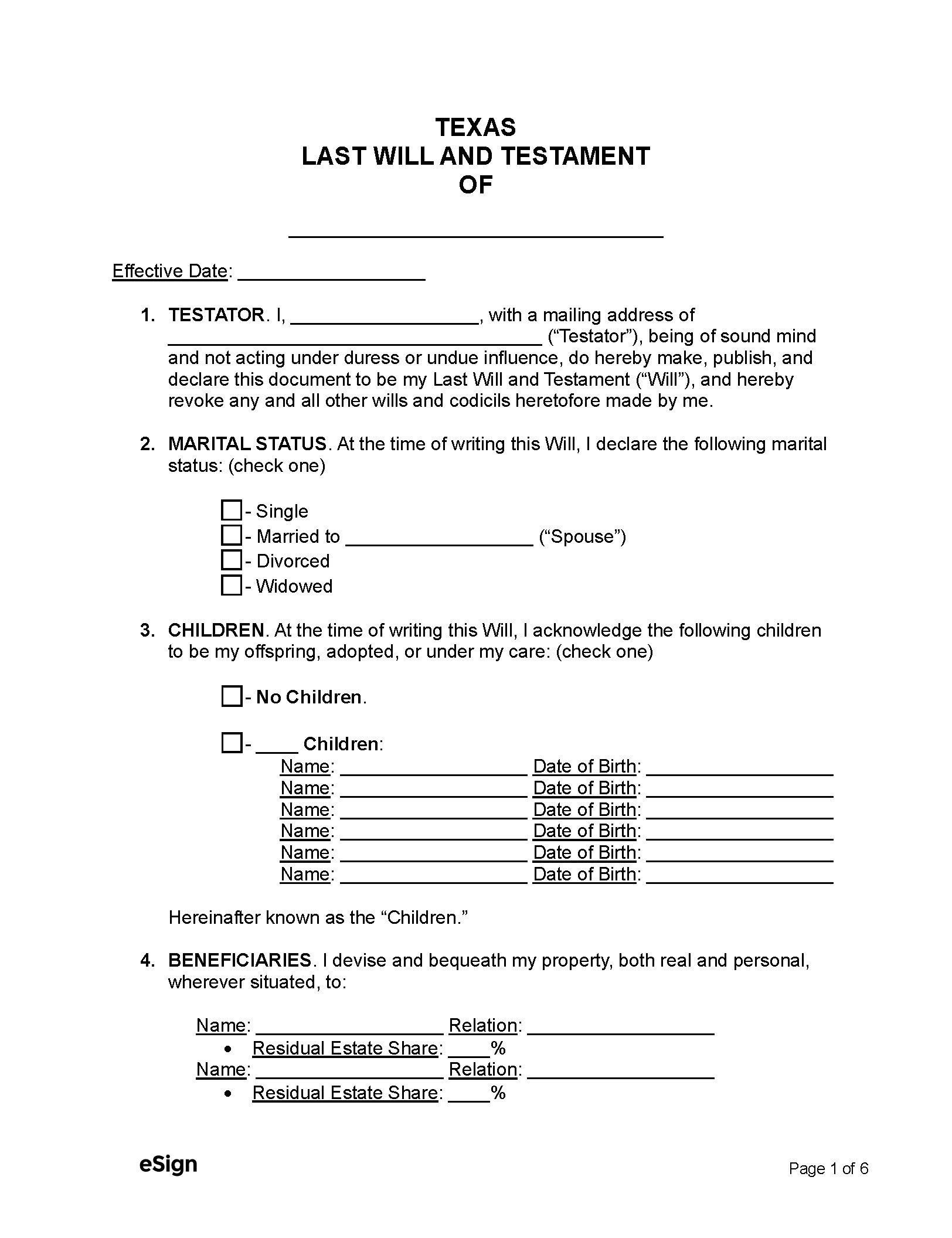
This is the core of your will – specifying who will inherit your property. You should clearly identify each beneficiary and the specific assets or portions of your estate they are to receive.
Types of Bequests:
- Specific Bequests: A gift of a particular item or sum of money (e.g., “I give my grandmother’s antique watch to my niece, Sarah”).
- General Bequests: A gift that can be satisfied from the general assets of the estate (e.g., “I give $10,000 to my brother, Mark”).
- Residuary Bequests: This covers all remaining assets in the estate after specific and general bequests, debts, and expenses have been paid. It’s essential to clearly define who receives the residue.
Guardianship of Minor Children
For parents with minor children, naming a guardian in your will is one of the most critical decisions you can make. The court will give significant weight to your nomination when appointing a guardian for your children if both parents pass away.
Factors to Consider When Naming a Guardian:
- Moral Character and Values: Do they share your parenting philosophy and values?
- Financial Stability: While not the sole factor, can they provide a stable environment?
- Relationship with the Children: Do they have a strong bond with your children?
- Willingness and Ability: Are they willing and capable of raising your children?
Powers Granted to the Executor
Your will can grant specific powers to your executor, such as the ability to sell property, manage investments, or settle claims. These powers can help ensure the efficient administration of your estate.
Beyond the Will: Related Estate Planning Tools
While a will and testament is a cornerstone of estate planning, it is often best used in conjunction with other legal instruments to create a comprehensive plan.
Trusts
A trust can be an excellent tool for managing and distributing assets, especially for complex estates, minor beneficiaries, or to achieve specific tax planning goals. Unlike a will, which takes effect after death and during probate, many trusts can operate during the grantor’s lifetime and provide for asset management and distribution without court intervention.
Powers of Attorney
A durable power of attorney allows you to designate someone to make financial decisions on your behalf if you become incapacitated. A medical power of attorney (or advance directive) allows you to appoint someone to make healthcare decisions for you. These documents are crucial for managing your affairs if you are unable to do so yourself, and they operate during your lifetime, not after your death.
Living Wills (Advance Directives)
A living will is a specific type of advance directive that outlines your wishes regarding medical treatment in end-of-life situations, such as the use of life-sustaining measures.
The Importance of Professional Legal Counsel
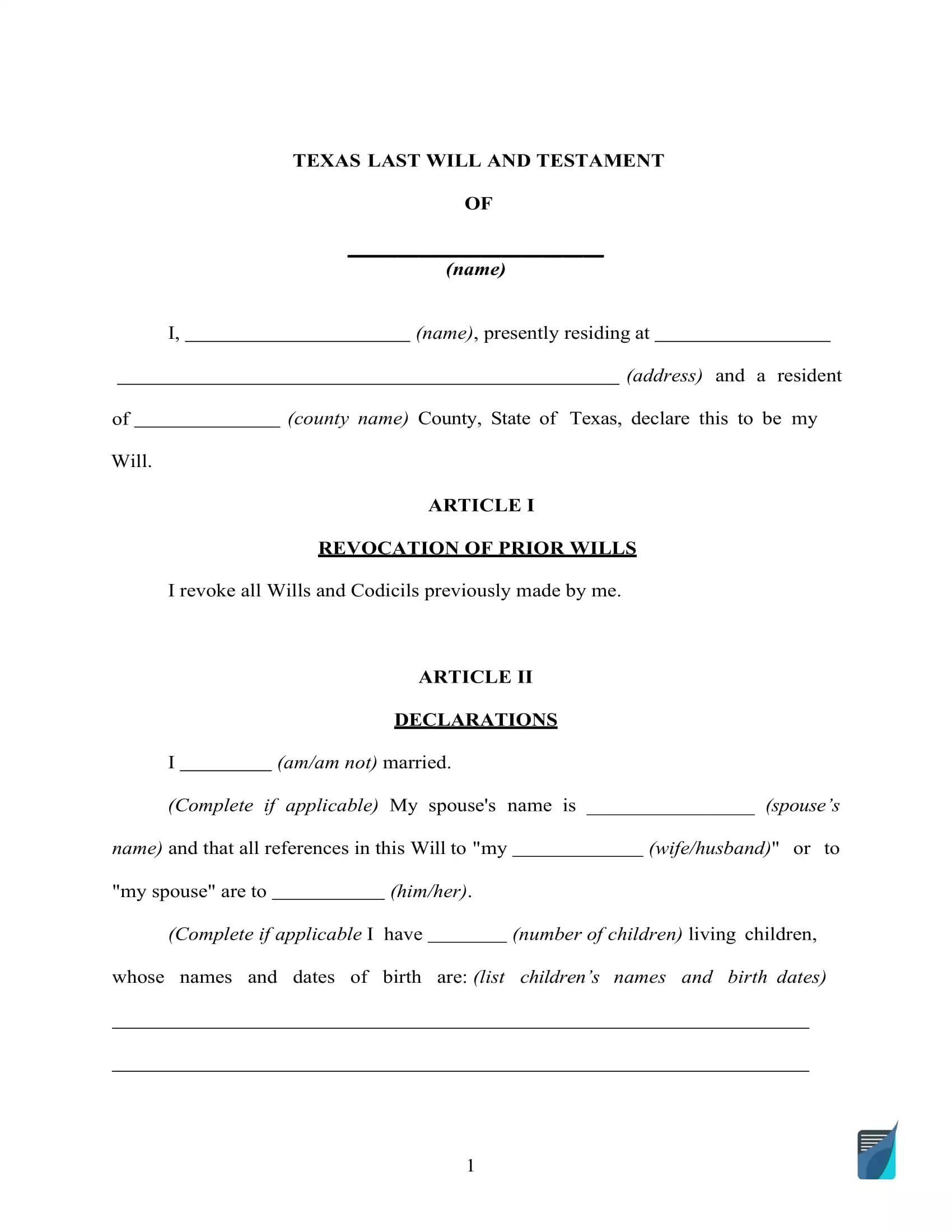
While the information provided here offers a foundational understanding of wills and testaments in Texas, it is not a substitute for professional legal advice. Estate planning laws are complex and can change. Mistakes in drafting or executing a will can lead to unintended consequences, such as the will being declared invalid or disputes among beneficiaries.
When to Seek Legal Counsel:
- When creating your first will.
- When you have significant assets.
- When you have complex family situations (e.g., blended families, estranged relatives).
- When you wish to disinherit a close family member.
- When you have specific charitable intentions.
- When you are considering establishing a trust.
- When your life circumstances change significantly (marriage, divorce, birth of a child, death of a beneficiary or executor).
An experienced estate planning attorney in Texas can guide you through the process, ensure your will is legally sound, and help you craft an estate plan that accurately reflects your wishes and provides for your loved ones. Taking the time to create a comprehensive and legally valid will and testament is a profound act of care for your family and a critical step in securing your legacy.
LifeOutOfTheBox is a participant in the Amazon Services LLC Associates Program, an affiliate advertising program designed to provide a means for sites to earn advertising fees by advertising and linking to Amazon.com. Amazon, the Amazon logo, AmazonSupply, and the AmazonSupply logo are trademarks of Amazon.com, Inc. or its affiliates. As an Amazon Associate we earn affiliate commissions from qualifying purchases.