
For anyone planning a trip to the Sunshine State, understanding local laws is paramount to ensuring a smooth and enjoyable experience. While Florida is renowned for its stunning beaches, vibrant cities, and world-class attractions, like any popular tourist destination, it has strict legal frameworks in place, particularly concerning offenses like theft. Visitors often focus on the fun aspects of their journey, but being aware of the legal thresholds that differentiate petty theft from a serious felony can prevent inadvertent complications and protect one’s travel plans and future. This guide aims to demystify Florida’s theft laws, specifically addressing when an act of theft escalates to a felony, offering crucial tips for tourists to navigate these regulations.

Understanding Theft Classifications in Florida for Tourists
In Florida, theft is broadly categorized into two main types: petty theft and grand theft. The distinction between these two is critical because it determines whether an offense is charged as a misdemeanor or a felony, carrying significantly different legal consequences. For tourists, understanding this distinction is not merely academic; it’s a practical necessity to comprehend the seriousness of even minor missteps.
Petty Theft vs. Grand Theft: The Value Threshold
The primary factor differentiating petty theft from grand theft in Florida is the monetary value of the property stolen.
-
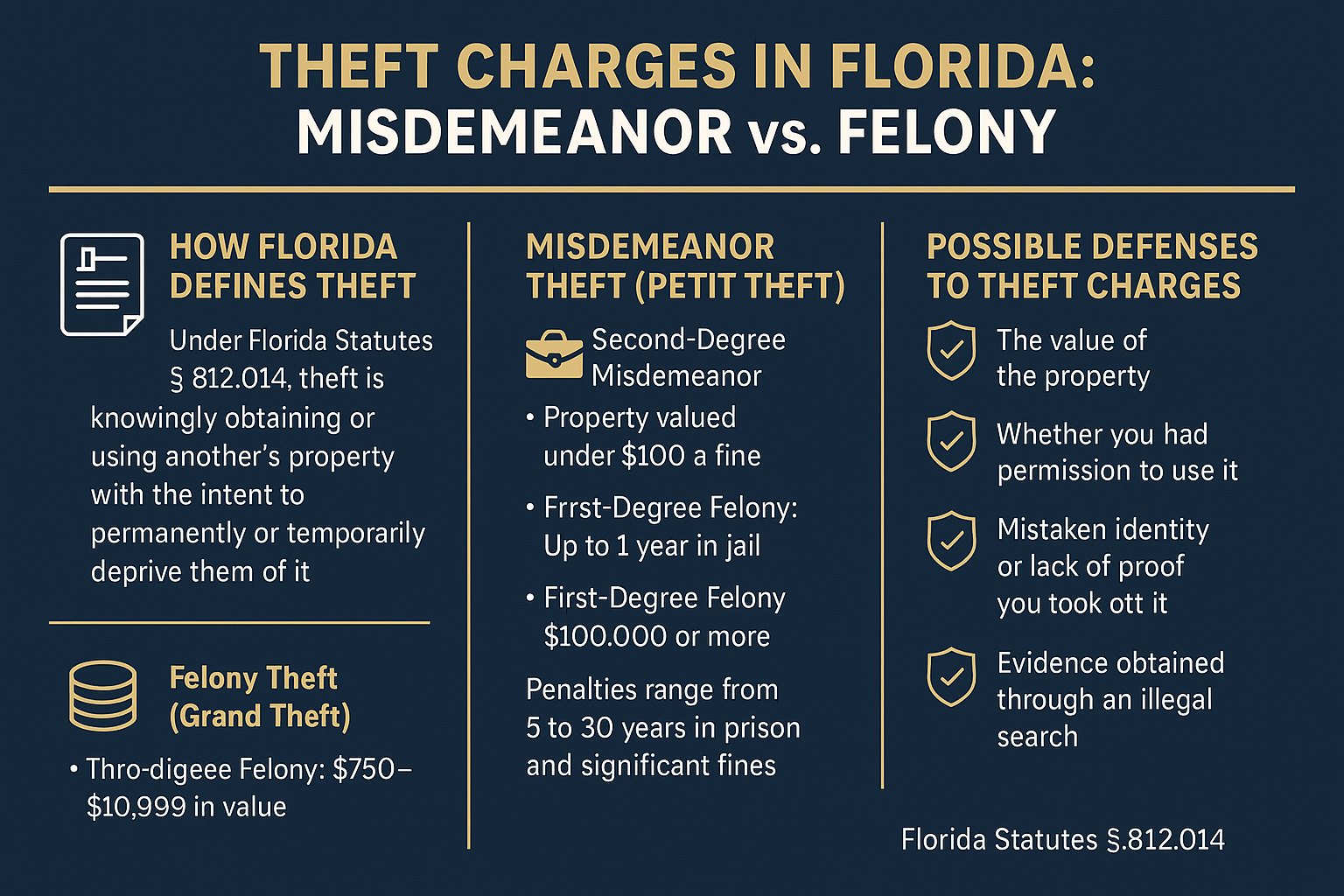
Petty Theft (Misdemeanor): If the value of the property stolen is less than $750, the offense is generally classified as petty theft.
- Second-Degree Petty Theft: This applies when the property value is less than $100. It’s a second-degree misdemeanor, carrying potential penalties of up to 60 days in jail and a $500 fine.
- First-Degree Petty Theft: This applies when the property value is $100 or more but less than $750. It’s a first-degree misdemeanor, potentially leading to up to one year in jail and a $1,000 fine.
-
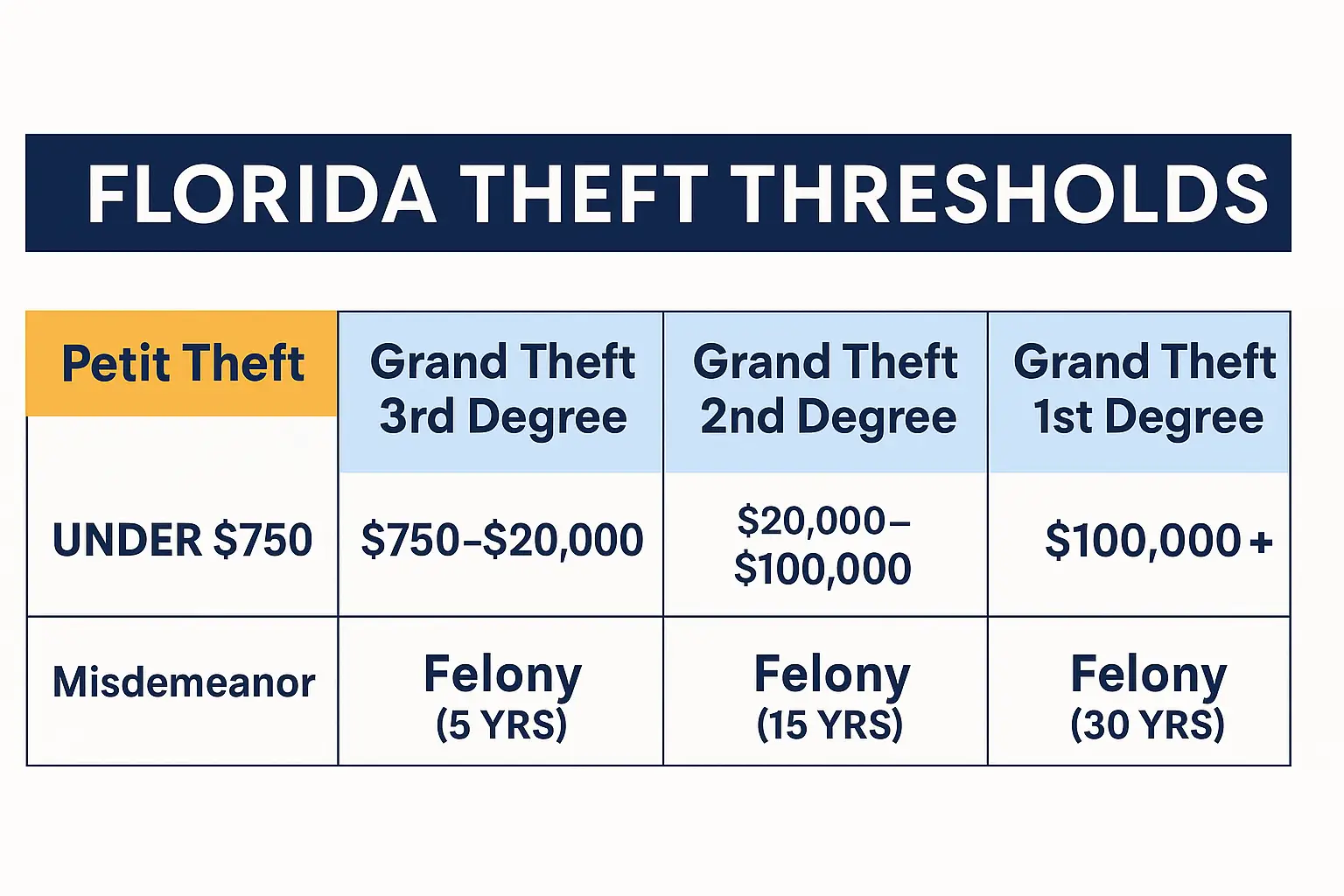
Grand Theft (Felony): When the value of the stolen property reaches or exceeds $750, the crime escalates to grand theft, which is a felony offense.
- Third-Degree Grand Theft: This is the most common felony theft charge. It applies when the stolen property is valued at $750 or more, but less than $20,000. This charge also applies if the stolen item is a specified type, regardless of value, such as a motor vehicle, a will, a firearm, a controlled substance, or emergency medical equipment. Third-degree grand theft is a third-degree felony, punishable by up to five years in prison and a $5,000 fine.
- Second-Degree Grand Theft: This more serious felony theft charge applies when the stolen property is valued at $20,000 or more but less than $100,000. It also applies if the stolen item is a law enforcement vehicle, 100 or more citrus trees, or specific designated items like a fire extinguisher. Second-degree grand theft is a second-degree felony, carrying penalties of up to 15 years in prison and a $10,000 fine.
- First-Degree Grand Theft: This is the most severe form of grand theft. It is charged when the property stolen is valued at $100,000 or more, or if the theft involves specific actions like using a motor vehicle as an instrumentality to further commit grand theft, causing damage to the vehicle, or theft of cargo valued at $50,000 or more from a semi-trailer. First-degree grand theft is a first-degree felony, punishable by up to 30 years in prison and a $10,000 fine.
It is crucial to note that the value of the property is assessed based on its fair market value at the time of the theft, not its original purchase price. For tourists, unknowingly taking an item that might seem insignificant but holds a higher market value could inadvertently lead to felony charges.
Types of Property and Specific Offenses
Beyond monetary value, certain types of property automatically elevate a theft charge to a felony in Florida, regardless of their individual value. This is a critical point for visitors who might encounter items in public or semi-public spaces.
- Motor Vehicles: Stealing any motor vehicle immediately constitutes third-degree grand theft. This includes cars, motorcycles, boats, and even golf carts in communities like The Villages.
- Firearms: The theft of any firearm, regardless of its monetary value, is a third-degree felony.
- Controlled Substances: Theft of drugs classified as controlled substances, even in small amounts, is also a third-degree felony.
- Wills or Testamentary Instruments: Taking such documents is a serious offense due to their legal significance.
- Commercial Quantities of Certain Items: For example, theft of a large number of citrus trees (100 or more) is a second-degree felony.
- Law Enforcement/Emergency Equipment: Stealing items vital to public safety, such as emergency medical equipment or a law enforcement vehicle, carries enhanced penalties.
Tourists engaging in seemingly minor acts, such as taking a souvenir from a construction site, “borrowing” a bicycle, or picking up what they perceive as discarded items, could inadvertently be committing a felony if the item falls into one of these specific categories or exceeds the $750 value threshold. Ignorance of the law is not a defense, making awareness absolutely essential.
The Serious Ramifications of Felony Theft
A felony conviction in Florida carries profound and long-lasting consequences that extend far beyond the immediate penalties. For tourists, these ramifications can severely impact their ability to travel, their future employment, and their personal freedom.
Penalties Beyond Fines and Jail Time
While the potential for significant prison time and hefty fines is a direct consequence of a felony theft conviction, the repercussions do not end there.
- Criminal Record: A felony conviction results in a permanent criminal record, which is publicly accessible. This can hinder future job prospects, as many employers conduct background checks.
- Loss of Rights: In Florida, a felony conviction typically results in the loss of certain civil rights, including the right to vote, hold public office, and possess a firearm. While these rights can sometimes be restored after the completion of a sentence and parole, the process is often complex.
- Immigration Consequences: For international tourists, a felony conviction can lead to immediate deportation and a permanent ban from re-entering the United States. Even for U.S. citizens, future international travel may be complicated, as many countries deny entry to individuals with felony convictions.
- Professional Licenses: Many professional licenses (e.g., medical, legal, financial) can be revoked or denied upon a felony conviction, severely impacting one’s career.
- Social Stigma: The social stigma associated with a felony conviction can be debilitating, affecting personal relationships and community standing.
Impact on Travel and Future Opportunities
For individuals who love to travel, a felony theft conviction can be a catastrophic blow.
- Visa Denials: Applying for visas to other countries can become exceptionally difficult, with many nations outright denying entry to individuals with felony records, regardless of the crime’s nature.
- Border Crossings: Even countries that don’t require visas may question or deny entry at the border upon discovering a criminal record. This could turn what should be a straightforward trip into a nightmare of bureaucratic hurdles or outright refusal.
- Employment Restrictions: Beyond professional licenses, a felony record can restrict employment opportunities, particularly in sectors requiring trust, security clearances, or handling of money. This can force individuals into lower-paying jobs or make it difficult to find work at all.
- Housing Difficulties: Landlords often conduct background checks, and a felony conviction can make it extremely challenging to secure rental housing.
- Educational Opportunities: Admissions to certain educational programs or institutions may also be affected, limiting future academic and career growth.
The message is clear: even a seemingly minor act of theft, if it meets Florida’s felony threshold, can have life-altering consequences, making prevention and awareness crucial for any visitor.
Navigating Florida’s Legal Landscape as a Visitor
For tourists, the best approach is always prevention and caution. Understanding the potential legal pitfalls and taking proactive steps can safeguard your trip and peace of mind.
Protecting Yourself and Your Belongings
While this article focuses on committing theft, it’s also important for tourists to protect themselves from becoming victims of theft, which can also lead to complicated situations.
- Be Vigilant: In crowded tourist areas like Walt Disney World in Orlando, South Beach Miami, or the lively streets of Key West, pickpocketing and purse snatching can occur. Always keep your valuables secure and out of sight.
- Secure Your Accommodation: Whether staying in a hotel in Tampa or a vacation rental, ensure doors and windows are locked, and use hotel safes for passports, cash, and expensive jewelry.
- Avoid Suspicious Situations: Be wary of individuals offering “too good to be true” deals or engaging in distracting behaviors designed to facilitate theft.
- Document Valuables: Keep a record of serial numbers for electronics and photographs of valuable items. This helps with insurance claims and police reports if theft occurs.
From the perspective of avoiding committing a theft, always err on the side of caution. If an item does not clearly belong to you and is not freely offered, do not take it. Respect private property signs and local regulations, even in seemingly abandoned areas.
Seeking Legal Counsel
If, despite your best intentions, you find yourself accused of theft in Florida, the immediate and most crucial step is to seek legal counsel. Do not attempt to explain your situation to law enforcement without a lawyer present.
- Right to Remain Silent: Remember your Miranda rights. You have the right to remain silent, and anything you say can be used against you.
- Request an Attorney: Clearly state that you wish to speak with an attorney before answering any questions.
- Contact a Florida Criminal Defense Lawyer: An attorney experienced in Florida law can explain the charges, advise on your legal options, and represent your interests. They can help clarify misunderstandings, negotiate with prosecutors, or defend you in court. Given the severe consequences of a felony conviction, professional legal representation is indispensable.
Navigating a foreign legal system can be daunting, especially when facing serious charges. A local attorney will be familiar with the courts, procedures, and potential outcomes specific to Florida.
Common Scenarios and Prevention for Tourists
Beyond the strict legal definitions, understanding practical scenarios can help tourists avoid accidental transgressions. Florida’s diverse attractions, from theme parks to natural preserves, present unique contexts where misunderstandings could arise.
Avoiding Misunderstandings
Sometimes, actions that seem harmless or even customary in one’s home country might be illegal in Florida.
- Souvenirs from Nature: Taking shells from protected beaches, plants from state parks or national preserves like Everglades National Park, or artifacts from historical sites can be considered theft or a violation of environmental laws, often leading to fines or more severe penalties. Always check local regulations before collecting anything from natural environments.
- “Finding” Lost Property: If you find an item of value, Florida law generally requires you to make a reasonable effort to return it to its owner or turn it over to law enforcement. Keeping found property with the intent to permanently deprive the owner of it can be considered theft. For instance, finding a wallet at Universal Studios Florida and not turning it into guest services could lead to charges.
- Restaurant/Bar Tabs: Walking out of a restaurant or bar without paying for services rendered is considered theft of services. While often a misdemeanor, if the value is high enough or combined with other offenses, it could lead to more serious charges. Always double-check your bill and resolve discrepancies with staff.
- “Borrowing” Items: Taking items that do not belong to you, even if you intend to return them later, can be legally construed as theft if the owner did not grant permission. This applies to everything from beach chairs to bicycles.
Safety Practices in Popular Destinations like Miami or Orlando
These major tourist hubs present unique situations.
- Theme Parks: At attractions like Walt Disney World or Universal Studios Florida, vigilance is key. Items left unattended, even for a moment, could be stolen. Conversely, avoid taking any props or decorative items, as even if they seem insignificant, they are considered property of the park and their removal constitutes theft. Security is robust in these areas, and cameras are ubiquitous.
- Shopping Districts: In high-end shopping areas like those in Miami or Palm Beach, shoplifting (retail theft) is aggressively prosecuted. Even attempting to remove security tags or swapping price tags can lead to charges. The value thresholds mentioned earlier apply here, meaning taking an item over $750 can instantly become a felony.
- Nightlife: In vibrant nightlife areas, particularly in Miami or Key West, alcohol can impair judgment. Be extra cautious about your actions and interactions, as misunderstandings or impulsive decisions can lead to serious legal trouble.
By staying informed and exercising common sense, tourists can ensure their visit to Florida is memorable for all the right reasons, free from legal entanglements. Understanding the felony thresholds for theft in Florida isn’t about fostering fear, but empowering visitors with the knowledge to make responsible decisions and respect the local legal environment.
LifeOutOfTheBox is a participant in the Amazon Services LLC Associates Program, an affiliate advertising program designed to provide a means for sites to earn advertising fees by advertising and linking to Amazon.com. Amazon, the Amazon logo, AmazonSupply, and the AmazonSupply logo are trademarks of Amazon.com, Inc. or its affiliates. As an Amazon Associate we earn affiliate commissions from qualifying purchases.