
Understanding the financial landscape of living in California is a critical aspect of managing one’s lifestyle, whether you’re a long-time resident or considering making the Golden State your home. For many individuals and families, the Electronic Benefit Transfer (EBT) program, known federally as the Supplemental Nutrition Assistance Program (SNAP), serves as a vital resource for ensuring food security. Knowing the potential monthly benefit amount is essential for budgeting and planning, offering a foundation for a stable and thriving lifestyle amidst California’s diverse economic environment.
The Role of EBT in Your California Lifestyle
EBT in California is more than just a payment system; it’s a lifeline that helps residents afford nutritious food, directly impacting their health, well-being, and overall quality of life. For those committed to living a fulfilling life, understanding how such programs work is key to optimizing resources and making informed decisions about daily expenses. The program aims to alleviate food insecurity, allowing households to allocate other funds towards housing, transportation, or even experiences that enrich their lifestyle.
What is EBT/SNAP and How Does It Function in California?
EBT is the electronic system used in California to distribute food benefits. Eligible households receive a plastic card, similar to a debit card, which is loaded with a set amount of funds each month. This card can be used at authorized grocery stores, farmers’ markets, and other food retailers to purchase eligible food items. It’s a straightforward system designed to provide discreet and efficient access to food assistance. The program is administered at the state level by the California Department of Social Services (CDSS), following federal guidelines set by the U.S. Department of Agriculture (USDA).
Eligibility Requirements: A Foundation for Your California Budget
To qualify for EBT benefits in California, applicants must meet specific criteria primarily related to income, household size, and residency. These requirements are put in place to ensure that assistance reaches those who need it most, helping them maintain a sustainable lifestyle.
- Income Limits: A household’s gross monthly income (before deductions) and net monthly income (after certain deductions) must be below specific thresholds. These thresholds are typically set as a percentage of the federal poverty level and vary based on household size. In general, most households must have a gross income at or below 200% of the federal poverty level.
- Household Size: The number of people living and eating together plays a significant role in determining both eligibility and the benefit amount.
- Residency: Applicants must be residents of California.
- Citizenship/Immigration Status: While many recipients must be U.S. citizens or qualified non-citizens, there are exceptions, and specific guidelines apply.
- Work Requirements: Able-bodied adults without dependents may have work requirements to meet to continue receiving benefits, though there are exemptions.
Understanding these parameters is the first step in determining if EBT can be a component of your lifestyle management strategy in California.
Calculating Your Potential Monthly EBT Benefits in California
The precise amount of EBT benefits a household receives in California is not fixed; it is dynamically calculated based on several factors unique to each applicant’s situation. This personalized approach ensures that the assistance provided is tailored to individual needs, helping to cover essential food costs within varying lifestyle contexts.
Key Factors Influencing Benefit Amounts
The California Department of Social Services considers the following when determining your monthly EBT allotment:
- Household Size: This is arguably the most significant factor. Larger households generally qualify for higher maximum benefits to account for more mouths to feed.
- Net Income: After allowable deductions (such as a standard deduction, earned income deduction, dependent care costs, medical expenses for elderly/disabled members, and shelter costs), your household’s net income is calculated. The lower the net income, the higher the potential benefit.
- Allowable Deductions: California allows specific deductions from your gross income, which can lower your countable income and potentially increase your benefit amount. These often include a standard deduction, an earned income deduction (20% of earned income), dependent care costs, medical expenses for elderly or disabled household members, and shelter costs that exceed 50% of your household’s income after other deductions.
- Resources: While generally less restrictive than income, households usually need to have limited countable resources (e.g., bank accounts). However, certain assets, like your home and most vehicles, are typically excluded.
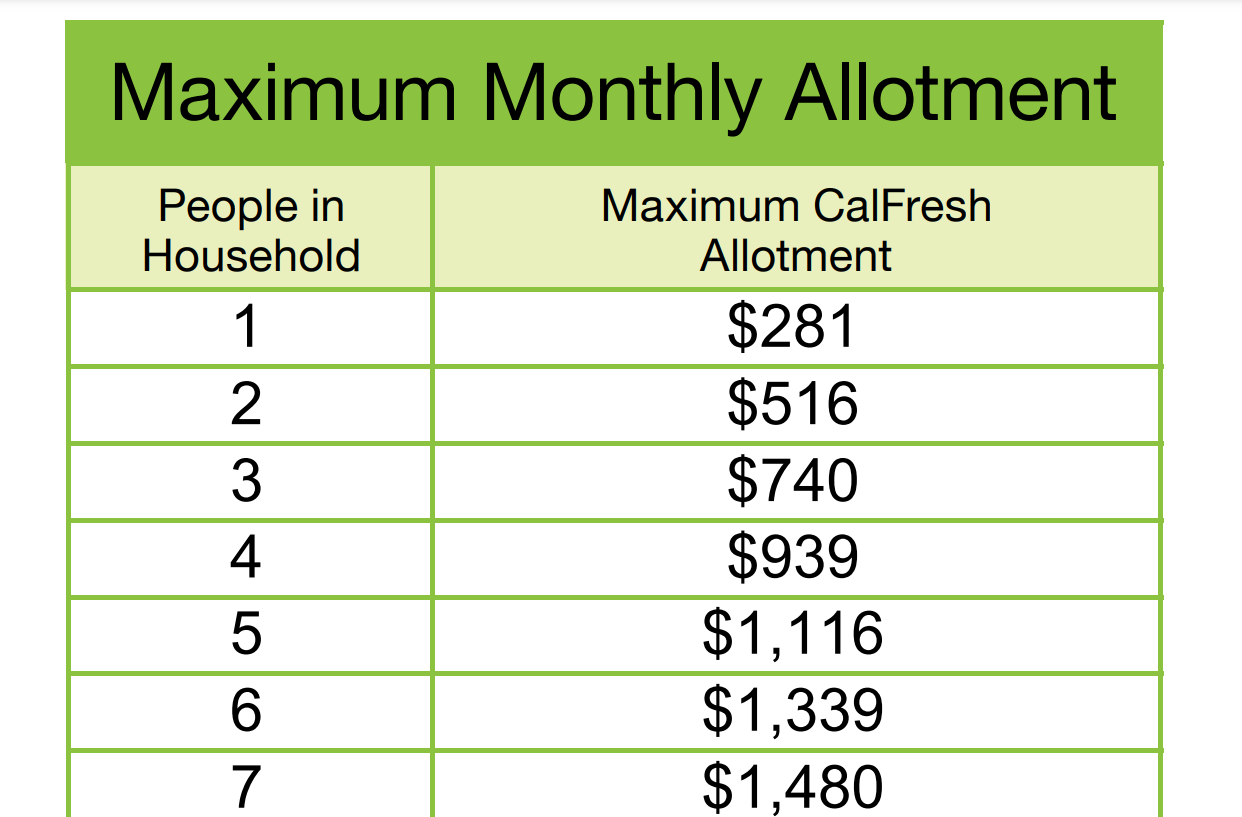
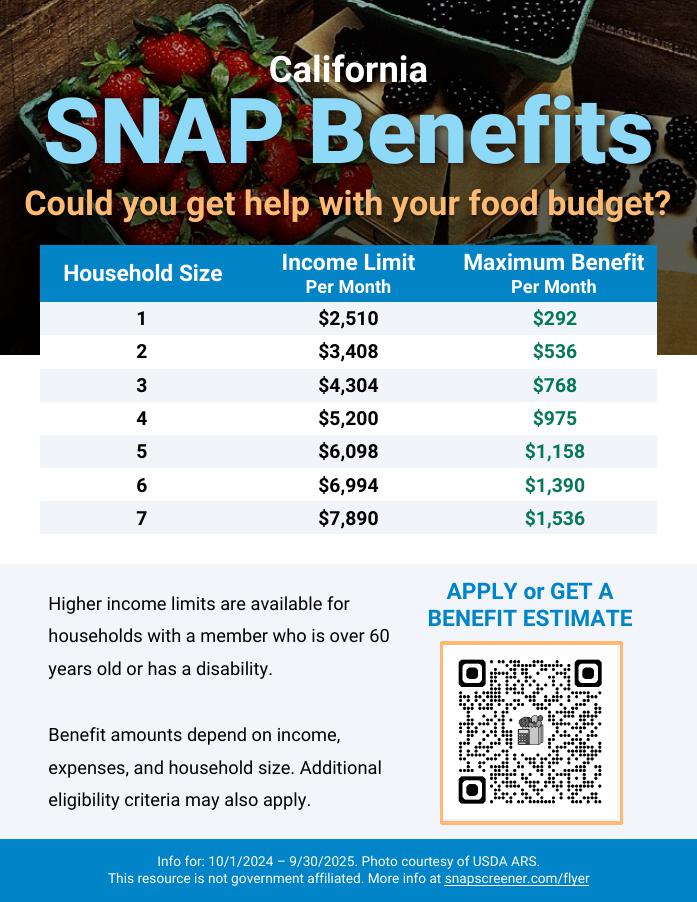
Maximum Monthly Allotments by Household Size (Federal Fiscal Year 2024)
To give you a concrete idea, here are the maximum monthly federal allotments for SNAP benefits that a household in California could receive, assuming no countable net income. These figures are subject to change annually and serve as an upper limit; most households receive an amount determined by their specific income and deductions.
- Household Size 1: Up to $291
- Household Size 2: Up to $535
- Household Size 3: Up to $766
- Household Size 4: Up to $973
- Household Size 5: Up to $1,155
- Household Size 6: Up to $1,386
- Household Size 7: Up to $1,532
- Household Size 8: Up to $1,751
- For each additional person: Add $219
It’s important to remember that these are maximums. Your actual benefit will be calculated by taking the maximum allotment for your household size and subtracting 30% of your household’s net monthly income. For instance, if a household of three has a net monthly income of $500, their benefit might be calculated as $766 (maximum for 3) – (30% of $500) = $766 – $150 = $616. This provides a clear framework for how EBT can supplement your food budget and support your lifestyle choices in California.
Navigating the EBT Application Process in California
Applying for EBT benefits in California is a streamlined process designed to be accessible to all eligible residents. Understanding the steps and required documentation can help you navigate the system efficiently, ensuring you receive the support necessary for your lifestyle.
How to Apply for EBT in California
There are several convenient ways to apply for food assistance in California:
- Online: The most common and often quickest method is through BenefitsCal.com. This online portal allows you to apply for EBT and other public assistance programs from the comfort of your home. It’s user-friendly and guides you through the application questions.
- In Person: You can visit your local county social services office. This option is beneficial if you prefer face-to-face interaction, need assistance with the application, or have specific questions about your situation.
- By Mail or Fax: You can download an application form from the California Department of Social Services website or pick one up at a county office, complete it, and then mail or fax it to your local county office.
After submitting your application, you will typically be scheduled for an interview, which can be conducted over the phone or in person. This interview is a crucial step to verify information and clarify any details.
Essential Documentation for Your EBT Application
To ensure a smooth application process and prevent delays, it’s vital to have the necessary documentation ready. These documents help county workers verify your eligibility and calculate your correct benefit amount, directly impacting your financial lifestyle.
- Proof of Identity: A valid form of identification for the head of household (e.g., driver’s license, state ID, passport).
- Proof of Residency: Documents showing you live in California (e.g., utility bill, rent receipt, mail with your address).
- Proof of Income: Pay stubs, employer statements, benefit award letters (for Social Security, unemployment, etc.), or self-employment records for all household members.
- Proof of Expenses: Documentation for allowable deductions, such as rent/mortgage statements, utility bills, child support payments, and medical expense receipts (if applicable).
- Social Security Numbers (SSN): SSNs for all household members applying for benefits, or proof that an SSN has been applied for.
- Immigration Status (if applicable): Documentation for qualified non-citizens.
Having these documents organized and accessible will significantly speed up the approval process, allowing you to quickly integrate EBT benefits into your household’s financial planning.
Maximizing Your EBT Benefits and Budgeting in California
Once approved, EBT benefits become a consistent part of your monthly resources, offering a tangible boost to your food budget. Strategic use of these benefits, combined with sound budgeting practices, can greatly enhance your lifestyle in California, freeing up other funds and promoting financial stability.
Using Your EBT Card Effectively
Your California EBT card functions like a debit card. Swipe it at the checkout counter, enter your Personal Identification Number (PIN), and the amount will be deducted from your balance.
- Eligible Purchases: EBT funds can be used for most food items, including fruits, vegetables, meat, poultry, fish, dairy products, breads, cereals, and seeds/plants that produce food.
- Ineligible Purchases: EBT cannot be used for non-food items like alcohol, tobacco, vitamins, pet food, cleaning supplies, paper products, or hot foods prepared for immediate consumption (unless specifically authorized for certain populations like the homeless or elderly).
- Farmers’ Markets: Many farmers’ markets in California accept EBT, often participating in programs like Market Match, which doubles your EBT dollars for fresh produce, further extending your purchasing power and promoting a healthy lifestyle.
Budgeting Strategies for California Residents
Integrating EBT into your overall financial plan is crucial. With the high cost of living in California, every dollar counts.
- Meal Planning: Plan your meals for the week or month around the EBT funds you have available. This helps prevent overspending and ensures you maximize your food dollars.
- Grocery Lists: Stick to a grocery list when shopping to avoid impulse purchases of non-essential items.
- Compare Prices: Shop at stores that offer the best value for your EBT dollars. Consider stores known for lower prices or look for sales and discounts.
- Cook at Home: Preparing meals at home is almost always more cost-effective than eating out, allowing your EBT benefits to go further.
- Utilize Leftovers: Repurpose leftovers to minimize food waste and extend your meals.
By conscientiously managing your EBT benefits, you can free up other financial resources, allowing you to better manage housing costs, transportation, or even save for future lifestyle enhancements. Understanding “How Much Is EBT Per Month In California?” is the first step toward empowering yourself with the knowledge to maintain a stable and healthy lifestyle in this vibrant state.
LifeOutOfTheBox is a participant in the Amazon Services LLC Associates Program, an affiliate advertising program designed to provide a means for sites to earn advertising fees by advertising and linking to Amazon.com. Amazon, the Amazon logo, AmazonSupply, and the AmazonSupply logo are trademarks of Amazon.com, Inc. or its affiliates. As an Amazon Associate we earn affiliate commissions from qualifying purchases.