
Understanding the legal landscape surrounding marriage is a critical aspect of lifestyle planning, especially for individuals and couples considering a move, long-term stay, or retirement in a new state like Florida. Many people harbor misconceptions about common law marriage, a legal construct that recognizes a couple as married without a formal ceremony or license, based on specific criteria. The question of whether Florida acknowledges common law marriage holds significant implications for personal finances, property rights, healthcare decisions, and overall lifestyle for those residing or contemplating residency in the Sunshine State. This article delves into Florida’s stance on common law marriage and outlines essential lifestyle considerations for unmarried couples.
The Historical Context and Current Status of Common Law Marriage in Florida
To properly address whether Florida recognizes common law marriage, it’s essential to look at the historical legal framework and its evolution. Historically, common law marriage was a widespread practice, rooted in a time when formal ceremonies were less accessible or necessary. It served to legitimize relationships where couples presented themselves as married to the public and intended to be married.
The Shift Away from Common Law in Florida
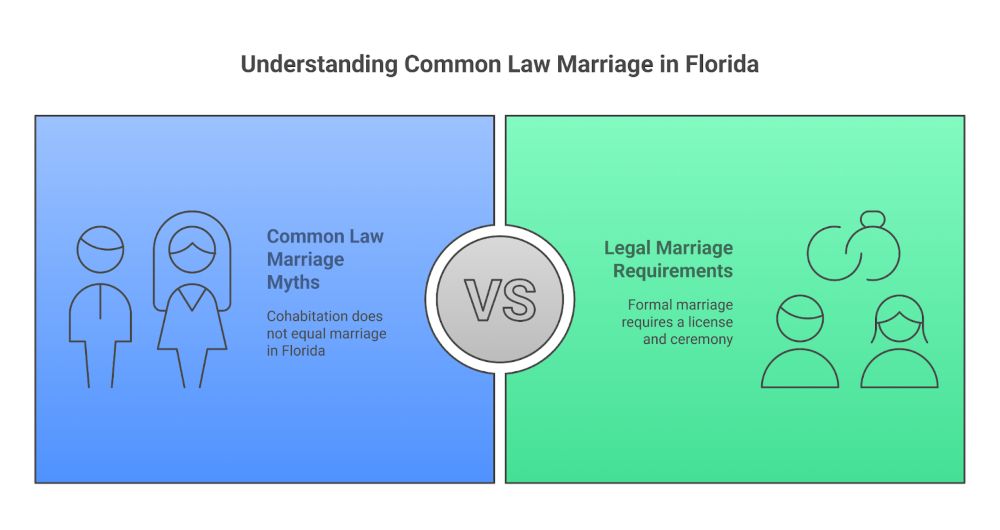
Florida was once among the states that recognized common law marriage. However, this changed significantly over half a century ago. As of January 1, 1968, Florida abolished common law marriage. This means that any common law marriages initiated within Florida’s borders after this date are not legally recognized by the state. The primary driver for this legislative change was to standardize marital recognition, reduce legal ambiguities, and encourage formal marital processes, which provide clear documentation and protect individuals within a defined legal framework.
Recognition of Out-of-State Common Law Marriages
Despite its abolition within the state, Florida does adhere to the principle of “comity,” which generally means states respect the laws and judicial decisions of other states. Therefore, if a couple established a valid common law marriage in a state that does recognize it (e.g., Colorado, Iowa, Kansas, Montana, New Hampshire for inheritance purposes only, Oklahoma, Rhode Island, South Carolina, Texas, Utah, and the District of Columbia) before moving to Florida, the Sunshine State will generally recognize that marriage as valid. This is a crucial distinction for couples relocating to Florida, as their marital status, and thus their legal rights and responsibilities, will be preserved. However, they may need to provide proof that their common law marriage met the specific requirements of the state where it was formed.
What Constitutes a Valid Marriage in Florida Today?
For couples forming a marital union within Florida today, the process is clear and requires a formal approach. The state mandates specific steps to ensure a marriage is legally recognized, which impacts everything from tax filings to healthcare proxies.
The Formal Requirements for Marriage
To be legally married in Florida, couples must:
- Obtain a Marriage License: This is issued by a Florida county court clerk. There’s a waiting period of three days between applying for and receiving the license for Florida residents who have not completed a premarital preparation course. Non-residents do not have this waiting period.
- Participate in a Ceremony: The marriage must be solemnized by an authorized officiant. This can include an ordained minister, priest, rabbi, or any other regularly ordained clergy; a judicial officer (judge, clerk of court); or a notary public.
- Return the License: The officiant must return the completed marriage license to the clerk of court within 10 days of the ceremony.
These steps ensure a clear, documented record of the marriage, providing legal clarity for all parties involved and the state. This formal process is fundamental to lifestyle planning, as it solidifies a couple’s legal standing and unlocks associated rights and benefits.
Lifestyle Implications for Unmarried Couples in Florida
Given that Florida does not recognize common law marriage initiated within its borders, unmarried couples residing in the state face distinct lifestyle considerations that formally married couples do not. These differences can profoundly impact their financial, medical, and personal arrangements.
Property Ownership and Division
For unmarried partners, property acquired during their cohabitation is generally not subject to the equitable distribution laws that apply to divorcing married couples. Each partner typically retains ownership of assets held individually, and jointly owned assets are treated as a tenancy in common or joint tenancy, depending on how they were titled. Without explicit legal agreements, disputes over shared property, such as a home purchased together, can become complex and contentious. This necessitates proactive lifestyle planning regarding asset titling and financial contributions.
Estate Planning and Inheritance

One of the most significant lifestyle impacts for unmarried couples in Florida concerns estate planning. Without a valid will or trust, an unmarried partner has no automatic right to inherit from their deceased partner’s estate under Florida’s intestacy laws. These laws dictate that assets pass to legal spouses, children, parents, or other blood relatives. This means that a long-term partner could be left without financial support or access to shared assets if proper legal documents are not in place. Effective lifestyle planning demands comprehensive wills, trusts, and beneficiary designations for all assets.
Healthcare Decisions and Medical Power of Attorney
In times of medical crisis, an unmarried partner generally does not have the legal authority to make healthcare decisions for their incapacitated partner. This right is typically reserved for spouses or blood relatives. To ensure that an unmarried partner can act as a medical proxy, a Durable Power of Attorney for Healthcare or a Healthcare Surrogate designation is essential. This document allows one partner to make medical decisions on behalf of the other, aligning with their wishes and ensuring continuity of care and advocacy, which is a vital aspect of a secure lifestyle.
Social Security and Other Benefits
Married couples automatically qualify for certain spousal benefits under Social Security, pension plans, and other government or employer-sponsored programs. Unmarried partners in Florida do not have access to these spousal benefits, which can significantly affect retirement planning and financial security. Understanding these limitations is crucial for long-term lifestyle and financial planning.
Protecting Your Lifestyle: Legal Strategies for Unmarried Partners
For unmarried couples committed to building a life together in Florida, proactive legal planning is indispensable to safeguard their individual and shared lifestyle. While the state doesn’t recognize common law marriage, several legal tools can help establish rights and responsibilities akin to those of married couples.
Cohabitation Agreements
A cohabitation agreement, also known as a domestic partnership agreement, is a legally binding contract between unmarried partners. It can define terms related to:
- Property Ownership: How assets acquired during the relationship will be divided upon separation or death.
- Financial Contributions: Clarifying contributions to household expenses, debts, and joint investments.
- Support: Although not equivalent to alimony, it can outline financial support arrangements.
- Debt Responsibility: Specifying who is responsible for which debts.
This agreement acts as a blueprint for managing financial and property aspects of the relationship, offering peace of mind and clarity that are central to a stable lifestyle.
Wills and Trusts
To ensure that assets are distributed according to an individual’s wishes, especially to an unmarried partner, comprehensive wills and trusts are paramount.
- Wills: Clearly state who will inherit property, including real estate, bank accounts, and personal belongings.
- Trusts: Can provide more complex estate planning solutions, allowing for assets to be managed for a partner’s benefit, potentially avoiding probate and offering greater control over distribution.
These documents are critical for protecting an unmarried partner’s financial future and ensuring their lifestyle is maintained.
Durable Power of Attorney
Beyond healthcare, a Durable Power of Attorney for financial matters allows one partner to make financial decisions on behalf of the other if they become incapacitated. This can cover banking, investments, property transactions, and more, ensuring that daily financial affairs continue smoothly and the shared lifestyle remains uninterrupted.
Conclusion: Navigating Florida’s Legal Landscape for Your Lifestyle
While the concept of common law marriage holds a place in legal history, particularly for older out-of-state unions, Florida firmly requires a formal ceremony and license for couples to be legally married within its borders today. For unmarried couples living in or relocating to Florida, understanding this distinction is not merely a legal technicality; it’s a fundamental aspect of proactive lifestyle planning.
Without the automatic legal protections afforded to married couples, unmarried partners must take deliberate steps to secure their financial futures, healthcare autonomy, and property rights. Employing legal tools such as cohabitation agreements, wills, trusts, and powers of attorney is not just advisable; it is essential for building a resilient and secure lifestyle in the Sunshine State. By addressing these critical areas, unmarried couples can ensure their wishes are honored and their shared life is protected, allowing them to fully enjoy all that Florida has to offer.
LifeOutOfTheBox is a participant in the Amazon Services LLC Associates Program, an affiliate advertising program designed to provide a means for sites to earn advertising fees by advertising and linking to Amazon.com. Amazon, the Amazon logo, AmazonSupply, and the AmazonSupply logo are trademarks of Amazon.com, Inc. or its affiliates. As an Amazon Associate we earn affiliate commissions from qualifying purchases.