
The Emblem of the Sunshine State: An Introduction to the Florida Flag
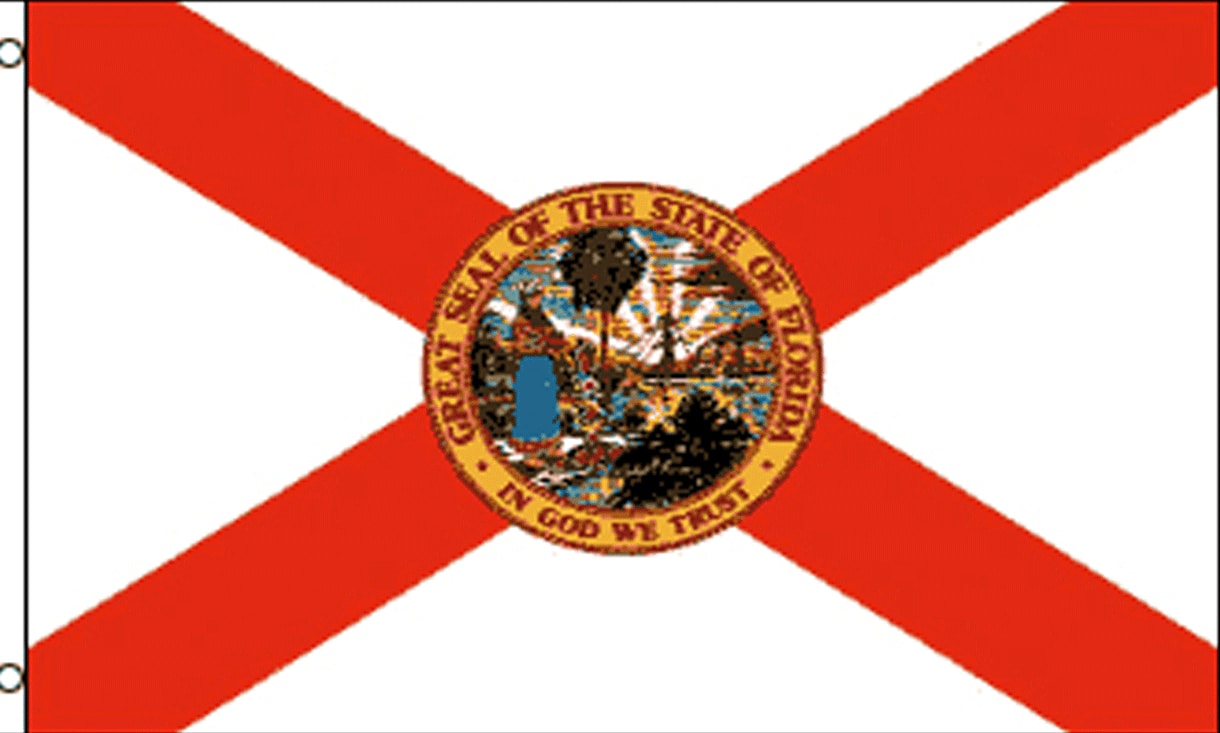
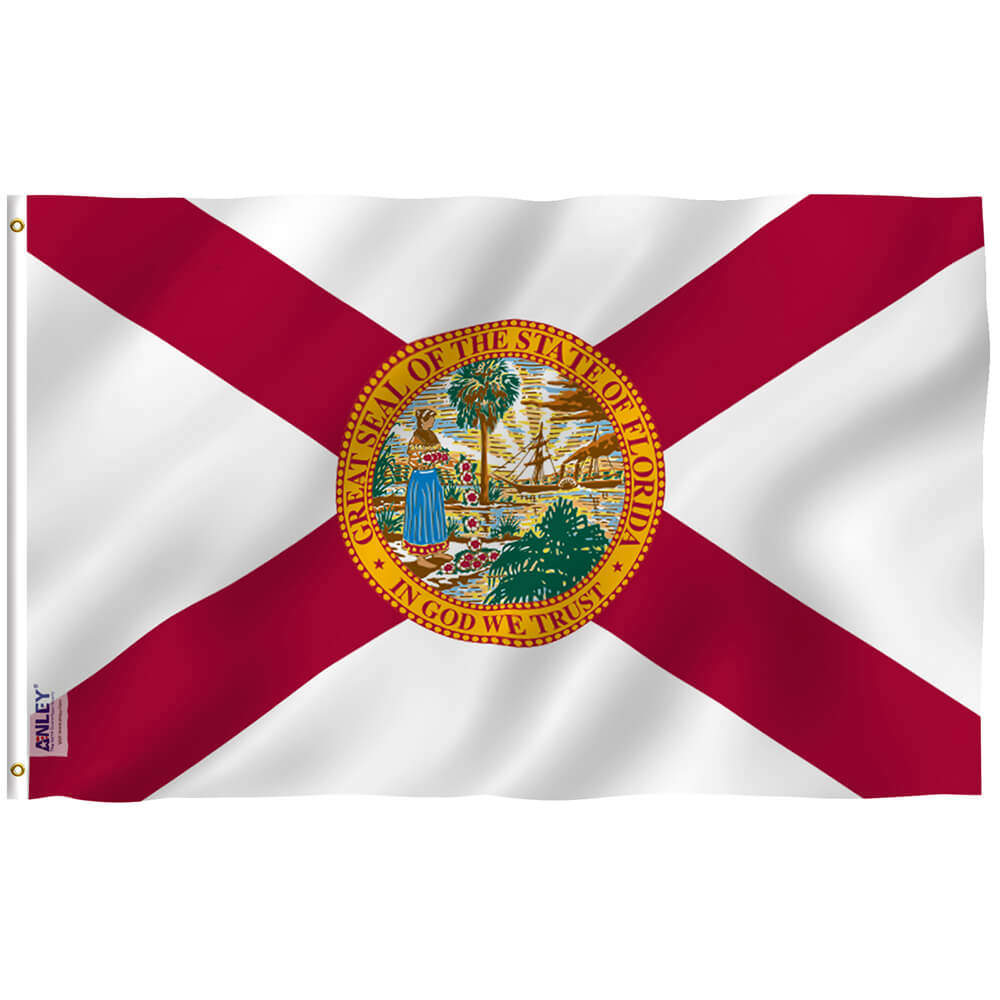
The Florida State Flag is far more than a simple banner; it is a profound historical emblem, a visual testament to the state’s rich and complex past, and a powerful symbol of its identity as the Sunshine State. Recognizing this flag is to immediately connect with the essence of Florida, encapsulating its natural beauty, diverse heritage, and enduring spirit. At its core, the flag features a striking red saltire, or X-shaped cross, set against a pristine white field. Centered upon this vibrant backdrop is the official Great Seal of the State of Florida, an intricate design that tells its own story of land, people, and progress.

For residents and visitors alike, understanding the Florida flag is akin to uncovering a significant landmark. While not a physical structure, its design elements and historical evolution provide a tangible link to key moments and cultural narratives that have shaped the state. It represents centuries of change, from its indigenous roots to its colonial periods under various European powers, through its tumultuous entry into the United States and its pivotal role in national history. Every line and color on the flag is imbued with meaning, making it a focal point for civic pride, educational discourse, and a shared sense of belonging among Floridians. Its prominence on state buildings, schools, and public spaces throughout Florida underscores its permanent status as a historical and cultural cornerstone, inviting deeper exploration into the state’s distinct character and enduring legacy.
A Tapestry of History: Evolution of the Florida Flag
The current design of the Florida State Flag is the culmination of centuries of shifting allegiances and significant historical events, reflecting a journey from colonial territories to a sovereign state. Its evolution is a direct mirror of Florida’s storied past, marked by the influence of multiple nations and pivotal conflicts.
From Colonial Banners to Statehood
Before its admission to the United States, Florida existed under a succession of colonial powers, each leaving its distinct mark on the land and its symbolism. From the 16th century, the banner of Spain, notably the Cross of Burgundy (a red saltire on a white field, remarkably similar in structure to the modern Florida flag), flew over significant settlements like St. Augustine, established by Ponce de León. Brief periods saw the French Fleur-de-lis and the British Union Jack asserting their presence, each flag signifying a change in dominion and culture. The transfer of Florida to the United States in 1819, solidified by the Adams-Onís Treaty, brought the American Stars and Stripes, symbolizing a new era for the territory. When Florida officially achieved statehood in 1845, it did so without adopting a specific state flag, relying instead on the national banner.
The Civil War Era and Beyond
The true impetus for a distinct Florida flag arose during the tumultuous period of the Civil War. Upon Florida’s secession from the Union in 1861, various flags were flown, including the Bonnie Blue Flag and the First National Flag of the Confederate States of America. It wasn’t until 1868, during the Reconstruction era, that the Florida Legislature legally prescribed the design for the state’s first official flag. This initial design was starkly simple: the Great Seal of the State of Florida emblazoned upon a plain white field. However, this design soon encountered a practical problem. When hanging limp, particularly on a windless day, the flag could be mistaken for a flag of truce or surrender.
To remedy this, Governor Francis P. Fleming, a former Confederate soldier, advocated for a change. In 1900, a constitutional amendment was passed, adding a red saltire to the flag. This addition was widely understood to honor Florida’s Confederate heritage, drawing inspiration from the Confederate battle flag’s design. This pivotal modification created the fundamental design that remains largely unchanged today.
Modern Revisions
While the core design of the red saltire and state seal on a white field was established in 1900, the flag saw one significant revision in the latter part of the 20th century. The Great Seal of the State of Florida itself underwent a redesign in 1985. The primary motivation for this change was to correct several historical inaccuracies present in the original seal, particularly in the depiction of a Seminole woman. The revised seal aimed for greater authenticity and respect, portraying a Seminole woman more accurately dressed and depicted, and making minor adjustments to other elements to reflect Florida’s environment and industry more precisely. This modification ensured that the flag, as a prominent visual landmark, would continue to represent Florida with dignity and historical accuracy for future generations.
Decoding the Design: Symbolism and Elements
The Florida State Flag is a meticulously crafted symbol, where each element carries distinct historical and cultural significance. Understanding these components provides a deeper appreciation for the narratives embedded within this iconic state landmark.
The Red Saltire (St. Andrew’s Cross)
The most prominent feature of the Florida flag is the broad red saltire, an X-shaped cross, extending from corner to corner across the white field. This design element has deep historical roots and is frequently associated with the Cross of St. Andrew, a symbol often found in vexillology (the study of flags), such as the national flag of Scotland. In the context of Florida, its adoption in 1900 is widely recognized as a tribute to the state’s ties to the Confederate States of America during the Civil War. The Confederate battle flag, a symbol deeply ingrained in Southern history, also features a prominent red saltire. Governor Francis P. Fleming’s advocacy for this design stemmed from a desire to avoid the plain white flag being mistaken for a flag of truce and to honor the sacrifices made by Floridians during the war, thus embedding a layer of specific historical remembrance into the state’s official emblem.
The State Seal of Florida
Centered within the red saltire and white field lies the Great Seal of the State of Florida, a detailed and symbolic representation of Florida’s natural beauty, history, and economic activities. Each component of the seal contributes to a cohesive narrative:
- Native American Woman: A central figure is a Seminole Native American woman scattering flowers. This image, revised in 1985 to ensure a more historically accurate and respectful depiction, pays homage to Florida’s rich indigenous heritage. The scattering of flowers can symbolize generosity, bounty, and the natural beauty of the land.
- Sabal Palm Tree: The seal prominently features a sabal palm tree, the official state tree of Florida. This resilient tree, native to the state, symbolizes Florida’s unique subtropical environment and its enduring natural character.
- Steamboat: On the waters in the background, a steamboat is depicted. This element, often considered to be the SS George Washington, represents Florida’s historical reliance on waterways for commerce, transportation, and economic development. It speaks to the state’s connections to trade and its evolution as a hub for both goods and people.
- Sun and Rays: Above the landscape, a radiant sun with distinct rays is visible. This powerful symbol represents Florida’s moniker as the “Sunshine State,” highlighting its famous climate, abundant sunlight, and the warmth that defines its geography and attracts visitors worldwide. The sun also signifies prosperity and vitality.
- Land and Water: The overall landscape depicted within the seal typically shows a coastline with land in the background, subtly referencing Florida’s extensive coastal areas and its intimate relationship with the ocean, which has shaped its history and economy.
Collectively, these elements on the flag serve as a compact visual landmark, offering insights into Florida’s historical layers, its natural splendor, and the cultural tapestry that makes it unique.
Beyond the Fabric: The Flag’s Role in Florida’s Identity and Civic Pride
The Florida State Flag transcends its physical form to become a living, breathing component of the state’s identity and a powerful catalyst for civic pride. Its presence is woven into the fabric of everyday life and official ceremonies, solidifying its status as a vital symbolic landmark for Floridians.
Across the state, the flag is a ubiquitous sight, proudly displayed on the grounds of the Florida State Capitol in Tallahassee, outside county courthouses, public schools, and numerous state-operated facilities. This constant visibility ensures that the flag remains at the forefront of the public consciousness, serving as a daily reminder of the state’s heritage and the shared identity of its citizens. During state holidays, commemorative events, and civic gatherings, the flag becomes a focal point, its colors and symbols evoking a collective sense of history and belonging. It is a visual anchor for celebrations of Florida’s natural beauty, its significant contributions to the national narrative, and the achievements of its people.
Furthermore, the Florida flag plays a crucial educational role. In civics classes and history lessons throughout the state, the flag’s design and evolution are taught as essential components of Florida’s past. Students learn about the various flags that preceded the current design, the historical context of the saltire’s addition, and the meaning behind each element of the state seal. This educational emphasis helps to foster an understanding of state government, historical events, and the values represented by the flag, instilling a sense of informed citizenship from a young age. It connects generations to the stories of their ancestors and the journey of the land they inhabit.
The flag is also a powerful symbol in cultural representation. It appears on official documents, state-issued licenses, and various emblems, ensuring its image is consistently associated with the authority and spirit of Florida. For those who call Florida home, the flag embodies a unique blend of natural splendor, a complex and often turbulent history, and a modern, vibrant society. It stands as a testament to resilience, growth, and the enduring allure of the Sunshine State. Ultimately, the Florida State Flag is more than just a piece of fabric; it is a deeply embedded historical landmark, a beacon of civic pride, and a constant visual affirmation of everything that makes Florida distinct.
LifeOutOfTheBox is a participant in the Amazon Services LLC Associates Program, an affiliate advertising program designed to provide a means for sites to earn advertising fees by advertising and linking to Amazon.com. Amazon, the Amazon logo, AmazonSupply, and the AmazonSupply logo are trademarks of Amazon.com, Inc. or its affiliates. As an Amazon Associate we earn affiliate commissions from qualifying purchases.