
The Emblematic Heart of the Sunshine State
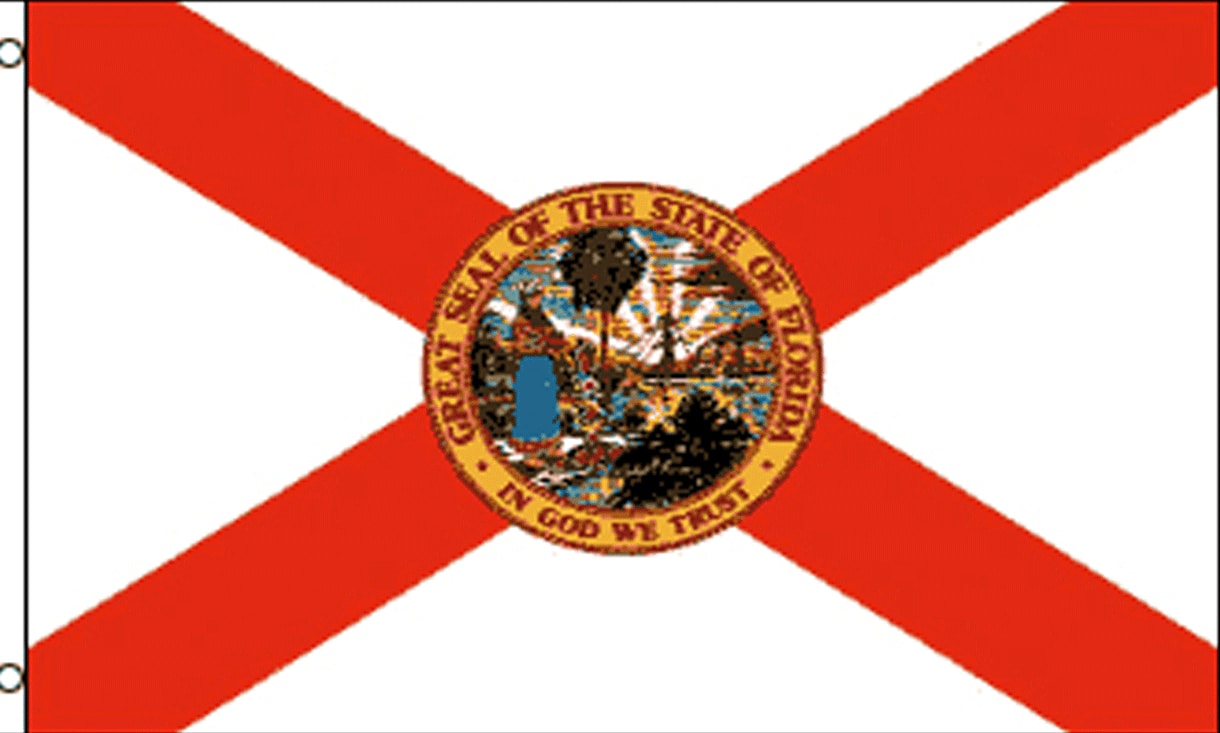
Every state in the United States proudly flies its own distinctive flag, a vibrant tapestry of history, values, and regional identity. For Florida, the “Sunshine State,” its flag is a powerful and enduring symbol, immediately recognizable with its white field, red saltire (a diagonal cross), and the vibrant state seal prominently displayed in the center. More than just a piece of fabric, the Florida state flag serves as a symbolic landmark, encapsulating centuries of history, diverse cultural influences, and the natural splendor that defines this unique peninsular state. Understanding this emblem is to grasp a deeper facet of Florida’s identity, from its indigenous roots to its modern-day dynamism. It stands as a visual declaration of Florida’s storied past and its aspirations, often seen fluttering above government buildings, schools, and homes, a constant reminder of the state’s heritage.

A Tapestry of History: Evolution of the Florida Flag
The design of Florida’s current state flag is a culmination of various historical periods and influences, reflecting the complex journey the state has undertaken. Its evolution provides a compelling narrative of conquest, independence, and the formation of a distinct identity within the American Union.
Antecedents and Early Banners
Before Florida adopted its own unique state flag, its territory saw a succession of imperial banners. The land now known as Florida has been under the dominion of several nations since its European discovery. The Spanish Empire claimed it first in 1513, leading to centuries where various Spanish flags, such as the Cross of Burgundy, flew over its nascent settlements like St. Augustine. Later, the French briefly established a foothold, bringing their royal ensigns. The British Empire took control in 1763, introducing the Union Jack until Spain regained Florida in 1783. Each of these flags represents a layer of Florida’s rich colonial history, contributing to the diverse cultural landscape that exists today.
Post-Civil War and the Birth of a State Flag
Florida officially became a U.S. territory in 1821 and achieved statehood in 1845. However, it wasn’t until after the tumultuous period of the Civil War and its subsequent readmission to the Union that the state considered a distinctive flag. The first official state flag, adopted in 1868, was remarkably simple: a white field with the state seal in the center. This design, while distinct, presented a logistical challenge during the Spanish-American War of 1898, as a plain white flag could easily be mistaken for a flag of truce or surrender. This practical concern catalyzed the next significant design modification.
The Addition of the Saltire (1900)
The desire for a more distinct and recognizable flag led to a pivotal change in 1900. Francis P. Fleming, a former Florida governor and a Confederate veteran, championed the addition of a red saltire, or diagonal cross, to the flag. This design element, reminiscent of the Confederate Battle Flag, was intended to prevent confusion with a flag of surrender and to incorporate a symbol with deep historical resonance for many Floridians at the time. The state seal remained at the center, ensuring continuity with the previous design. This 1900 iteration fundamentally established the look of the Florida flag that largely persists to this day, becoming the defining symbol for generations.
Modern Revisions (1985)
While the core design remained consistent since 1900, a minor but important revision occurred in 1985. The state seal, which is the central element of the flag, was updated to reflect a more accurate and detailed depiction of its various components. This amendment ensured clarity and precision in the flag’s most intricate feature, solidifying the visual representation that we recognize today. The 1985 change underscored the state’s commitment to maintaining an accurate and visually striking emblem that clearly articulates its identity.
Decoding the Design: Symbolism and Meaning
Each element of the Florida state flag is imbued with specific symbolism, collectively telling the story of the state’s natural beauty, history, and values.
The White Field
The prominent white background of the flag traditionally signifies peace, purity, and honor. In the context of Florida, it also evokes the state’s bright, sunny climate, reinforcing its widely known moniker as the “Sunshine State.” This bright, clean backdrop provides a stark contrast for the other elements, allowing them to stand out vibrantly.
The Red Saltire (St. Andrew’s Cross)
The bold red diagonal cross, or saltire, is arguably the most historically debated feature of the Florida flag. Officially, its inclusion is often linked to Florida’s early Spanish heritage, reminiscent of the Cross of Burgundy, a Spanish imperial flag that once flew over the territory. However, historically, its addition in 1900 under Francis P. Fleming’s influence undeniably drew inspiration from the battle flags of the Confederacy, serving as a memorial to Florida’s participation in the Civil War. This dual interpretation imbues the saltire with a complex symbolism, representing a significant period in the state’s past while also continuing to be a point of discussion regarding its contemporary relevance.
The Great Seal of Florida
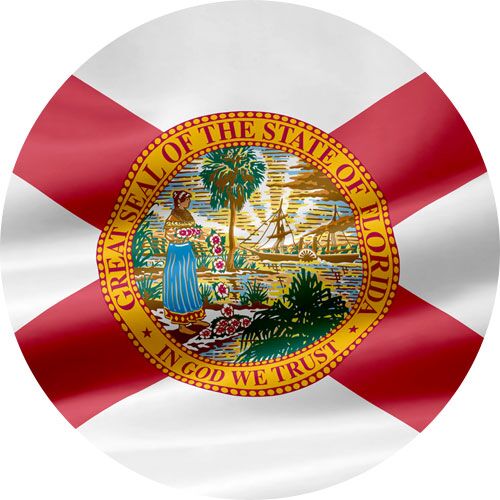
Central to the flag’s design is the Great Seal of Florida, which is a rich tableau of symbolism:
- Native American Woman: The seal features a Seminole woman scattering flowers, symbolizing Florida’s indigenous heritage and its abundant natural beauty, particularly its flora. This figure pays homage to the original inhabitants and the pristine environment they cherished.
- Steamboat: A steamboat is depicted sailing across calm waters towards a rising sun. This element represents commerce, industry, and economic progress, highlighting the importance of navigation and trade in Florida’s development, especially its vital waterways.
- Sabal Palm: Florida’s official state tree, the Sabal Palm, stands prominently in the seal. It signifies the state’s unique subtropical environment, its natural resilience, and its iconic landscape.
- Sun: The radiant sun ascending over the horizon reinforces the “Sunshine State” identity, emblematic of warmth, energy, and a new day.
- Landmass and Water: The general landscape depicted within the seal typically shows land and water, representing Florida’s distinctive peninsular geography, surrounded by the Atlantic Ocean and the Gulf of Mexico.
- “In God We Trust”: Positioned at the bottom of the seal, this phrase is the official motto of the United States and also Florida’s state motto. It reflects a widely held American value of faith and spiritual grounding.
Beyond the Fabric: Cultural and Civic Importance
The Florida state flag transcends its physical form to become a crucial cultural and civic landmark. It is a unifying emblem that embodies the collective identity of Floridians and provides a tangible link to their shared heritage.
A Beacon of Identity
The flag serves as a powerful beacon of identity, fostering a sense of pride and community among the state’s diverse population. It is prominently displayed at the Florida State Capitol in Tallahassee, at county courthouses, public schools, and during state holidays and ceremonial events. Its consistent presence helps to solidify a collective sense of belonging and highlights the state’s individual character within the larger national mosaic. For many, it’s a direct connection to home, evoking images of sunny beaches, historical cities, and vibrant wildlife.
Educational Value
The flag also holds significant educational value. It is often a focal point in civic education, teaching students about Florida’s history, geography, and governmental structure. Through its symbols, the flag offers a concise visual lesson on the state’s indigenous past, its colonial influences, its agricultural and commercial growth, and its enduring values. Studying the flag allows for an exploration of the narratives that have shaped Florida into the state it is today, promoting a deeper understanding of its complex history.
A Landmark in Itself
While not a physical structure, the state flag functions as a symbolic landmark. It is a visual shorthand for Florida recognized globally, just as a famous building or natural feature might be. When one sees the distinctive red saltire and state seal, Florida’s unique blend of history, nature, and culture immediately comes to mind. It is a permanent fixture in the state’s public consciousness, representing its aspirations, achievements, and the resilient spirit of its people.
Where to Witness Florida’s Emblems
Engaging with the Florida state flag and its history offers a profound way to connect with the state’s identity. While the flag flies ubiquitously, certain landmark locations offer deeper insights into its significance and evolution.
The most prominent place to witness the Florida state flag is at the Florida State Capitol complex in Tallahassee. Here, not only is the current flag proudly displayed, but visitors can also learn about the legislative history that led to its various iterations. The adjacent Museum of Florida History, also in Tallahassee, frequently features exhibits that delve into the state’s symbols, including the flag, providing detailed historical context and showcasing earlier versions or proposed designs.
Historical sites across the state, such as the ancient Castillo de San Marcos in St. Augustine, often display replicas of the flags that flew over Florida during different periods of its colonial past. Observing these historical banners alongside the modern state flag provides a vivid timeline of the forces that shaped Florida’s identity. Local historical societies and civic centers throughout the state also frequently host educational displays and historical markers dedicated to Florida’s symbols, making the flag’s narrative accessible in communities from Pensacola to Key West. Engaging with these physical and symbolic landmarks allows for a richer understanding of what the Florida state flag truly represents.
LifeOutOfTheBox is a participant in the Amazon Services LLC Associates Program, an affiliate advertising program designed to provide a means for sites to earn advertising fees by advertising and linking to Amazon.com. Amazon, the Amazon logo, AmazonSupply, and the AmazonSupply logo are trademarks of Amazon.com, Inc. or its affiliates. As an Amazon Associate we earn affiliate commissions from qualifying purchases.