
Fort Myers, Florida, a jewel on the state’s southwestern Gulf Coast, is renowned for its idyllic beaches, vibrant natural beauty, and a climate that beckons travelers year-round. Understanding the temperature in this captivating destination is paramount for any visitor planning their trip, as it directly influences everything from what to pack to the types of activities that will be most enjoyable. Situated in a subtropical zone, Fort Myers experiences distinct seasons, each offering a unique atmospheric tapestry for travelers to explore. Far from being a mere number on a thermometer, the temperature here shapes the very essence of a Fort Myers experience, guiding expectations and enhancing preparedness for an unforgettable journey.
Understanding Fort Myers’ Subtropical Climate
The climate in Fort Myers is characterized as humid subtropical, meaning it enjoys warm temperatures for much of the year, coupled with significant humidity, especially during the summer months. This classification promises mild winters and hot, often wet, summers, making it a diverse destination depending on the time of your visit. The Gulf of Mexico plays a crucial role in moderating temperatures, particularly cooling coastal areas in the summer and warming them slightly in the winter.
Seasonal Temperature Breakdown
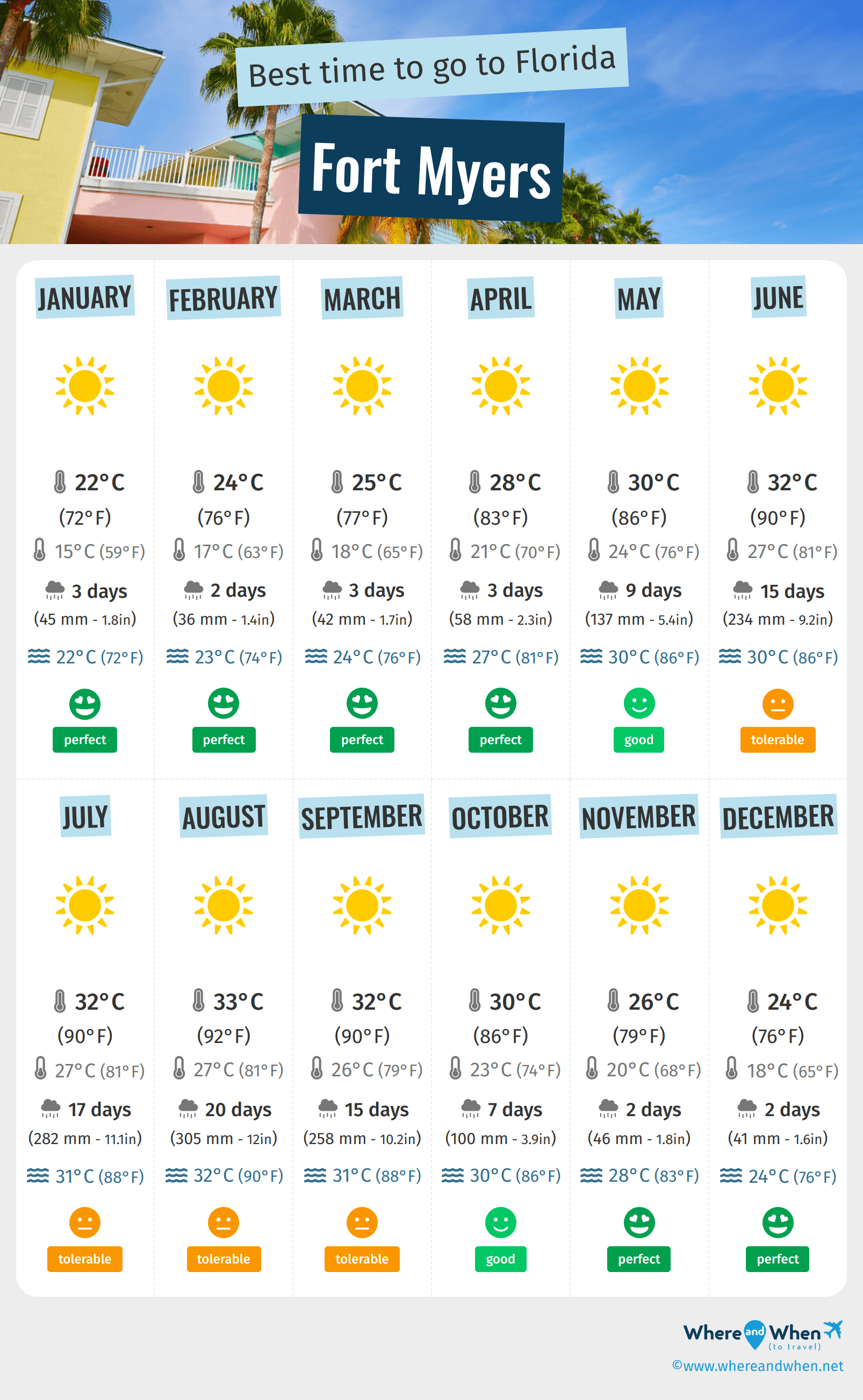
- Winter (December to February): This is arguably the most popular time to visit Fort Myers for those seeking respite from colder northern climates. Temperatures are wonderfully mild and comfortable, with average daytime highs ranging from the low to mid-70s Fahrenheit (21-24°C). Nights can dip into the low 50s (10-12°C), occasionally reaching the upper 40s (7-9°C), especially in January. Rainfall is minimal, and the humidity is low, making for pleasant, sunny days perfect for outdoor activities. This period is considered peak season, drawing snowbirds and vacationers alike.
- Spring (March to May): As spring unfolds, temperatures gradually rise, and the region begins its transition towards the warmer summer months. March maintains much of the winter’s pleasantness, with average highs in the mid-70s (24°C). By April, temperatures comfortably reach the low 80s (27°C), and by May, they often push into the mid-80s (29-30°C). Humidity starts to increase, and while rainfall is still relatively low compared to summer, occasional afternoon showers become more common, especially in late spring. This is an excellent time for those who enjoy warmth without the intense heat and humidity of summer.
- Summer (June to August): Summer in Fort Myers is characterized by consistent heat and high humidity. Daytime highs consistently hover in the low 90s (32-34°C), and the “real feel” temperature, due to the humidity, can often exceed 100°F (38°C). Nights offer little relief, staying in the mid-70s (24-25°C). This is the wet season, with frequent afternoon thunderstorms that, while intense, often pass quickly, leaving behind refreshed air. The sea breeze offers some comfort along the coast.
- Fall (September to November): Fall sees a gradual cooling, although September and early October can still feel very much like summer, with highs in the upper 80s (30-32°C). As the season progresses, particularly by late October and November, temperatures become more agreeable, dropping into the low to mid-80s (27-29°C) and then the upper 70s (25-26°C) respectively. Humidity decreases significantly towards late fall, and the frequency of tropical systems lessens. This period offers a pleasant return to milder conditions, especially as winter approaches.
Humidity and Its Impact
Beyond just the mercury reading, humidity is a critical factor in Fort Myers that significantly affects how the temperature feels. During the summer months, high humidity makes the air feel heavier and warmer, impacting comfort levels and exertion during outdoor activities. Even in winter, while generally dry, certain days can still experience higher humidity levels. Understanding the interplay between temperature and humidity is vital for visitors to dress appropriately and plan their day effectively. Proper hydration is always recommended, especially when humidity is high.
Planning Your Visit: Best Times Based on Temperature
The ideal time to visit Fort Myers largely depends on personal preference for temperature and activity. Each season offers unique advantages and considerations for travelers.
Winter Escapes: Mild and Dry
For those seeking escape from harsh northern winters, December through February is the undisputed prime season. The consistently mild temperatures, ample sunshine, and low humidity create perfect conditions for beach relaxation, golf, outdoor dining, and exploring nature preserves without breaking a sweat. It’s the ideal time for shelling on Sanibel Island or a leisurely stroll along Fort Myers Beach. However, this popularity means higher prices for accommodations and potentially larger crowds. Booking well in advance is highly recommended for travel during these months.
Spring Break and Early Summer: Warm and Vibrant
March to May offers a fantastic balance for travelers who enjoy warmth but prefer to avoid the intense summer heat and peak winter crowds. Temperatures are inviting, ranging from comfortable to pleasantly hot, making it perfect for swimming, water sports, and enjoying the lively atmosphere of spring break. Early summer (June) still offers plenty of sunshine and warmth, with the added benefit of slightly fewer crowds than peak winter. This period is excellent for families and those looking for a vibrant, active vacation before the full onset of the rainy season.
Navigating the Summer Heat: Tips for Enjoying Peak Season
While summer (June to August) brings the highest temperatures and humidity, it also comes with its own charm and benefits. Travelers during this time will find fewer crowds at popular attractions and often more affordable accommodation rates. To enjoy Fort Myers in the summer, focus on early morning or late afternoon activities, taking advantage of air-conditioned indoor attractions during the hottest parts of the day. Embrace the afternoon thunderstorms as a refreshing interlude, often followed by clear, beautiful evenings. Water activities, like swimming, kayaking, and boating, are paramount for staying cool.
Fall Transition: Pleasant Yet Prone to Weather Shifts
September through November represents a transition period. Early fall can still be quite warm and humid, but as the season progresses, especially from mid-October onwards, temperatures become increasingly pleasant. This is a great time to visit for those who want to avoid peak crowds and don’t mind the occasional tropical system (hurricane season officially runs until November 30th). Late fall offers beautiful weather similar to early spring, making it ideal for outdoor exploration without the intensity of summer or the full crowds of winter.
What to Pack: Temperature-Driven Essentials
Packing for Fort Myers requires thoughtful consideration of the seasonal temperatures and humidity. Dressing appropriately will significantly enhance your comfort and enjoyment.

Layering for Comfort
Even in the mildest winter months, layering is key. While daytime highs are pleasant, evenings can be cool. Lightweight sweaters, cardigans, or light jackets are essential for cooler nights and air-conditioned indoor spaces. For summer, light, breathable fabrics like cotton, linen, and moisture-wicking materials are critical. Pack plenty of shorts, t-shirts, and swimwear. In spring and fall, layers allow flexibility as temperatures fluctuate throughout the day.
Sun Protection and Hydration
Regardless of the season, sun protection is non-negotiable in sunny Florida. Pack high-SPF sunscreen, wide-brimmed hats, and sunglasses. Reapplying sunscreen regularly, especially after swimming, is crucial. Staying hydrated is equally important, particularly during the warmer months when humidity levels are high. Always carry a reusable water bottle and drink plenty of fluids.
Rain Gear Considerations
While winters are dry, spring, summer, and fall can experience sudden downpours. A lightweight rain jacket or a compact umbrella is a wise addition to your packing list, especially if visiting between June and November. These showers often pass quickly, but being prepared means you won’t be caught off guard and can continue enjoying your day once the rain subsides.
Activities and Experiences Influenced by Fort Myers Temperatures
The varying temperatures in Fort Myers directly dictate the most enjoyable activities and experiences available to visitors.
Beach and Water Activities
The beaches of Fort Myers, Sanibel Island, and Captiva Island are major draws. In winter and spring, the mild temperatures are perfect for long walks, sunbathing, and leisurely dips in the Gulf’s refreshing waters. During the hot summer, the beaches become essential havens for cooling off, with swimming, paddleboarding, jet-skiing, and parasailing being immensely popular. The Gulf waters are warmest in summer, offering a truly tropical swimming experience.
Outdoor Exploration and Nature Trails
Fort Myers boasts an abundance of natural beauty, from mangroves to pine flatwoods. Exploring places like the Six Mile Cypress Slough Preserve or Lakes Park is best done during the cooler months of winter and early spring. The comfortable temperatures make hiking, birdwatching, and cycling particularly enjoyable. In summer, early morning visits are crucial to avoid the midday heat and humidity, ensuring a more pleasant and safe experience.
Indoor Attractions and Evening Entertainment
When temperatures soar or unexpected rain showers arrive, Fort Myers offers a variety of indoor options. Museums like the IMAG History & Science Center or the historic Edison and Ford Winter Estates provide air-conditioned refuge. Shopping centers and diverse dining establishments also offer excellent ways to escape the elements. Evenings, particularly in winter and spring, are ideal for outdoor dining, waterfront strolls, or catching live music at one of the many venues. In summer, cooler evenings provide a welcome opportunity to enjoy the vibrant nightlife after a hot day.
Beyond the Thermometer: Weather Phenomena in Southwest Florida
While temperature is a primary concern, understanding broader weather patterns can further enhance a Fort Myers travel plan.
Hurricane Season Awareness
Southwest Florida is located within the Atlantic hurricane belt. Hurricane season officially runs from June 1st to November 30th, with peak activity typically occurring from August through October. While direct hits are relatively infrequent, visitors traveling during these months should remain aware of weather advisories and consider travel insurance. Hotels and local authorities are well-prepared with evacuation plans and communication systems to ensure the safety of residents and visitors.

Thunderstorm Patterns
During the summer wet season, Fort Myers experiences frequent afternoon thunderstorms. These are often localized, intense, and accompanied by heavy rain and lightning, but usually short-lived. They typically develop in the early to mid-afternoon, clear by late afternoon or early evening, and contribute to the region’s overall tropical ambiance. Travelers should plan outdoor activities for mornings and be prepared to take cover indoors if a storm rolls in. These natural phenomena, though sometimes disruptive, are a characteristic part of the Florida summer experience.
In conclusion, the temperature in Fort Myers, Florida, is a dynamic element that shapes the travel experience. From the delightfully mild winters to the warm, humid summers, each season presents unique opportunities and challenges. By understanding these seasonal variations and preparing accordingly, visitors can ensure their trip to this stunning Gulf Coast destination is as comfortable, enjoyable, and memorable as possible, regardless of when they choose to arrive.
LifeOutOfTheBox is a participant in the Amazon Services LLC Associates Program, an affiliate advertising program designed to provide a means for sites to earn advertising fees by advertising and linking to Amazon.com. Amazon, the Amazon logo, AmazonSupply, and the AmazonSupply logo are trademarks of Amazon.com, Inc. or its affiliates. As an Amazon Associate we earn affiliate commissions from qualifying purchases.