
Embarking on a journey from the sun-kissed shores of Florida to the tropical paradise of Hawaii represents one of the longest domestic flights within the United States. While both states are renowned for their beautiful beaches and vibrant cultures, the sheer distance separating them means that travel between these two destinations is a significant undertaking. There are no direct commercial flights spanning the nearly 5,000 miles that separate the southeastern tip of the continental U.S. from the mid-Pacific archipelago. Consequently, travelers must prepare for a multi-leg journey, often involving substantial layovers, making the total travel time considerable. Understanding the intricacies of this long-haul flight is crucial for planning an efficient and enjoyable trip to the Aloha State.

Understanding the Great Pacific Crossing
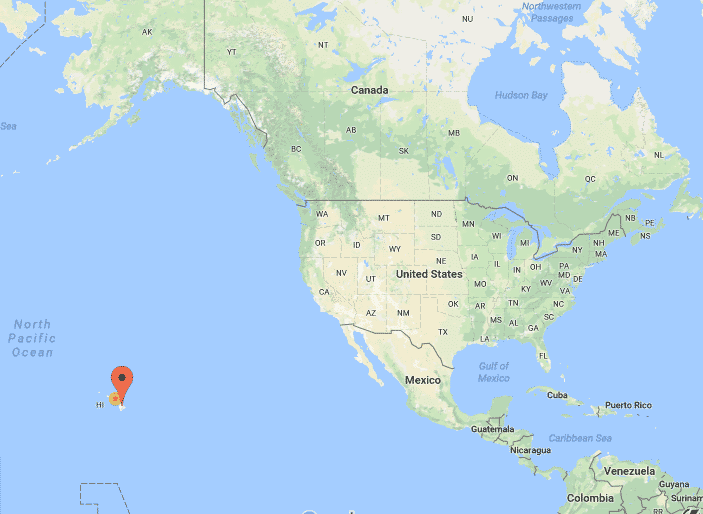
The vast expanse between Florida and Hawaii dictates a complex travel itinerary. Unlike shorter transcontinental flights, a trip to Hawaii from Florida inherently includes at least one, and often two, layovers. The total distance covered is approximately 4,500 to 5,000 miles, depending on the specific departure and arrival airports. This geographic reality means that flight duration is not a simple calculation of airborne hours but a comprehensive estimate that factors in ground time at connecting hubs.
Several variables influence the overall travel time:
- Aircraft Type: Modern, long-range aircraft are designed for efficiency, but older models might have slightly longer flight times or be less comfortable for extended periods.
- Wind Speed and Direction: The powerful jet stream across the United States can significantly impact flight durations, particularly on eastbound legs, making westbound flights generally longer.
- Number of Layovers: Most routes will include one layover, but some might involve two, adding several hours to the total journey.
- Specific Airports: The choice of departure city in Florida and arrival island in Hawaii affects the overall distance and available flight options.
- Layover Duration: This is perhaps the most variable factor, ranging from a brisk 1-hour connection to an extended 6-hour wait.
The No-Direct-Flight Reality
The absence of direct flights from Florida to Hawaii is primarily due to the immense distance. While technically possible for some ultra-long-range aircraft, the demand for such a specific direct route is not consistently high enough to justify the operational costs for commercial airlines. Instead, airlines funnel passengers through major hub airports in the continental United States. These hubs serve as strategic points for connecting flights to Hawaii, particularly those on the West Coast.
Common connecting cities include:
- Los Angeles International Airport (LAX)
- San Francisco International Airport (SFO)
- Seattle-Tacoma International Airport (SEA)
- Phoenix Sky Harbor International Airport (PHX)
- Denver International Airport (DEN)
- Dallas/Fort Worth International Airport (DFW)
- Houston George Bush Intercontinental Airport (IAH)
Flights from Florida will first travel westward to one of these hubs, and then a second flight will complete the journey across the Pacific Ocean to Hawaii.
Typical Flight Paths and Durations
Let’s break down what a typical journey might look like, originating from major Florida airports. Popular departure points in Florida include Miami International Airport (MIA), Orlando International Airport (MCO), Tampa International Airport (TPA), and Fort Lauderdale-Hollywood International Airport (FLL). The final destination in Hawaii is most often Daniel K. Inouye International Airport (HNL) in Honolulu on Oahu, which acts as the primary gateway to the Hawaiian Islands.
A Sample Itinerary Breakdown
Consider a common route from Orlando, Florida to Honolulu, Hawaii:
- Leg 1: Orlando International Airport (MCO) to Los Angeles International Airport (LAX)
- Flight Time: Approximately 5 to 6 hours. This segment covers a significant portion of the continental United States.
- Layover at LAX
- Duration: Typically 1.5 to 4 hours. This allows time for deplaning, navigating the airport, and boarding the connecting flight. Shorter layovers risk missed connections, while excessively long ones can add unnecessary fatigue.
- Leg 2: Los Angeles International Airport (LAX) to Daniel K. Inouye International Airport (HNL)
- Flight Time: Approximately 5.5 to 6 hours. This is the trans-Pacific segment, often over open ocean.
Total Estimated Travel Time: Summing these segments, a trip from Orlando to Honolulu typically ranges from 11.5 to 16 hours or more. This total includes the actual flight time and a reasonable layover. Factors like air traffic control delays, gate changes, or longer connections can easily push the total closer to 18-20 hours.
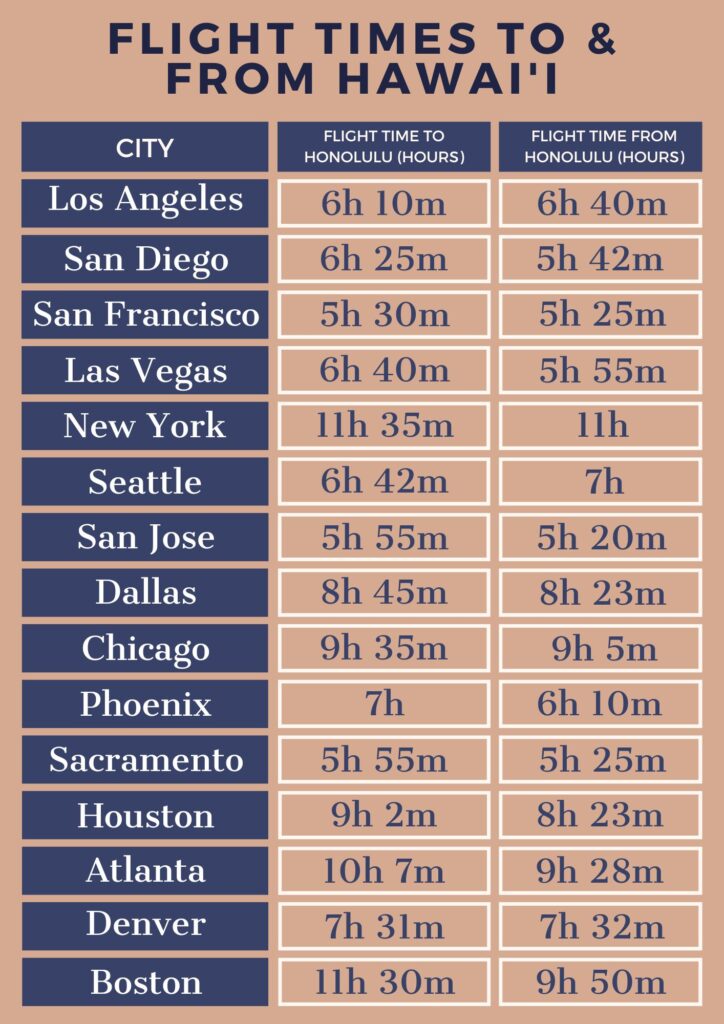
If your final destination is another Hawaiian Island such as Maui (Kahului Airport OGG), Kauai (Lihue Airport LIH), or the Big Island (Kona International Airport KOA or Hilo International Airport ITO), you will likely add an inter-island flight, usually originating from Honolulu. These additional flights are typically 30-60 minutes, plus extra time for disembarkation, transit, and re-boarding, adding another 2-4 hours to the total journey.
Minimizing Travel Fatigue and Maximizing Comfort
A journey of this length demands proactive strategies to combat fatigue and ensure comfort. The goal is to arrive in Hawaii as refreshed as possible, ready to enjoy your vacation.
Choosing the Right Flight
- Optimal Layover Times: While a short layover (1-2 hours) might seem appealing to reduce overall travel time, it can be risky for long-haul connections, especially if there are delays. A 2-4 hour layover offers a good balance, allowing time to stretch, grab food, and comfortably make your next flight. Avoid layovers exceeding 6 hours unless you specifically plan to leave the airport for a mini-excursion.
- Red-eye vs. Daytime Flights: A red-eye flight from the West Coast to Hawaii can mean arriving early in the morning, giving you a full day. However, sleeping on a plane can be challenging. Daytime flights allow you to enjoy the views but might lead to a later arrival, potentially consuming your first evening.
- Aircraft Type: Whenever possible, research the aircraft type. Newer models like the Boeing 787 Dreamliner or Airbus A330 often feature better cabin pressurization, humidity, and larger windows, contributing to a more comfortable experience on long flights.
In-Flight Comfort Strategies
- Hydration: Drink plenty of water before, during, and after your flight to combat dehydration caused by dry cabin air. Avoid excessive alcohol and caffeine.
- Comfortable Clothing: Wear loose-fitting, breathable layers. Compression socks can also be beneficial to prevent swelling.
- Movement: Get up and walk around the cabin periodically, or perform simple stretches in your seat to maintain blood circulation.
- Entertainment: Load up your devices with movies, music, podcasts, or books. Noise-canceling headphones are invaluable for blocking out engine noise and chatter.
- Sleep Aids: A neck pillow, eye mask, and earplugs can significantly improve your chances of resting during the flight.
Managing Time Zones
Hawaii Standard Time (HST) is typically 5 hours behind Eastern Daylight Time (EDT) and 6 hours behind Eastern Standard Time (EST) in Florida (as Hawaii does not observe Daylight Saving Time). This significant time difference means you will “gain” time during your flight but will likely experience jet lag upon arrival.
- Pre-Adjustment: Start shifting your sleep schedule a few days before departure.
- On Arrival: Immediately adopt the local time, exposing yourself to natural light during the day and avoiding naps if possible. Staying hydrated and getting some light exercise can also help your body adjust.
Booking Strategies for the Long Haul
Booking flights from Florida to Hawaii requires a strategic approach to secure the best routes and fares.
- Flexibility is Key: If your travel dates are flexible, you can often find better deals by flying mid-week or during the off-season (typically spring and fall, avoiding major holidays).
- Airlines Serving the Route: Major carriers operating these routes include United Airlines, American Airlines, Delta Air Lines, Southwest Airlines, Alaska Airlines, and Hawaiian Airlines. Hawaiian Airlines primarily handles the trans-Pacific leg, often in partnership with mainland carriers for the first segment.
- Utilizing Flight Search Engines: Platforms like Google Flights, Skyscanner, and Kayak are invaluable for comparing prices and itineraries across different airlines and layover combinations. Set up price alerts to be notified of fare drops.
- Consider Stopovers: Sometimes, extending a layover into a deliberate stopover in a hub city like Los Angeles or San Francisco can break up the journey and add another exciting element to your travel experience. Many airlines offer programs that allow for extended layovers at no additional airfare. This can turn a tedious connection into an opportunity to explore a new city before reaching your ultimate tropical destination.
The Reward: Why the Journey is Worth It
While the flight duration from Florida to Hawaii is undeniably long, the destination unequivocally makes the journey worthwhile. Hawaii offers a tapestry of breathtaking landscapes, from the volcanic marvels of the Big Island to the lush cliffs of Kauai and the iconic beaches of Maui and Oahu. The vibrant Polynesian culture, world-class surfing, diverse marine life, and unparalleled natural beauty provide an escape unlike any other. The hours spent in transit fade into memory once you are greeted by warm trade winds, the fragrant scent of plumeria, and the rhythm of the ocean. Prepare well, plan intelligently, and the extensive travel time will simply become the preface to an unforgettable adventure in paradise.
LifeOutOfTheBox is a participant in the Amazon Services LLC Associates Program, an affiliate advertising program designed to provide a means for sites to earn advertising fees by advertising and linking to Amazon.com. Amazon, the Amazon logo, AmazonSupply, and the AmazonSupply logo are trademarks of Amazon.com, Inc. or its affiliates. As an Amazon Associate we earn affiliate commissions from qualifying purchases.