
Planning a trip to the “Theme Park Capital of the World,” Orlando, Florida, inherently involves understanding its unique climate. The weather in Orlando plays a pivotal role in shaping your travel itinerary, influencing everything from what you pack to how you navigate the sprawling attractions. While often synonymous with sunshine and warmth, Orlando’s weather patterns exhibit distinct seasonal variations that every traveler should be aware of to maximize their experience.
Understanding Orlando’s Subtropical Climate
Orlando is situated in a humid subtropical climate zone, characterized by hot, humid summers and mild to warm winters. This means that year-round, visitors can generally expect abundant sunshine and temperatures that rarely dip into extreme cold. The city averages over 230 sunny days per year, contributing significantly to its appeal as a premier vacation destination. However, this climate also brings specific phenomena, such as frequent afternoon thunderstorms during the warmer months and the annual hurricane season. Humidity is a constant companion for much of the year, particularly from late spring through early autumn, which can make even moderate temperatures feel warmer. Understanding these fundamental characteristics is the first step in preparing for your Orlando adventure.

Seasonal Breakdown: Planning Your Visit
The distinct seasons in Orlando offer varied experiences, each with its own charm and set of considerations for travelers.
Summer (June-August): The Peak Heat & Humidity
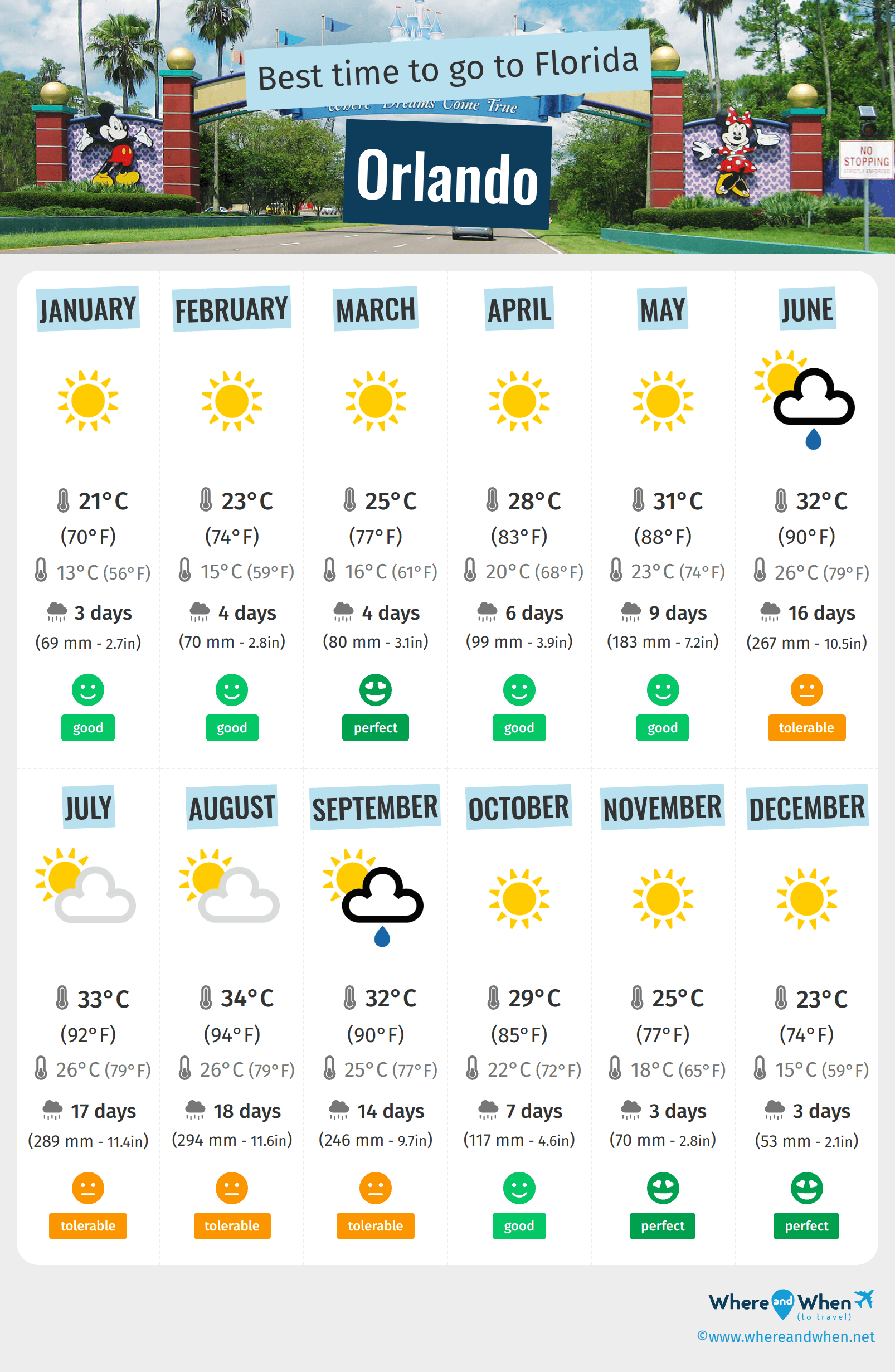
Summers in Orlando are defined by intense heat and very high humidity, making it the most challenging time for some visitors, particularly those unaccustomed to such conditions. Daytime temperatures consistently soar into the high 80s and low 90s Fahrenheit (30-35°C), often feeling even hotter due to the oppressive humidity. The typical summer pattern involves sunny mornings followed by scattered, often intense, afternoon thunderstorms. These storms usually roll in quickly, drop a significant amount of rain, and then dissipate, leaving behind refreshed air, though still warm and humid. While they are usually brief, they can disrupt outdoor plans or cause temporary ride closures at theme parks.
This period also falls within the official Atlantic hurricane season, which runs from June 1 to November 30. While a direct hit from a hurricane is relatively rare for inland Orlando, tropical storms and depressions can bring several days of heavy rain and strong winds. It’s wise for travelers during this time to monitor weather forecasts and consider travel insurance that covers weather-related cancellations. Despite the heat and potential for rain, summer remains a peak travel season, especially for families, largely due to school holidays.
Autumn (September-November): A Welcome Transition
As summer gives way to autumn, Orlando’s weather becomes notably more pleasant. September still retains much of summer’s heat and humidity, and remains firmly within hurricane season, making it a month of transition. However, by October, temperatures begin to cool, and humidity levels gradually drop, providing a much more comfortable environment. Daytime highs typically range from the low 80s to mid-70s Fahrenheit (24-29°C). The frequency of afternoon thunderstorms also diminishes significantly.
November often brings some of the most delightful weather of the year, with crisp, clear days and comfortable temperatures. This period is ideal for travelers seeking to avoid the intense summer heat while still enjoying warm conditions perfect for theme parks and outdoor activities. Crowds tend to be lighter during non-holiday weeks, adding to the appeal.
Winter (December-February): Mild and Pleasant
Winter is arguably the most desirable time to visit Orlando for many, especially those looking to escape colder northern climates. The weather is generally mild, dry, and sunny, with low humidity. Daytime temperatures typically range from the low 70s to high 60s Fahrenheit (18-23°C). While nights can be cool, occasionally dropping into the 40s or 30s (4-9°C) during cold fronts, truly freezing temperatures are rare. These colder snaps usually last only a few days before returning to more moderate conditions.
This season is perfect for extensive theme park exploration, golfing, or enjoying Florida’s numerous natural attractions without the strain of intense heat. It’s a prime time for “snowbirds” and travelers seeking a comfortable, warm getaway. However, this popularity also means winter, particularly around holidays like Christmas and New Year’s, can see increased crowds and higher prices for accommodation and flights.
Spring (March-May): Warmth Returns with Less Humidity
Spring in Orlando is characterized by a gradual warming trend and relatively low humidity, creating some of the most beautiful weather of the year. March and April offer abundant sunshine, comfortable temperatures in the 70s and low 80s Fahrenheit (21-27°C), and minimal rainfall. This makes it an excellent time for all types of outdoor activities, from park hopping to exploring Orlando’s many outdoor dining and entertainment venues.
As May progresses, temperatures begin to climb into the mid-80s (29-32°C), and humidity starts to increase, signaling the approach of summer. While still very pleasant, late spring can see some early, isolated afternoon showers. Spring Break periods, typically from March into early April, are incredibly popular, leading to significant crowds and demand at attractions like Walt Disney World Resort and Universal Orlando Resort. Booking well in advance is crucial during these times.
How Weather Impacts Your Orlando Travel Experience
The prevailing weather conditions will undoubtedly influence your day-to-day activities and overall enjoyment of your Orlando vacation.
Theme Park Strategies
Given that theme parks like Walt Disney World Resort and Universal Orlando Resort are primarily outdoor experiences, weather considerations are paramount. In summer, prioritize early morning park visits to tackle popular rides before the peak heat and afternoon thunderstorms arrive. Utilize midday for indoor shows, air-conditioned restaurants, or even a return to your hotel for a swim and rest. Water rides become incredibly popular, offering a welcome respite from the heat. Staying hydrated is non-negotiable; carry reusable water bottles and take advantage of free water at quick-service locations. Sunscreen, hats, and sunglasses are essential year-round, but especially during the summer. During afternoon showers, many guests head for shelter, which can sometimes create opportunities for shorter lines at attractions that remain open. Investing in lightweight rain ponchos is a smart move.
In contrast, cooler months allow for more leisurely park days, as the heat and humidity are less of a factor. While light jackets or sweaters might be needed in the mornings and evenings, midday is often perfectly comfortable for strolling between lands and queuing outdoors.
Outdoor Activities Beyond the Parks
Orlando offers a wealth of outdoor activities beyond its famous theme parks. Golfing is a popular pastime, with numerous championship courses scattered across the region. The spring, autumn, and winter months provide ideal conditions for a round, offering pleasant temperatures and low humidity. Airboat tours through the Everglades or nearby marshlands are thrilling ways to experience Florida’s unique ecosystem. While available year-round, these are most comfortable outside of the intense summer heat. Exploring Florida’s natural springs, such as Wekiva Springs State Park or Blue Spring State Park, is an excellent way to cool off in summer, as the spring waters remain a constant 72°F (22°C) year-round. These activities benefit significantly from milder weather, making careful planning based on the season essential.
Packing Essentials
Your packing list will vary depending on the time of year you visit. For summer travel, lightweight, breathable fabrics are key. Think cotton t-shirts, shorts, and sundresses. A wide-brimmed hat, UV-protective sunglasses, and high-SPF sunscreen are absolute necessities. Don’t forget a small, collapsible umbrella or rain poncho. Comfortable walking shoes are paramount regardless of the season, as you’ll be doing a lot of walking. In spring and autumn, layered clothing is advisable, as mornings can be cool and afternoons warm. For winter visits, pack long-sleeved shirts, jeans or trousers, and a light to medium jacket or sweater, especially for evenings. Even in winter, a swimsuit is a good idea, as many hotels have heated pools.

Preparing for Weather Anomalies and Updates
While Orlando’s general weather patterns are predictable, anomalies can occur. Staying informed is crucial, particularly during hurricane season. Utilize reliable weather apps, local news channels, and the official alerts from the National Hurricane Center. Understand the difference between a hurricane “watch” (meaning conditions are possible) and a “warning” (meaning conditions are expected). Most Orlando hotels and theme parks have robust emergency plans in place, and they will communicate directly with guests regarding any necessary precautions or closures.
Having flexibility in your travel plans, if possible, and investing in travel insurance that covers weather-related disruptions can provide peace of mind. While severe weather is not a frequent occurrence, being prepared ensures that you can adjust your itinerary with minimal stress. Ultimately, with a little foresight and an understanding of Orlando’s climate, you can plan an incredible trip, come rain or shine.
LifeOutOfTheBox is a participant in the Amazon Services LLC Associates Program, an affiliate advertising program designed to provide a means for sites to earn advertising fees by advertising and linking to Amazon.com. Amazon, the Amazon logo, AmazonSupply, and the AmazonSupply logo are trademarks of Amazon.com, Inc. or its affiliates. As an Amazon Associate we earn affiliate commissions from qualifying purchases.