
Understanding Sarasota’s Climate: A Traveler’s Guide
Nestled on Florida’s picturesque Gulf Coast, Sarasota is a vibrant destination renowned for its stunning beaches, cultural richness, and outdoor appeal. For any traveler planning a visit, understanding the local weather patterns is paramount to ensuring an enjoyable and well-prepared experience. Sarasota enjoys a humid subtropical climate, characterized by warm, often hot temperatures year-round, abundant sunshine, and distinct wet and dry seasons. This translates into a diverse range of conditions throughout the year, each offering unique opportunities and considerations for visitors.
The mild winters, sun-drenched springs, and balmy autumns draw countless tourists seeking respite from colder northern climates, making weather a crucial factor in determining the “best” time to visit based on individual preferences. Summers, while warm and humid, offer their own charm with refreshing afternoon showers and a focus on water-based activities. Knowing what to expect allows travelers to pack appropriately, plan itineraries with flexibility, and make the most of Sarasota’s myriad attractions, from lounging on pristine shores to exploring lush botanical gardens or indulging in vibrant arts scenes. This guide delves into the seasonal nuances of Sarasota’s weather, offering insights to help you craft the perfect Florida getaway.

Seasonal Breakdown: What to Expect When You Visit
Sarasota’s climate transitions gracefully through four distinct seasons, each presenting a different facet of its natural beauty and recreational possibilities. Understanding these shifts is key to tailoring your trip for maximum enjoyment, whether you seek cool breezes, warm sunshine, or vibrant tropical downpours.
Winter (December – February): The Peak Season Sweet Spot
Winter in Sarasota is arguably the most coveted time to visit, and for good reason. The weather during these months is characterized by idyllic conditions: mild temperatures, low humidity, and minimal rainfall. Daytime highs typically range from the low to mid-70s Fahrenheit (21-24°C), with evenings cooling down to the 50s (10-15°C). Frost is a rare occurrence. This comfortable climate is perfect for all manner of outdoor pursuits, from extended walks along Sarasota’s beaches to rounds of golf at premier courses.
Travelers can comfortably explore attractions like the upscale boutiques and restaurants of St. Armands Circle, the stunning botanical displays at Marie Selby Botanical Gardens, or the marine life exhibits at Mote Marine Laboratory & Aquarium. Packing should include light layers, such as t-shirts, light long-sleeved shirts, and perhaps a comfortable sweater or light jacket for cooler evenings or air-conditioned indoor spaces. Sunscreen, hats, and sunglasses remain essential, even in winter, as the Florida sun is consistently strong. This period also sees a higher volume of visitors, so booking accommodations and popular activities in advance is highly recommended.
Spring (March – May): Pleasant Transitions and Blossoming Beauty
As winter gives way to spring, Sarasota experiences a gradual warming trend, with temperatures rising into the high 70s and low 80s Fahrenheit (25-29°C). Humidity levels remain relatively comfortable, making it another excellent time for outdoor exploration before the summer heat fully sets in. Rainfall is still infrequent compared to the summer months, offering consistently pleasant conditions for travel.
Spring is ideal for enjoying natural parks like Myakka River State Park, where wildlife viewing and airboat tours are popular. The city also comes alive with various festivals and events, such as the Sarasota International Dragon Boat Festival, making it a culturally rich time to visit. Lighter clothing like shorts, t-shirts, and sundresses are perfect for daytime, with a light cardigan or jacket for cooler evenings. Spring break periods can see an influx of visitors, particularly to popular beach areas, so planning ahead is still advisable. The blooming flora across the region adds an extra layer of beauty to the landscape.
Summer (June – August): Embracing the Heat and Afternoon Showers
Sarasota’s summer months are characterized by hot, humid weather and frequent, often brief, afternoon thunderstorms. Daily highs consistently reach the high 80s and low 90s Fahrenheit (30-34°C), with heat index values often making it feel warmer. The humidity can be intense, but the daily thunderstorms, while predictable, typically pass quickly, leaving behind refreshed air. These showers usually occur in the late afternoon, allowing for sunny mornings dedicated to outdoor activities.
This season is synonymous with water-centric fun. Siesta Key Beach, with its famous quartz sand, and Lido Beach become prime destinations for swimming, sunbathing, paddleboarding, and kayaking. For those seeking refuge from the heat, indoor attractions like the renowned The Ringling museum complex offer a cool and enriching experience. Travelers should pack lightweight, breathable fabrics, swimwear, and ensure they have ample sun protection (high SPF sunscreen, wide-brimmed hats, sunglasses). A compact umbrella or light rain jacket is also a wise addition for navigating the afternoon downpours. Despite the heat, summer offers a more relaxed atmosphere and often better deals on accommodations compared to peak winter months.
Autumn (September – November): Lingering Warmth and Quieter Shores
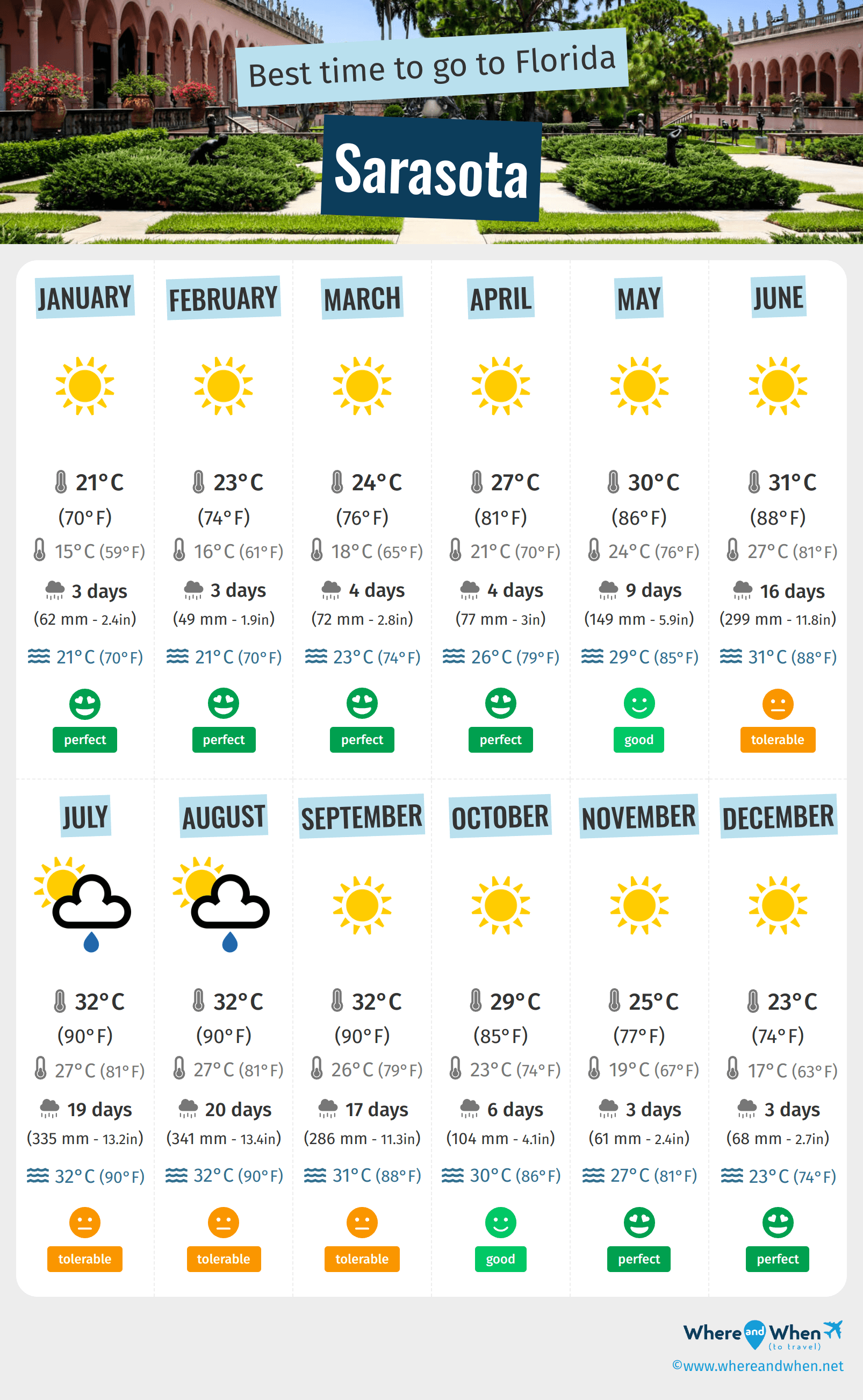
Autumn in Sarasota represents a gradual transition from the summer heat and humidity towards the pleasant conditions of winter. Early autumn (September, early October) can still feel very much like summer, with warm temperatures and lingering humidity. However, as the season progresses, temperatures begin to moderate, and humidity levels noticeably drop, especially by late October and November. Daytime highs typically range from the low to mid-80s in September, cooling to the mid-70s by November.
This period falls within hurricane season (which runs from June 1st to November 30th), so while direct hits are rare, travelers should monitor forecasts, especially if planning a trip during September and October. However, later autumn offers a delightful window of opportunity for travelers seeking pleasant weather without the peak season crowds. The beaches remain inviting, and outdoor dining becomes particularly enjoyable as the evenings cool. Events like the Stone Crab Festival celebrate local flavors. Packing versatile clothing that can be layered is ideal for this transitional season, adapting to both warm days and increasingly comfortable evenings.
Preparing for Sarasota’s Weather: Essential Travel Tips
Regardless of when you choose to visit Sarasota, Florida, a few universal weather-related tips will enhance your travel experience. Being adequately prepared ensures comfort, safety, and the ability to fully immerse yourself in the destination.
Firstly, sun protection is non-negotiable year-round. The Florida sun is strong, even on cloudy days and in cooler months. Pack high-SPF sunscreen, wide-brimmed hats, and sunglasses to shield yourself from harmful UV rays. Reapply sunscreen frequently, especially after swimming or extended periods outdoors.
Hydration is equally critical. With warm temperatures prevalent throughout the year, it’s easy to become dehydrated. Carry a reusable water bottle and drink plenty of fluids, particularly when engaging in outdoor activities. Local restaurants and cafes are usually happy to refill water bottles.
For summer travel, a light umbrella or compact rain poncho is a must-have. While summer showers are often brief, they can be intense. Having rain gear allows you to quickly take cover and continue your day once the rain passes without being completely soaked.
Appropriate footwear will make a difference. Comfortable sandals or flip-flops are perfect for Sarasota’s beaches and casual outings. If you plan on hiking in parks like Myakka River State Park, closed-toe shoes are recommended. Water shoes can be useful for certain water activities or exploring tide pools.
During hurricane season (June 1st to November 30th), while many beautiful days occur, it’s wise to be aware. Travelers planning trips during this period should monitor official weather forecasts (e.g., from the National Hurricane Center), consider purchasing travel insurance that covers weather-related disruptions, and be prepared to adjust plans if a storm threatens the region. Local authorities are proactive in providing information and guidance during such events.
Finally, embracing layers in your packing strategy will serve you well. Even in warm months, air-conditioned indoor spaces can be quite cool, and evenings can bring a welcome drop in temperature. A light cardigan, shawl, or long-sleeved shirt can provide comfort across varying conditions. Always check the specific forecast a few days before your departure, as local weather can occasionally surprise even seasoned travelers.

Optimizing Your Sarasota Experience Based on Weather
Understanding Sarasota’s weather patterns allows for strategic planning that maximizes enjoyment of your trip. The best time to visit often depends on your primary interests.
For those whose priority is enjoying the beaches and engaging in extensive outdoor activities like golf, kayaking, or cycling, the winter and spring months (December through May) offer the most consistently pleasant weather. The cooler temperatures and lower humidity create ideal conditions for prolonged outdoor exposure without the intense heat or the interruption of afternoon rainstorms. This is also prime time for exploring downtown Sarasota’s vibrant arts scene and attending numerous outdoor festivals.
If water sports and a more relaxed, less crowded atmosphere appeal to you, then the summer months (June through August) can be incredibly rewarding. While the heat and humidity are undeniable, planning your more strenuous outdoor activities for the mornings, followed by a swim or an indoor museum visit in the afternoon, works perfectly. The predictable afternoon thunderstorms often provide a dramatic, albeit brief, spectacle and can actually be quite refreshing, clearing the air and making way for spectacular sunsets.
Autumn (September through November) presents a mixed bag but can be a fantastic time for travelers seeking a balance. Early autumn still offers plenty of warmth for beach days, albeit with hurricane season considerations. Late autumn, particularly November, is a sweet spot, providing mild, comfortable weather reminiscent of spring, fewer crowds, and often better value on accommodations before the winter peak season truly kicks in.
Flexibility is key, especially during summer and early autumn. Have a backup plan for indoor activities like visiting The Ringling or Mote Marine Laboratory & Aquarium if an unexpected shower rolls through. Ultimately, Sarasota’s diverse climate ensures that there’s a perfect time for everyone to visit, provided they come prepared and with an open mind to embrace whatever the Florida weather brings. The natural beauty of the Gulf Coast is captivating in all seasons, offering unique experiences regardless of the forecast.
LifeOutOfTheBox is a participant in the Amazon Services LLC Associates Program, an affiliate advertising program designed to provide a means for sites to earn advertising fees by advertising and linking to Amazon.com. Amazon, the Amazon logo, AmazonSupply, and the AmazonSupply logo are trademarks of Amazon.com, Inc. or its affiliates. As an Amazon Associate we earn affiliate commissions from qualifying purchases.