
Florida, widely known as the Sunshine State, conjures images of endless white-sand beaches, vibrant theme parks, and balmy breezes year-round. It’s a premier travel destination for those seeking an escape from colder climates, a place where swimming in January is not just possible but often preferable. Given this reputation, the very idea of snow gracing its shores seems almost mythical. Yet, while exceedingly rare, snow has indeed fallen in Florida, leaving behind fleeting moments of wonder and historical records that fascinate meteorologists and travelers alike. For visitors planning a trip to this tropical paradise, understanding the extreme rarity of such events merely underscores the state’s consistent appeal for warmth and outdoor leisure, even as it provides a unique historical footnote to its diverse climate story.

A Rare Meteorological Event in the Sunshine State
The geographical positioning of Florida, extending far south into the subtropical and tropical zones, coupled with the warming influence of the Atlantic Ocean and the Gulf of Mexico, typically prevents the atmospheric conditions necessary for snowfall. For snow to occur, temperatures from the clouds all the way down to the ground must be at or below freezing (32°F or 0°C). While Florida can experience cold snaps, especially in its northern regions, prolonged freezing temperatures at all altitudes are infrequent. This makes each snow event an anomaly, often confined to the northern parts of the state and characterized more by flurries than significant accumulation. These rare occurrences often make headlines, not because of the disruption they cause, but because of their sheer novelty in a state synonymous with warmth and sunshine.
Tracing Florida’s Snowy Past: A Historical Overview
While snow in Florida is infrequent, it is not unprecedented. Records indicate that flakes have occasionally dusted parts of the state for centuries, offering curious glimpses into its more unusual climatic history.
Early Accounts and Anecdotes
The earliest verifiable record of snow in Florida dates back to January 19, 1774. Historical accounts describe snow falling in what is now Jacksonville, accumulating to a depth of several inches. This event would have been a profoundly bewildering experience for residents of the British colony of East Florida, accustomed to a much milder winter. Another significant early event occurred on February 13, 1899, during what is still considered one of the most severe cold waves in United States history. On this date, snow was reported across much of central Florida, including parts of Orlando and Tampa, with some areas seeing several inches of accumulation. Such events were so rare they often entered local folklore, becoming stories passed down through generations.
The 20th Century’s Notable Snowfalls
The 20th century brought a few more memorable snow events that etched themselves into the state’s historical climate records.
Perhaps the most famous snowfall occurred on January 19, 1977. This day stands out because it marked the first time in recorded history that snow fell as far south as Miami and Fort Lauderdale. While accumulations were minimal (mostly flurries that melted upon contact), the sight of snowflakes drifting through the air in South Florida caused widespread excitement and disbelief. Schools closed, traffic slowed to a crawl as drivers gawked, and residents rushed outdoors to witness the extraordinary phenomenon. This event, often dubbed the Great Blizzard of 1977 in more northern states, was a fleeting, yet unforgettable, moment for the Sunshine State.
Another notable event transpired on Christmas Eve in 1989. A severe cold snap brought freezing temperatures and widespread snow to parts of northern and central Florida. Jacksonville received up to an inch of snow, coating palm trees and sandy beaches in a festive, if unusual, white blanket. Cities like Pensacola and Tallahassee also saw significant accumulation, disrupting holiday travel plans but creating unique memories for many Floridians. The Christmas Eve Snow of 1989 remains a popular topic of conversation among long-time residents.
The Millennium’s Glimpse: Recent Snow Events
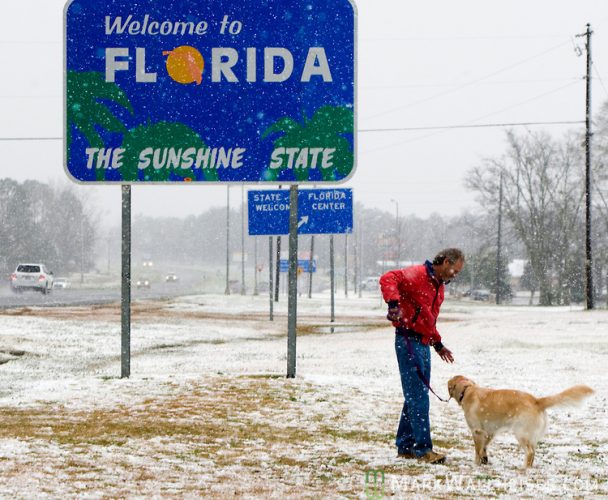
The 21st century has also seen a few instances where Florida has experienced snowfall, albeit mostly confined to its northern reaches and typically consisting of light flurries.
The 2010 Cold Snap
In January 2010, a series of powerful cold fronts swept across the southeastern United States, bringing unusually cold temperatures deep into Florida. While most of the state shivered under freezing temperatures, the northernmost parts, particularly the Panhandle, experienced light snow and freezing rain. Areas around Pensacola and Tallahassee reported measurable snowfall, enough to temporarily cover grassy areas and create slick road conditions. It was a brief but impactful event, reminding residents that even in Florida, winter can sometimes deliver a wintry punch.
January 2018: A Memorable Event
The most recent significant snowfall in Florida occurred on January 3, 2018, primarily in the state capital of Tallahassee and surrounding areas of the Panhandle. A strong cold front brought Arctic air plunging south, combining with moisture to create ideal conditions for snow. Tallahassee received a half-inch to an inch of snow, marking its first measurable snowfall in 28 years (since the 1989 Christmas Eve Snow of 1989).
The city effectively shut down as schools and government offices closed, and roads became treacherous. Children experienced the rare joy of playing in the snow, building miniature snowmen, and marveling at the transformed landscape. The event garnered national attention, with images of palm trees dusted with snow going viral, encapsulating the unique juxtaposition of tropical flora and winter weather. While short-lived, the January 2018 Cold Front provided a new generation of Floridians with a firsthand experience of a truly rare phenomenon. Since this event, there have been no further measurable snowfalls reported in Florida that have captured widespread attention or accumulation.
The Science Behind Florida’s Fleeting Flurries
The meteorological conditions required for snow in Florida are a precise alignment of several factors that rarely coincide. Firstly, an intense Arctic air mass must plunge unusually far south, bringing surface temperatures well below freezing across a significant portion of the state. This deep freeze needs to extend through the entire atmospheric column, from the clouds to the ground, ensuring that precipitation falls as snow rather than melting into rain or freezing rain.
Secondly, this cold air mass must then interact with sufficient moisture. Often, these deep cold fronts are associated with dry air, which prevents precipitation. For snow to form, a secondary low-pressure system or a moisture-laden cold front from the Gulf of Mexico or Atlantic Ocean must move into the region while the deep freeze is still in place. This delicate balance of cold air and moisture is why snow in Florida is such a rare spectacle, typically impacting only the northern counties, as the air quickly warms further south. These events are often short-lived, with the snow melting rapidly as soon as temperatures rise, or the sun emerges.

Experiencing Florida: Beyond the Blizzard
While the stories of snow in Florida are fascinating historical anecdotes, it’s crucial for travelers to understand that these are extreme rarities and not representative of the typical Florida experience. For the vast majority of visitors, the state’s enduring appeal lies in its reliable warmth and abundant sunshine, making it an ideal year-round destination.
From the enchanting magic of Walt Disney World Resort and Universal Orlando Resort in Orlando to the vibrant nightlife of Miami Beach, the natural wonders of Everglades National Park, and the tranquil beauty of its countless beaches, Florida offers an unparalleled array of activities and attractions centered around its tropical climate. Travelers can expect to enjoy swimming, sunbathing, golfing, boating, and exploring outdoor attractions in comfortable temperatures, even in the depths of winter when much of the northern hemisphere is bundled up against the cold.
So, while the occasional dusting of snow offers a delightful, if fleeting, novelty for local residents, it remains an extraordinary anomaly in a state fundamentally defined by its warm embrace. When planning your Florida getaway, rest assured that you’re far more likely to pack swimsuits and sunglasses than snow boots and scarves, ready to immerse yourself in the true Sunshine State experience.
LifeOutOfTheBox is a participant in the Amazon Services LLC Associates Program, an affiliate advertising program designed to provide a means for sites to earn advertising fees by advertising and linking to Amazon.com. Amazon, the Amazon logo, AmazonSupply, and the AmazonSupply logo are trademarks of Amazon.com, Inc. or its affiliates. As an Amazon Associate we earn affiliate commissions from qualifying purchases.