
Eglin Air Force Base, a name synonymous with military innovation and vast natural beauty, stands as a monumental landmark in the Florida Panhandle. Far more than just a military installation, its sheer scale, strategic importance, and unique environmental characteristics cement its status as a prominent geographical, historical, and ecological feature of the southeastern United States. Understanding “where” this behemoth lies requires appreciating not just its coordinates on a map, but also the extensive territory it encompasses and its profound impact on the surrounding region and national defense.
The Geographic Colossus of the Florida Panhandle
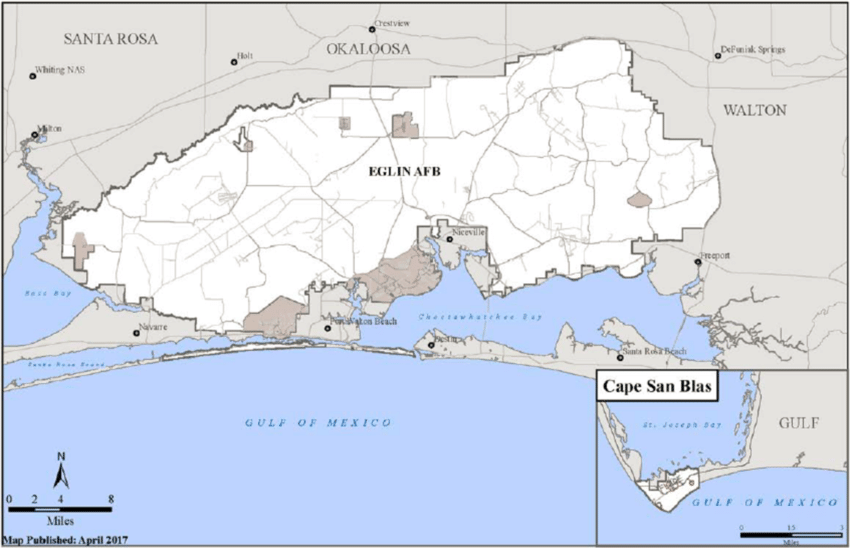
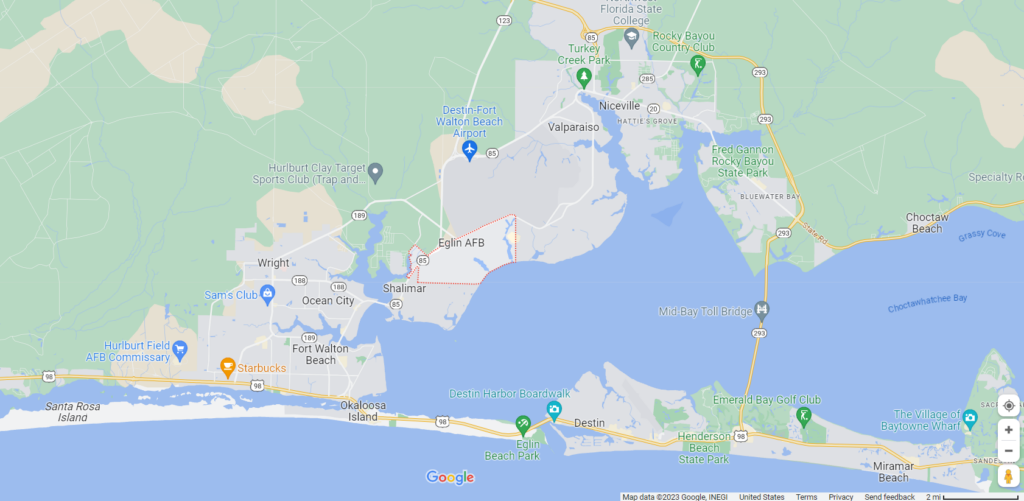
At its core, Eglin Air Force Base is situated in the northwestern part of Florida, hugging the picturesque Emerald Coast along the Gulf of Mexico. Its immense footprint primarily spans three counties: Okaloosa County, Santa Rosa County, and Walton County. The primary base, including its main airfield and command center, is located approximately 7 miles northeast of Fort Walton Beach and extends significantly inland from the coast.

What makes Eglin truly a landmark in terms of geography is its sheer size. Covering an astounding 724 square miles, or nearly 464,000 acres, it is one of the largest air force bases in the world and the largest contiguous military reservation in the U.S. in terms of land area. This massive expanse includes 129,000 acres of water, primarily made up of portions of Choctawhatchee Bay and the adjacent Gulf of Mexico where critical testing and training operations take place. This land area is larger than the state of Rhode Island, providing unparalleled space for diverse military activities ranging from flight testing and armament development to extensive ground training exercises.
A Strategic Location on the Emerald Coast
The base’s strategic positioning on the Emerald Coast places it amidst a region known for its stunning white-sand beaches and vibrant coastal communities. Towns such as Fort Walton Beach, Destin, Niceville, and Valparaiso are all either adjacent to or directly influenced by the base. While the main gates and populated areas of the base are concentrated around these communities, much of its vast territory remains wild, serving as a critical buffer zone and a unique environmental preserve. The installation also hosts several auxiliary fields, including Hurlburt Field (a separate, distinct base closely associated with Eglin), Duke Field, Camp Rudder, and Auxiliary Field 9, each playing a vital role in its expansive mission and further extending its presence across the Panhandle.
A Landmark Forged in History and Innovation
The establishment of Eglin Field in 1935, initially as a sub-post of Maxwell Field in Alabama, marked the genesis of a landmark that would profoundly influence military aviation and defense. Its early days were characterized by experimental gunnery and bombing ranges, leveraging the remote and expansive nature of the Florida wilderness. This foundational role in weapons testing and development rapidly cemented its importance, particularly as global tensions mounted leading into World War II.
From Test Range to Air Force Powerhouse
During World War II, Eglin transformed into a pivotal center for the development and evaluation of new aircraft, weaponry, and tactics. It was here that many of the aerial combat techniques and bombing strategies that defined the war were refined. The base’s name was officially changed to Eglin Air Force Base in 1948, honoring Lt. Col. Frederick I. Eglin, a pioneering aviator who died in an aircraft crash in Alabama in 1937.
Throughout the Cold War and into the modern era, Eglin has remained at the forefront of military technological advancement. It serves as the headquarters for the Air Force Materiel Command’s Armament Systems Center and the 96th Test Wing, making it the primary site for the research, development, acquisition, testing, and deployment of non-nuclear air-delivered weapons. This mission places Eglin as a living landmark of innovation, where the future of air power is continually shaped. Its expansive testing ranges and sophisticated facilities are critical national assets, unparalleled in their capacity to evaluate and integrate cutting-edge defense technologies.
Eglin’s Dual Identity: Military Power and Environmental Stewardship
Perhaps one of the most remarkable aspects of Eglin Air Force Base as a landmark is its dual identity as a crucial military installation and an expansive environmental preserve. The very vastness that makes it ideal for military testing also positions it as one of the largest and most ecologically significant landholdings in Florida. The base’s Eglin Reservation actively manages and protects diverse ecosystems, making it a unique natural landmark.
Protecting Biodiversity Within a Military Mission
The diverse landscapes within Eglin’s boundaries range from pristine coastal scrub and barrier islands to extensive pine forests and wetlands. These habitats support an incredible array of biodiversity, including 18 federally listed threatened and endangered species. The most notable of these is the Longleaf Pine ecosystem, which historically dominated the southeastern United States but has largely disappeared due to development and logging. Eglin hosts one of the largest and most intact remaining Longleaf Pine forests, serving as a critical refuge for numerous species.
The military’s land management practices, ironically, have contributed to the preservation of these ecosystems. Controlled burns, necessary for managing munitions test areas, also mimic natural fire regimes vital for the health of the Longleaf Pine forests and the species that depend on them, such as the red-cockaded woodpecker. This intricate balance between military readiness and environmental protection is a testament to Eglin’s unique character as a landmark where human endeavor and natural heritage coexist on an extraordinary scale.
The Enduring Presence: Eglin AFB as a Regional Beacon
Beyond its geographical expanse, historical narrative, and environmental significance, Eglin Air Force Base functions as an undeniable regional landmark due to its profound socio-economic and cultural impact. It is not merely a place on a map but a cornerstone of the Florida Panhandle’s identity and prosperity.
Economic and Community Ties
As one of the largest employers in the state, Eglin drives significant economic activity across Okaloosa and Santa Rosa Counties, and extends its influence to Walton County and beyond. Its presence supports thousands of military personnel, civilian employees, and contractors, along with their families, contributing to vibrant local communities. The base’s operations foster a robust ecosystem of ancillary businesses, from housing and retail to specialized services catering to its unique military requirements.
The base’s influence is also deeply woven into the local culture. The distinct character of the Emerald Coast is shaped by its long-standing relationship with the military. Many residents have direct or indirect ties to Eglin, creating a strong sense of community and patriotism. The skies above the Panhandle are often graced by the sight and sound of military aircraft, a constant reminder of the base’s active mission and its enduring presence. This blend of economic engine, cultural influencer, and visible national defense asset firmly establishes Eglin Air Force Base as an irreplaceable landmark, defining the landscape and spirit of its Florida home.
LifeOutOfTheBox is a participant in the Amazon Services LLC Associates Program, an affiliate advertising program designed to provide a means for sites to earn advertising fees by advertising and linking to Amazon.com. Amazon, the Amazon logo, AmazonSupply, and the AmazonSupply logo are trademarks of Amazon.com, Inc. or its affiliates. As an Amazon Associate we earn affiliate commissions from qualifying purchases.