
Planning a trip to the Grand Canyon, exploring the vibrant city life of Phoenix, or seeking tranquility in the red rocks of Sedona? When you’re preparing for an adventure in the Southwest, one question frequently arises, often sparking confusion among first-time visitors and even seasoned travelers: “Does Arizona observe Daylight Saving Time?” The simple, yet nuanced, answer is: mostly no.
Arizona stands as a unique exception in the United States when it comes to the biannual clock change. While most states spring forward in March and fall back in November, Arizona largely remains steadfast on Mountain Standard Time (MST) year-round. This peculiar stance has profound implications for travel planning, daily life, and even the local culture, making it an essential piece of knowledge for anyone looking to fully experience what the Grand Canyon State has to offer. From coordinating arrival times at your resort to understanding the timing of guided tours, a grasp of Arizona’s time zone policy is invaluable. This guide will delve into the why behind this decision, explore the critical exception that adds a layer of complexity, and provide practical tips for navigating time in the land of perpetual sunshine.
The Straight Answer: Arizona’s Unique Time Zone Approach
For decades, Arizona has chosen a path less traveled regarding time observance, opting out of the federal mandate for Daylight Saving Time. This decision, rooted in practical considerations and local lifestyle, sets it apart from its neighbors and the majority of the nation.
A History of Non-Observance: Why Arizona Opted Out
The story of Arizona’s rejection of Daylight Saving Time (DST) is deeply intertwined with its extreme climate. DST was originally introduced as a measure to conserve energy, primarily during World War I and World War II, by extending daylight into the evening hours. The idea was that less artificial lighting would be needed. However, for a state like Arizona, particularly its lower desert regions like Phoenix and Tucson, this logic didn’t quite hold up.
In the scorching summer months, when temperatures routinely soar past 100 degrees Fahrenheit, residents prefer to start their days early to beat the heat. Shifting the clock forward would mean the sun would set an hour later, extending the brutal heat further into the evening. This would, paradoxically, increase energy consumption as air conditioning units would need to run longer to cool homes and businesses. Instead of saving energy, DST would lead to more electricity usage. Consequently, the state legislature recognized that DST was counterproductive for Arizona’s unique climate and lifestyle.
The decision to permanently forgo DST was cemented in 1968, making Arizona one of only two states (the other being Hawaii, for different reasons) that do not observe it. This historical choice means that throughout the year, the state’s clocks remain consistent, aligning with Mountain Standard Time. This consistency contributes to a more predictable rhythm of life and a distinct sense of place for both locals and travelers. The idea of extending daylight hours into the evening, a benefit for many cooler climates, simply translates to extending the oppressive heat for much of Arizona.
The Mountain Standard Time (MST) Constant
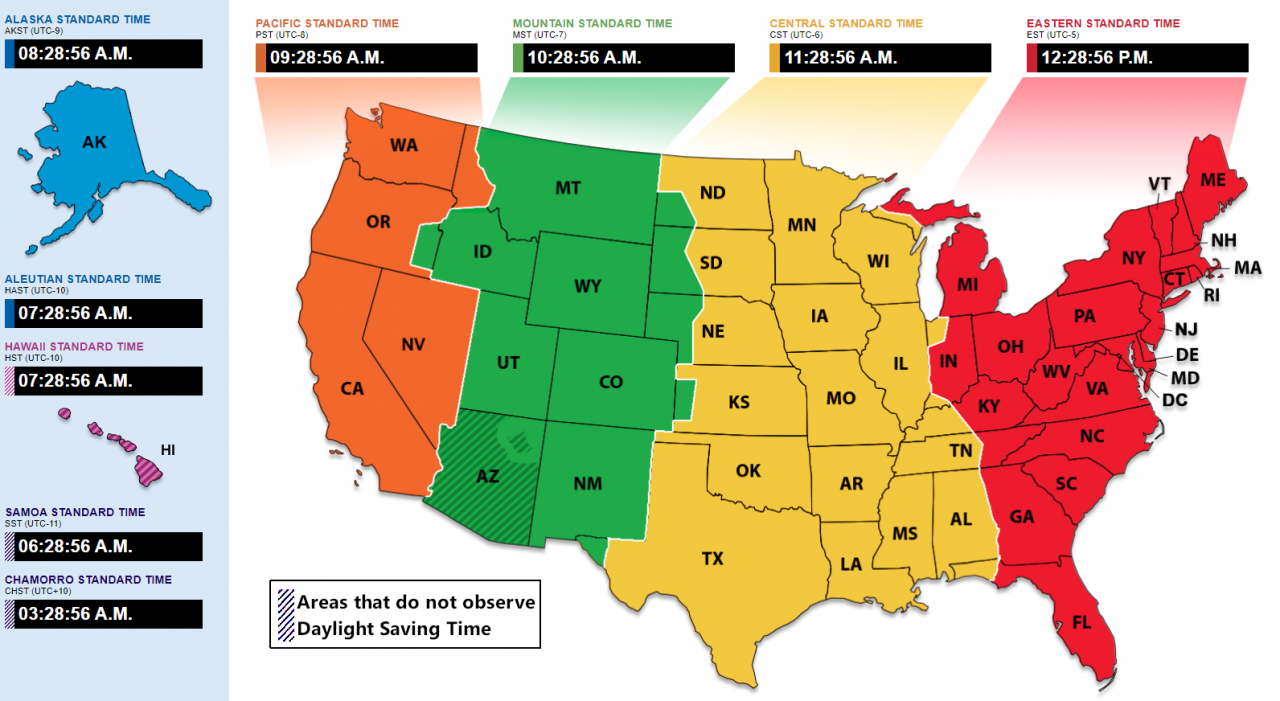
So, what does it mean for Arizona to observe Mountain Standard Time (MST) year-round? During the winter months, when most of the United States observes Standard Time, Arizona is on the same time as neighboring states like Colorado, Utah, and New Mexico. However, once Daylight Saving Time begins in March, these states “spring forward” an hour to Mountain Daylight Time (MDT). At this point, Arizona effectively becomes an hour behind them.
To put it into perspective:
- Winter Months (November to March): Arizona (MST) is on the same time as Colorado (MST), Utah (MST), New Mexico (MST). It’s an hour ahead of California (PST) and Nevada (PST).
- Summer Months (March to November): Arizona (MST) becomes an hour behind Colorado (MDT), Utah (MDT), New Mexico (MDT). It is then on the same time as California (PDT) and Nevada (PDT).
This consistent schedule offers a degree of simplicity for residents and long-term visitors, eliminating the bi-annual adjustment of clocks. For those engaged in business stays or extended accommodation in Arizona, this means no disruptions to work schedules or daily routines due to time changes. However, it does require a mental recalibration for those traveling in from other states, especially when coordinating across time zones for flights, virtual meetings, or family calls. The predictability of MST means that once you understand this singular shift, navigating time within the state becomes straightforward.
Navigating the Exception: The Navajo Nation’s DST Observance
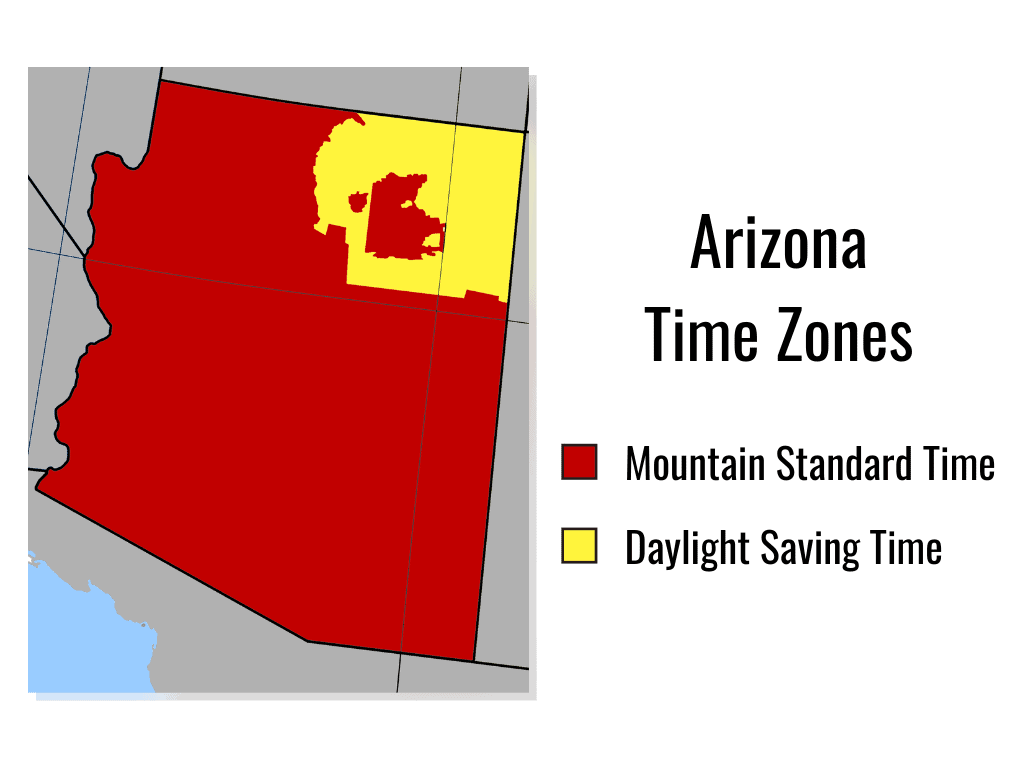
While the vast majority of Arizona remains committed to its year-round Mountain Standard Time, there is one significant and geographically substantial exception that every traveler must be aware of: the Navajo Nation. This sovereign nation, with lands spanning across northeastern Arizona, Utah, and New Mexico, follows its own rules, adding a fascinating layer of complexity to Arizona’s time zone map.
A Nation Within a State: Understanding the Nuance
The Navajo Nation is the largest Native American reservation in the United States, encompassing a land area roughly the size of West Virginia. For administrative and logistical consistency across its multi-state territory, the Navajo Nation observes Daylight Saving Time, just like Utah and New Mexico. This means that during the spring and summer months (from March to November), when the rest of Arizona remains on MST, the Navajo Nation “springs forward” to Mountain Daylight Time (MDT).
For travelers, this is a crucial detail, particularly when visiting iconic landmarks and attractions located within the reservation, such as Monument Valley, parts of the Grand Canyon’s east rim, Antelope Canyon, and the area around Page. If you drive from a city like Flagstaff (which is on MST) into the Navajo Nation during DST, you will effectively lose an hour. When planning tours, booking accommodation at local establishments, or arranging meetings, it is absolutely vital to confirm which time zone applies. Tour operators, especially those for popular attractions like Antelope Canyon, are usually very clear about their operating times and any time zone differences, but it always pays to double-check. Ignoring this can lead to missed tours, late arrivals for hotel check-ins, or confusion with local tourism providers.
Borderline Confusion: The Hopi Exception
To add another layer of intrigue to Arizona’s time zone saga, one must consider the Hopi Nation. The Hopi Reservation is entirely surrounded by the Navajo Nation in northeastern Arizona. Despite being an “island” within a DST-observing territory, the Hopi Nation aligns with the rest of Arizona and does not observe Daylight Saving Time.
This creates a unique and often bewildering “donut hole” effect where, during the spring and summer months, you could theoretically drive from Arizona MST into Navajo Nation MDT, then into Hopi Nation MST, and back into Navajo Nation MDT, all within a relatively short drive. While most travelers won’t experience this frequent time-hopping, it underscores the importance of being aware of local time zones when traversing these culturally rich regions. For those interested in local culture and history, understanding these nuances becomes part of the immersive experience of visiting indigenous lands. Always verify the local time when planning activities or visits, especially when engaging with tribal tourism or cultural centers.
Practical Implications for Arizona Travel and Tourism
Understanding Arizona’s unique time zone situation is more than just a trivia fact; it’s a practical necessity for any traveler. From booking flights to dining out, the consistent MST observance (with the Navajo Nation exception) shapes the rhythm of your Arizona adventure.
Planning Your Arizona Adventure: Tips for Travelers
When you’re planning your Arizona trip, the time zone difference needs to be front and center, particularly during the months when Daylight Saving Time is in effect elsewhere (roughly March to November).
- Flight Times: If you’re flying into Phoenix Sky Harbor International Airport or Tucson International Airport from a state observing DST, remember that Arizona will be an hour behind your departure time if you came from Mountain Daylight Time, or on the same time as Pacific Daylight Time. Always confirm your arrival time in local Arizona time. This can affect connecting flights, ground transportation, and hotel check-in schedules.
- Hotel Check-ins and Check-outs: Most hotels, resorts, and vacation rentals operate on Arizona local time (MST). Ensure your arrival and departure plans align with their policies. If you’re coming from the Navajo Nation, remember to set your clock back an hour when returning to the rest of Arizona.
- Tour Schedules and Attractions: This is perhaps the most critical area where time zone awareness pays off. Whether you’re booking a Grand Canyon bus tour, a jeep tour in Sedona, or a visit to the Petrified Forest National Park, all scheduled activities outside the Navajo Nation will run on MST. However, if your attraction is within the Navajo Nation (e.g., Antelope Canyon tours departing from Page, which itself is on Arizona time, but many tours cross into Navajo land), ensure you know whether the tour operator is using Arizona time or Navajo Nation time. Many operators specify “Mountain Standard Time (No DST)” or “Navajo Time (MDT).” A quick call or check on their website will clarify any ambiguity.
- Dining and Nightlife: Restaurant opening hours and event schedules in cities like Scottsdale and Tucson will be consistent with Arizona MST. The consistent time means no disruption to evening plans or enjoying local food and culture.
- Weather and Daylight: One significant benefit for Arizona is the consistent natural light. In summer, the sun rises and sets at predictable times, aligning with cooler morning temperatures for outdoor activities and providing extended daylight for evening enjoyment without the sweltering heat. This makes early morning hikes in Saguaro National Park or leisurely sunsets over the Desert Botanical Garden more enjoyable.
Business and Lifestyle Adaptations
Arizona’s consistent time zone has profoundly shaped the daily rhythm of life for its residents and businesses, creating a distinct lifestyle that many find appealing.
For businesses, particularly those interacting with other states, the time difference can be a significant factor. Companies in Phoenix during the summer months operate on the same time as Los Angeles (PDT) but are an hour behind Denver (MDT) and three hours behind New York City (EDT). This means carefully scheduled conference calls and adjusted business hours to accommodate partners in different time zones. However, internally, there’s no disruption. Employees don’t have to adjust their sleep schedules or childcare arrangements twice a year, contributing to stability.
From a lifestyle perspective, the non-observance of DST is deeply ingrained in the culture. The long, bright summer mornings allow residents to complete outdoor chores, exercise, or embark on adventures before the intense heat of the afternoon sets in. Afternoons often become a time for indoor activities, perhaps enjoying the amenities of a luxury resort or a cool apartment. The sun setting earlier in the evening during the summer (compared to if DST were observed) means that while it’s still warm, there’s a slightly quicker transition to cooler nighttime temperatures, making evening strolls, patio dining, or stargazing more pleasant. This allows for a more natural daily rhythm, where people wake with the sun and adapt their schedules to the natural light and temperature cycles. For family trips, this can mean consistent bedtimes and less disruption for children, making travel to Arizona a smoother experience. It’s an example of how a seemingly small detail like time observance can significantly impact a region’s entire lifestyle.

Making the Most of Arizona’s Perpetual Sunshine
Arizona’s commitment to year-round Mountain Standard Time, with its distinct Navajo Nation exception, is more than just a logistical quirk; it’s an integral part of what makes the state a truly unique and appealing destination. For travelers, understanding this time zone dynamic unlocks a smoother, more enjoyable experience, allowing you to fully immerse yourself in the wonders of the Grand Canyon State.
The absence of Daylight Saving Time means a predictable rhythm of daylight throughout the year, especially beneficial during the sweltering summer months. You’ll find that locals embrace early mornings, making it the perfect time for invigorating hikes through the red rocks of Sedona, exploring the expansive trails of Saguaro National Park, or playing a round of golf at one of Scottsdale’s world-class courses before the midday heat settles in. The consistent sunrises and sunsets offer beautiful photographic opportunities and a consistent schedule for enjoying dawn patrols or twilight adventures.
Moreover, the predictable time helps immensely with planning your accommodation and activities. Whether you’re staying in a luxurious suite in Phoenix, a charming villa in Tucson, or a family-friendly apartment near Lake Havasu City, coordinating your schedule with tours, dinner reservations, or even just calling home is simplified. The peace of mind that comes from not having to constantly adjust your internal clock allows you to focus more on the stunning landscapes and rich local culture that Arizona offers.
From the majestic Grand Canyon National Park to the historic streets of Tombstone, Arizona’s unique time zone policy contributes to its distinct appeal as a travel destination. Embrace the consistent Mountain Standard Time, be mindful of the Navajo Nation’s exception, and you’ll find that planning your Arizona adventure is not only straightforward but also opens doors to a seamless and memorable experience under its perpetual sunshine. So, set your watch (or don’t!), pack your bags, and prepare to discover the timeless allure of Arizona.
LifeOutOfTheBox is a participant in the Amazon Services LLC Associates Program, an affiliate advertising program designed to provide a means for sites to earn advertising fees by advertising and linking to Amazon.com. Amazon, the Amazon logo, AmazonSupply, and the AmazonSupply logo are trademarks of Amazon.com, Inc. or its affiliates. As an Amazon Associate we earn affiliate commissions from qualifying purchases.