
Magic Kingdom is the crown jewel of global tourism, serving as the flagship theme park of the Walt Disney World Resort. While many travelers associate the park with the city of Orlando, its actual location is slightly more nuanced. Nestled within the heart of Central Florida, this iconic destination occupies a specific geographic footprint that spans both Bay Lake and Lake Buena Vista. Understanding exactly where Magic Kingdom is located, how to reach it, and how it fits into the broader Florida landscape is essential for any traveler planning an excursion to the most visited vacation resort in the world.

The Geographical Heart of Walt Disney World Resort
To pinpoint the location of Magic Kingdom, one must look toward Orange County, Florida. Although the mailing address often lists Lake Buena Vista, the park technically sits within the boundaries of the city of Bay Lake. This area was specifically carved out and incorporated to give the Walt Disney Company greater autonomy over its land use through the Reedy Creek Improvement District, now known as the Central Florida Tourism Oversight District.
Understanding the Proximity to Orlando and Kissimmee
While Orlando is the primary metropolitan hub nearby, Magic Kingdom is situated approximately 20 miles southwest of Downtown Orlando. For many visitors, the city of Kissimmee provides an even closer gateway, located just to the south and east of the park’s main gates. This positioning makes Magic Kingdom the northernmost theme park within the Walt Disney World Resort complex, separated from its sister parks—Epcot, Disney’s Hollywood Studios, and Disney’s Animal Kingdom—by thousands of acres of protected wetlands and Everglades ecosystem.
The Role of Lake Buena Vista
Lake Buena Vista serves as the primary administrative and commercial center for the resort. When driving toward the park, visitors will likely pass through this area, which also houses Disney Springs and several major resort hotels. The physical coordinates of the park place it at the terminus of World Drive, a major arterial road that serves as the spine of the entire resort. Accessing the park requires navigating through the massive Walt Disney World Resort property, which encompasses nearly 40 square miles of United States territory in North America.
Navigating the Most Visited Theme Park on Earth
Once you arrive at the outskirts of the park, the journey to the entrance is a unique experience that defines the Magic Kingdom experience. Unlike many other Florida attractions, you cannot simply park your car and walk directly to the front gate. The park was intentionally designed with a “buffer” to preserve the “magic” and separate the outside world from the fantasy environment.
The Transportation and Ticket Center: The Gateway
For those arriving by car, the first stop is the Transportation and Ticket Center. This massive hub is where the parking lots are located and where guests decide how they will complete the final leg of their journey. From here, visitors have two primary scenic options to cross the Seven Seas Lagoon.
The first is the Walt Disney World Monorail System, an iconic elevated train that offers breathtaking views of the Cinderella Castle as it approaches the station. The second option is the ferry boat, which provides a more leisurely pace across the water. This intentional distance ensures that the first view of the park is unobstructed by parking lots or highways, cementing its status as a premier Landmark in Florida.
Iconic Landmarks Within the Park
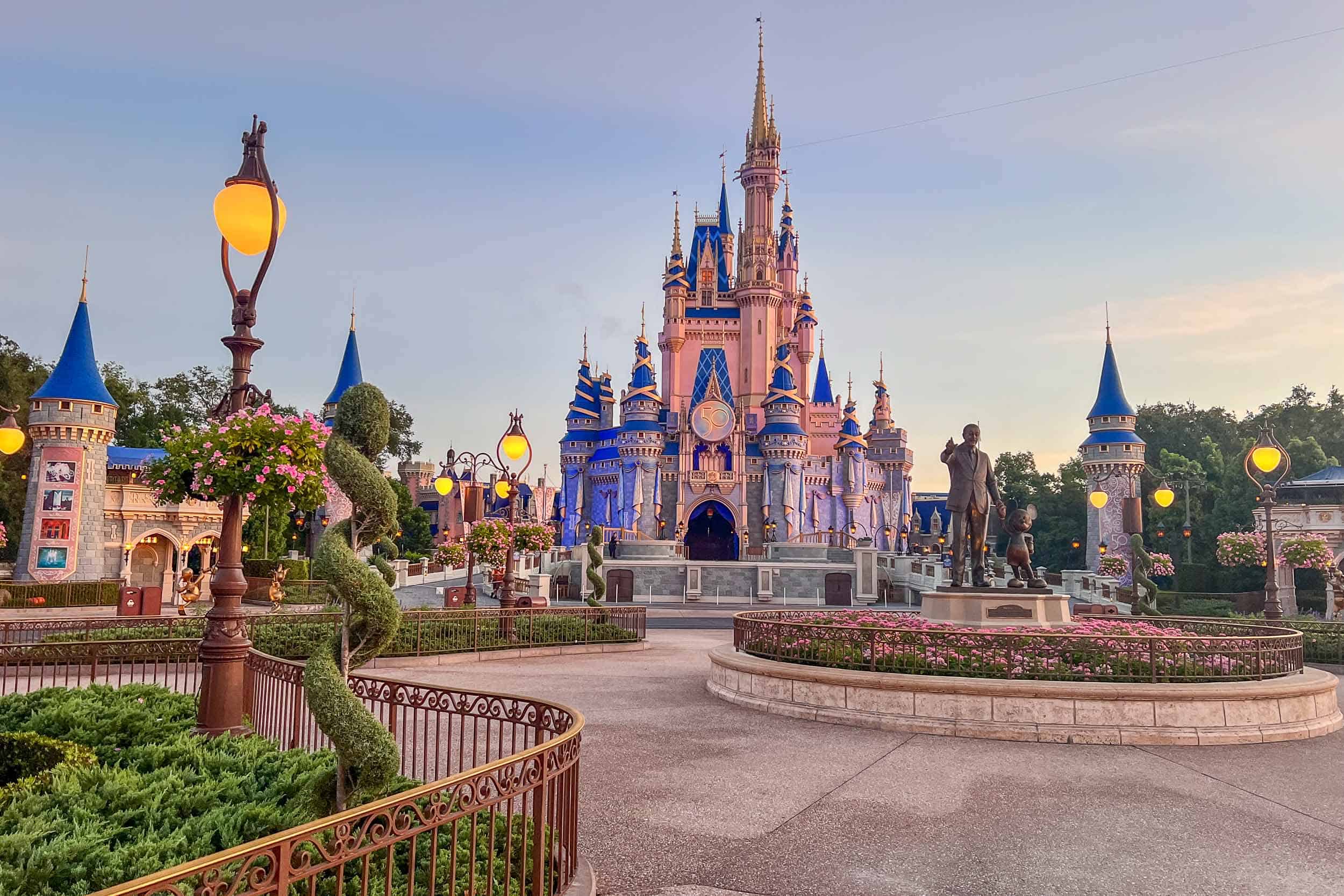
Upon passing through the turnstiles, the layout of Magic Kingdom is revealed in a “hub-and-spoke” design. At the center stands Cinderella Castle, the most photographed building in Florida. This architectural marvel serves as the north star for guests, visible from almost every corner of the park. Radiating outward from the central hub are the various themed lands, each representing a different aspect of history, fantasy, or the future.
A Journey Through the Themed Lands
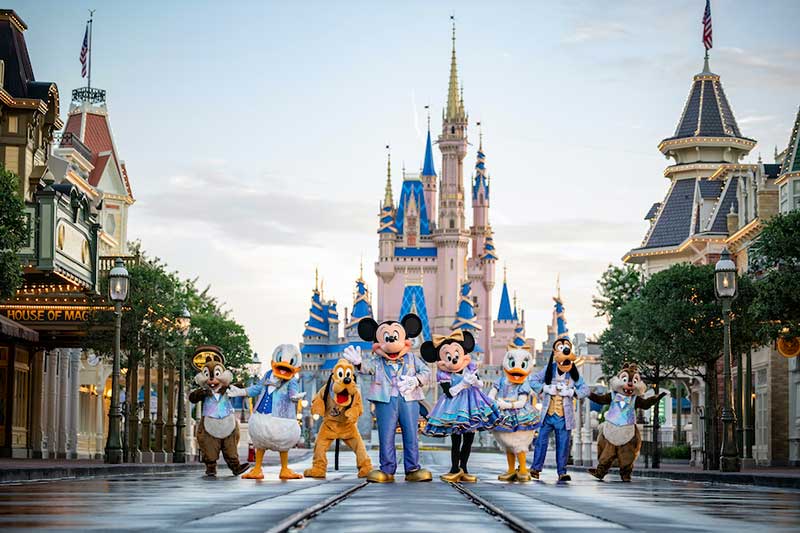
The location of Magic Kingdom is subdivided into six distinct regions, each functioning as a destination within a destination. These areas are meticulously designed to transport guests to different times and places without ever leaving Bay Lake.
Main Street, U.S.A. and Liberty Square
The entrance leads directly onto Main Street, U.S.A., a stylized version of an early 20th-century American town. This area serves as the park’s main corridor for shopping and dining. To the west lies Liberty Square, a land unique to Magic Kingdom that celebrates colonial America. It is home to the Haunted Mansion and a life-sized replica of the Liberty Bell.
Adventureland and Frontierland
Continuing counter-clockwise, visitors encounter Adventureland, which captures the spirit of tropical exploration. Here, attractions like the Jungle Cruise and Pirates of the Caribbean take center stage. Adjacent to this is Frontierland, a sprawling area dedicated to the American Old West. It features high-thrill attractions such as Big Thunder Mountain Railroad and the newly reimagined Tiana’s Bayou Adventure.
Fantasyland and Tomorrowland
The largest and perhaps most popular land is Fantasyland, located directly behind Cinderella Castle. This area is the quintessential Disney experience, featuring the Seven Dwarfs Mine Train, Peter Pan’s Flight, and It’s a Small World. Finally, Tomorrowland occupies the eastern portion of the park, offering a retro-futuristic look at technology with Space Mountain and the high-speed TRON Lightcycle Run.
Planning Your Arrival: Travel Tips and Logistics
Because Magic Kingdom is such a significant destination within Florida, the logistics of reaching the park are well-developed but require foresight. The park is easily accessible from major highways including Interstate 4 and Florida’s Turnpike.
Best Times to Visit Central Florida
The location of the park in Central Florida means it is subject to a humid subtropical climate. Travelers should be aware that the summer months—from June through September—bring high temperatures and frequent afternoon thunderstorms. For the most comfortable experience, many visitors choose to arrive during the late fall or early spring when the weather is milder. Planning around major holidays like Christmas or Spring Break is also crucial, as these periods see the highest foot traffic.
Staying Nearby: Disney Resorts and Beyond
To maximize time at Magic Kingdom, many choose to stay at one of the resorts located within the Walt Disney World Resort property. The most convenient options are the “Monorail Resorts,” which include Disney’s Contemporary Resort, Disney’s Grand Floridian Resort & Spa, and Disney’s Polynesian Village Resort. These hotels offer direct access to the park via the Walt Disney World Monorail System.
Other nearby options that provide unique transportation experiences include Disney’s Wilderness Lodge and Disney’s Fort Wilderness Resort & Campground, both of which offer water taxi service across Bay Lake directly to the park gates. For those traveling from further away, Orlando International Airport is the primary flight hub, located approximately 30 minutes to the east.
The Significance of the Florida Location
The decision to place Magic Kingdom in Florida was a strategic choice made by Walt Disney in the 1960s. After the success of Disneyland in California, he sought a location with enough land to prevent “encroachment” from outside businesses. This led to the secret purchase of vast tracts of land in Orange County and Osceola County.
Today, Magic Kingdom stands as more than just a theme park; it is a central pillar of the Florida economy and a global icon of the travel industry. Whether you are navigating the Seven Seas Lagoon for the first time or returning to see the fireworks over Cinderella Castle, its location in the heart of the Sunshine State remains a beacon for millions of travelers every year. By understanding the geography and the intentional design of Bay Lake, visitors can better appreciate the massive scale and historical importance of this extraordinary destination.
LifeOutOfTheBox is a participant in the Amazon Services LLC Associates Program, an affiliate advertising program designed to provide a means for sites to earn advertising fees by advertising and linking to Amazon.com. Amazon, the Amazon logo, AmazonSupply, and the AmazonSupply logo are trademarks of Amazon.com, Inc. or its affiliates. As an Amazon Associate we earn affiliate commissions from qualifying purchases.