
The Pacific Ocean is a realm of staggering proportions, a blue expanse that covers more than a third of the Earth’s surface. Within this vast wilderness of water lie two of the most significant outposts of the United States: the island of Guam and the archipelago of Hawaii. While both destinations are synonymous with tropical beauty, white-sand beaches, and vibrant indigenous cultures, they are separated by a distance that often surprises even the most seasoned travelers. Understanding the spatial relationship between Guam and Hawaii is essential for anyone planning a trans-Pacific odyssey, as the journey involves crossing thousands of miles, multiple time zones, and the invisible boundary of the International Date Line.

Measuring the Great Blue Distance
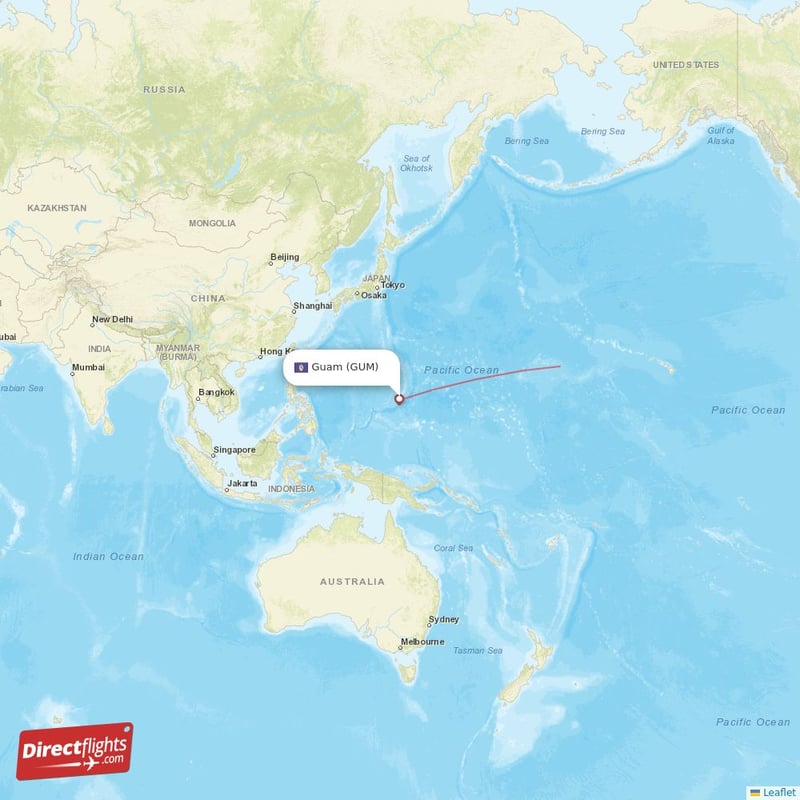
When asking “How far is Guam from Hawaii?”, the answer can be quantified in several ways: geographic miles, flight hours, and cultural displacement. Geographically, the distance between Honolulu on the island of Oahu and Hagatna, the capital of Guam, is approximately 3,800 to 3,950 miles (roughly 6,115 to 6,350 kilometers). To put this in perspective, this distance is greater than the span between New York City and London.
The Geographical Positioning
Guam is the southernmost and largest of the Mariana Islands, situated in a subregion of Oceania known as Micronesia. It is located significantly further west than Hawaii, sitting much closer to Asia than to the North American mainland. In fact, Guam is roughly 1,500 miles from Tokyo and Manila, making it a strategic gateway between the Western Hemisphere and the Far East.
Hawaii, conversely, sits in the heart of Polynesia. It is the most isolated island chain in the world, located about 2,400 miles from California. When you travel from Hawaii to Guam, you are essentially traversing the “empty” middle of the Pacific Ocean, a region dotted only by tiny atolls and volcanic peaks.
Crossing the International Date Line
One of the most mind-bending aspects of traveling between these two destinations is the time difference. Guam is 20 hours ahead of Hawaii because it sits on the opposite side of the International Date Line. When you fly from Honolulu to Guam, you are effectively “traveling to the future.” If you depart Hawaii on a Monday morning, you will arrive in Guam on Tuesday afternoon, despite the flight only lasting about seven to eight hours. On the return trip, you can experience the rare phenomenon of landing in Hawaii at an earlier time and date than when you took off from Guam.
Navigating the Aerial Journey
Because of the vast distance and the lack of intermediate landmasses capable of hosting large-scale infrastructure, air travel is the only practical way to move between Guam and Hawaii. The route is a vital corridor for the United States Armed Forces, as well as for residents and tourists.
Direct Flights and Airlines
The primary carrier for this route is United Airlines, which maintains a hub at Antonio B. Won Pat International Airport in Guam. United Airlines operates daily non-stop flights between Daniel K. Inouye International Airport in Honolulu and Guam. These flights typically utilize long-haul aircraft like the Boeing 777, providing the necessary range and comfort for the seven-to-eight-hour duration.
For travelers, the flight is a unique experience. Looking out the window for hours, one sees nothing but the deep cobalt of the Philippine Sea and the North Pacific Ocean. The sense of isolation is profound, emphasizing just how remote these islands truly are.
The Legendary Island Hopper
For those who view travel as an adventure rather than just a means to an end, there is the famous “Island Hopper” service. This flight route, also operated by United Airlines, connects Honolulu and Guam but includes several stops along the way. The journey can take upwards of 14 hours and typically stops at Majuro and Kwajalein in the Marshall Islands, as well as Kosrae, Pohnpei, and Chuuk in the Federated States of Micronesia.
Taking the Island Hopper is a “bucket list” item for aviation enthusiasts and world travelers. It provides a rare glimpse into some of the most remote communities on the planet. Each descent offers stunning views of coral atolls that look like emerald rings dropped into the ocean. While the direct flight is far more efficient, the Island Hopper reveals the true geographical tapestry that connects Hawaii to Guam.
Comparing the Two Pacific Gems
While the distance is great, the connection between Guam and Hawaii is strengthened by their shared status as American hubs in the Pacific. However, for the traveler, they offer distinct environments and experiences.
Landscapes and Nature
Hawaii is famous for its dramatic volcanic peaks, such as Mauna Kea and the lush cliffs of the Napali Coast on Kauai. Its islands are geologically diverse, ranging from the active lava flows on the Big Island to the world-class surf breaks of the North Shore.
Guam, while also volcanic in origin, is characterized by a mix of limestone plateaus and volcanic hills. The highest point, Mount Lamlam, is technically the tallest mountain in the world if measured from the bottom of the nearby Mariana Trench. The island is surrounded by a fringing reef, creating calm, turquoise lagoons like those found in Tumon Bay, which serves as the island’s primary tourism hub. While Hawaii has more varied climate zones, Guam offers a consistently tropical, humid environment that feels even more “equatorial” than Honolulu.
Cultural Identity: Chamorro vs. Hawaiian
The cultural distance is as fascinating as the physical mileage. Hawaii is the heart of Hawaiian culture, defined by the Hula, the Aloha spirit, and a complex history of a former kingdom. Visiting the Polynesian Cultural Center or Iolani Palace provides deep insight into this heritage.
Guam is the home of the Chamorro people, who have inhabited the island for nearly 4,000 years. Their culture is a resilient blend of indigenous seafaring traditions and heavy Spanish influence from three centuries of colonial rule. This is reflected in the language, the architecture of Hagatna, and the delicious Chamorro cuisine, which features staples like red rice and kelaguen. Travelers to Guam often find the atmosphere a bit more laid-back and less “commercialized” than the high-density tourist areas of Waikiki.
Practical Considerations for the Journey
Traveling nearly 4,000 miles across the ocean requires some logistical planning. Whether you are moving between these islands for a vacation or as part of a longer trek through Asia, certain factors should be kept in mind.
Entry Requirements and Customs
Since Guam is an unincorporated territory of the United States and Hawaii is a state, travel between the two is considered domestic for U.S. citizens. No passport is technically required for U.S. citizens flying direct, although having one is highly recommended for identification and in case of an emergency diversion to a foreign country like Japan or the Philippines.
However, travelers should be aware that Guam maintains its own customs and quarantine regulations to protect its unique ecosystem. Agricultural inspections are strict, much like they are when arriving in Hawaii.
Budgeting for the Trip
Due to the limited competition on the route, flights between Honolulu and Guam can be relatively expensive compared to transcontinental flights within the Mainland United States. It is not uncommon for a round-trip ticket to cost between $800 and $1,500. Smart travelers look for deals during the shoulder seasons—typically late spring and early autumn—to avoid the peak travel times associated with Japanese holidays and U.S. summer vacations.
Strategic Stopovers
Many travelers use the distance between Guam and Hawaii to their advantage by planning multi-leg trips. From Guam, it is a short flight to Saipan, Palau, or the Federated States of Micronesia. Conversely, Hawaii serves as the perfect jumping-off point for American Samoa, Tahiti, or Fiji. By understanding the vastness of the Pacific, you can begin to see these islands not as isolated dots, but as part of a grand maritime network.
The Significance of the Distance
The nearly 4,000 miles between Guam and Hawaii represent more than just a number; they represent the sheer scale of the Pacific Ocean. For the traveler, this distance is a reminder of the incredible history of Pacific navigators who crossed these waters in outrigger canoes long before the era of jet engines.
Today, landmarks like Two Lovers Point in Guam and Diamond Head in Oahu stand as sentinels on either side of this vast blue bridge. Whether you are visiting the War in the Pacific National Historical Park to learn about World War II history or snorkeling in the pristine waters of Hanauma Bay, the journey between these two American outposts is one of the great adventures of the modern world. The distance may be vast, but the shared spirit of the Pacific makes the 3,800-mile trip feel like a journey between neighbors in a very large, very blue neighborhood.
LifeOutOfTheBox is a participant in the Amazon Services LLC Associates Program, an affiliate advertising program designed to provide a means for sites to earn advertising fees by advertising and linking to Amazon.com. Amazon, the Amazon logo, AmazonSupply, and the AmazonSupply logo are trademarks of Amazon.com, Inc. or its affiliates. As an Amazon Associate we earn affiliate commissions from qualifying purchases.