
For many travelers planning a getaway to the United States, the archipelago of Hawaii represents the ultimate tropical paradise. Beyond the crystal-clear waters of Waikiki and the lush cliffs of the Na Pali Coast State Wilderness Park, one of the most frequently asked questions by prospective visitors concerns the local wildlife—specifically, the presence of snakes. In a world where tropical destinations often come with the caveat of avoiding venomous reptiles, the situation in the Pacific Ocean is uniquely different.
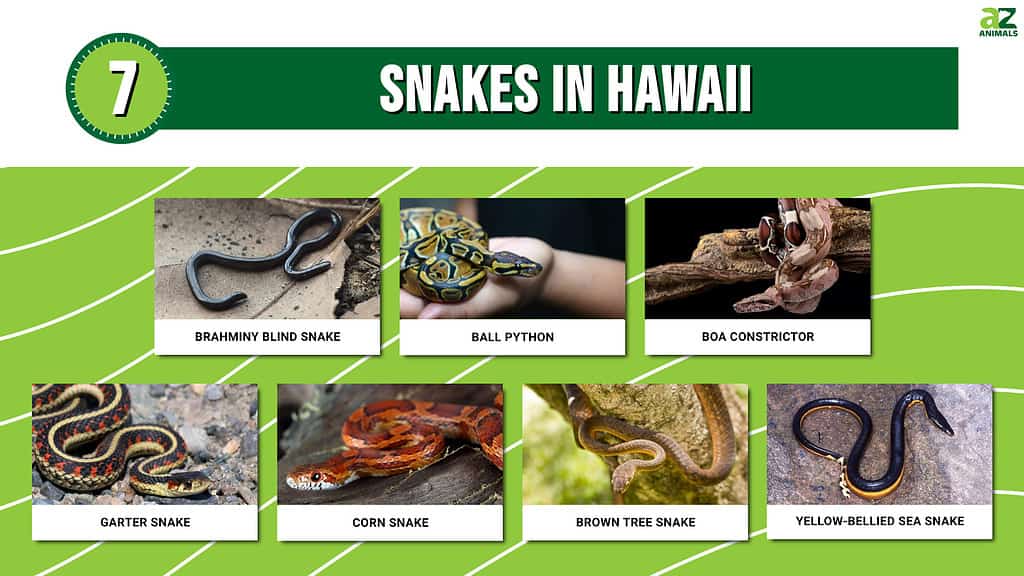
To answer the question simply: No, Hawaii does not have a native population of land snakes, and it is technically illegal to possess them in the state. However, for the inquisitive tourist, the answer carries more nuance involving marine biology, invasive species management, and the incredible efforts of the Hawaii Department of Agriculture. Understanding the reality of the island ecosystem is essential for anyone looking to explore the trails of Oahu or the volcanic landscapes of the Big Island.
The Unique Ecosystem of Hawaii: Why Snakes are Rare
The primary reason Hawaii remains largely snake-free is its extreme geographic isolation. Located thousands of miles from the nearest continent, the islands were formed by volcanic activity rising from the sea floor. Because these islands never had a land bridge to North America or Asia, the only species that could reach the islands were those that could fly, swim, or be carried by the wind or waves. This natural barrier prevented terrestrial snakes from ever establishing a native presence in Polynesia.
Geographic Isolation and Evolutionary History
The native fauna of Hawaii evolved in an environment devoid of mammalian and reptilian predators. This led to a flourish of bird species and unique insects that would be highly vulnerable to the introduction of snakes. When tourists visit landmarks like Diamond Head State Monument or hike through the dense rainforests of Kauai, they are walking through an ecosystem that is essentially a sanctuary. The absence of snakes is a defining feature of the Hawaiian outdoors, allowing for a more relaxed experience for those who might suffer from ophidiophobia (the fear of snakes).
Strict Agricultural and Environmental Laws
The state government takes the “snake-free” status very seriously. Bringing a snake into the islands is a class C felony, punishable by heavy fines and even prison time. At the Daniel K Inouye International Airport in Honolulu, and other points of entry like the Kahului Airport in Maui, there are specialized inspection teams and even detector dogs trained to sniff out prohibited reptiles. These measures are in place because the introduction of a single species, such as the Brown Tree Snake, could cause an ecological catastrophe similar to what occurred in Guam.
The Only Resident Snake: The Yellow-Bellied Sea Snake
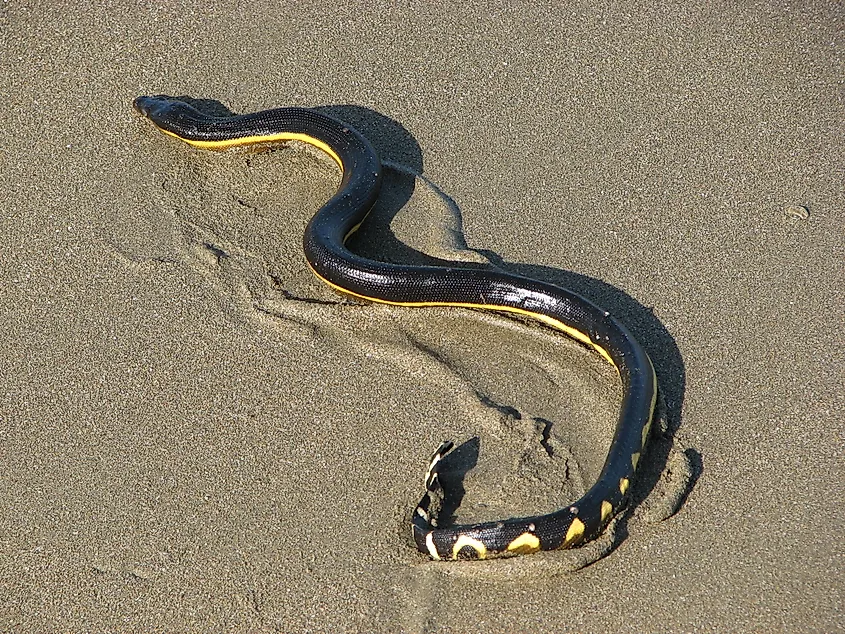
While you won’t find a cobra on a hiking trail in Molokai or a rattlesnake in Lanai, there is one species that occasionally visits Hawaiian waters: the Yellow-bellied Sea Snake. It is important for tourists engaging in water activities like snorkeling at Hanauma Bay or diving off the coast of Kona to be aware of this marine reptile, even though sightings are incredibly rare.
Identifying the Yellow-Bellied Sea Snake
The Yellow-bellied Sea Snake is distinct and easily recognizable. It features a bright yellow underside and a dark brown or black back, with a paddle-like tail designed for swimming. Unlike land snakes, this species is entirely pelagic, meaning it spends its entire life in the open ocean. They are venomous, but they are not aggressive. Most sightings occur when a snake is sick or injured and washes up on a beach, rather than during active swimming encounters.
Where and When They Are Spotted
Sightings in Hawaii are so infrequent that each one is typically documented by local news. They are more common in warmer tropical waters elsewhere in the Pacific Ocean, but ocean currents occasionally bring them toward the Hawaiian chain. If you are enjoying the sands of Poipu Beach or the shores of Waikiki Beach and happen to see one, the best course of action is to maintain a safe distance and contact the local authorities immediately.
Invasive Species and the Brahminy Blind Snake
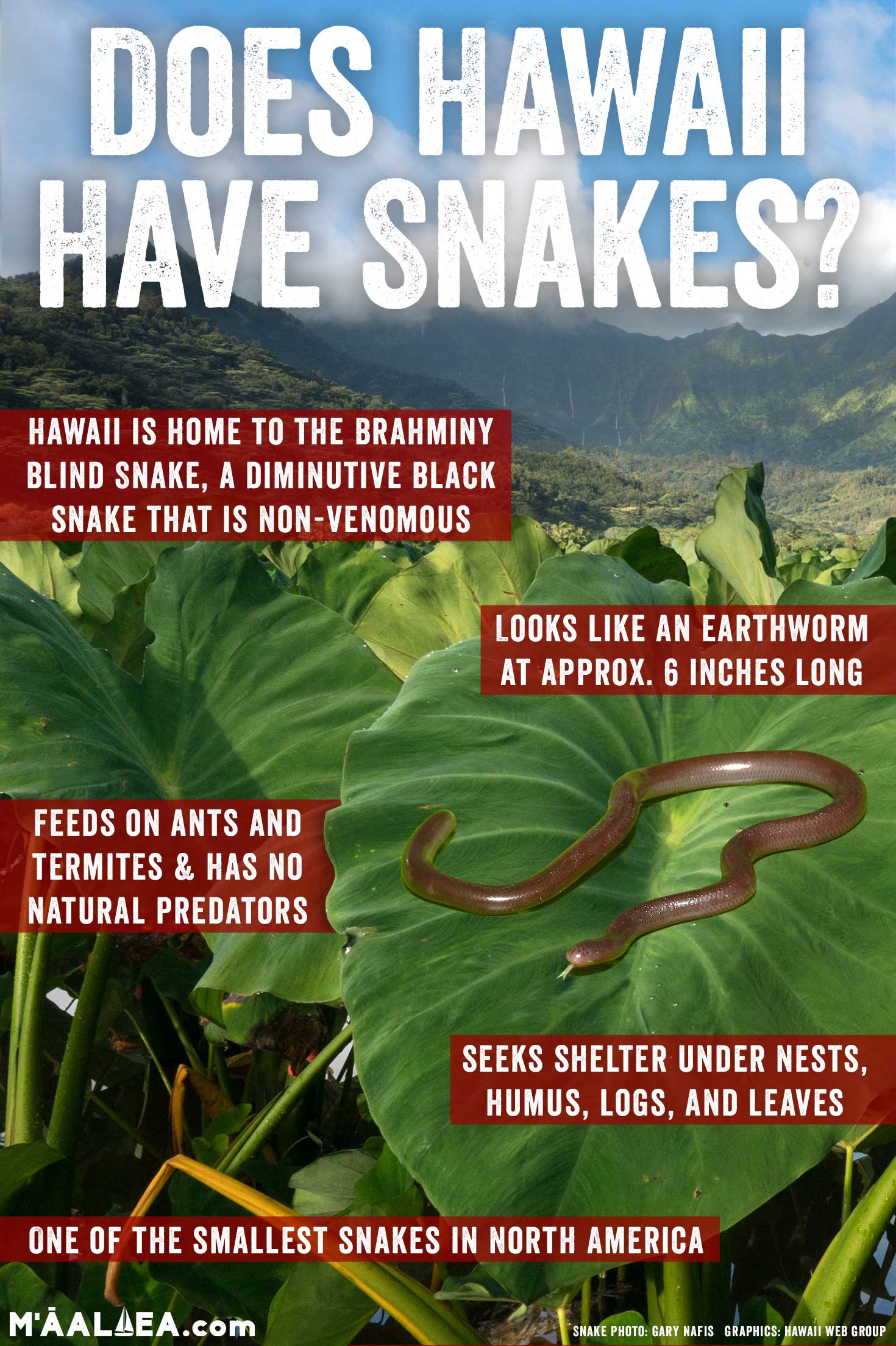
While “true” snakes are absent, there is one tiny exception that many locals and tourists mistake for a worm. The Brahminy Blind Snake is technically a snake, but it is harmless and poses no threat to humans. It is an invasive species that was likely introduced to the islands in the soil of imported plants.
The “Flowerpot Snake” and Its Characteristics
Often called the “flowerpot snake,” this creature is rarely more than six inches long. It is thin, shiny, and dark purple or gray. Because it is fossorial (living underground), most tourists will only encounter it if they are gardening or moving rocks near their resort in Kaanapali. It has no venom, and its mouth is too small to bite a human. Its presence is mostly ignored by the Hawaii Department of Agriculture because it does not pose the same predatory threat to native birds as larger snakes would.
Why the Brown Tree Snake is the Biggest Threat
The reason for the intense security at Honolulu and other entry points is the Brown Tree Snake. Having decimated the native bird populations in Guam, this snake is the “boogeyman” of Hawaiian ecology. If it were to establish a population on Oahu, experts believe it would cause the extinction of several endangered bird species and frequent power outages by climbing electrical lines. This is why the state invests heavily in prevention, ensuring that the “no snakes” rule remains a reality for generations of tourists to come.
Safety Tips for Hikers and Swimmers
One of the joys of visiting Hawaii is the ability to wander through the wilderness without the constant vigilance required in places like Australia or the Amazon Rainforest. However, being “snake-free” doesn’t mean there aren’t other natural elements to respect.
Navigating the Trails of Oahu and Kauai
When hiking at Haleakala National Park or exploring the Waimea Canyon State Park, the lack of snakes often gives hikers a false sense of security regarding other pests. While there are no poisonous snakes, Hawaii does have centipedes and scorpions. These are not lethal but can deliver a painful sting. Tourists are encouraged to stay on marked trails and wear closed-toe shoes. The absence of snakes makes the undergrowth safer, but the terrain itself—sharp volcanic rock and slippery mud—remains the primary concern for safety.
Marine Safety in Maui and the Big Island
In the water, the focus shifts from snakes to other marine life. While the Yellow-bellied Sea Snake is a statistical anomaly, travelers should be mindful of sea urchins, jellyfish (specifically the Portuguese Man o’ War), and eels. When snorkeling near Molokini Crater, always follow the instructions of your tour guide. They are trained to spot hazards and ensure that your interaction with the marine environment is both safe and respectful of the delicate coral reefs.
Preserving the Paradise: How Visitors Can Help
The snake-free status of Hawaii is a fragile one that requires the cooperation of every visitor. Tourism is the heartbeat of the islands, but it also brings the risk of accidental introductions of non-native species.
Reporting Sightings and Compliance
If you are staying at a villa in Princeville or a resort in Wailea and you see a creature that looks like a snake (and isn’t the tiny Brahminy Blind Snake), you should report it to the pest hotline (643-PEST). This rapid response system has prevented several escaped or illegally imported snakes from establishing a foothold. As a tourist, ensuring that your luggage and gear are clean before flying between islands also helps prevent the spread of other invasive species like the Coqui frog or Rapid Ohia Death fungus.
Education and Awareness
Part of the Hawaiian experience is learning about the “Aina” (the land). Visiting cultural centers or taking guided tours through Volcanoes National Park provides context on why these islands are so ecologically sensitive. By understanding that Hawaii is a unique sanctuary, tourists can better appreciate the freedom of walking through a forest without the fear of a hidden predator.
In conclusion, while the idea of a tropical jungle without snakes might seem like a myth, it is one of the many wonders that Hawaii offers. From the heights of Mauna Kea to the depths of the Pacific Ocean, the islands provide a safe haven for both wildlife and travelers. By respecting the strict biosecurity laws and remaining aware of the rare marine visitors, you can enjoy everything from the Road to Hana to the sunsets of North Shore with total peace of mind. Hawaii remains one of the few places on Earth where the greatest danger on a hike is simply forgetting your camera or running out of water, making it a premier destination for those seeking the beauty of nature without the bite.
LifeOutOfTheBox is a participant in the Amazon Services LLC Associates Program, an affiliate advertising program designed to provide a means for sites to earn advertising fees by advertising and linking to Amazon.com. Amazon, the Amazon logo, AmazonSupply, and the AmazonSupply logo are trademarks of Amazon.com, Inc. or its affiliates. As an Amazon Associate we earn affiliate commissions from qualifying purchases.