
For many travelers planning a getaway to the United States‘ most iconic tropical paradise, the question of weather is paramount. When you picture Hawaii, you likely imagine sun-drenched beaches, turquoise waters, and endless blue skies. However, the archipelago’s breathtaking emerald landscapes are a direct result of significant rainfall. To understand whether it rains “a lot” in the islands, one must look beyond a simple yes or no. The reality is a complex tapestry of microclimates, seasonal shifts, and geographical anomalies that make Hawaii one of the most climatically diverse places on Earth.
Understanding Hawaii’s Microclimates and Weather Patterns
To answer whether it rains frequently, you first have to understand the unique geography of the islands. Hawaii is located in the central Pacific Ocean, and its weather is dictated by its volcanic topography and the surrounding sea.
The Role of the Northeast Tradewinds
The most consistent feature of Hawaii weather is the northeast tradewinds. These winds blow across the Pacific Ocean, picking up moisture along the way. When this moist air hits the high volcanic mountains of islands like Kauai or Maui, it is forced upward. As the air rises, it cools and condenses, resulting in clouds and frequent rainfall on the mountain slopes and the northeastern sides of the islands. These tradewinds are responsible for the cooling breezes that make the tropical heat manageable, but they are also the primary engine for the islands’ precipitation.
Windward vs. Leeward: The Great Rainfall Divide
The most critical concept for any traveler to understand is the difference between “windward” and “leeward” sides.
The Windward Side refers to the north and east portions of each island. These areas face the prevailing winds and receive the lion’s share of the rain. Because of this, windward regions are incredibly lush, filled with tropical rainforests, cascading waterfalls, and vibrant flora. If you stay in a windward town, you will likely experience rain almost every day, though it often comes in short, refreshing bursts.
The Leeward Side refers to the south and west portions of the islands. As the clouds move over the mountain peaks, they lose most of their moisture. By the time the air reaches the leeward side, it is dry and warm. Consequently, these areas are much sunnier and more arid, often resembling a desert or a dry savannah. Most major tourist hubs, such as Waikiki on Oahu or Kona on the Big Island, are located on the leeward side to ensure visitors enjoy maximum sunshine.
Seasonal Rain Trends: When to Plan Your Visit
While Hawaii is a year-round destination with relatively consistent temperatures, there are two distinct seasons that influence how much rain you might encounter.
The Dry Season (Summer)
The dry season typically runs from May through October. During these months, the tradewinds are steady, and the weather is generally hot and sunny across most of the islands. While rain still falls in the mountains and on the windward coasts, it is less frequent and usually occurs at night or in the early morning. This is the peak time for beach activities and hiking, as the trails are drier and the ocean is calmer.
The Rainy Season (Winter)
The rainy season occurs from November through March. During this period, the tradewinds can sometimes be interrupted by “Kona storms.” These are low-pressure systems that approach the islands from the west or south (the “Kona” direction). Unlike the localized tradewind showers, Kona storms can bring widespread, heavy rain that affects both windward and leeward sides. These storms can last for several days and may include high winds and even snow on the highest peaks like Mauna Kea. However, even in winter, it is rare for it to rain everywhere at once; if it is pouring in Hanarei, it might be perfectly clear in Poipu.
Island-by-Island Rainfall Guide
Each island has its own unique personality and rainfall profile. Depending on where you choose to stay, your experience with Hawaiian rain will differ significantly.

Kauai: The Lush Garden Isle
Kauai is the oldest of the main islands and is famous for its staggering natural beauty. It is also the wettest island. Mount Waialeale, located in the center of the island, is one of the rainiest spots on the planet, receiving over 450 inches of rain annually.
This rainfall is what created the dramatic cliffs of the Na Pali Coast and the deep clefts of Waimea Canyon. If you are visiting the North Shore of Kauai, expect frequent passing showers. These rains are usually brief and are almost always followed by spectacular rainbows. To stay dry, many travelers base themselves in the southern resort areas, which remain sunny even when the north is shrouded in clouds.
Oahu: The Gathering Place
Oahu offers a great balance for travelers. The capital city, Honolulu, and the famous Waikiki Beach sit on the dry leeward coast. While you may see clouds hugging the Koolau Range in the distance, the coastal areas stay predominantly dry.
If you venture to the North Shore to watch surfers or visit Pearl Harbor, you may encounter more humidity and occasional rain. Landmarks like Diamond Head provide a great vantage point to see how the rain clouds interact with the island’s geography, often stopping abruptly at the mountain ridgelines.
Maui: The Valley Isle
Maui is characterized by two massive volcanic peaks with a valley in between. The weather here is highly localized. The resort areas of Lahaina, Kaanapali, and Wailea are famously sunny and dry.
In contrast, the Road to Hana on the eastern coast is a journey through a temperate rainforest. This area receives a massive amount of rainfall, which feeds the countless waterfalls and botanical gardens that make the drive famous. Additionally, the summit of Haleakala National Park can experience extreme weather; while it may be 80 degrees on the beach, it can be 40 degrees and raining or sleeting at the 10,000-foot summit.
The Big Island: A Land of Extremes
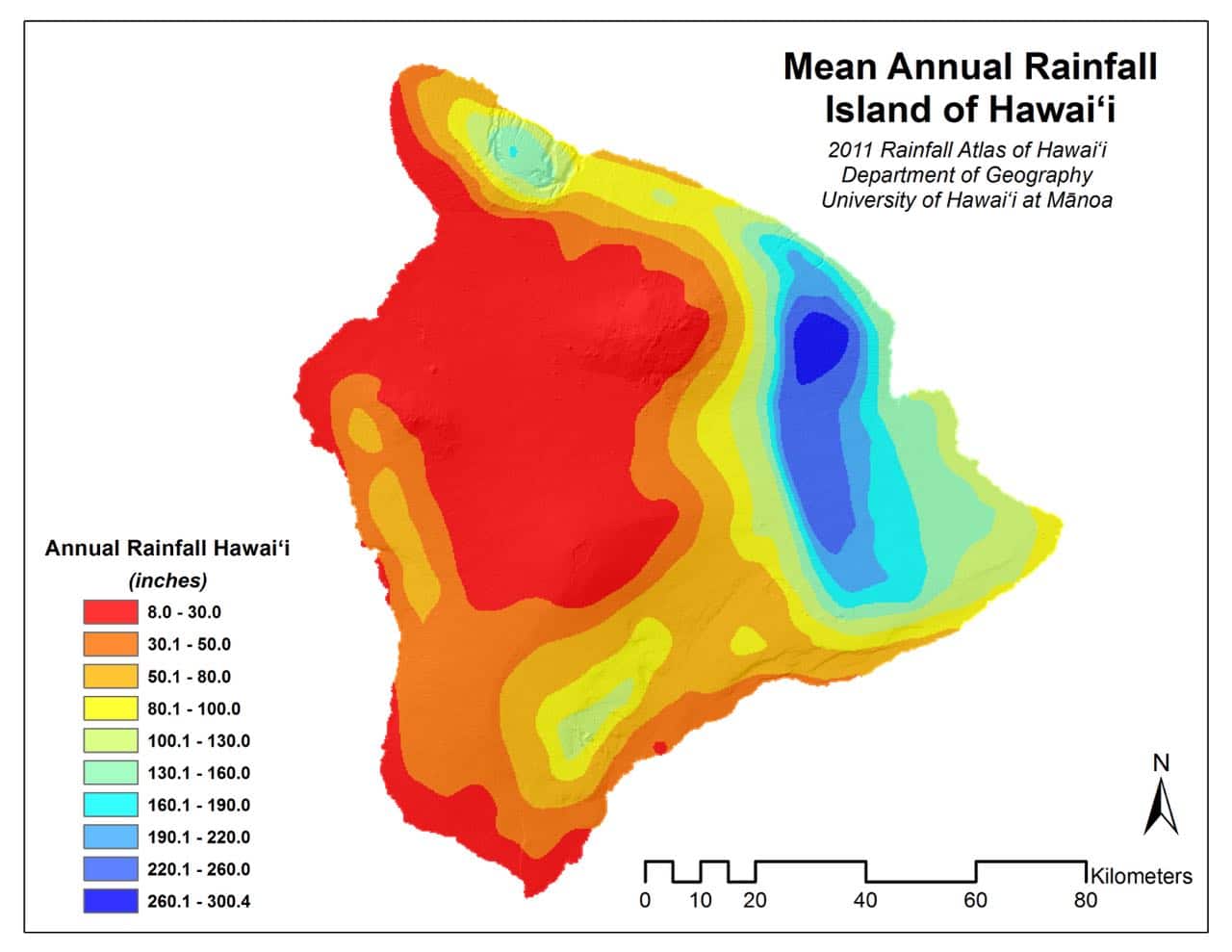
The Big Island (officially named Hawaii) contains 4 out of the 5 major climate zones found on Earth. The contrast between its two main cities is the perfect example of Hawaiian rainfall patterns.
Hilo, located on the windward side, is the rainiest city in the United States. It is lush, tropical, and known for its incredible gardens and waterfalls, such as Akaka Falls. Conversely, Kona on the leeward side is dry, volcanic, and sunny. Most travelers choose to stay in Kona for the beaches but day-trip to Hawaii Volcanoes National Park, where the weather can change from misty rain to bright sun in a matter of minutes. The massive peaks of Mauna Kea and Mauna Loa act as a giant barrier, ensuring that the two sides of the island have completely different weather stories.

How to Make the Most of Your Trip Despite the Rain
Does it rain a lot in Hawaii? In the mountains and on the windward coasts, yes. But for a traveler, this shouldn’t be a deterrent. In fact, the rain is part of the magic.
First, Hawaiian rain is rarely cold. It is often referred to as “liquid sunshine.” Because the air temperature remains warm, getting caught in a brief shower is usually a pleasant way to cool off. Moreover, rain is the reason for Hawaii’s most beautiful features. Without the rain, there would be no Waimea Canyon, no lush valleys in Molokai, and no towering waterfalls on the Na Pali Coast.
To prepare, always carry a light, breathable rain shell if you plan on hiking or exploring the windward sides. Check the local radar frequently; because the islands are small, rain clouds move quickly. If it is raining at your hotel, a 15-minute drive in almost any direction will often bring you back into the sun.
Embrace the “Aloha” spirit by being flexible with your plans. If a morning shower rolls into Honolulu, use that time to visit a museum or enjoy a long breakfast. By the time you finish, the sun will likely be out, and the air will be fresher than before. The rain is what keeps the islands vibrant, and experiencing a tropical downpour followed by a vivid rainbow is a quintessential part of the Hawaii experience.
In summary, while Hawaii does receive significant rainfall, it is rarely “ruined” by it. By choosing your location wisely—such as staying in Kapalua on Maui or Waikiki on Oahu—and understanding the island’s microclimates, you can enjoy a sunny vacation while still appreciating the verdant beauty that the rain provides. Whether you are exploring the dry plains of Lanai or the misty rainforests of Kauai, the weather is simply another layer of the islands’ incredible natural diversity.
LifeOutOfTheBox is a participant in the Amazon Services LLC Associates Program, an affiliate advertising program designed to provide a means for sites to earn advertising fees by advertising and linking to Amazon.com. Amazon, the Amazon logo, AmazonSupply, and the AmazonSupply logo are trademarks of Amazon.com, Inc. or its affiliates. As an Amazon Associate we earn affiliate commissions from qualifying purchases.