
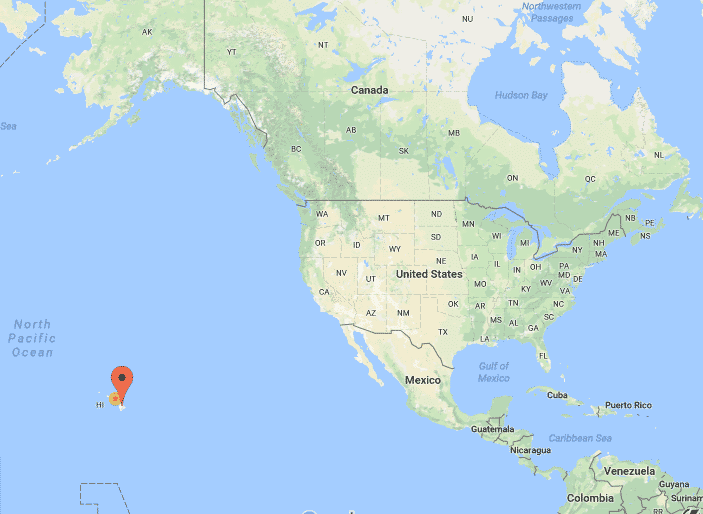
When travelers ask about the distance between Hawaii and the United States, they are usually contemplating the vast expanse of the Pacific Ocean that separates the 50th state from the mainland. While Hawaii is an integral part of the nation, its geographical isolation makes it one of the most remote island chains on Earth. This distance is not merely a logistical hurdle; it is the very factor that has preserved the archipelago’s unique ecological beauty and its distinct cultural identity. Understanding the spatial relationship between the North American continent and this tropical paradise is the first step in planning a transformative tourism experience.
Bridging the Gap: The Geographical Distance from the Mainland
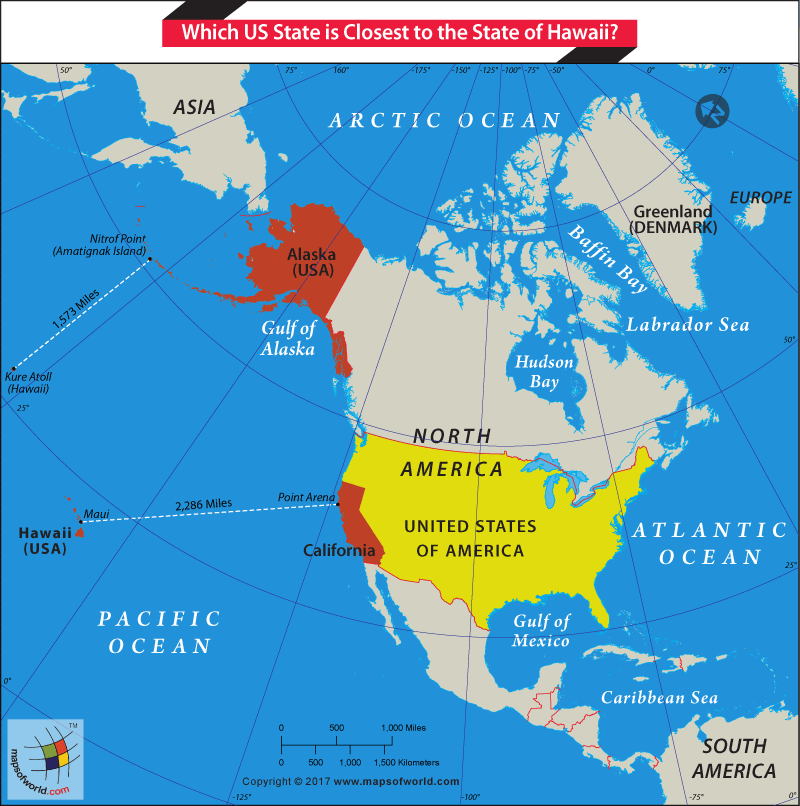
The shortest distance from the mainland United States to Hawaii is approximately 2,390 miles (3,846 kilometers). This measurement is taken from the coastline of California, specifically near San Francisco, to the shores of Honolulu. To put this in perspective, this journey is longer than the distance between New York City and Los Angeles. Because there are no land bridges or ferry services connecting the islands to the continent, tourism relies almost exclusively on air travel.
Flight Times and Major Gateways
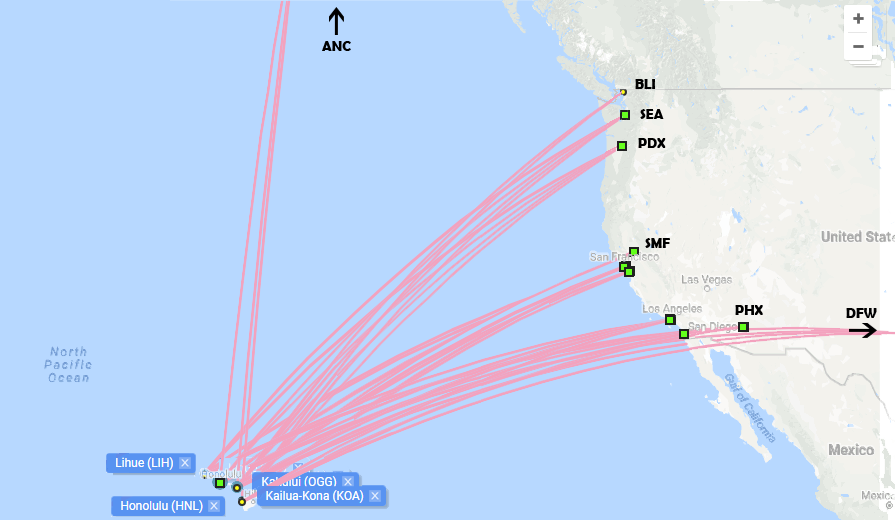
For most visitors, the journey begins at major West Coast hubs. Flights from Los Angeles, San Francisco, Seattle, or Portland typically take between five and six hours. These routes are among the most frequented in the world, serving as the primary arteries for tourism. Travelers departing from the East Coast, such as New York or Boston, face a much more significant trek, often exceeding ten to eleven hours of flight time.
The primary point of entry for international and domestic travelers is the Daniel K Inouye International Airport in Honolulu. However, direct flights are also available to Kahului Airport on Maui, Ellison Onizuka Kona International Airport on the Big Island, and Lihue Airport on Kauai. This accessibility has allowed Hawaii to remain a premier destination despite its mid-ocean location.
Isolation as a Destination Asset
The sheer distance from the mainland contributes to the “away from it all” atmosphere that defines Hawaiian tourism. Unlike coastal destinations in Florida or Mexico, which are easily reachable by car or short-haul flights, Hawaii requires a commitment of time and resources. This physical separation creates a mental shift for the traveler; crossing the Pacific Ocean acts as a literal and figurative threshold, moving the visitor from the fast-paced environment of the Americas into a world governed by “Island Time.”
A Cultural World Apart: Tourism and Local Traditions
While the distance is vast in miles, it is even more significant in terms of cultural evolution. Hawaii was originally settled by voyagers from Polynesia, likely from the Marquesas Islands and later Tahiti. This history has created a cultural foundation that is entirely different from the colonial history of the mainland United States.
The Spirit of Aloha
At the heart of the tourist experience is the Spirit of Aloha. While many visitors recognize the word “Aloha” as a greeting, in Hawaii, it represents a profound philosophy of coordination of mind and heart. It is a way of life that emphasizes kindness, compassion, and responsibility toward one’s community and environment. For the tourist, this manifests in the warm hospitality found in local shops, the respectful storytelling of tour guides, and the community-centered approach of local businesses.
Culinary Tourism: A Melting Pot of Flavors
The distance from the mainland necessitated a self-sufficient food culture, which was later enriched by waves of immigration from Japan, China, the Philippines, and Portugal. Today, culinary tourism is a pillar of the Hawaiian experience.
Visitors are encouraged to venture beyond the resort buffets to sample authentic local fare. This includes Poke, a dish of raw marinated fish that has gained global popularity but remains unmatched in its birthplace. A traditional Luau provides a window into ancient traditions, featuring Kalua Pig cooked in an Imu (underground oven) and staples like Poi, made from the taro plant. For a more casual experience, the Plate Lunch—consisting of two scoops of rice, macaroni salad, and a protein like Chicken Katsu—serves as a testament to the islands’ multicultural history.
The Arts and Hula
Engagement with the arts is another essential aspect of Hawaii tourism. Hula is far more than a dance; it is a complex form of visual poetry used to preserve history and genealogy in the absence of a written language before Western contact. Visitors can experience Hula through various festivals, the most prestigious being the Merrie Monarch Festival held in Hilo. These performances offer an insightful look into the resilience of Hawaiian culture despite centuries of outside influence.
Navigating the Island Chain: Landmarks and Nature
The distance from the mainland has allowed Hawaii to evolve a biological diversity that is unrivaled. For the modern tourist, the archipelago is a living laboratory of volcanic activity and endemic species. Each island offers a distinct set of landmarks that define the Hawaiian experience.
Oahu: The Gathering Place
Oahu is the most visited island, home to the capital city of Honolulu. The most iconic landmark here is Waikiki Beach, a world-famous stretch of sand framed by the majestic Diamond Head crater. Beyond the beaches, Oahu offers deep historical insights at Pearl Harbor. The USS Arizona Memorial remains a somber and essential site for those wishing to understand the role of the United States in World War II. On the island’s North Shore, the tourism focus shifts to the power of nature, where massive winter swells attract the world’s best surfers to Banzai Pipeline and Waimea Bay.
Maui: The Valley Isle
Maui offers a blend of luxury and rugged nature. One of its most famous landmarks is Haleakala National Park, where visitors can drive to the 10,023-foot summit to watch a sunrise above the clouds. The experience is often described as otherworldly, resembling a lunar landscape. Another major draw is the Road to Hana, a winding highway that features 620 curves and 59 bridges, leading tourists through lush rainforests, waterfalls, and black sand beaches. This journey is a prime example of how tourism in Hawaii is often about the journey as much as the destination.
Kauai: The Garden Isle
Kauai is the oldest of the main islands, and its age is reflected in its dramatic, weathered landscapes. The Na Pali Coast is perhaps the most breathtaking landmark in the state, featuring emerald-green pinnacles that drop straight into the Pacific Ocean. Because much of this coastline is inaccessible by car, tourists often explore it via boat tours or helicopter excursions. Inland, Waimea Canyon, known as the “Grand Canyon of the Pacific,” offers miles of hiking trails through red-soil gorges and endemic forests.
The Big Island: Volcanic Wonders
The Big Island of Hawaii is the youngest and largest in the chain, still growing due to active volcanism. At Hawaii Volcanoes National Park, visitors can witness the raw power of creation as Kilauea and Mauna Loa reshape the land. The island is also home to Mauna Kea, a dormant volcano that hosts one of the world’s premier astronomical observatories. The contrast between the snow-capped peaks of Mauna Kea and the sunny beaches of Kailua-Kona is a testament to the island’s incredible climatic diversity.
Practical Tips for Modern Travelers
Navigating the distance between the mainland and Hawaii requires more than just a plane ticket; it requires preparation to ensure a smooth transition into island life.
Understanding the Time Difference
The United States mainland spans four major time zones, but Hawaii operates on Hawaii-Aleutian Standard Time. Crucially, Hawaii does not observe Daylight Saving Time. This means that for part of the year, Hawaii is three hours behind the West Coast and six hours behind the East Coast. When the mainland shifts its clocks, that gap increases to four and seven hours, respectively. Adjusting to this “jet lag” is a common part of the first few days of any Hawaiian vacation.
Packing for Tropical Diversity
While Hawaii is synonymous with sunshine, the islands contain 10 of the world’s 14 climate zones. A tourist might start their day at a humid beach in Lahaina and end it in the chilly, wind-swept heights of Haleakala. Layers are essential. Additionally, the State of Hawaii has strict laws regarding reef-safe sunscreen to protect its delicate marine ecosystems. Visitors are encouraged to purchase locally approved products to ensure they are not contributing to coral bleaching.
Sustainable Tourism and Malama Hawaii
The distance and isolation of the islands make their ecosystems particularly vulnerable. In recent years, the Hawaii Tourism Authority has shifted its focus toward regenerative tourism through the Malama Hawaii initiative. “Malama” means to care for, and this program encourages visitors to give back to the land during their stay.
Many hotels and tour operators now offer opportunities for tourists to participate in reforestation projects, beach cleanups, or taro patch restoration. In exchange, visitors often receive discounts or unique cultural experiences. This approach to tourism ensures that the very things that make Hawaii worth the 2,400-mile journey—its pristine nature and vibrant culture—are preserved for generations to come.
In conclusion, while the distance from the United States mainland to Hawaii is significant, it is this very separation that creates the allure of the islands. By understanding the geography, respecting the culture, and engaging with the unique landmarks of each island, visitors can ensure their journey across the Pacific is not just a vacation, but a profound exploration of one of the world’s most remarkable destinations.
LifeOutOfTheBox is a participant in the Amazon Services LLC Associates Program, an affiliate advertising program designed to provide a means for sites to earn advertising fees by advertising and linking to Amazon.com. Amazon, the Amazon logo, AmazonSupply, and the AmazonSupply logo are trademarks of Amazon.com, Inc. or its affiliates. As an Amazon Associate we earn affiliate commissions from qualifying purchases.