
The vast and diverse landscape of Texas is as much a part of its allure as its rich history and vibrant culture. When planning a visit, understanding the practicalities of navigating this sprawling state is crucial. One question that frequently arises, particularly for those crossing state lines or even vast distances within Texas, concerns its time zones. The answer, perhaps surprisingly to some, is a definitive yes. Texas is not a monolith when it comes to time; it straddles two distinct time zones, a detail that can impact travel itineraries, business meetings, and even the simple act of enjoying a sunset.
Understanding the Temporal Divide
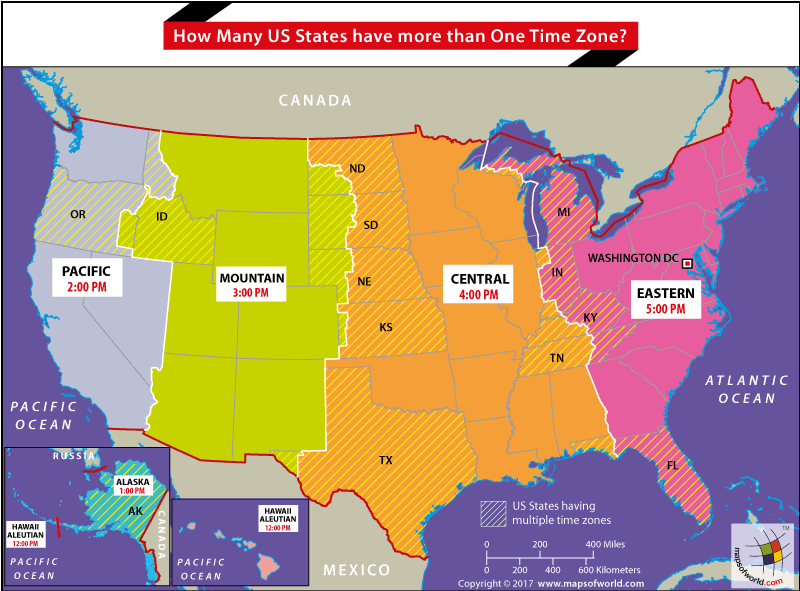
The United States officially operates under six primary time zones, and Texas falls under two of them: the Central Time Zone (CT) and the Mountain Time Zone (MT). The majority of the Lone Star State observes Central Standard Time (CST) during the winter months and Central Daylight Time (CDT) during the summer months, when clocks are advanced by an hour. This zone encompasses the eastern and southern parts of the state, including major metropolitan areas like Dallas, Houston, and San Antonio.
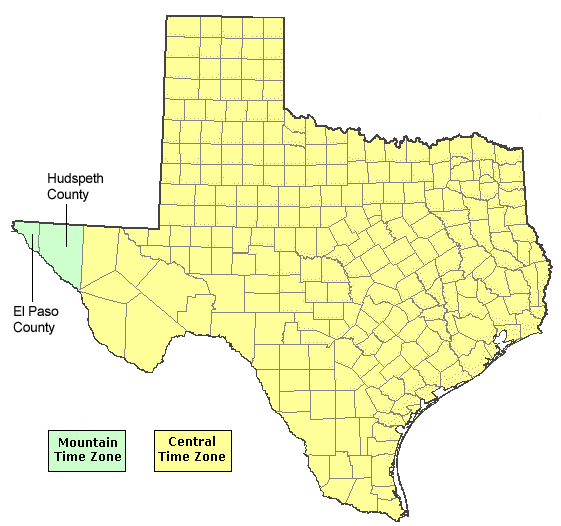
However, a small portion of West Texas, specifically the counties of El Paso and Hudspeth, observe Mountain Time. This means that during Standard Time, El Paso is one hour behind Dallas, and during Daylight Saving Time, the same one-hour difference persists. This temporal anomaly is a direct consequence of historical development, geographical proximity to neighboring states, and federal legislation governing time zones in the United States.
The Rationale Behind the Division
The division of time zones within a single state is not unique to Texas. It often arises from practical considerations of commerce, communication, and the historical development of infrastructure like railways, which were instrumental in establishing standardized time. For Texas, the western counties’ alignment with New Mexico and other Mountain Time states made practical sense for business and daily life. The primary driver for this geographical separation was to maintain synchronization with the time zones of neighboring regions with which these western counties had strong economic and social ties.
Navigating the Time Change
For travelers, the distinction between Central and Mountain Time in Texas primarily affects the westernmost parts of the state, particularly around El Paso. If your itinerary includes travel between, for example, Dallas and El Paso, you will need to adjust your watch by one hour upon arrival. This is a relatively minor adjustment, but it’s one that can cause confusion if not accounted for. Flights, train schedules, and even GPS devices will typically display the local time of your destination, but it’s always prudent to be aware of the prevailing time zone.
Consider a scenario where you have a business meeting scheduled in El Paso at 10:00 AM Mountain Time. If you are traveling from Dallas, that same meeting time would correspond to 11:00 AM Central Time. Overlooking this detail could lead to a missed appointment or a rushed arrival. For tourists exploring attractions in both the eastern and western regions, it simply means being mindful of the clock’s progression. For instance, if you’re enjoying the vibrant nightlife in Austin (Central Time), and then decide on a spur-of-the-moment trip to the scenic Guadalupe Mountains National Park (Mountain Time), you’ll need to factor in that hour’s difference.
Implications for Travelers and Visitors
The existence of two time zones within Texas might seem like a minor detail, but it can have practical implications for various aspects of a visitor’s experience. From planning day trips to coordinating with local businesses, awareness is key.
Eastern Texas and Central Time
The overwhelming majority of Texas’s population and its most famous tourist destinations reside within the Central Time Zone. Cities like Austin, the state capital known for its live music scene and burgeoning tech industry, operate on Central Time. Similarly, the historical significance of San Antonio, with its iconic Alamo and Riverwalk, falls under CT.
When booking accommodations, tours, or making dining reservations in these popular locales, you will invariably be dealing with Central Time. This includes popular resorts like the Omni Barton Creek Resort & Spa in Austin or the historic Hotel Emma in San Antonio. The schedules for attractions such as the Space Center Houston or the museums in the Dallas Arts District will all adhere to CT.
Western Texas and Mountain Time
In contrast, the counties of El Paso and Hudspeth in the far western tip of Texas operate on Mountain Time. This region offers a distinctly different landscape and cultural experience, heavily influenced by its proximity to Mexico and the unique desert environment. Visiting El Paso means experiencing the local culture through the lens of Mountain Time. This includes its historic missions, vibrant art scene, and the stunning views from the Franklin Mountains State Park.
If your travel plans involve venturing into this part of Texas, whether for the natural beauty or the unique blend of Texan and Southwestern culture, remember to adjust your watch accordingly. For instance, if you’re enjoying a leisurely breakfast in El Paso, and then plan to drive to Carlsbad Caverns National Park in New Mexico (which also observes Mountain Time), the time difference is less of an issue between these two destinations. However, if you’re returning to the Central Time Zone, the hour difference becomes relevant again.
Planning Your Texas Itinerary Wisely
The practicalities of time zones are often overlooked in the excitement of planning a trip. However, for Texas, acknowledging this temporal duality can prevent minor inconveniences and ensure a smoother travel experience.
The Impact on Business Travel
For business professionals visiting Texas, understanding the time zones is paramount. Coordinating meetings across different regions of the state requires careful attention to time differences. A conference call scheduled for 1:00 PM Central Time is effectively 12:00 PM Mountain Time. When booking flights or making arrangements that span both regions, confirm the local time at each destination to avoid any scheduling conflicts. Major airports like Dallas/Fort Worth International Airport (DFW) and Houston George Bush Intercontinental Airport (IAH) will operate on Central Time, while El Paso International Airport (ELP) will operate on Mountain Time.
Leisure Travel and Day Trips
For leisure travelers, the impact is generally less critical but still worth noting. If you plan a road trip that involves crossing the temporal divide, be aware of how it affects your timing. For example, if you leave Dallas early in the morning with a destination in El Paso, you’ll gain an hour as you travel west. Conversely, returning east will mean losing that hour. This can be beneficial for maximizing daylight hours during shorter trips or for catching a late flight out of a Central Time zone airport after spending time in the Mountain Time zone.
When considering activities, always check the operating hours of attractions in their local time. A museum in Austin might close at 5:00 PM Central Time, while an attraction in El Paso might close at 5:00 PM Mountain Time, meaning you have an extra hour of daylight in El Paso for that specific closing time.

Historical Context and Future Considerations
The establishment of time zones in the United States was a complex process, evolving significantly since their introduction in the late 19th century. The Standard Time Act of 1918, and subsequent amendments, have shaped the way time is observed across the nation. Texas’s adoption of these zones was influenced by its unique geography and its place within the broader American context.
While the current division has remained stable for many years, the conversation around Daylight Saving Time and time zone adherence occasionally resurfaces at state and federal levels. However, for the foreseeable future, Texas will continue to be a state that thoughtfully straddles two distinct temporal realities. For visitors, this simply adds another layer of interest to the already captivating tapestry of the Lone Star State, a reminder that even in matters of time, Texas marches to its own, albeit dual, rhythm. Whether you’re exploring the historic missions of San Antonio or gazing at the vast desert skies near El Paso, understanding this subtle yet significant aspect of Texas geography will only enhance your journey through this remarkable state.
LifeOutOfTheBox is a participant in the Amazon Services LLC Associates Program, an affiliate advertising program designed to provide a means for sites to earn advertising fees by advertising and linking to Amazon.com. Amazon, the Amazon logo, AmazonSupply, and the AmazonSupply logo are trademarks of Amazon.com, Inc. or its affiliates. As an Amazon Associate we earn affiliate commissions from qualifying purchases.