
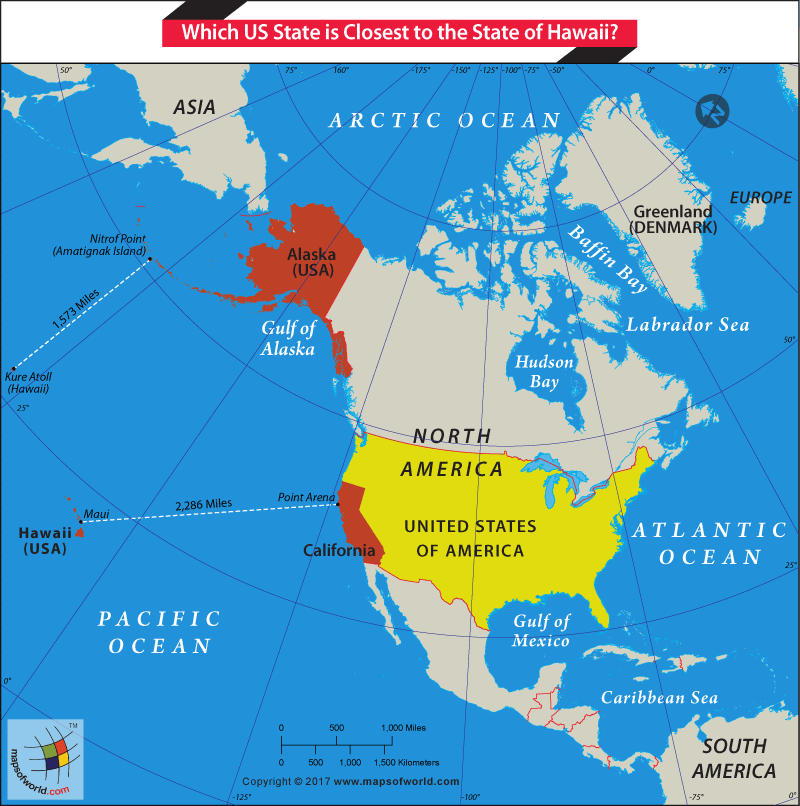
The journey from the United States mainland to the Hawaiian Islands is more than just a flight; it is a transition across the vast expanse of the Pacific Ocean into one of the most isolated and beautiful archipelagos on Earth. For travelers planning their first trip to this tropical paradise, understanding the geographic scale of the journey is essential. Hawaii is located approximately 2,400 miles from the coast of California, making it the most isolated population center on the planet. This distance defines the travel experience, influencing everything from flight durations and airfare to the distinct cultural shift felt the moment you step off the plane at Daniel K Inouye International Airport.
Understanding the Geographic Distance and Flight Times
To grasp how far Hawaii is from the US Mainland, one must look at the specific gateways that connect the two. The distance varies significantly depending on your point of departure within North America. While the closest major city is San Francisco, the trek from the East Coast represents a much more substantial undertaking.
West Coast Departures: The Five-Hour Threshold
For many travelers in California, Oregon, and Washington, the trip to Honolulu is a manageable direct flight. From Los Angeles or San Francisco, the flight time typically ranges between 5 and 6 hours. This route covers roughly 2,400 to 2,500 miles. Further north, departures from Seattle and Portland add a slight increase in flight time, usually clocking in at around 6 hours and 15 minutes.
The proximity of the West Coast has made Hawaii a staple vacation destination for residents of San Diego and San Jose. Because of the high volume of flights, carriers like Alaska Airlines and Southwest Airlines offer frequent service, often at competitive rates. The flight path takes travelers over nothing but open water, providing a unique perspective on the sheer size of the Pacific Ocean.
The Mid-Continent and East Coast Challenge
If you are traveling from Chicago, Dallas, or Denver, the distance increases significantly. A direct flight from O’Hare International Airport to Oahu takes approximately 9 hours, covering over 4,200 miles. From the East Coast, the journey is truly a long-haul experience. A flight from New York City or Boston to Hawaii can take between 10 and 12 hours, spanning nearly 5,000 miles.
Travelers from Atlanta or New York often choose to break up the trip with a layover in California or Nevada. However, airlines like Hawaiian Airlines and United Airlines operate non-stop routes that are highly prized for their convenience, despite the lengthy time spent in the air. This significant distance also means that time zone management becomes a factor, as Hawaii follows Hawaii-Aleutian Standard Time, which does not observe Daylight Saving Time.
Major Gateways and Island Arrivals
While Honolulu is the primary entry point for most international and mainland visitors, the distance to other islands in the chain varies slightly. Depending on your final destination, whether it be the lush cliffs of Kauai or the volcanic landscapes of the Big Island, your flight path and duration will shift.
Oahu: The Central Hub
Most travelers begin their journey at Oahu. As the home of Waikiki and Pearl Harbor, it is the economic and travel center of the state. The Daniel K Inouye International Airport is designed to handle massive influxes of travelers from North America, Japan, and Australia. Because Oahu is centrally located within the main island chain, it serves as the perfect jumping-off point for inter-island travel.
Reaching the Neighbor Islands
Direct flights from the US Mainland are not limited to Honolulu. Many major airlines now fly directly into Kahului Airport on Maui, Lihue Airport on Kauai, and Kona International Airport on the Big Island.
For those heading to the “Valley Isle,” a flight to Maui is roughly the same duration as a flight to Oahu. However, travelers heading to the Big Island should note that the island is the easternmost in the chain, technically making it the closest point to the US Mainland, though the difference in flight time is negligible. Conversely, Kauai is the westernmost of the major islands, adding a few extra minutes to the journey for those arriving from the east.
Planning Your Journey: Airlines and Experiences
The distance between the mainland and Hawaii necessitates a high level of airline service. Because the flight occurs over a vast stretch of ocean with no emergency landing strips, the aircraft used for these routes must meet strict FAA requirements, often referred to as ETOPS (Extended-range Twin-engine Operational Performance Standards).
Choosing the Right Carrier
Several major carriers dominate the skies between the mainland and the islands. Hawaiian Airlines is often favored for its “island vibes” that begin the moment you board, including island-inspired meals and hospitality. United Airlines has a long history of serving Hawaii, particularly from its hubs in San Francisco and Los Angeles.

In recent years, Southwest Airlines has revolutionized travel to the islands by offering low-cost options from several California cities and even Phoenix. American Airlines and Delta Air Lines also provide robust service, especially from Dallas, Atlanta, and Minneapolis. For those in Canada, Air Canada and WestJet provide essential links from Vancouver and Calgary.
The In-Flight Experience
Given the five to twelve-hour duration, the in-flight experience is a significant part of the travel guide for Hawaii. Most wide-body aircraft used for these routes offer various classes of service. For a luxury travel experience, booking a lie-flat seat on a Hawaiian Airlines A330 or a United Airlines 787 Dreamliner can make the long hours pass in total comfort.
Even in economy, the excitement of the destination tends to keep spirits high. As the plane begins its descent, passengers are often treated to views of the Pacific Ocean turning from deep indigo to turquoise as the coral reefs of the islands come into view. Seeing the silhouette of Diamond Head or the red dirt of Molokai from the air is a landmark experience in itself.
Beyond the Miles: Why the Distance is Worth the Travel
The sheer distance of Hawaii from the US Mainland is exactly what has allowed its unique ecosystems and culture to thrive. When you arrive, the sense of being “away” is palpable. This isolation has created a sanctuary for endemic species and a culture that is deeply rooted in the land and sea.
Iconic Destinations Await
Once the journey is complete, the rewards are immediate. On Oahu, the distance feels worlds away as you walk through the historic sites of Pearl Harbor or hike the summit of Lanikai Pillbox. The North Shore offers a different pace, where the massive winter swells of the Pacific Ocean draw the world’s best surfers to Banzai Pipeline.
On Maui, the distance translates into the serenity of Haleakala National Park, where you can stand above the clouds at 10,000 feet. The legendary Road to Hana takes you through rainforests and past waterfalls that feel completely disconnected from the frantic pace of mainland life.
Exploring the Natural Wonders
The Big Island offers the chance to see the Earth being born at Hawaii Volcanoes National Park. Here, the distance from the mainland is reflected in the raw, volcanic landscape that looks more like the moon than North America. On Kauai, the “Garden Isle,” the Na Pali Coast features 4,000-foot tall sea cliffs that are only accessible by boat, helicopter, or a strenuous hike along the Kalalau Trail.
For those seeking even more seclusion, the smaller islands of Lanai and Molokai offer a glimpse into a slower way of life. These islands are just a short hopper flight or ferry ride away from their larger neighbors, yet they feel even further removed from the US Mainland.
Navigating Inter-Island Travel
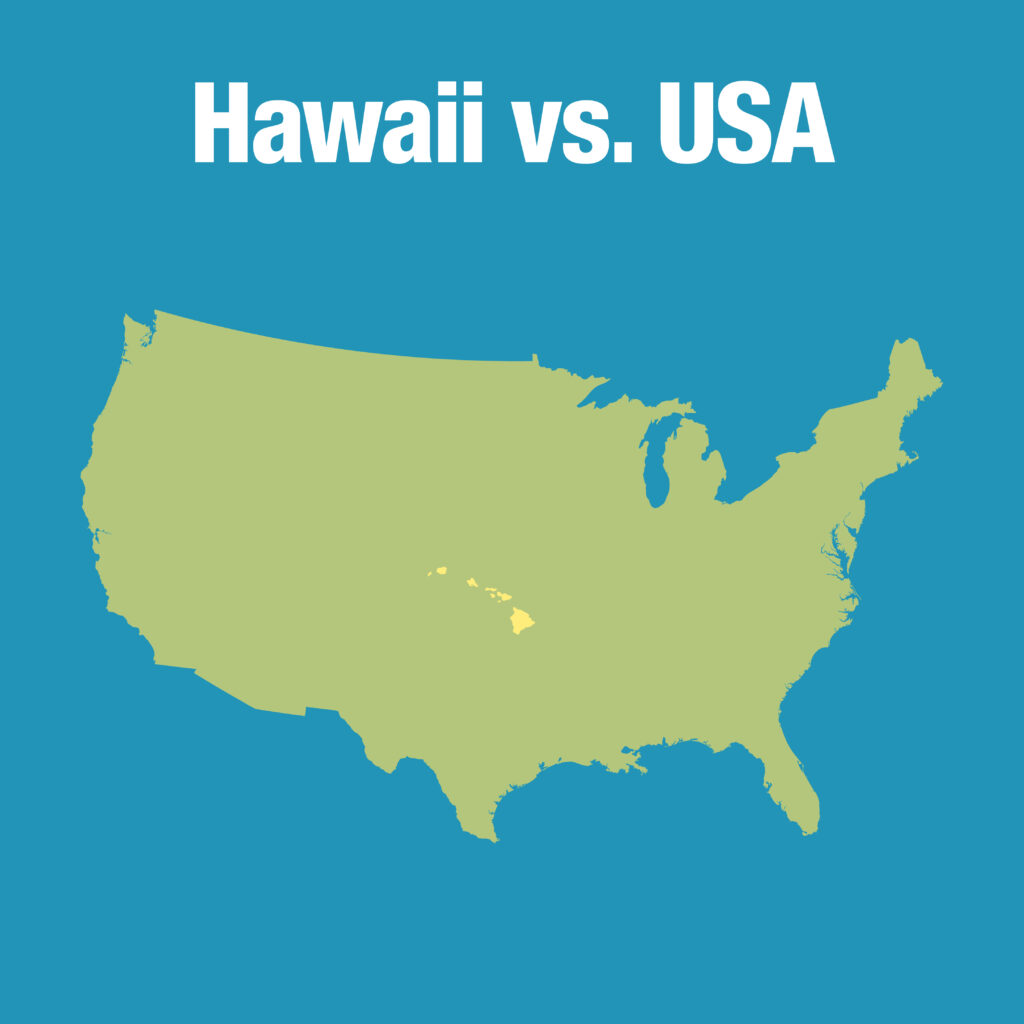
Understanding the distance between the islands is just as important as knowing the distance from the mainland. While the islands may look close together on a map, they are separated by deep-water channels that can be quite turbulent. There are no bridges connecting the Hawaiian Islands, meaning travel between them is strictly by air or, in limited cases, by sea.
The Inter-Island Flight Experience
Flights between Honolulu and Kahului or Lihue are some of the busiest routes in the world. These flights typically last between 20 and 45 minutes and are operated primarily by Hawaiian Airlines and Southwest Airlines. Smaller carriers like Mokulele Airlines provide essential service to smaller airfields like Hana Airport or Kapalua Airport.
Inter-island travel is an integral part of the Hawaii experience, allowing travelers to witness the diverse personalities of each island. You can spend the morning surfing at Waikiki Beach and be at a luau in Kona by sunset. The efficiency of these short flights makes it possible to explore multiple islands even on a shorter vacation.
Practical Tips for the Long Haul
To make the journey from the US Mainland as smooth as possible, travelers should prepare for the unique requirements of Hawaii travel. Because of the state’s fragile ecosystem, there are strict agricultural inspections. When leaving Hawaii to return to the mainland, all luggage must be scanned by the USDA to ensure no prohibited plants or animals are transported.
Additionally, because of the distance and the time change, staying hydrated and adjusting your sleep schedule a few days before departure can help mitigate the effects of jet lag. Whether you are flying from San Francisco or New York, the transition to the Aloha spirit begins the moment you commit to the journey across the Pacific.
The distance from the US Mainland to Hawaii is significant, but it is this very gap that preserves the magic of the islands. From the five-hour hop from the West Coast to the twelve-hour trek from the East Coast, every mile brings you closer to a world of emerald peaks, sapphire waters, and the warm hospitality of the Hawaiian people. Planning for this distance is the first step in an unforgettable travel experience that bridges the gap between the familiar and the extraordinary.
LifeOutOfTheBox is a participant in the Amazon Services LLC Associates Program, an affiliate advertising program designed to provide a means for sites to earn advertising fees by advertising and linking to Amazon.com. Amazon, the Amazon logo, AmazonSupply, and the AmazonSupply logo are trademarks of Amazon.com, Inc. or its affiliates. As an Amazon Associate we earn affiliate commissions from qualifying purchases.